Ajay Singh demands canal water until Nov 30 to save drought-hit crops
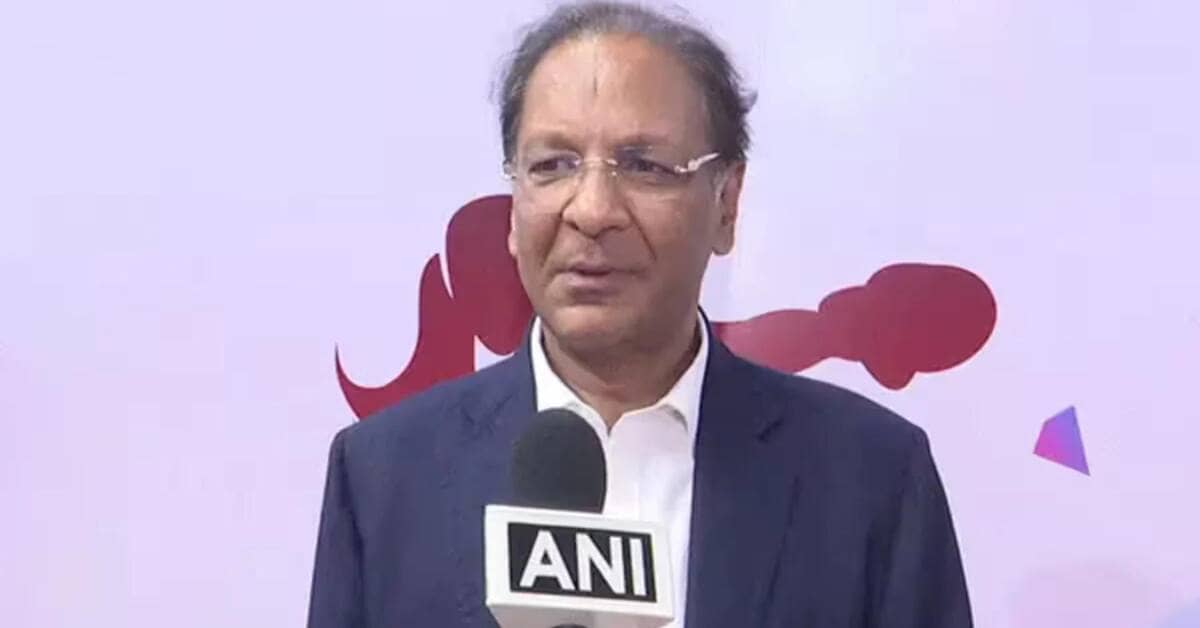
Karnataka Minister Ajay Singh has formally requested Chief Minister DK Shivakumar to extend canal water releases until November 30 to protect standing crops in the Krishna command area, which is reeling under severe drought.
Singh, who holds the portfolios of small irrigation, science and technology and serves as the Raichur district in-charge minister, submitted a letter to the chief minister in Bengaluru on Thursday.
In the letter, Singh proposed reserving water strictly for drinking purposes and releasing the remaining available water into canals for irrigation.
The Almatti and Narayanpur reservoirs together currently hold around 53 tmcft of water.
The Irrigation Consultative Committee had decided at its October 15 meeting to release canal water under the rotational warabandi system only until November 12.
Warabandi is a rotational water distribution system used in canal irrigation, where each farmer gets water for a fixed duration in proportion to their landholding.
Cotton, tur (pigeon pea) and chilli crops in the command area are at a critical growth stage, and farmers fear losing them because of inadequate water supply.
"If crops nearing harvest are damaged due to water shortage, farmers will be pushed into further debt," Singh wrote in his letter.
"Available water must be managed scientifically, safeguarding drinking water needs while providing as much as possible for crop protection," he added.
Farmers across the command area have demanded continuous canal supply, according to Singh.
He urged the chief minister to direct officials to continue releases until November 30 without compromising drinking water security for the coming summer.
The Krishna basin covers large parts of northern Karnataka, including Raichur, Bijapur, Bagalkot and Bellary districts.

These regions depend heavily on the Almatti and Narayanpur dams for both drinking water and irrigation.
Drought conditions have persisted in parts of Karnataka for multiple seasons, depleting groundwater and reservoir levels.
The state government has declared drought in several taluks and has been providing relief measures, but farmers say the current water allocation is insufficient.
Cotton is a major cash crop in the region, and tur and chilli are essential for local food processing and markets.
A failure of these crops would mean significant financial losses for small and marginal farmers who have already invested in seeds, fertilizers and labor.
Singh's request comes at a time when the state is also preparing for the summer months, when drinking water demand typically rises.
Balancing irrigation needs with drinking water reserves is a perennial challenge in Karnataka's drought-prone districts.
The chief minister's office has not yet issued a formal response to Singh's letter.
The Irrigation Consultative Committee may need to reconvene to revise its earlier decision if the government decides to extend the canal supply.
Any extension would require coordination between the water resources department and the Karnataka Power Corporation Limited, which manages dam releases.
Farmers' organizations in the Krishna command area have welcomed Singh's intervention but say the government must act quickly.
"Every day without water is a day closer to losing our crop," a farmer from Raichur told local media.

Singh, who also serves as the Boxing Federation of India president, has been simultaneously dealing with a separate dispute within the federation that has reached the Punjab and Haryana High Court.
He has publicly stated that the BFI will focus on Olympic preparations while the courts decide the internal governance row.
But for the farmers of the Krishna basin, the immediate concern is water — not boxing.
The November 12 cutoff is just days away, and the window to save the standing crops is narrowing rapidly.
If the government does not act by then, the canal gates will close, and the remaining water will be reserved exclusively for drinking.
That would leave thousands of hectares of cotton, tur and chilli without irrigation at their most vulnerable stage.
The economic ripple effect would extend beyond individual farmers to local traders, ginning mills, pulse processors and vegetable markets.
Singh's letter emphasizes that a scientific approach to water management can still protect both drinking supplies and crops.
He has not proposed any new infrastructure or emergency measures, only a reallocation of existing water within the reservoirs.
The 53 tmcft currently held in Almatti and Narayanpur is below normal for this time of year, reflecting the severity of the drought.
A tmcft (thousand million cubic feet) is a standard unit for measuring large volumes of water in Indian reservoir management.
To put it in perspective, 1 tmcft is roughly enough to meet the annual drinking water needs of about 1 million people.

The government's challenge is to stretch that limited resource through the summer while also saving the current crop cycle.
Singh's proposal to prioritize drinking water first and then release the remainder for irrigation is a standard drought management strategy.
The rotational warabandi system, which allocates water to farmers on a fixed schedule, is designed to ensure equitable distribution during shortages.
But farmers argue that the current schedule ends too early, leaving their late-season crops high and dry.
November is typically the tail end of the kharif (monsoon) cropping season, but cotton and tur have longer maturation periods.
Cotton bolls need water to open fully, and tur pods need moisture to fill properly.
Without that final irrigation, the yield drops sharply and quality deteriorates.
Chilli plants are similarly sensitive to water stress at the fruiting stage.
Singh's November 30 deadline would give farmers roughly two more weeks of canal supply — enough for one or two additional irrigation rotations.
Whether the chief minister will accept the request depends on the latest reservoir level readings and summer demand projections.
The chief minister's office typically consults with the water resources department before making such decisions.
A final decision is expected within the next few days, before the November 12 cutoff takes effect.
For now, farmers in the Krishna basin are watching the skies and waiting.
Advertisement
You may also like

Boozer and Lendeborg top the NBA’s rookie ladder early.
The NBA season is only a little over two weeks old. That is barely enough time for most rookies to find their locker. But…

Retirement: Piers Morgan names Ronaldo’s greatest Portugal achievements
British broadcaster Piers Morgan has highlighted three of Cristiano Ronaldo’s biggest achievements with Portugal. Morgan’s remarks came after Ronaldo announced his retirement from international…

Sergio Perez breaks silence on $100M Cadillac stake sale
SAO PAULO GP — Sergio Perez addresses whether majority stake at Cadillac is up for sale. Sergio Perez was questioned directly at the Sao…

LIV Golf to liquidate after rescue deal collapses
LIV Golf’s future suddenly in jeopardy after a major financial setback. The breakaway league announced plans to wind down its operations. An attorney told…

Paige Bueckers wins 2026 WNBA Dawn Staley leadership award.
Dallas Wings star Paige Bueckers has been named the winner of the 2026 WNBA Dawn Staley Community Leadership Award. The honor recognizes her commitment…

$64M Coach Speaks Out on Mike Norvell’s FSU Exit
Brando went on Fox News and said what a lot of college football fans have been thinking. Florida State is a good coaching job.…