Barred In Pennsylvania Over Cruelty, Juan Vazquez Racks Up 44 Wins Across State Lines

Despite being turned away by Pennsylvania, Vazquez has logged 243 starts and 44 wins as a trainer at Mountaineer through the first 10 months of 2026.
He has maintained that winning pace just across the state border in West Virginia.
During that exact same 10-month stretch, official Equibase records show he also made 116 starts and secured 18 victories as an owner.
Yet just a short drive away, the Commonwealth of Pennsylvania wants nothing to do with him.
Regulators there have slammed the door on his attempt to re-enter their racing program as a licensed owner.
The sharp divide illustrates how jurisdictional boundaries operate within American thoroughbred racing.
One state views a licensee as a threat to equine welfare and public integrity.
Another state allows that same individual to enter dozens of horses every month.
THE SPLIT ACROSS THE BORDER
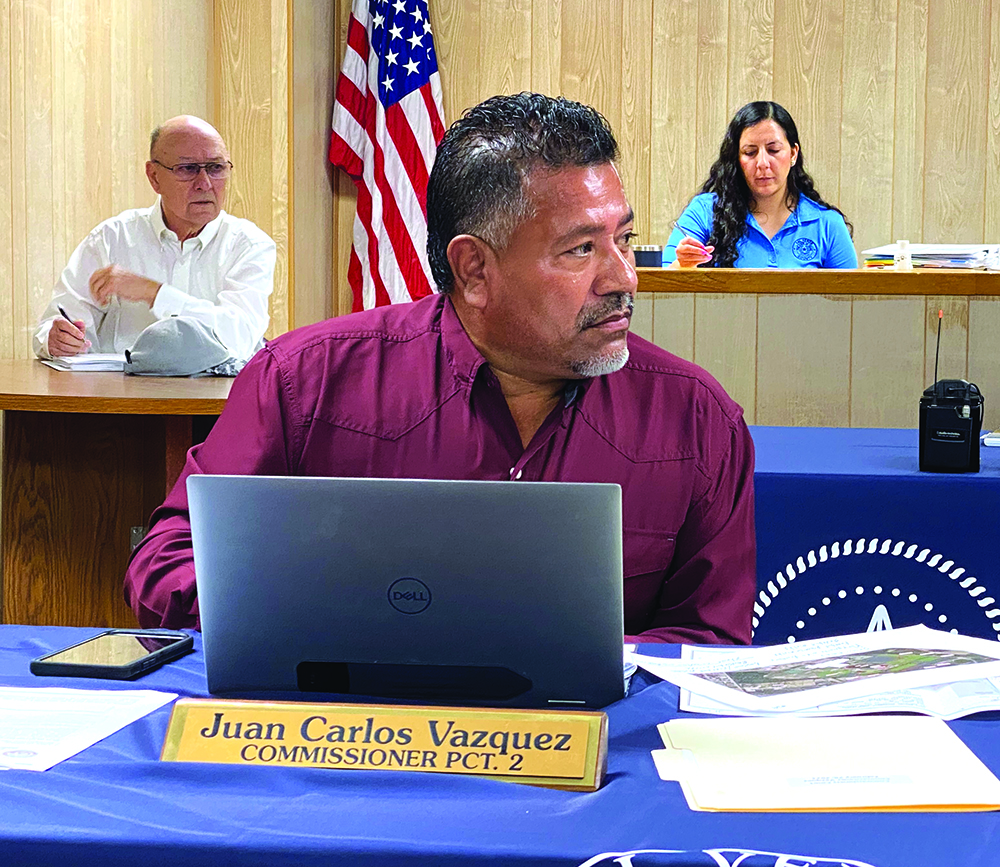
Juan Carlos Vazquez has concentrated his entire operation at Mountaineer Casino, Racetrack & Resort.
According to Equibase tracking, he has competed exclusively at the West Virginia oval since returning to the sport.
His horses have appeared in the starting gate regularly, piling up wins and purse money.
His training operation recorded 44 victories from 243 starts through the end of October 2026.
His separate owner statistics show a similarly busy campaign with 18 trips to the winner's circle from 116 outings.
By traditional racetrack metrics, those numbers reflect an active and prominent stable.
However, his status in neighboring racing jurisdictions tells a radically different story.
While his horses were crossing the wire first in West Virginia, regulators in Pennsylvania were examining his past conduct.
THE PENNSYLVANIA APPLICATION
Vazquez submitted a formal application for a Pennsylvania owner's license on May 28, 2026.
The request came after his prior Pennsylvania penalty had formally run its course.
His previous Pennsylvania trainer's license had been suspended for more than two years by state stewards.
That suspension carried an official expiration date of January 26, 2025.
Following that date, Vazquez waited several months before returning to active competition.
He resumed his training duties at Mountaineer on April 27, 2025.
Having rebuilt his stable in West Virginia, he then sought a path back onto Pennsylvania backstretches as a horse owner.
The Pennsylvania State Horse Racing Commission took several months to review his application.
On October 23, 2026, the governing body issued a formal ruling denying his request outright.
FINDINGS OF CRUELTY AND ABUSE
The commission rooted its denial in the severe disciplinary findings that initially drove Vazquez from the state.
Those penalties originated in a July 7, 2022, ruling issued by stewards at Parx Racing.
That case centered on the treatment and subsequent death of a racing mare named Shining Colors.
According to regulatory findings, Shining Colors was suffering from severe, chronic laminitis.
Despite that debilitating condition, she was transported directly from Belmont Park in New York to Parx Racing in Pennsylvania.
Her physical distress was so profound upon arrival that veterinarians had to euthanize her.
Pennsylvania stewards reviewed the circumstances surrounding the mare's transfer and physical state.
They determined that Vazquez's conduct regarding Shining Colors was "grossly negligent, cruel, and abusive."
In addition to handing down the multi-year suspension running through early 2025, regulators assessed a $5,000 fine against him.
A CHARACTER REQUIREMENT UNMET

When reviewing his May 2026 application, Pennsylvania authorities decided the expiration of his suspension was not enough.
The regulatory body evaluated whether Vazquez met the legal threshold required of every licensee in the Commonwealth.
Under state standards, applicants must show they possess good character, honesty, and professional integrity.
Regulators concluded that Vazquez "failed to demonstrate by clear and convincing evidence that he is a person of good character, honesty, and integrity, or that his prior activities will not pose a threat to the public interest or the effective regulation and control of horse racing."
The commission emphasized that Vazquez offered little to counter his established disciplinary record.
"Mr. Vazquez has presented no supporting information to refute the conclusion that his previous conduct and corrupt actions remain a threat to the public interest, the effective regulation and control of horse racing and to the health, safety and welfare of the racing participant and the racehorse," the October 23 ruling stated.
The commission was explicit regarding the risk his participation would present.
"Mr. Vazquez’s presence at a licensed racetrack under the jurisdiction of the Commission remains detrimental to the best interest of horse racing and to the integrity of the betting public in the Commonwealth."
A PROLIFIC RECORD OF VIOLATIONS
The commission did not evaluate the 2022 cruelty ruling in complete isolation.
Regulators also weighed a broader, multi-jurisdictional history that stretches back two decades.
Records compiled in the regulatory database ThoroughbredRulings.com link Vazquez to 135 entries dating back to 2006.
Some single infractions generate multiple entries in that system whenever stewards issue subsequent orders modifying or rescinding earlier rulings.
Even with administrative corrections accounted for, the overall volume demonstrates prolonged scrutiny across multiple racing commissions.
Individual racetrack operators have taken independent action against him in the past as well.
In 2015, private track management at Delaware Park enacted a property ban against Vazquez.
That same year, track management at Laurel Park in Maryland similarly barred him from entering their grounds.
Those decisions showed that individual racing corporations were willing to exclude him from their premises.
THE PENDING APPEAL
Vazquez has chosen to contest Pennsylvania's latest denial.
He submitted a timely legal appeal challenging the October 23 decision.
In a follow-up order issued on October 30, 2026, the Pennsylvania commission granted his request for an administrative appeal.
That procedural order provides Vazquez an opportunity to argue his case before the regulatory framework.
However, the October 30 order does not overturn the commission's substantive findings.
It does not issue him an owner's license.
For the time being, the Commonwealth's racetracks remain closed to his horses and his ownership entries.
THE JURISDICTIONAL DIVIDE
The contrast between West Virginia and Pennsylvania underscores how fragmented horse racing governance remains.
State racing commissions operate under separate legislative mandates and distinct regulatory standards.
While reciprocity between states often leads regulators to honor suspensions issued elsewhere, the return to active status varies widely.
Once a formal suspension period concludes, individual states retain independent authority over licensing determinations.
West Virginia permitted Vazquez to resume active conditioning duties in the spring of 2025.
Over the following 18 months, his stable became a regular fixture at Mountaineer's evening racing programs.
His horses continued to compete on track, accumulating starts, purses, and 44 victories in 2026 alone.
Pennsylvania regulators, conversely, evaluated his past animal welfare findings and determined that his presence still posed an unacceptable threat.
For bettors, horse lovers, and industry observers, the geographic proximity makes the divide impossible to miss.
A trainer barred from one state's grounds can run an active, winning enterprise just miles across the state line.
Should state racing commissions have unified licensing standards across state lines for individuals with past cruelty suspensions?
Advertisement
You may also like
Maya Jama Reveals Backstage Secrets After Sneakily Drinking Co-Stars' Alcohol On Celebrity Traitors
Maya Jama revealed that she and castmate Joanne McNally regularly swiped and drank their co-stars' unused nightly drink rations while filming The Celebrity Traitors.…
Zoom Diallo Answers Preseason Critics With 12 Points After Deactivating Social Media
After facing harsh online criticism and deactivating his Instagram following exhibition struggles, guard Zoom Diallo answered doubters with 12 points and drew booming cheers…
LIV Golf Set To Be Wound Down In Bankruptcy Court After $300M Rescue Deal Collapses
LIV Golf is set to be wound down in bankruptcy court after private credit firm BC Partners abruptly pulled out of a $300 million…
The Chicks Flash Expletive Anti-Trump Props Onstage During Election Night Concert
During an Election Night performance at the Dolby Theatre in Los Angeles, The Chicks brandished red fans reading an expletive aimed at Donald Trump…
Lee Westwood Reveals Why He Sacrificed European Ryder Cup Captaincy For LIV Golf
Before jumping to LIV Golf, Lee Westwood approached DP World Tour chief executive Guy Kinnings about captaining Team Europe in Italy, only to walk…
Sophie Cunningham Sparks Controversy After Publicly Questioning Why WNBA Players Miss Open Layups
Impending free agent Sophie Cunningham has sparked debate after publicly discussing missed open layups on her podcast, a topic critics frequently use to dismiss…