Billy Loughnane Is Godolphin’s Smartest Succession Play in Years
Horses can’t talk.
That’s a problem for a sport where the main athletes — the horses themselves — are unable to communicate with the audience.
After Forever Young’s deflating defeat in the Breeders’ Cup Classic, trainer Yoshito Yahagi lamented that the horse couldn’t speak to him to say why he hadn’t run his usual race.
But jockeys can talk.
Some of them can talk really well.
Hong Kong’s champion Zac Purton is one.
Any number of U.S.-based riders you’d like to name can hold a microphone.
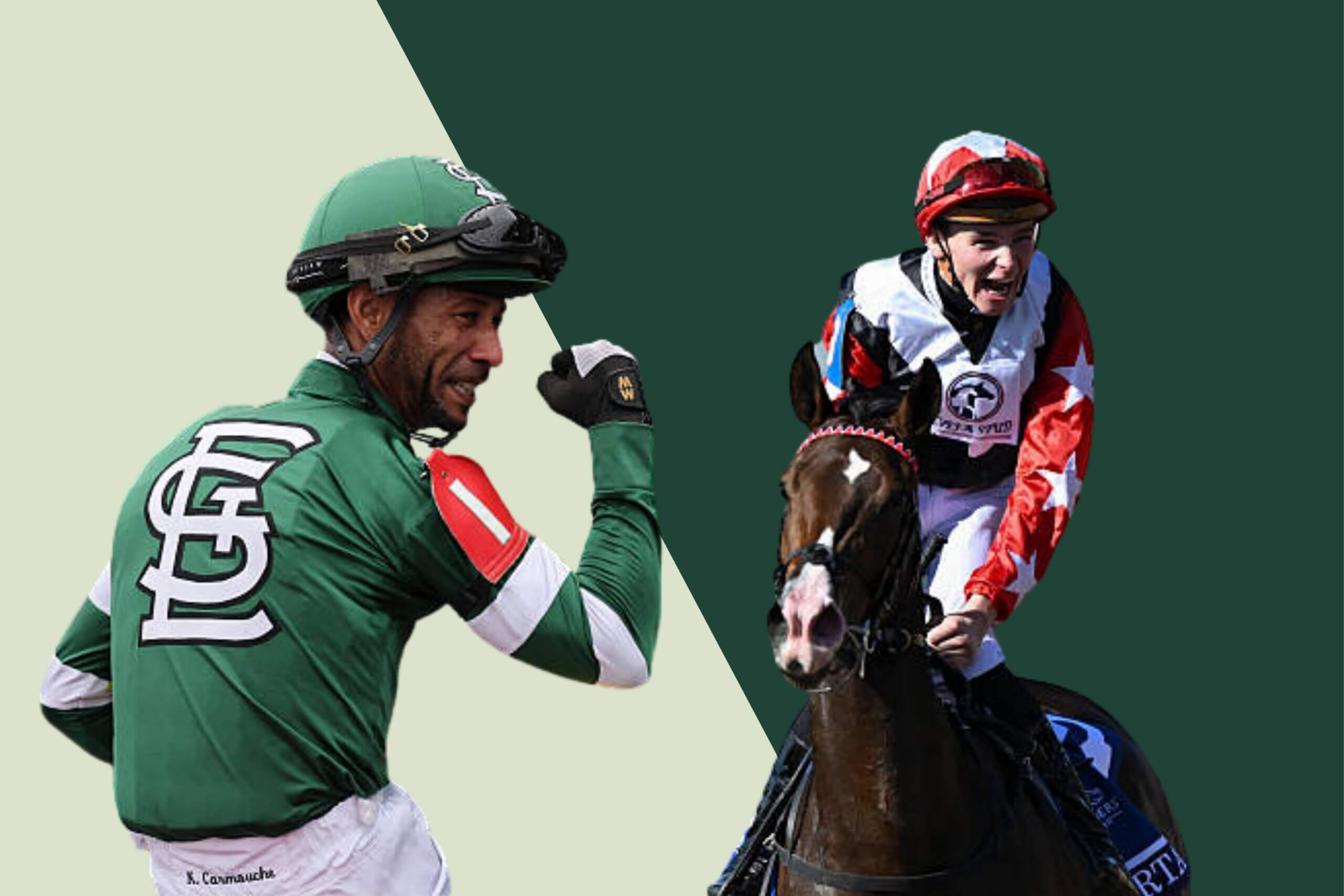
On Saturday at the Breeders’ Cup, it was the seasoned Kendrick Carmouche who stole the show.
“They call me Gator,” Carmouche said, almost rapping with delight after he out-manoeuvred William Buick with a positive ride to win the Breeders’ Cup Mile.
He reversed the result from Woodbine in September.
The man has charisma, and it was out there for everyone to see.
“Y’all stood me up last time in Canada but I knew at Keeneland I was gonna turn the tables on y’all, so here it goes, Deterministic.”
The first ‘t’ was emphasised.
The final ‘i’ was stretched out for effect.
It was punctuated by the hard ‘c’.
“It’s the best sport in the world, horse racing,” he added.
“If you never saw it yet, you need to come out and see it because you’re gonna meet cool people like me, and some of the top jockeys in the world, so come and see the horse racing.”
“We love y’all. Woooo!”
That kind of vibrancy is exactly what racing needs right now.
The sport is in general global decline.
In the past decade or so, there has not been a truly engaging personality emerge at the very top of the jockey ranks internationally.
Ryan Moore, for example, is a genuinely great jockey.
He has a sense of humour, a dry wit, by all accounts, and an acute sense of professionalism as a horseman.
But he is not an outgoing character.
He is cautious and often closed around the media.
He is certainly not one for fist bumps and flying dismounts.
Yet that’s the kind of vibrancy racing needs.
Enter Billy Loughnane.
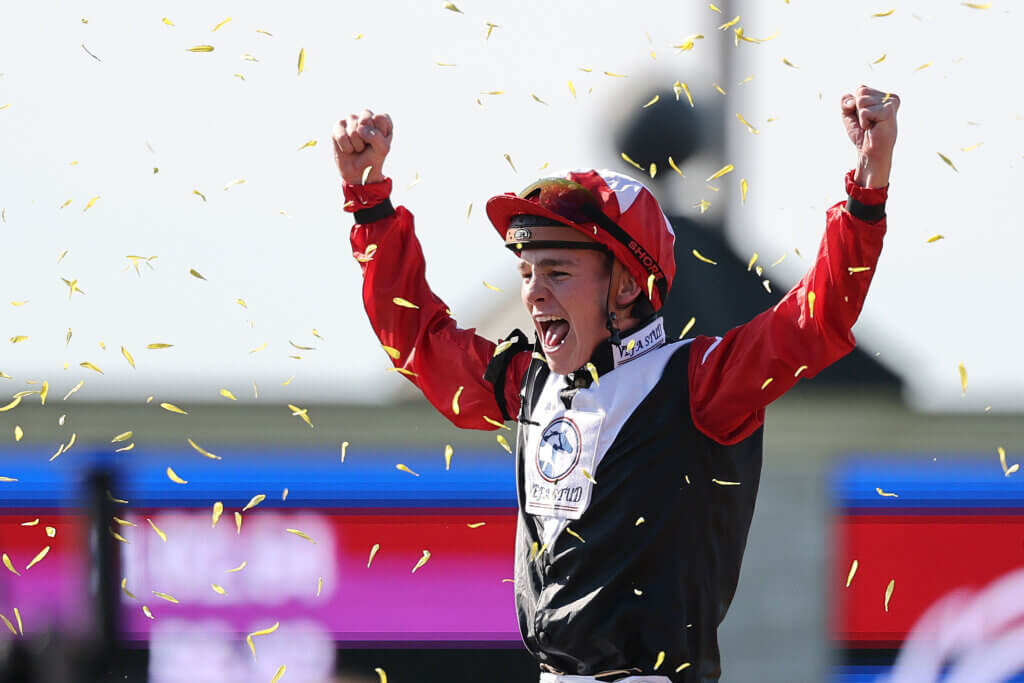
Loughnane is 20 years old and Britain’s champion jockey.
He has just signed a retainer to ride in the royal blue colours of Sheikh Mohammed’s global Godolphin operation next year.
Loughnane will be contracted alongside William Buick as one of two retained Godolphin jockeys next year, not as an outright No. 1.
But even if Loughnane does not claim the lion’s share of the best rides as soon as next year, his trajectory within the operation seems clear.
That can only add to the hopes within the sport that Loughnane is a potential successor to Frankie Dettori.
Dettori was Godolphin’s first and most successful No. 1 rider.
He was a “crossover” talent with the charisma to build a public and media profile beyond the confines of the racing bubble.
Loughnane has been swatting away comparisons with Dettori almost since his earliest days as an apprentice.
Dettori was a relative veteran when he won his first title at 23.
Loughnane is engaging and articulate.
He has the same showman’s instincts and ability to engage with the crowd.
He takes as much obvious pleasure from a big-race winner as the fans cheering him back to the winner’s enclosure.
For a racing operation conceived as a soft-power advertisement for Dubai around the globe, it is a combination of prodigious talent in the saddle and an easy likeability out of it that fits the brand ideally.
At the same time, Loughnane is not the next Dettori.

He is the first Billy Loughnane.
The racing, sporting and media landscapes have also changed completely since “Frankie” managed to achieve the same first-name status with the wider sporting public that “Lester” enjoyed a generation earlier.
Dettori not only rode all seven winners on the card at Ascot early on in his career.
He was also a familiar face for around eight million BBC viewers each week as a team captain on A Question Of Sport.
The fact that, at the time, he had never won the Derby was a running joke.
It was, in effect, a priceless — and free — weekly advertisement for Dettori, racing and the Derby on the national broadcaster.
In the fragmented world of social media and YouTube, such platforms no longer exist.
But there is still potential for Loughnane to be the first racing star of the TikTok era.
His new contract with Godolphin should soon enough see him competing at the highest level.
Loughnane has been playing an increasingly important role in Charlie Appleby’s wing of the Godolphin empire since just after he first lost his 7lb claim.
He has become a regular feature on the main work mornings at Moulton Paddocks since making his Group 1 breakthrough aboard Rebel's Romance in September 2025.
On the track, George Boughey seems to have been a relatively flexible boss.
There have probably only been a few occasions when Loughnane has not been available to Appleby of an afternoon.
“I want to ride more Group One winners,” Loughnane said last month when asked to name his main ambition for 2027.

He seems all but certain to achieve his aim, following Wednesday’s news of the Godolphin retainer.
The story of Loughnane’s rise is also the story of racing’s search for a new voice.
Carmouche’s winner’s circle performance at the Breeders’ Cup showed what the sport looks like when a jockey treats a microphone like a stage.
Loughnane’s appointment shows what the sport’s most powerful operation thinks the future should sound like.
Saffie Osborne’s rounded vowels are a contrast to Carmouche.
Hong Kong fans will soon know that she can be an engaging character.
Hollie Doyle is always good with fans and media, fresh back from injury and announced as starting her own Hong Kong stint in a few weeks’ time.
The jockeys are key to telling racing’s stories.
They are the sport’s main human heroes.
Legends in some cases — like the late, great Lester Piggott or Yves Saint-Martin or George Moore, the inimitable Frankie Dettori, Bill Shoemaker or Eddie Arcaro in the U.S., and Japan’s greatest, Yutaka Take.
Their charisma captivated fans.
That is needed now more than ever given racing’s general global decline.
Horses can’t talk.
But Billy Loughnane and Kendrick Carmouche can.
And that might be exactly what the sport needs.
Advertisement
You may also like
Retirement: Piers Morgan names Ronaldo’s greatest Portugal achievements
British broadcaster Piers Morgan has highlighted three of Cristiano Ronaldo’s biggest achievements with Portugal. Morgan’s remarks came after Ronaldo announced his retirement from international…
Sergio Perez breaks silence on $100M Cadillac stake sale
SAO PAULO GP — Sergio Perez addresses whether majority stake at Cadillac is up for sale. Sergio Perez was questioned directly at the Sao…
LIV Golf to liquidate after rescue deal collapses
LIV Golf’s future suddenly in jeopardy after a major financial setback. The breakaway league announced plans to wind down its operations. An attorney told…
Paige Bueckers wins 2026 WNBA Dawn Staley leadership award.
Dallas Wings star Paige Bueckers has been named the winner of the 2026 WNBA Dawn Staley Community Leadership Award. The honor recognizes her commitment…
$64M Coach Speaks Out on Mike Norvell’s FSU Exit
Brando went on Fox News and said what a lot of college football fans have been thinking. Florida State is a good coaching job.…
Draymond Green Reveals Why He Hard-Fouled Khaman Maluach
Draymond Green says there is one thing a big man can never afford to lose: respect. That is why he threw Phoenix Suns center…