Caitlin Clark sets the record straight on her trash talk
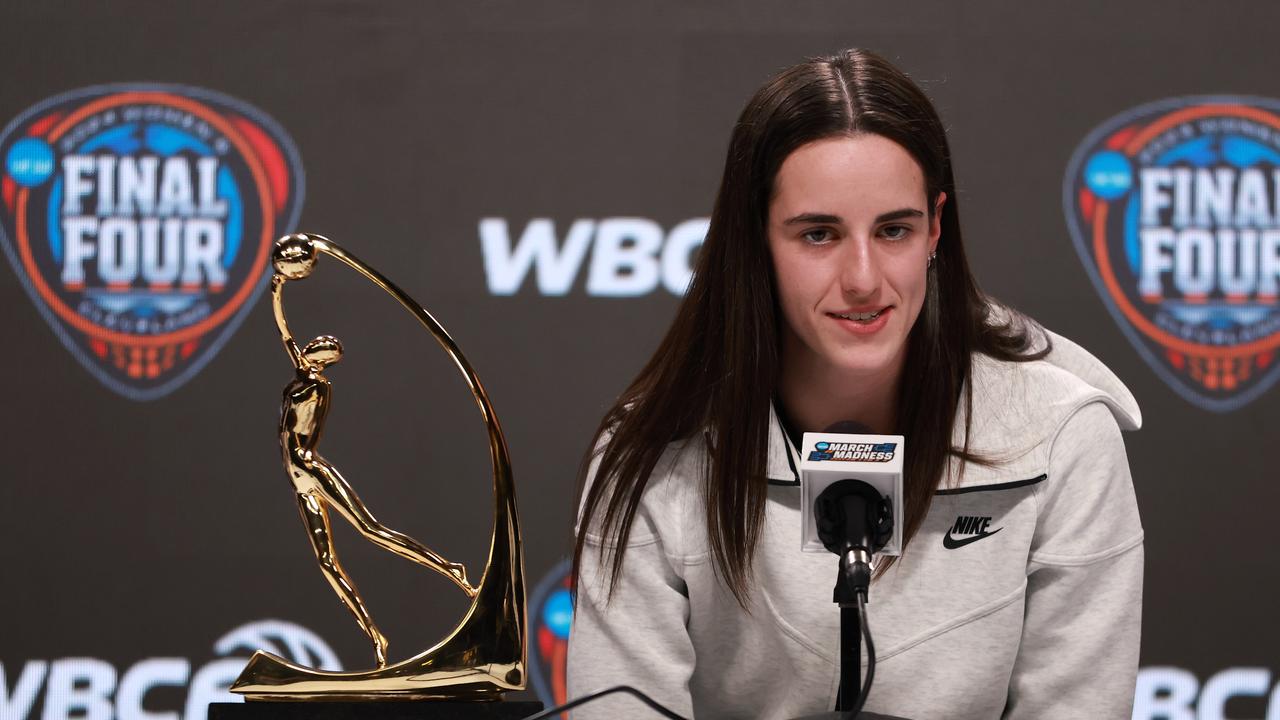
During an appearance on Kylie Kelce's podcast, Caitlin Clark confessed that game officials, not opposing players, are the ones she speaks to the most during games.
The Indiana Fever star sat down for a candid conversation on the Not Gonna Lie with Kylie Kelce show.
Her comments offered a direct look into what really happens when the cameras zoom in on her on the hardwood.
Fans often watch her fiery reactions and assume an intense back-and-forth is unfolding with rival guards.
Yet Clark made it clear that her competitive dialogue rarely starts with the opposing roster.
Instead, she turned the spotlight squarely toward her habit of engaging the crew chief and the officiating crew.
"I don’t really trash talk like that, honestly," Clark revealed during the podcast appearance.
She explained that her verbal fire only comes out under very specific game conditions.
"I mean if somebody says something to me like I’ll probably go back," Clark said.
In essence, she behaves like a sleeping bear on the court.
If opponents choose to leave her alone, Clark stays focused purely on executing the game plan.
If another player initiates the banter, however, she will not hesitate to deliver a swift response.
Yet the most revealing part of her interview centered on where her voice actually goes during four quarters of action.
"Honestly, the people I talk to the most is the refs," Clark confessed.
She immediately acknowledged the downside of that ongoing in-game conversation.
"Which I need to do better at," Clark added candidly.
AN HONEST ADMISSION ABOUT THE WHISTLE
Admitting to speaking too much to the referees is exceptionally rare for an elite professional athlete.
Most superstars prefer to argue that officials unfairly target them or disregard physical play.

Clark took full ownership of the dialogue, highlighting it as an area where personal growth is necessary.
Throughout the 2026 season, Clark has functioned as a constant lobbyist whenever play stops.
Physical defense has shadowed the Indiana Fever sensation from baseline to baseline.
There remains a strong argument across basketball circles that Clark absorbs heavy contact on drives without receiving standard whistles.
Guard play at the highest professional level demands constant navigation around reaching hands and aggressive screens.
When defenders bump her off her line, Clark instinctively seeks explanations from nearby officials.
That dynamic creates a continuous feedback loop between the star guard and the referees wearing the stripes.
Every missed reach-in or ticky-tack foul can trigger an immediate on-court debate.
Clark acknowledged that spending so much energy on those discussions may not be productive.
Whether pulling back on the commentary would earn her a friendlier whistle remains an open question.
Some league observers believe less chatter might actually help build better rapport with officiating crews.
Others recognize that an elite competitor cannot easily switch off the urge to argue an obvious infraction.
COMPETITIVE EDGES ACROSS THE WNBA
The broader culture of trash talk in the women's game recently became a talking point across sports media.
NFL Hall of Famer Terrell Owens addressed the dynamic during an episode of his Get to the Point podcast with Chris Spencer.
Owens weighed in on Clark and Angel Reese, rejecting the premise that only one can serve as the face of the league.
"They're their own superstars in their own rights," Owens explained on his show.
Owens pointed out that both players bring unique audiences and massive attention to women's basketball.
He specifically defended on-court trash talk as a natural component of high-stakes, competitive sports.

Owens noted that male athletes routinely talk trash and engage in chippy confrontations without facing widespread backlash.
"I don't see it any different than male sport," Owens said regarding the fiery exchanges.
He emphasized that mouthing off is simply part of competing at the highest level.
Owens also spoke to the league's booming profile by sharing a personal story about trying to attend the WNBA Finals.
He wanted to sit courtside in San Francisco to watch a Game 7 matchup featuring the Golden State Valkyries and the Atlanta Dream.
Reese helped lead the Dream to that final series after beginning her professional career with the Chicago Sky.
Despite spending eight NFL seasons with the San Francisco 49ers and tapping his deep local network, Owens could not secure a ticket.
"I could not get a ticket to the WNBA Finals in San Francisco," Owens shared.
He ended up watching the decisive championship showdown from a local hotel bar instead.
Owens viewed his inability to get through the arena doors as clear proof of unprecedented fan demand.
LOOKING AHEAD TO FUTURE WHISTLES
That booming spotlight means every word Clark utters during a broadcast will continue to be heavily scrutinized.
Viewers lip-read every exchange after an offensive foul or a contested layup attempt.
Now, Clark has pulled back the curtain on those viral sideline moments.
Opposing guards are rarely the target of her longest rants.
The real target has been the officiating crew tasked with managing the physical battles around her.
Recognizing the tendency on Kylie Kelce's show represents the first step toward altering her approach.
Still, old competitive habits do not disappear overnight in the heat of a close fourth quarter.
The very next missed foul call she encounters could instantly reignite the familiar urge to plead her case.
Do you think Caitlin Clark speaking less to referees would actually improve her whistle, or does she need to keep lobbying on missed calls?
Advertisement
You may also like
Shelley Duncan Earns Major League Promotion With Red Sox Following A Decade-Long Coaching Climb
Since his playing career ended in 2014, Shelley Duncan has climbed through Low-A, High-A, Double-A, and Triple-A alongside multiple MLB staff roles before earning…
Juan Vazquez Granted Appeal as He Fights to Overturn Pennsylvania License Denial
Following the October 23 denial, Juan Vazquez filed a timely appeal that was granted by the Pennsylvania commission on October 30. The regulatory body…
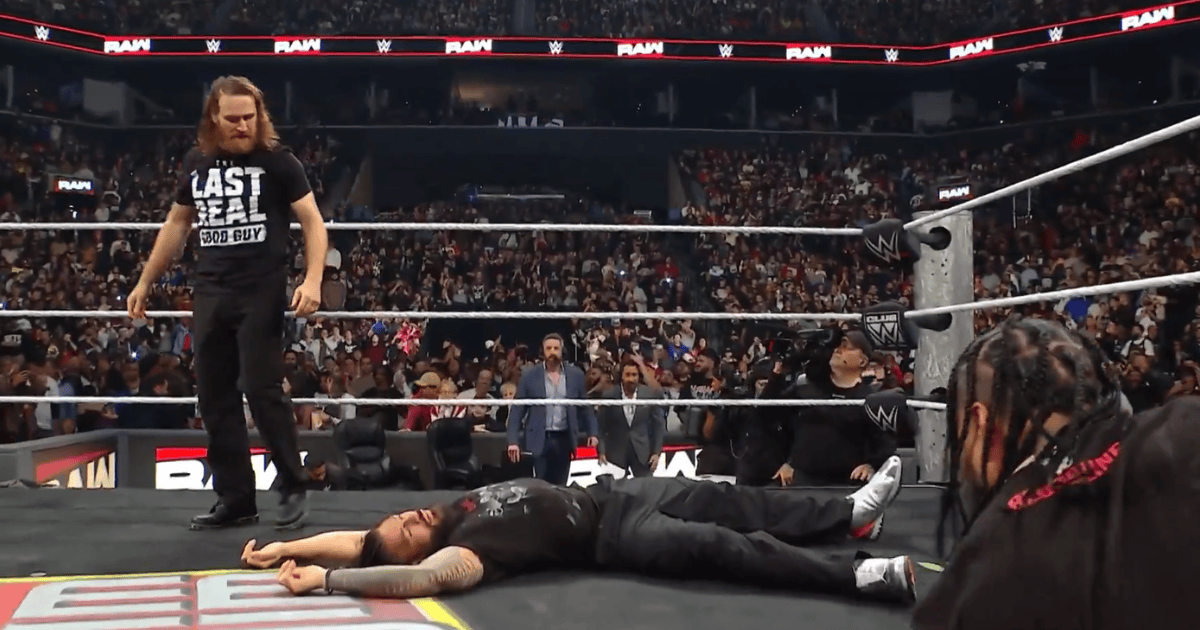
Sami Zayn Targets Roman Reigns' Guarded Persona, Claiming Tribal Chief Is Masking Self-Doubt
Undisputed WWE Champion Sami Zayn stated that Roman Reigns cannot escape human self-doubt despite projecting total dominance ahead of their Champion vs. Champion clash.…
Preston Spradlin Returns to Rupp Arena as Justin McBride Faces Former JMU Head Coach
Former Kentucky staffer Preston Spradlin brings his James Madison Dukes to Rupp Arena on Friday night for a matchup against Mark Pope and former…
Bully Ray Argues WWE Missed A Massive Opportunity With CM Punk On NXT
Following CM Punk's loss on NXT, wrestling veteran Bully Ray argued that putting the NXT Championship on Punk would have brought immense credibility to…
Dennis Gates faces sudden roster losses as CJ Gunn ruled ineligible and Jaylen Carey suspended
Missouri had to open its season without guard CJ Gunn, who was ruled ineligible by the SEC, alongside the indefinite suspension of projected starting…