Dana White admits he made Josh Hokit’s UFC fights harder on purpose.
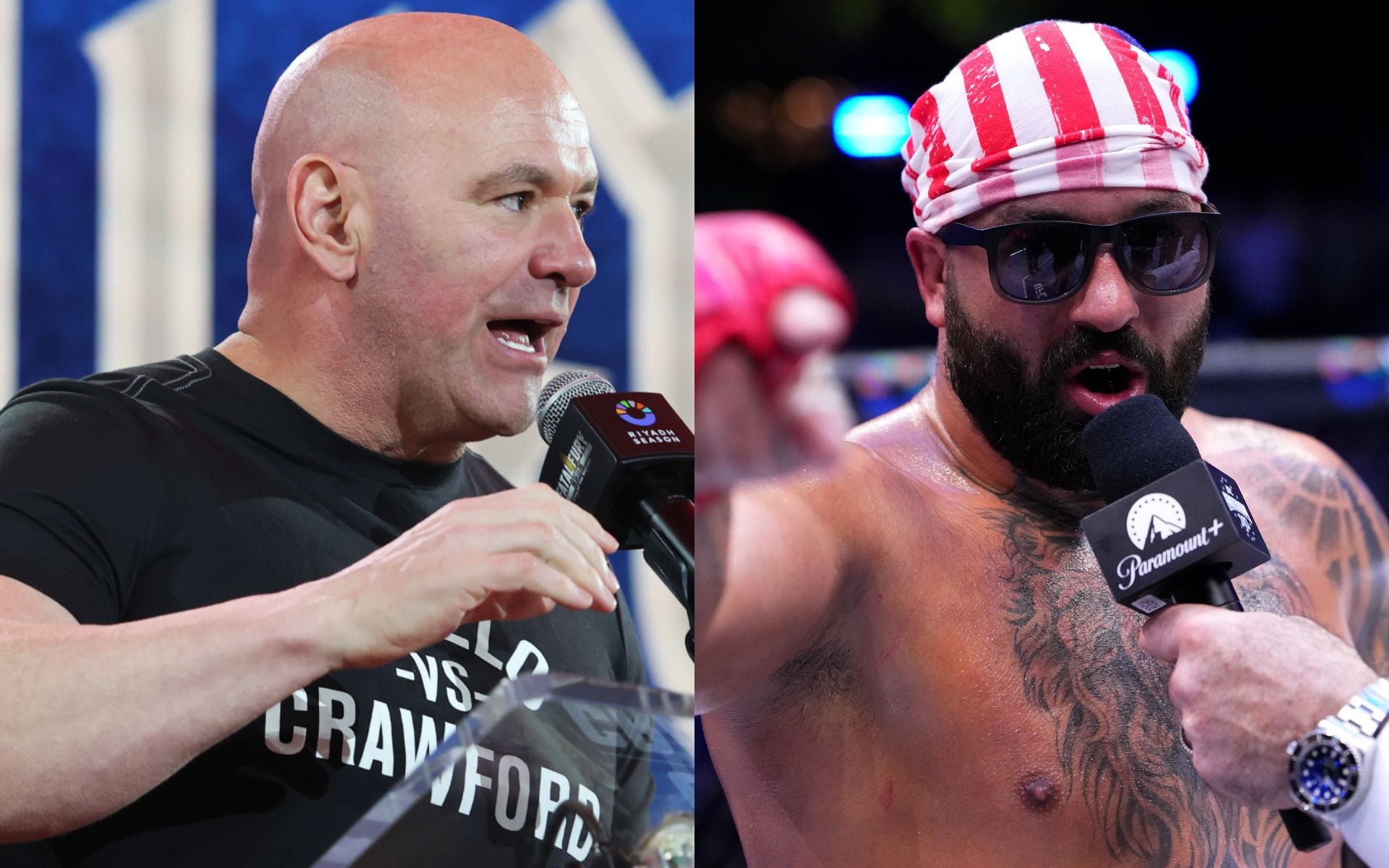
Dana White has admitted that his personal dislike of Josh Hokit influenced the matchmaking decisions the UFC made for the rising heavyweight star.
In an appearance on The Jim Rome Show, the UFC CEO acknowledged that he intentionally gave Hokit tougher opponents than necessary.
“I didn’t like some of the things he said so I might’ve threw some tough guys at him,” White said.
Hokit, 28, is set to fight Ciryl Gane for the vacant heavyweight title in the main event of UFC 334 on November 14.
He earned that shot by defeating Curtis Blaydes and Derrick Lewis, among others.
White’s admission came in response to criticism that Hokit’s path to the title was not legitimate.
“Hokit was the fight to make,” White told Rome.
“Hokit has been overlooked the entire time not only by the fans and the media, but by me.”
The UFC boss first expressed his dislike for Hokit ahead of UFC 327.
During that event’s press conference, Hokit took over the microphone with his strange characters.
White’s frustration grew after a comment Hokit made at UFC Freedom 250.
Hokit said, “Michelle Obama is a man,” a remark that left White extremely unhappy.
Despite that, White now says Hokit deserves the title shot.
“Like him or hate him, he fought his way to the top, there’s no denying that this guy deserves the title shot,” White continued.
Hokit’s run has not been universally seen as a murderers’ row of opponents.
His fight at UFC Freedom 250 against Derrick Lewis was considered favorable by some analysts.
Lewis entered that fight with a record of 3-2 in his last five bouts, showing clear signs of regression.
Still, Hokit won and kept climbing.
White’s admission raises questions about how much personal feelings shape UFC matchmaking.

The promotion has dealt with controversial champions before.
Sean Strickland has consistently created problems for the UFC with some of his comments.
White has had to learn how to manage fighters whose public statements clash with the brand’s image.
Hokit’s growing star power may now outweigh White’s earlier reservations.
The financial potential of having Hokit as champion is significant.
White acknowledged that Hokit “passed every test” thrown at him.
“Yeah, Hokit was the fight to make,” White repeated in the interview.
“He fought his way to the top, there’s no denying that.”
The UFC heavyweight division has been in flux since the previous champion vacated the belt.
Hokit’s rise has been rapid — a title shot in just his fifth UFC fight.
That speed is unusual for the promotion, which typically requires more experience before a championship opportunity.
White’s admission that he made the path intentionally harder adds context to Hokit’s journey.
Hokit has not publicly responded to White’s comments as of this writing.
The UFC has not issued any additional clarification on the matchmaking process.
White’s remarks were made during a broader interview covering multiple topics.
He also discussed Justin Gaethje’s future and a potential fight with Alexander Volkanovski.
But the Hokit admission drew the most attention from MMA media.
The question now is whether Hokit can complete his unlikely rise by winning the title.
If he defeats Gane, he will become champion despite the UFC boss’s efforts to derail him.

If he loses, the debate over whether he was set up to fail will only grow louder.
White’s honesty about his personal bias has opened a rare window into how the UFC operates behind the scenes.
Matchmaking is typically presented as a merit-based process.
This admission suggests that personal feelings can and do play a role.
Hokit’s case may become a precedent for how fighters are evaluated in the future.
The UFC 334 main event is scheduled for November 14, 2026.
Hokit will enter the fight as a significant underdog according to early betting lines.
Gane is a former interim champion with elite striking and experience in five-round fights.
Hokit’s path has been unconventional, but he has consistently defied expectations.
White’s admission has already sparked debate among fans and analysts.
Some argue that Hokit’s opponents were not as tough as White claims.
Others say that being matched with Blaydes and Lewis in your first five fights is a legitimate test.
Regardless, the UFC boss has now put his own decision-making under scrutiny.
The full interview with Jim Rome is available online.
White did not specify which comments from Hokit triggered his dislike.
But the Michelle Obama remark is the most publicly known incident.
Hokit has built a following partly through his provocative persona.
That persona has now been acknowledged as a factor in how the UFC treated him.
Whether this helps or hurts Hokit’s brand remains to be seen.
For now, all eyes are on November 14.
Advertisement
You may also like
Reds Get Major Update on Elly De La Cruz Trade
The Cincinnati Reds have received a new update on the Elly De La Cruz trade situation. A report from Chris Landers of FanSided outlines…
Charles Barkley’s blunt take on Wemby’s insane game says it all
Charles Barkley's reaction to Victor Wembanyama's unreal performance says everything you need to know. During Wednesday night's NBA game between the Dallas Mavericks and…

Luke Bryan & Megan Moroney to Headline Coastal Country Jam 2027
Coastal Country Jam is returning to Huntington Beach in 2027 with Luke Bryan and Megan Moroney headlining the SoCal beachside country festival. Activated Events,…
Watch Dallas Stars vs Blue Jackets Live Free on TV
NHL.LIVE: Dallas Stars vs Columbus Blue Jackets Live Free NHL Games On TV Channel Nov 6.2026. The Dallas Stars face the Columbus Blue Jackets…
Church Downs picks: Expert predictions for Friday, Nov 6
Churchill Downs Horse Racing Picks and Predictions Today for Friday, November 6. Mr. Ed has returned to his regular twice-a-week VSiN beat after a…
Garcia Exposes LIV Golf’s ‘Good, Bad and Ugly’ After Quitting
The PGA Tour and DP World Tour now have an obvious decision to make with the likes of Sergio Garcia and Lee Westwood. Garcia,…