FIFA Pushes To Restrict Women's Olympic Soccer To Under-23s Ahead Of Brisbane 2032
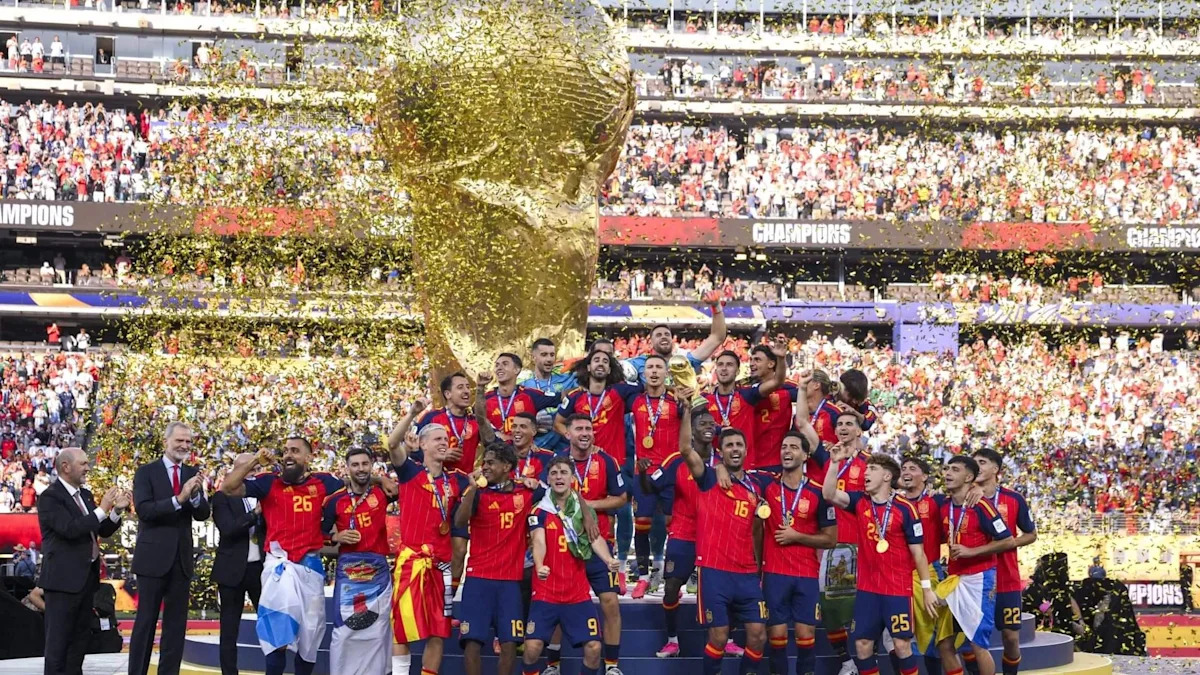
FIFA wants the International Olympic Committee to limit the women's Olympic football tournament to under-23 squads, though existing criteria mean any restriction could not take effect until Brisbane 2032 at the earliest.
The world governing body is considering the change due to rising concerns over fixture congestion and senior player workload.
While no formal proposal has been submitted, sources at both FIFA and the IOC have confirmed they are open to dialogue.
Any change would fundamentally alter one of the crown jewels of international women's sports.
Because qualification pathways and tournament guidelines for the 2028 Los Angeles Games are already determined, the current format remains locked in through 2028.
That leaves the Brisbane 2032 Olympic Games in Australia as the earliest target for any structural pivot.
FIFA is understood to be seeking formal discussions with the IOC, players, and prominent national federations whose teams regularly qualify for the Games.
Implementing an age cap would demand exhaustive analysis, institutional consultation, and formal approval through official FIFA and IOC governing channels.
THE HISTORIC DOMINANCE OF TEAM USA
A move to restrict rosters would trigger fierce resistance across the women's game.
The Olympic women's tournament has long held status as a pinnacle event, unlike the men's version which operates primarily as a youth showcase.
The United States Women's National Team has historically defined the competition.
Across the eight Olympic women's soccer tournaments played to date, the United States has captured five gold medals.
Most recently, manager Emma Hayes led the American squad to the gold medal in Paris two years ago.
Olympic women's football also commands massive commercial value for the IOC, particularly across vital broadcast and commercial markets in the United States, Europe, and Australia.
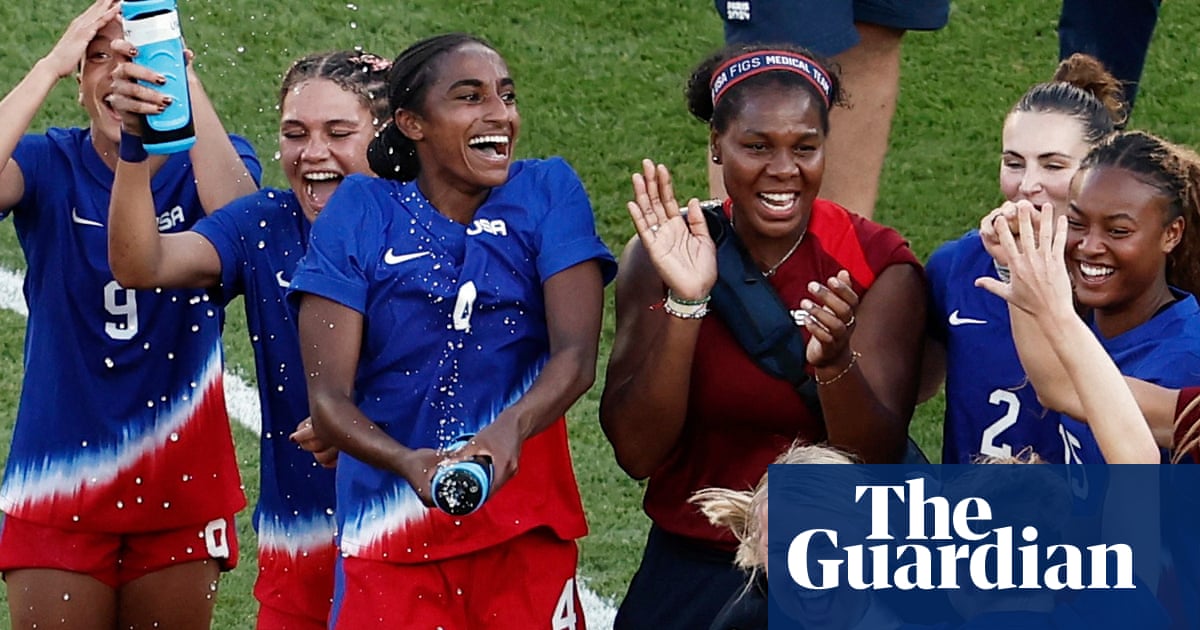
Because of that substantial commercial appeal, the IOC may ultimately resist FIFA's overtures to diminish the star power of the field.
HOW MEN'S OLYMPIC SOCCER GOT ITS AGE CAP
Women's football made its official Olympic debut at the 1996 Games in Atlanta.
Because women's soccer was classified as an amateur sport during that era, organizers instituted no player age restrictions.
That open approach stood in stark contrast to the turbulent, decades-long history of the men's tournament.
The IOC first admitted men's football to the Olympic program in 1908.
For decades, the IOC banned professional men's players from participating.
That prohibition persisted until 1984, largely driven by FIFA's fierce determination to protect the primacy and exclusivity of the men's World Cup.
FIFA also cited the physical strain and demands placed on senior players by an increasingly crowded calendar.
Under sustained pressure from FIFA, the IOC eventually established a strict under-23 age restriction for men's squads in 1992.
Organizers altered that rule slightly ahead of the 1996 Atlanta Games to permit each men's national team to include three overage players.
CALENDAR CONGESTION AND A CROWDED SCHEDULE
The explosive growth and rapid professionalization of women's soccer over the past decade has sparked modern fixture congestion.
The global soccer calendar for 2028 is currently projected to be the most congested in the sport's history.
FIFA itself bears significant responsibility for creating that severe scheduling logjam.

The governing body decided to introduce the brand-new Women's Club World Cup directly into an Olympic year.
The United States is scheduled to stage that 16-team club tournament between January 5 and January 30 in 2028.
Staging that major competition just six months before the Los Angeles Games will disrupt regular domestic league seasons across Europe.
Senior international players will face back-to-back high-stakes competitions alongside their regular club duties.
THE EXPANDING ROAD TO LOS ANGELES 2028
While FIFA considers distant changes for Brisbane 2032, preparations for the 2028 Games in Los Angeles are accelerating.
The Olympic field will expand noticeably for the Los Angeles tournament.
The women's Olympic bracket is growing from the 12 teams featured at Paris 2024 to 16 participating nations in 2028.
Continental qualifying tournaments are already underway or scheduled across several regions.
In Asia, the qualifying format has already been finalized by confederation officials.
The group draw for the final Asian qualifiers will occur at 4:00 p.m.
Korea Standard Time on the 12th at AFC House in Kuala Lumpur, Malaysia.
The Asian Football Confederation has received 2.5 qualification spots for the expanded 16-team Olympic tournament.
ASIA'S ROAD TO THE 2028 GAMES
Asia's final qualifying phase will feature the eight quarterfinalists from the 2026 AFC Women's Asian Cup.

Those eight nations will be split into two round-robin groups of four teams.
Each country will play six home-and-away matches within its group.
The matches are scheduled across designated FIFA women's international match windows in 2027.
The first window takes place on April 19 and April 24, 2027.
The second series will follow on October 7 and October 12, 2027.
The third group window will run from November 29 to December 4, 2027.
The winner of each four-team group will punch an automatic ticket directly to the Los Angeles Games.
The two group runners-up will meet in a two-legged, home-and-away playoff on February 28 and March 4, 2028.
The winner of that Asian playoff will advance to an inter-confederation playoff series against Argentina from South America.
Pots for the upcoming AFC draw were established using recently published FIFA world rankings.
Pot 1 contains fifth-ranked Japan alongside 12th-ranked North Korea.
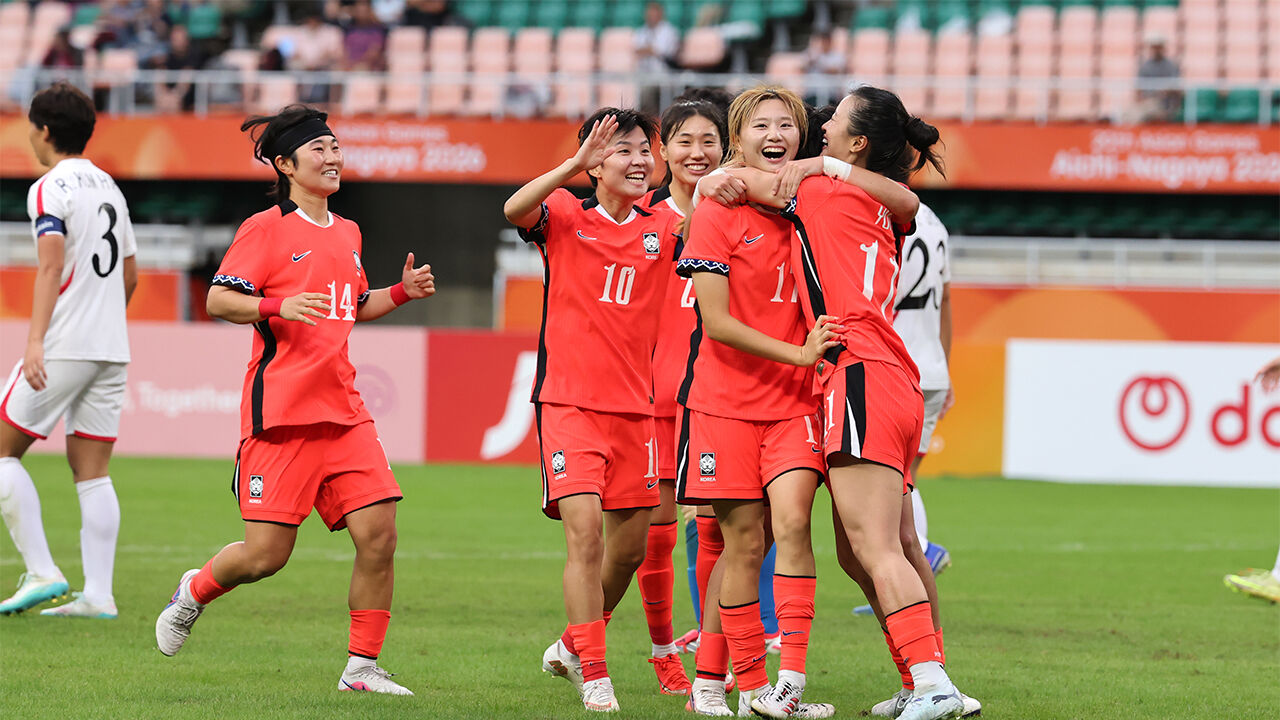
Pot 2 features 15th-ranked Australia alongside 17th-ranked South Korea.
Pot 3 includes 18th-ranked China and 38th-ranked Chinese Taipei.
Pot 4 rounds out the draw with 39th-ranked Philippines and 51st-ranked Uzbekistan.
PLAYER TENSIONS AND EQUAL PAY BATTLES
FIFA's musings over Olympic eligibility arrive amid escalating financial friction between the governing body and elite players.
FIFA is facing threatened legal action from leading women's players if prize money at the next Women's World Cup in Brazil remains inequitable.
A formal letter verified by The Athletic was submitted to FIFA this past September.
The document was jointly authored by global players' union FIFPRO alongside player representatives from 45 individual nations.
Signatories on the letter include players from reigning world champions Spain, European champions England, and the United States squad.
In fact, representatives from every single nation currently ranked within the global top 10 signed the challenge.
Back in 2023, FIFA president Gianni Infantino publicly expressed an ambition to achieve prize money equality by the 2027 tournament.
However, FIFA and FIFPRO have not executed any binding legal agreement to guarantee that target.
THE FIGHT FOR BINDING COMMITMENTS
The joint union letter presented three specific contractual demands to FIFA leadership.
First, players demanded proportional equal prize money between the men's and women's World Cups, guaranteeing players at least 30 percent of total prize allocations.
Second, the letter called for the co-development with FIFPRO of a binding global minimum standards framework covering all national team assemblies.
Third, players demanded a formal collective bargaining agreement between FIFA and FIFPRO to enshrine these terms permanently.
The letter explicitly stated: "When adopted, these proposals will ensure: equal pay for equal work for both women and men."
Signatories added: "As national team players, we want to leave women's football in better shape than we found it; we want the next generation to enjoy better conditions and competitive opportunities than we did."

The letter emphasized: "This can only be done if opportunities are available and resourced."
At the 2023 Women's World Cup in Australia and New Zealand, FIFA distributed a record $110 million in prize money.
The federation spent an additional $40 million on team preparation and club benefit payouts.
While payouts are expected to more than double for the upcoming World Cup in Brazil, sources close to negotiations report they will remain well short of parity.
Sources speaking anonymously confirmed that non-qualifying nations across the women's game will also receive larger solidarity payments.
Yet the economic divide between genders remains stark.
At the expanded 48-team men's World Cup held across North America earlier this year, FIFA disbursed a record $871 million.
That astronomical men's figure included $655 million awarded purely in performance-based prize money.
WHAT COMES NEXT BEFORE BRISBANE 2032
With players already pressing FIFA over fundamental workplace protections and equitable pay, altering the Olympics risks further confrontation.
Limiting the Olympic tournament to younger players could relieve calendar pressures for elite stars.
However, stripping the event of senior national team status would disrupt three decades of prestige built by global icons.
For powerhouse programs like Team USA, Olympic gold has long stood shoulder to shoulder with the World Cup trophy.
Any compromise between FIFA, the IOC, and player unions remains years away from resolution.
Should the women's Olympic tournament remain an unrestricted full-national-team event, or follow the men's under-23 structure?
Advertisement
You may also like
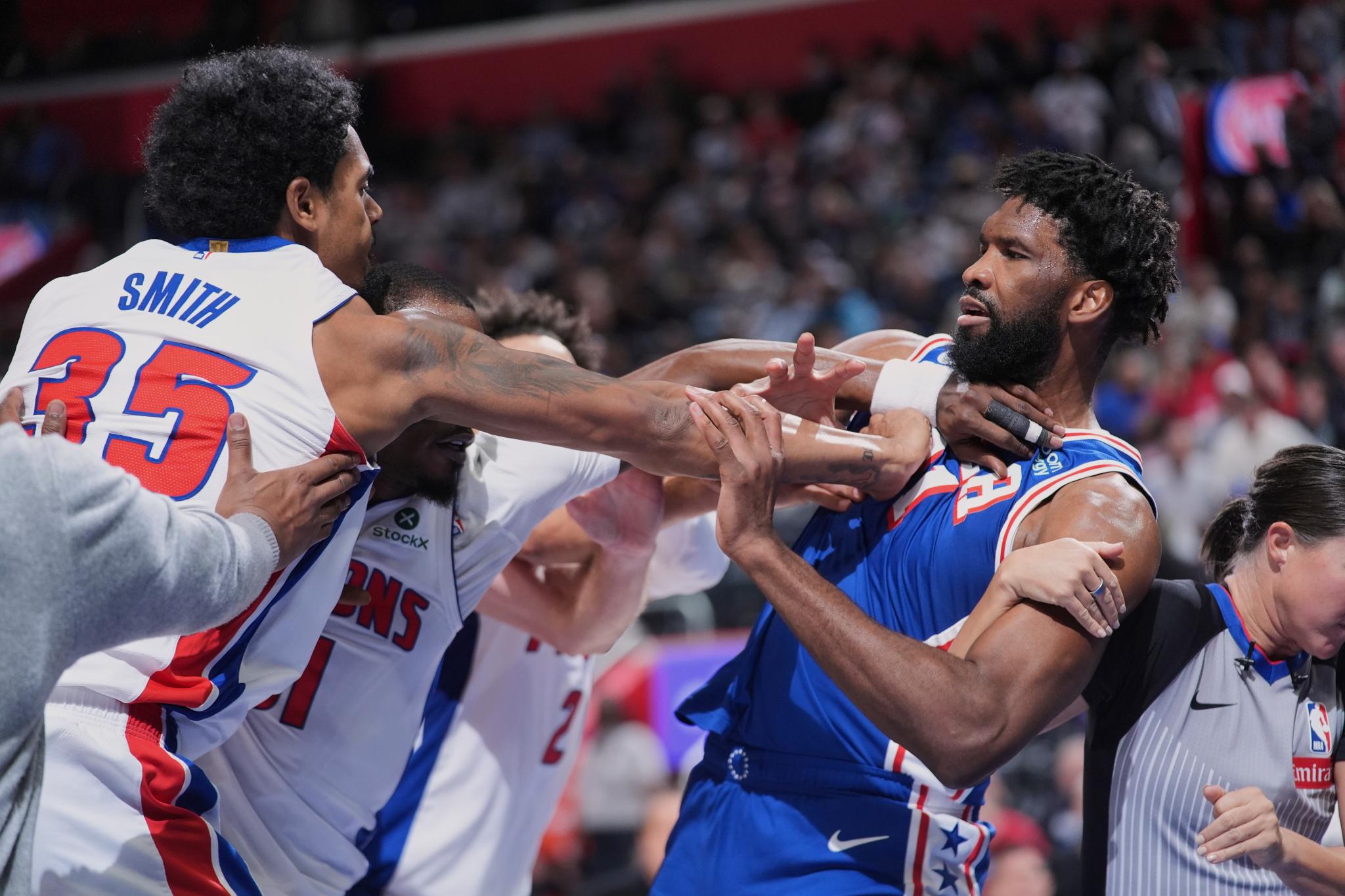
Charles Barkley Dismisses Joel Embiid’s Scuffle With Pistons Forward Tolu Smith On Air
Charles Barkley completely dismissed the first-half scuffle between Joel Embiid and Tolu Smith, joking on air that he had been kissed harder. The Hall…

Fans Urge The Chicks to Cancel Hollywood Concert as 48-Hour Reschedule Blocks Ticket Refunds
By moving their November 2 show to November 4 instead of canceling it outright, The Chicks left out-of-town ticketholders locked out of automatic refunds…

Valtteri Bottas Refuses to Back Down After Punishing Mexico Crash and Illness
Valtteri Bottas had to be evaluated at the medical centre and excused from post-race media duties after surviving a violent crash into the barriers…
Jimmie Johnson Expands LEGACY MOTOR CLUB Ownership Group With Sports Champions and Grammy Winners
LEGACY MOTOR CLUB Announces Additional Strategic Owners, Uniting Sports Champions, Grammy Winners and Business Leaders to Build a Shared Vision. The Statesville-based NASCAR Cup…
Steve Stricker Defies Locker-Room Pushback, Backing Returning LIV Stars for Champions Tour
While locker-room peers push to bar former defectors, 2021 U.S. Ryder Cup captain Steve Stricker stated that former LIV players like Lee Westwood and…
Kate Middleton Reaches Limit With Queen Camilla And Refuses To Hold Back Her Duties
Reports reveal Kate Middleton is done walking on eggshells around Queen Camilla after tensions escalated over the Waleses stepping up their public roles. The…