Former Good Good VP Jeff Lefkovits Sues Company for $1M Over Controversial Callaway Ad
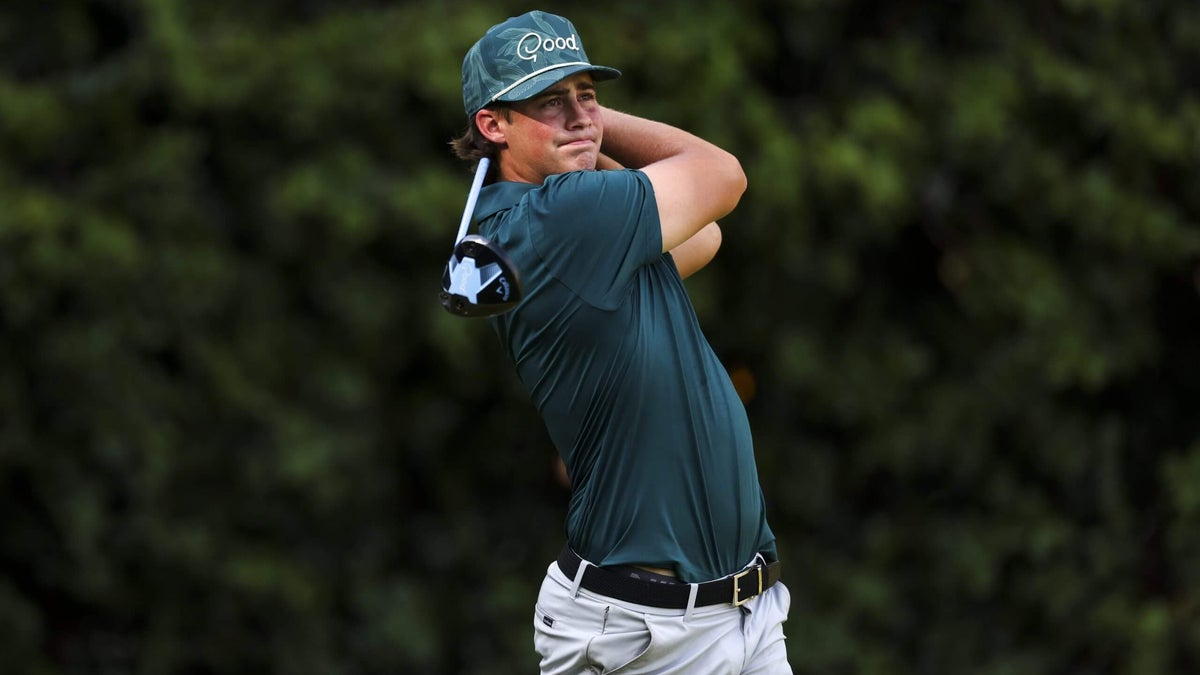
Former Good Good vice president of brand and marketing Jeff Lefkovits has filed a defamation lawsuit in Texas seeking more than $1 million after former CEO Matt Kendrick publicly blamed the marketing department for the controversial Callaway advertisement.
The legal filing was submitted on October 29 in the District Court of Dallas County, Texas.
Lefkovits names both Good Good Golf and Kendrick as defendants in the civil action.
The lawsuit alleges that Kendrick and the company scapegoated Lefkovits to divert public outrage away from executive leadership.
Lefkovits contends that public statements made regarding his role severely damaged his professional standing across the sports marketing industry.
According to the legal complaint, those executive remarks have left Lefkovits unable to secure new employment since his dismissal.
The complaint seeks more than $1 million in monetary relief to compensate for lost earnings and reputational harm.
THE CONTROVERSIAL PROMOTION
The dispute stems from a commercial released in August to promote a co-branded driver manufactured by equipment giant Callaway.
Good Good, widely celebrated as a flagship brand in golf social media, had built significant momentum around the product launch.
However, the promotional video generated instant backlash immediately after it went live on digital platforms.
In the advertisement, Good Good co-founder Garrett Clark was shown aggressively charging toward fellow creator Alexis Miestowski.
Clark shoved Miestowski directly to the ground during the clip.
He then stood over her in a threatening posture and delivered the line, “Do not touch my new driver.”
Viewers and critics quickly condemned the video, arguing that the scene made light of domestic violence and casual violence against women.
Miestowski is an accomplished golfer who previously competed professionally on the Epson Tour.
She was also a prominent member of Good Good's female-oriented initiative known as the Good Good Girls group.
THE SCRIPT AND THE ON-SET REVISION
Following the public outcry, leadership attempted to explain the creative intention behind the aggressive scene.
Kendrick and Clark claimed the commercial was originally envisioned as a spoof of the supernatural horror movie “Obsession.”
They argued that the narrative was supposed to depict someone becoming irrationally obsessed with a golf club to the point of temporary madness.
Yet court documents submitted by Lefkovits present a drastically different account of how that specific scene was created.
The lawsuit states that the original advertisement plan was authored a month earlier by Good Good content creator Sam Stamey.
Lefkovits reviewed and formally approved that initial concept, which he describes as a lighthearted parody script.
According to the suit, the original draft culminated in a comedic twist where the entire group developed an obsession with the driver.
Crucially, Lefkovits asserts that the violent confrontation between Clark and Miestowski was completely absent from Stamey's approved script.
The filing explains that Lefkovits was away from the office when the video shoot actually took place.
The lawsuit states: “On set, and without Lefkovits’s knowledge or participation, the team decided to film a shot in which Clark runs at Miestowski, shoves her to the ground, and, standing over her, says, ‘Do not touch my new driver.’”
Lefkovits maintains that the impromptu physical scene was conceived of and approved directly on set by those present.
The complaint further alleges that the finished cut was fully embraced by Good Good performers and ownership before being released.
CORPORATE APPROVALS AND SEVERED TIES
The legal filing also details the external review process that preceded the video's public distribution.
Lefkovits asserts that he signed off on the revised cut only after Callaway had formally approved it in writing.
Both organizations initially believed the promo was ready for distribution, but the ensuing public response proved catastrophic.
Facing intense scrutiny from the golf community and the public, Good Good quickly deleted the video from its social media channels.
The creator collective issued a formal apology, stating that the actions depicted on screen failed to reflect the group's core values.
Callaway likewise issued a public apology, acknowledging that the advertisement did not align with its corporate standards.
Callaway chief executive Chip Brewer admitted that the brand had approved the advertisement prior to release and conceded that internal review procedures had failed.
Brewer stated that Callaway would thoroughly investigate its approval protocols and implement reforms to avoid similar failures in the future.
Callaway also confirmed that while its staff did not participate in the physical filming, the company bore responsibility for inadequate oversight.
Despite Callaway's admission of procedural failure, the equipment manufacturer made the decision to terminate its partnership with Good Good.
The severed relationship stripped Good Good of one of its most prestigious and lucrative commercial alignments.
The commercial catastrophe quickly spread across the retail sector as well.
Major retailers including Dick’s Sporting Goods and Target moved swiftly to pull Good Good apparel and products from their shelves.
Several other retail and media partnerships connected to the YouTube collective were severely disrupted or discontinued entirely.
INTERNAL BLAME AND EXECUTIVE DEPARTURES
As commercial ties unraveled, the internal atmosphere inside Good Good grew increasingly tense.
Kendrick initially addressed the internal staff directly and accepted personal responsibility for the catastrophic video.
In an initial public apology, Kendrick stated plainly, “I own it.”
The chief executive acknowledged at the time that the organization was accountable for its distributed media regardless of original creative intent.
However, Lefkovits alleges that Kendrick’s public narrative underwent a dramatic shift once the commercial consequences began mounting.
Instead of maintaining personal responsibility, Kendrick turned public attention toward the internal marketing department.
In an interview with sports business outlet Front Office Sports, Kendrick stated that the marketing division had approved the ad.
Kendrick told the publication that Good Good had subsequently “removed people responsible” for the controversial commercial.
On August 26, Good Good officially terminated Lefkovits from his role as vice president of brand and marketing.
Lefkovits claims that Kendrick's public remarks directly linked him to the creative direction of a scene he never authorized.
The fallout from the failed marketing campaign soon engulfed top executive leadership as well.
Kendrick ultimately stepped down from his position as chief executive officer and chairman of Good Good.
Joe Flannery, who served as the company's president, also left the creator collective in the aftermath of the controversy.
THE DEFAMATION LAWSUIT AND REPUTATIONAL COLLAPSE
In his Dallas County lawsuit, Lefkovits argues that Kendrick’s comments to Front Office Sports constituted actionable defamation.
A defamation claim in Texas generally requires proving that a defendant published a false statement of fact that injured the plaintiff's reputation.
Lefkovits asserts that Kendrick's characterization falsely branded him as the architect of an advertisement widely condemned for promoting violence against women.
The lawsuit states that this public blame made him virtually unemployable in the marketing sector.
In the sports and entertainment industry, senior marketers rely heavily on brand safety credentials and executive trust to secure high-level roles.
The court filing emphasizes the severe personal and professional toll that the executive scapegoating has caused.
The lawsuit underscores this ongoing hardship directly in its legal filings.
"Every day that goes by without Defendants recanting their false statement, Lefkovits’s ability to provide for his family is further diminished," the court filing states.
Lefkovits argues that unless his name is cleared by the court, the public record will continue to blame him for decisions made without his consent.
THE CREATOR ECONOMY CONTEXT
The rapid escalation of the controversy highlights the immense vulnerabilities facing influencer-driven businesses in the modern digital economy.
Good Good originated as an informal group of young golfers filming entertaining matches and trick shots for YouTube.
Over several years, the group transformed into one of the creator economy's most remarkable success stories.
Their fast-paced, personality-driven content attracted millions of loyal subscribers and transformed traditional golf entertainment.
That massive online engagement enabled the company to raise $45 million in funding last year.
It also opened the door to major retail deals and co-branded club releases that typical digital creators rarely achieve.
Yet the Callaway disaster demonstrated how rapidly corporate goodwill can evaporate when creator content clashes with mainstream corporate standards.
When viral controversies erupt, traditional sponsors and retail chains rarely tolerate brand associations that draw public backlash.
The resulting fallout left Good Good struggling to manage both severe financial loss and an unprecedented leadership vacuum.
WHAT LIES AHEAD IN COURT
The legal battle now moves into the Texas civil court system, where both sides face substantial stakes.
To date, neither Good Good Golf nor Kendrick has filed a formal legal response to the lawsuit in Dallas County.
When contacted regarding the civil filing, a spokesperson for Good Good stated that the company had no comment on the pending litigation.
Kendrick did not immediately respond to requests for comment regarding the defamation claims.
The legal proceedings will likely focus on internal communications, script revisions, and on-set production records from the filming session.
Text messages, production emails, and witness depositions could soon be examined to determine who authorized the physical scene on set.
The court will also assess whether Kendrick's public comments crossed the legal threshold from executive spin into unlawful defamation.
For Lefkovits, the seven-figure lawsuit represents a high-stakes effort to restore a professional reputation tarnished on a national stage.
For Good Good, the litigation ensures that the most damaging misstep in company history will remain under intense legal examination.
Did Good Good leadership unfairly scapegoat their marketing head once the public backlash hit?
Advertisement
You may also like
Valtteri Bottas Refuses to Back Down After Punishing Mexico Crash and Illness
Valtteri Bottas had to be evaluated at the medical centre and excused from post-race media duties after surviving a violent crash into the barriers…
Jimmie Johnson Expands LEGACY MOTOR CLUB Ownership Group With Sports Champions and Grammy Winners
LEGACY MOTOR CLUB Announces Additional Strategic Owners, Uniting Sports Champions, Grammy Winners and Business Leaders to Build a Shared Vision. The Statesville-based NASCAR Cup…
Steve Stricker Defies Locker-Room Pushback, Backing Returning LIV Stars for Champions Tour
While locker-room peers push to bar former defectors, 2021 U.S. Ryder Cup captain Steve Stricker stated that former LIV players like Lee Westwood and…
Kate Middleton Reaches Limit With Queen Camilla And Refuses To Hold Back Her Duties
Reports reveal Kate Middleton is done walking on eggshells around Queen Camilla after tensions escalated over the Waleses stepping up their public roles. The…

Jessica Pegula Hot-Mic Leak Prompts WTA To Wipe Practice Video Ahead Of Gauff Clash
The WTA removed its Indian Wells practice session streams from YouTube after an unmuted microphone captured Jessica Pegula's candid comments just days before she…
Patrick Reed Breaks Silence on Jon Rahm Returning to the PGA Tour Without a Suspension
Patrick Reed has shared his opinion on whether Jon Rahm should be allowed to return to the PGA Tour immediately after leaving LIV Golf.…