Liberty Media ends super-voting stock, diluting Malone's power.

Liberty Media Corporation has acquired all shares of its super-voting Series B common stock held by founder John Malone, in a move that cuts his voting power from 48% to 3%.
The transaction came after Malone received unsolicited offers from third parties for his stake, according to the company.
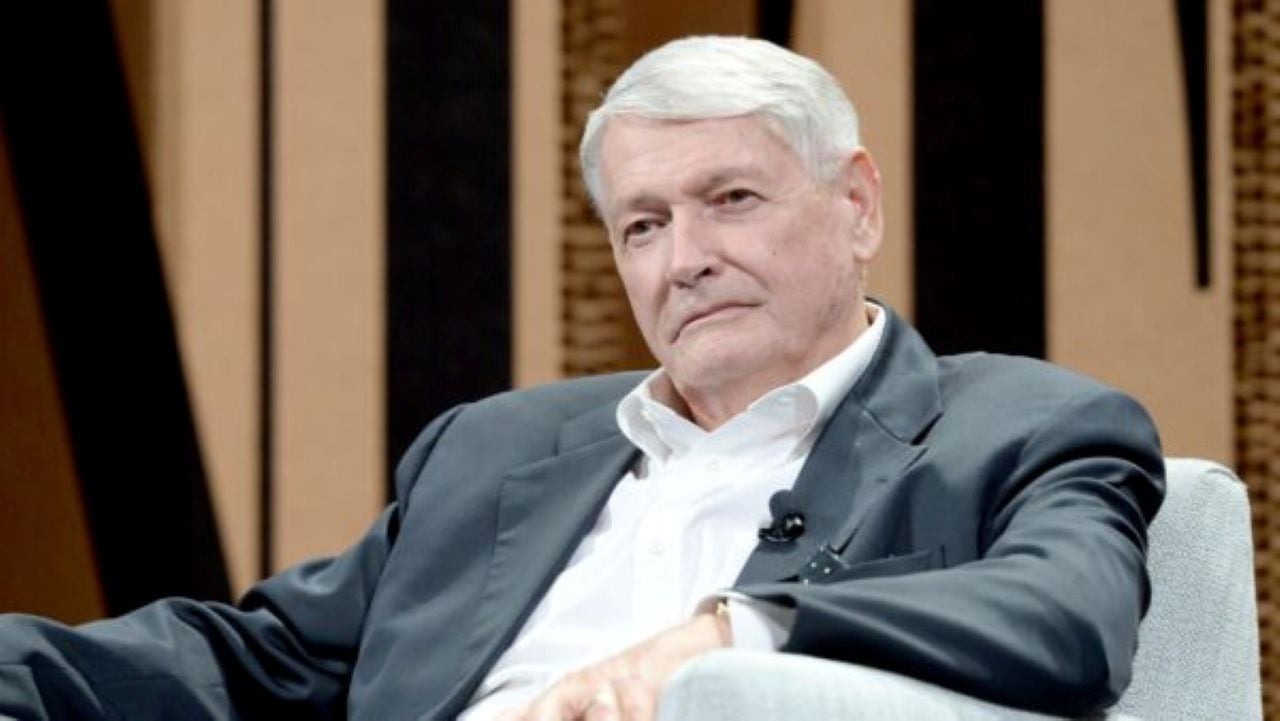
Malone, who founded Liberty Media in 1999, will step down from his role as chairman emeritus but remain a senior advisor.
A special committee of the Liberty Media board, chaired by Chase Carey, explored and approved the transaction.
"The transaction better aligns John's voting power with his economic ownership of Liberty Media while avoiding the potential transfer of a significant voting position in Liberty Media to a third party in a transaction in which other Liberty Media shareholders would not participate," Carey said in a statement.
Liberty Media CEO Derek Chang declined to give details about the offers when asked on an earnings call with analysts.
"I continue to have great confidence in Liberty Media's management team and fully support them and Liberty Media's strategy," Malone said in a statement.
"The Transaction allows me to increase my economic ownership of Liberty Media while distributing voting power more broadly among Liberty Media's other shareholders," Malone added.
Board chair Robert Bennett said the move simplifies Liberty's capital structure.
"And will give us flexibility as we enter our next chapter," Bennett said.
"We look forward to continuing to benefit from John's counsel for years to come."

No holder of Liberty Media common stock now holds more than 9% of voting power.
Liberty Media's investments have shifted over the years, with Formula 1 and MotoGP as its main assets currently.
The company also authorized a rights plan through November 2027 to "promote stability" after the transaction.
The rights plan makes it harder for any person or group to acquire a significant voting position or obtain control of the company without board involvement.
Liberty Media specifically laid out the benefits of the transaction in its announcement.
It will "reduce the ability of the Malone Holders or successors thereof to exercise significant influence over matters submitted to Liberty Media's shareholders for a vote," the company said.
It will also "eliminate the risk that the Malone Holders' significant voting power could be transferred to a third party in a transaction in which other Liberty Media shareholders do not participate."
And it will "potentially broaden the institutional investor base in Liberty Media's shares."
Shares of Liberty Media Corporation — Liberty Formula One Series C (NASDAQ: FWONK) hit a new 52-week high during trading on Thursday, November 5, 2026.
The stock traded as high as $108.35 and last traded at $105.63, with a volume of 1,240,893 shares traded.
The stock had previously closed at $98.93.

Analysts have given the stock an average rating of "Moderate Buy" with six Buy and four Hold ratings, according to MarketBeat.
The average price target among analysts is $115.50.
Liberty Media's market capitalization stands at $23.77 billion.
The company has a PE ratio of 155.28 and a beta of 0.46.
The stock's 50-day moving average is $94.40 and its 200-day moving average is $92.01.
Liberty Media last reported quarterly earnings on Thursday, August 6, 2026.
The company reported earnings per share of $0.02, missing the consensus estimate of $0.24 by $0.22.
Revenue for the quarter was $934 million, compared to analysts' expectations of $952.78 million.
Several brokerages have recently issued reports on FWONK.
Zacks Research lowered the stock from a "strong-buy" to a "hold" rating on October 29, 2026.
Sanford C. Bernstein raised its price target from $115 to $119 and gave the stock an "outperform" rating on July 28, 2026.
UBS Group increased its price target from $104 to $110 and gave a "neutral" rating on August 7, 2026.
Wells Fargo & Company cut its price target from $105 to $96 and set an "equal weight" rating on September 29, 2026.
The super-voting stock structure was a hallmark of Malone's control over Liberty Media since its founding in 1999.
Super-voting shares typically carry multiple votes per share, allowing founders or early investors to maintain control even with a minority economic stake.
In this case, the Series B stock held by Malone gave him 48% of the voting power despite representing a much smaller portion of the company's total equity.
The transaction swaps those super-voting shares for low-vote or no-vote shares, aligning Malone's voting power with his actual economic ownership.
The move effectively ends the era of concentrated voting control that defined Liberty Media for nearly three decades.
Malone is widely regarded as a pioneer in media and cable industry consolidation, having built Liberty Media into a holding company with stakes in everything from cable television to sports rights.
Under his leadership, Liberty Media acquired a majority stake in Formula 1 in 2017 for approximately $4.6 billion.
The company later acquired MotoGP, adding another major motorsport property to its portfolio.
The transition comes as Liberty Media enters what the board calls its "next chapter" with a simplified capital structure.
The rights plan adopted through November 2027 provides an additional layer of protection against any sudden accumulation of voting power by outside parties.
Whether this restructuring leads to broader institutional investment remains to be seen, but the company has explicitly cited that as one of its goals.
For now, John Malone remains a senior advisor to the company he founded, with his voting power reduced but his economic stake potentially increased through the share swap.
Advertisement
You may also like
Prince Harry’s first UK trip after Thomas Markle’s abuse allegations
Prince Harry makes first UK appearance since Thomas Markle child abuse allegations. Prince Harry surfaced in the UK yesterday evening for the first time…
Cristiano Ronaldo Retires From Portugal National Team for Good
Cristiano Ronaldo, one of the greatest footballers in history, has announced his retirement from the Portugal national team. The 41-year-old forward made the announcement…
Sophie Cunningham Tells Theo Von Nothing Can Keep Him from God’s Love
Indiana Fever guard Sophie Cunningham told comedian Theo Von on his podcast that nothing a person does or doesn’t do can separate them from…
Caitlin Clark trading cards dwarf her first WNBA contract.
Two Caitlin Clark trading cards have sold for sums that make her first WNBA contract look like pocket change. The first major milestone arrived…
Rory McIlroy Hit With 2-Shot Penalty in Abu Dhabi
Rory McIlroy’s former Ryder Cup teammate Lee Westwood has pushed back against McIlroy and DP World Tour CEO Guy Kinnings after both accused LIV…
Conor McGregor Plans BKFC Move After Final UFC Fight
Conor McGregor has revealed that he will use his final UFC fight to announce a move to bare-knuckle fighting. The former two-division champion opened…