Nico Rosberg reveals the extreme sacrifices that beat Lewis Hamilton.
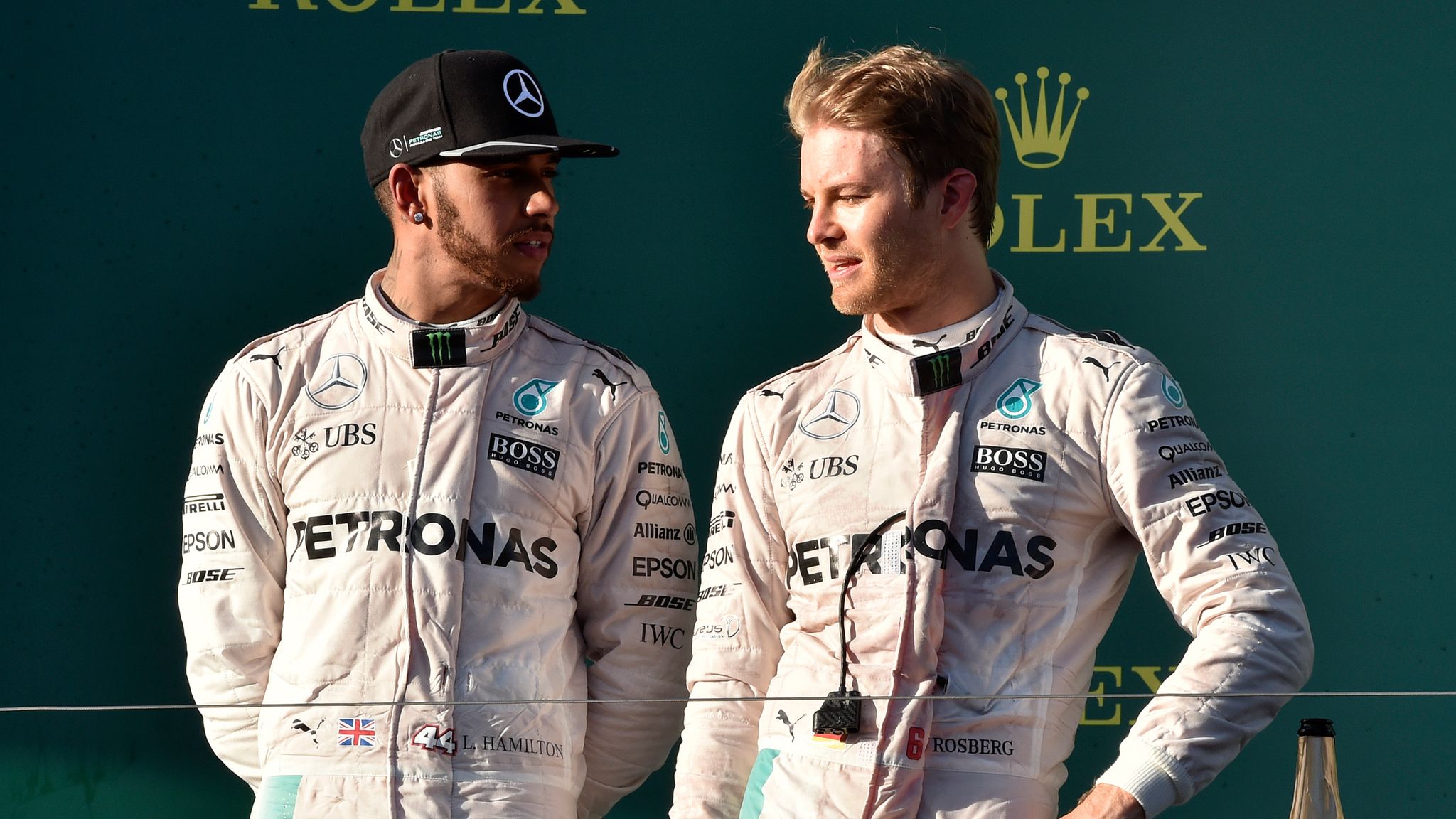
Nico Rosberg has revealed the extraordinary lengths he went to in order to beat Lewis Hamilton to the 2016 Formula 1 world championship.
The former Mercedes driver described removing paint from his helmet, giving up cycling and undergoing intensive psychological training as part of his pursuit of the title.
Speaking on Formula 1’s Beyond The Grid podcast, Rosberg admitted he believed Hamilton possessed greater natural ability.
He said meticulous preparation offered his best chance of beating his teammate.
“My superpower was preparation,” Rosberg said.
He described Hamilton as the greatest driver in terms of natural ability.
Rosberg estimated that reducing his body weight by one kilogram could improve his lap time by approximately three-hundredths of a second.
Over a Grand Prix distance, that could save around two seconds.
His attention extended to his equipment.

Rosberg removed the paint from his helmet after discovering it added approximately 80 grams.
He also stopped cycling, despite it being his favourite endurance exercise, to reduce muscle mass in his legs.
Rosberg claimed the change saved another 600 grams.
These marginal gains, he believed, were essential to competing against Hamilton.
The German pointed to the 2016 Japanese Grand Prix as an example of those small improvements making a difference.
He secured pole position at Suzuka by just 0.013 seconds before winning the race.
That victory extended his championship advantage to 33 points.
Although the precise contribution of his weight-saving measures cannot be established, Rosberg believes his meticulous preparation helped him gain an advantage over his rival.
Mental preparation proved equally important.

Rosberg also revealed that he undertook two hours of psychological training every other day.
He worked with a specialist on meditation, visualisation and techniques designed to improve concentration under pressure.
He described the sessions as more demanding than his physical training.
This was particularly true when confronting the fear of making mistakes during important races.
Rosberg also deliberately avoided discussing the world championship in media interviews.
He believed that focusing on the title could distract him from his immediate objectives.
Instead, he concentrated on preparing for individual races.
He maintained that approach even as the championship battle intensified.
The 2016 season was one of the most intense title fights in recent F1 history.

Rosberg and Hamilton were teammates at Mercedes, which had dominated the sport since the introduction of V6 hybrid turbo engines in 2014.
The two drivers had a famously strained relationship, dating back to their karting days.
Their rivalry reached its peak in 2016, with several on-track incidents including a first-lap collision at the Spanish Grand Prix that took both cars out.
Hamilton entered the season as the defending champion, having won the title in 2014 and 2015.
Rosberg had finished as runner-up in both those years.
The German had never won a world championship before 2016.
He announced his retirement from Formula 1 just days after clinching the title in Abu Dhabi.
That decision shocked the motorsport world.
Rosberg said at the time that he did not want to go through another season of such intensity.

The revelations on the Beyond The Grid podcast offer the fullest account yet of what that intensity demanded.
Rosberg’s approach to weight reduction went beyond typical driver fitness regimes.
Formula 1 drivers already maintain extremely low body fat levels to minimise overall car weight.
The combined weight of driver and seat must meet a minimum regulation figure, with any excess adding to the car’s total mass.
Every kilogram of extra weight costs approximately three-tenths of a second per lap around an average circuit.
Rosberg’s focus on removing paint from his helmet and reducing leg muscle mass shows how far he was willing to go.
The psychological training he described is less common among drivers.
While many F1 drivers work with mental coaches, Rosberg’s commitment to two-hour sessions every other day is unusual.
He described confronting the fear of making mistakes as one of the hardest parts.

That fear is amplified when racing against a seven-time world champion like Hamilton.
Hamilton’s natural speed and racecraft have been widely praised by rivals and teammates.
Rosberg’s admission that he saw Hamilton as the greater talent makes his own achievement more remarkable.
He won the title by five points, one of the smallest margins in championship history.
The final race in Abu Dhabi saw Hamilton deliberately slow the pace in an attempt to back Rosberg into chasing cars, a tactic that led to controversy and subsequent rule changes.
Rosberg held on to secure the position he needed.
His single championship may stand alone, but the methods he used to win it are now fully documented.
The paint removal, the cycling sacrifice, the psychological sessions — all of them were aimed at closing a gap that Rosberg believed was primarily about talent.
Whether those measures were decisive or not, they reveal the mindset of a driver who refused to accept second place.
The 2016 title remains the only drivers’ championship won by a Mercedes driver other than Hamilton during the team’s dominant era.
Hamilton went on to win four more titles with Mercedes, taking his total to seven.
Rosberg never raced in Formula 1 again.
He has since worked as a television pundit and commentator for Sky Sports F1 and other broadcasters.
His account of the 2016 season provides a rare inside look at what it takes to beat one of the greatest drivers in the history of the sport.
Advertisement
You may also like
Isaac Cruz Stops Angel Bravo And Immediately Calls Out Ryan Garcia Right In The Ring
Moments after securing a stoppage victory over Angel Bravo, Isaac 'Pitbull' Cruz seized the microphone to issue an immediate challenge to Ryan Garcia. The…
Garth Brooks Reveals How Ed Sheeran's Tour Posters Inspired His 2027 Irish Trek
Garth Brooks was inspired to bring his concerts directly to regional fans across Ireland after noticing tour posters for Ed Sheeran during his 2022…
Taylor Swift Vienna Doc Spotlights Fans Who Supported Swifties And Met Austria’s Chancellor
Beyond the thriller narrative of the thwarted attack, the 'Taylor Swift Wien' documentary follows three local female fans who organized psychological support for fellow…
Garth Brooks Unveils 10 Irish Tour Dates for 2027, Fulfilling a Long-Held Personal Dream
Garth Brooks officially unveiled a 10-concert Irish tour for May and June 2027, explaining that returning to play for Irish audiences has been a…

Anna Leigh Waters Dec 9 Araneta Coliseum Showcase Reveals Schedule And Pass Details
Fans looking to see Anna Leigh Waters live at the Smart Araneta Coliseum on Wednesday, December 9, can begin securing passes through a tiered…
Paco Valcarcel Promised Denzel Bentley A Defense, Then Retracted It Over Zuffa Signing
WBO president Paco Valcarcel reportedly posted a tweet granting Denzel Bentley a voluntary defense, only to retract the statement and install Yoenli Hernandez as…