Pennsylvania Denies Juan Vazquez Owner's License Over 2022 Death of Shining Colors
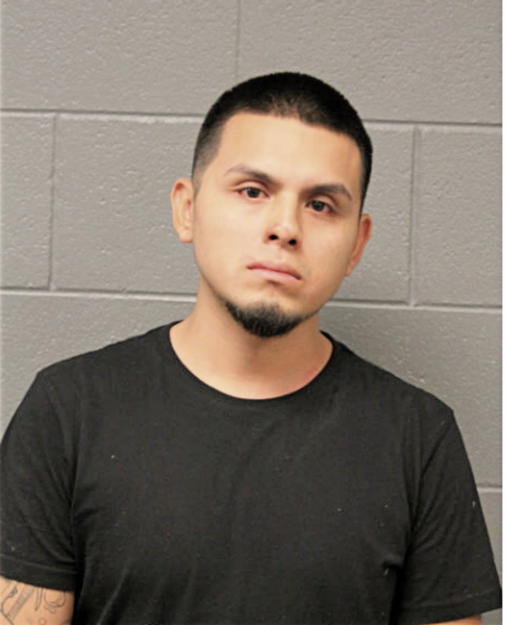
Pennsylvania regulators based their recent denial in part on a 2022 disciplinary ruling involving the death of the mare Shining Colors.
The Pennsylvania State Horse Racing Commission formally rejected an application submitted by Juan Carlos Vazquez for an owner's license.
The regulatory decision arrived in an official ruling issued on Oct. 23, 2026.
Vazquez had originally submitted his paperwork seeking an owner's permit in the commonwealth on May 28, 2026.
Regulators concluded that Vazquez failed to establish that he met the legal standards required to hold an occupational license in the state.
Specifically, the commission stated that Vazquez had not demonstrated the necessary character to participate as a licensed thoroughbred owner.
The panel cited his extensive disciplinary history across multiple racing jurisdictions in its formal denial.
According to the commission, Vazquez failed to satisfy the burden of proof required of applicants seeking regulatory approval.
THE SHINING COLORS RULING
The denial revives scrutiny surrounding one of the most severe equine welfare rulings in recent Pennsylvania racing history.
That case centered on Shining Colors, a racing mare who suffered catastrophic health issues while under Vazquez's care.
On July 7, 2022, Pennsylvania stewards issued a major disciplinary ruling against Vazquez following the mare's death.
Shining Colors was euthanized after she was transported from Belmont Park in New York to Parx Racing in Pennsylvania.
At the time of the journey, the mare was suffering from severe chronic laminitis.
Laminitis is a painful and debilitating foot condition that affects the sensitive laminae inside an equine hoof.
Moving a horse with advanced laminitis can cause extreme physical distress and worsen irreversible tissue damage.
State regulators investigated the circumstances surrounding the mare's transport and subsequent death.
Following their inquiry, the commission concluded that Vazquez’s conduct in caring for the horse was "grossly negligent, cruel, and abusive."
Stewards handed down a fine of $5,000 alongside a sweeping suspension of his trainer's license.
That suspension barred Vazquez from training racehorses in Pennsylvania through Jan. 26, 2025.
THE STANDARD OF CHARACTER
Vazquez served out the duration of that multi-year penalty before seeking a path back into Pennsylvania racing.
Rather than applying to train, Vazquez submitted an application on May 28 to obtain an owner's license.
State racing commissions maintain distinct licensing categories for different occupational roles within the racing industry.
An owner's license permits an individual to register racehorses, enter them into races, and receive purse earnings.

A trainer's license governs the day-to-day conditioning, stabling, veterinary care, and race-day handling of thoroughbreds.
Despite the difference between the two licenses, applicants in Pennsylvania must satisfy strict character requirements.
The commission ruled that Vazquez failed to demonstrate by clear and convincing evidence that he is a person of good character, honesty, and integrity.
Regulators also determined that he failed to prove his prior activities would not pose a threat to the public interest.
Furthermore, the state found that granting him a license would undermine the effective regulation and control of horse racing.
The commission expressed those conclusions in blunt language within the Oct. 23 ruling.
"Mr. Vazquez has presented no supporting information to refute the conclusion that his previous conduct and corrupt actions remain a threat to the public interest, the effective regulation and control of horse racing and to the health, safety and welfare of the racing participant and the racehorse," the ruling stated.
The panel added that his presence at any licensed racetrack under its jurisdiction remains detrimental to the sport and the betting public.
THE APPEAL PROCESS
Vazquez did not allow the Oct. 23 denial to stand uncontested.
He submitted a timely administrative appeal to contest the commission's determination.
On Oct. 30, 2026, the commission issued a separate ruling granting his request for an appeal.
That procedural order gives Vazquez the opportunity to present arguments against the denial before state racing officials.
However, the order granting the appeal does not overturn any findings from the Oct. 23 decision.
It also does not issue an owner's license to Vazquez while the appeal remains pending.
Under administrative law, an appeal permits an applicant to review the record and challenge regulator determinations.
Until that legal process concludes, Vazquez remains unlicensed to own horses within the Commonwealth of Pennsylvania.
ACTIVITY IN WEST VIRGINIA
While Pennsylvania has barred him from operating within its borders, Vazquez has remained active elsewhere in the Mid-Atlantic region.
His original Pennsylvania training suspension officially expired on Jan. 26, 2025.
Three months later, on April 27, 2025, Vazquez resumed his training career at Mountaineer Casino, Racetrack & Resort in West Virginia.
Equibase performance records show that he has operated exclusively at Mountaineer since returning to the sport.
At the West Virginia track, Vazquez has entered horses as both a licensed trainer and a registered owner.
His operation has maintained a busy racing schedule over the course of the 2026 racing season.
Through the first 10 months of 2026, Vazquez recorded 243 starts as a trainer at Mountaineer.

Those starts yielded 44 victories for his training stable.
During the same 10-month span, Vazquez logged 116 starts as an owner at the West Virginia oval.
His ownership entries produced 18 wins over that timeframe.
Yet his ongoing operations in West Virginia did not sway regulators across the state line in Pennsylvania.
The Pennsylvania commission held that his rehabilitation in another jurisdiction did not erase the gravity of his past conduct.
A LONG REGULATORY TRAIL
The 2022 ruling involving Shining Colors is not the only blemish on Vazquez's official racing record.
His regulatory history contains dozens of sanctions issued across two decades of participation in thoroughbred racing.
The racing database ThoroughbredRulings.com lists 135 records relating to violations by Vazquez dating back to 2006.
Some single violations generate multiple separate entries in that database when stewards issue orders modifying or rescinding previous penalties.
Nevertheless, the total record reflects repeated regulatory scrutiny across multiple racing jurisdictions.
Private racetrack operators have also previously exercised their rights to exclude him from their premises.
In 2015, track management at Delaware Park instituted a ban barring Vazquez from their property.
That same year, track management at Laurel Park in Maryland also barred him from their grounds.
Racetracks possess private property rights that allow management to deny stall space or entry to individuals independent of commission rulings.
THE WIDER WELFARE DEBATE
The denial in Pennsylvania highlights the ongoing tension between animal welfare standards and licensing reinstatement in American racing.
State racing commissions operate as separate sovereign entities, each enforcing its own licensing criteria and administrative regulations.
A license suspension in one state often triggers reciprocal action in others during the active penalty window.
Once a suspension period ends, individual jurisdictions evaluate reinstatement applications based on their own statutory criteria.
Pennsylvania regulators made clear that serving out the 2022 suspension was not sufficient on its own to warrant a new license.
The commission maintained that animal welfare findings carry enduring consequences for anyone seeking entry into the sport.
By citing the cruelty determination from the Shining Colors case, regulators signaled that past treatment of racehorses will continue to dictate occupational eligibility.
Vazquez will now present his case through the formal appeal granted by the commission on Oct. 30.
Should past animal cruelty findings permanently disqualify an individual from owning racehorses in any state?
Advertisement
You may also like
Maya Jama Reveals Backstage Secrets After Sneakily Drinking Co-Stars' Alcohol On Celebrity Traitors
Maya Jama revealed that she and castmate Joanne McNally regularly swiped and drank their co-stars' unused nightly drink rations while filming The Celebrity Traitors.…
Zoom Diallo Answers Preseason Critics With 12 Points After Deactivating Social Media
After facing harsh online criticism and deactivating his Instagram following exhibition struggles, guard Zoom Diallo answered doubters with 12 points and drew booming cheers…
LIV Golf Set To Be Wound Down In Bankruptcy Court After $300M Rescue Deal Collapses
LIV Golf is set to be wound down in bankruptcy court after private credit firm BC Partners abruptly pulled out of a $300 million…
The Chicks Flash Expletive Anti-Trump Props Onstage During Election Night Concert
During an Election Night performance at the Dolby Theatre in Los Angeles, The Chicks brandished red fans reading an expletive aimed at Donald Trump…

Lee Westwood Reveals Why He Sacrificed European Ryder Cup Captaincy For LIV Golf
Before jumping to LIV Golf, Lee Westwood approached DP World Tour chief executive Guy Kinnings about captaining Team Europe in Italy, only to walk…
Sophie Cunningham Sparks Controversy After Publicly Questioning Why WNBA Players Miss Open Layups
Impending free agent Sophie Cunningham has sparked debate after publicly discussing missed open layups on her podcast, a topic critics frequently use to dismiss…