Pennsylvania Regulators Reject Juan Vazquez's Owner's License Bid Over Integrity Concerns
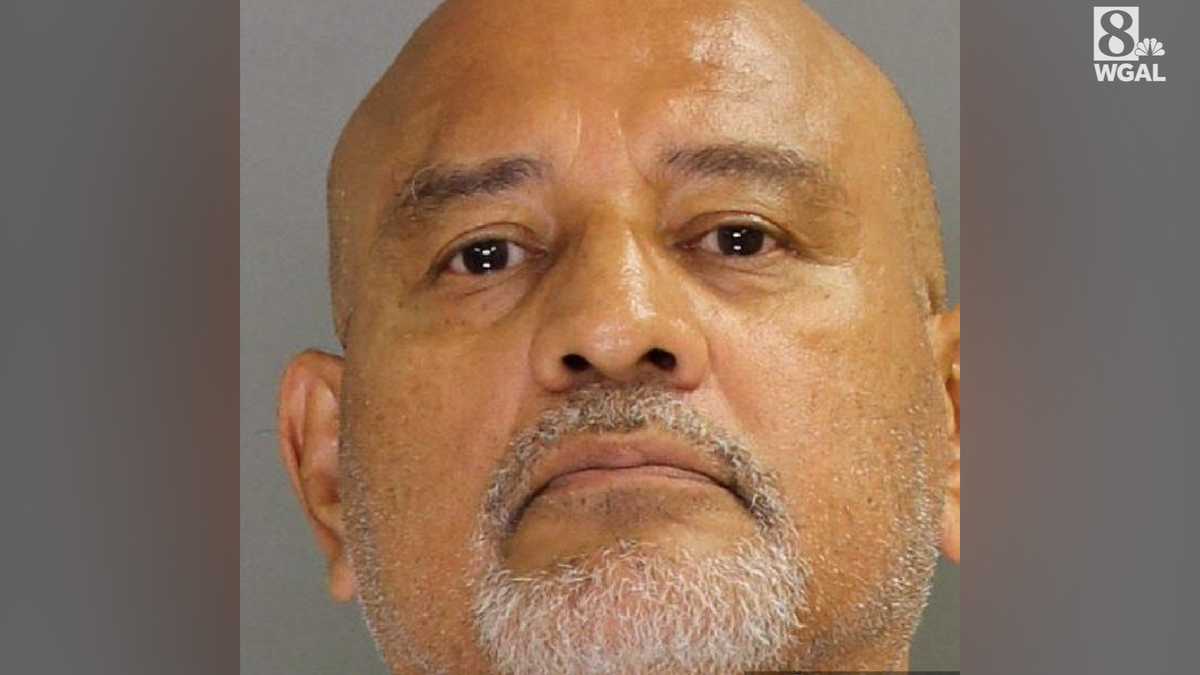
On Oct. 23, 2026, Pennsylvania racing regulators rejected Juan Carlos Vazquez's application for an owner's license after finding he failed to show good character or integrity.
The decision formally halted his attempt to re-enter Pennsylvania racing following an extensive disciplinary suspension.
Regulators concluded that Vazquez could not meet the strict integrity thresholds required of licensed participants in the Commonwealth.
The ruling followed a formal review of his background and multiple past violations across the Thoroughbred racing industry.
THE LICENSING DECISION
Vazquez originally submitted his application for a Pennsylvania owner's license on May 28.
State racing regulators spent months reviewing the application alongside his extensive regulatory record.
The commission determined that Vazquez failed to establish that his return would align with the sport's standards.
In its formal ruling, the commission cited his history of racing violations across multiple jurisdictions.
Regulators determined that he "failed to demonstrate by clear and convincing evidence that he is a person of good character, honesty, and integrity, or that his prior activities will not pose a threat to the public interest or the effective regulation and control of horse racing."
Under state administrative guidelines, applicants bear the legal burden of proving their fitness to hold an occupational license.
Pennsylvania regulators found no evidence presented by Vazquez sufficient to overcome his disciplinary record.
THE CASE OF SHINING COLORS
The denial stems directly from a severe disciplinary case dating back to 2022.
On July 7, 2022, Pennsylvania stewards issued a major ruling against Vazquez.
That disciplinary order suspended his training license through Jan. 26, 2025.
Stewards also assessed a $5,000 civil fine against the trainer.
The penalty followed an investigation into the death of Shining Colors, a racing mare under his care.
Vazquez shipped the mare from Belmont Park in New York to Parx Racing in Pennsylvania.

At the time of transport, Shining Colors was suffering from severe chronic laminitis.
Laminitis is a painful and debilitating hoof condition that severely impairs an equine athlete's ability to stand or walk.
Following her arrival at Parx Racing, the mare's condition was deemed terminal, and she was euthanized.
The commission investigated the circumstances surrounding the mare's shipment and medical care.
Regulators ultimately concluded that Vazquez's conduct was "grossly negligent, cruel, and abusive."
The resulting suspension removed Vazquez from the backstretch and racing surfaces in Pennsylvania for more than two years.
RETURN TO RACING IN WEST VIRGINIA
Vazquez's Pennsylvania suspension officially reached its conclusion on Jan. 26, 2025.
With the suspension expired, Vazquez looked to resume his career on the track outside Pennsylvania.
On April 27, 2025, he returned to active competition at Mountaineer Casino, Racetrack & Resort in West Virginia.
Official Equibase records show that his professional operations remained focused exclusively at Mountaineer.
Vazquez operated in West Virginia in a dual capacity, conditioning horses while also entering them under his own ownership.
Through the first 10 months of 2026, he compiled an active record on the track.
Vazquez recorded 243 starts and 44 victories as a licensed trainer during that span.
As an owner, his stable made 116 starts and secured 18 wins at Mountaineer in the same period.
Despite his regular racing presence in West Virginia, his standing remained compromised in Pennsylvania.
THE COMMISSION REJECTS THE BID
Vazquez's active status in West Virginia did not persuade regulators in Pennsylvania to welcome him back.
State racing commissions maintain sovereign authority over who is granted the privilege of participating within their borders.

Pennsylvania officials evaluated his May 28 owner's application in light of his past conduct at Commonwealth tracks.
Regulators ruled that the passage of time had not mitigated the severity of his prior actions.
"Mr. Vazquez has presented no supporting information to refute the conclusion that his previous conduct and corrupt actions remain a threat to the public interest, the effective regulation and control of horse racing and to the health, safety and welfare of the racing participant and the racehorse," the Oct. 23 ruling stated.
The regulatory panel focused heavily on the broader perception and security of the sport.
"Mr. Vazquez's presence at a licensed racetrack under the jurisdiction of the Commission remains detrimental to the best interest of horse racing and to the integrity of the betting public in the Commonwealth."
With those findings recorded, the state officially denied his bid to race horses as an owner.
THE APPEAL PROCESS
Vazquez moved swiftly to contest the administrative denial.
He submitted a formal appeal challenging the commission's Oct. 23 decision within the permitted regulatory window.
In a subsequent ruling dated Oct. 30, the Pennsylvania commission officially granted his request for an appeal.
Granting an appeal is a standard procedural step within administrative law.
The decision ensures that Vazquez will receive a formal forum to argue his case.
However, the Oct. 30 order does not overturn the commission's underlying findings.
It also does not grant him an owner's license while the matter remains under review.
Vazquez remains unlicensed to own racehorses within Pennsylvania until any subsequent proceeding alters the ruling.
A LONG HISTORY OF VIOLATIONS
The commission's findings sit atop a documented record of regulatory issues spanning two decades.
According to the industry regulatory database ThoroughbredRulings.com, Vazquez has accumulated 135 ruling records.
Those entries date back to 2006 across multiple racing jurisdictions.

Industry databases frequently log multiple entries for a single underlying violation.
This occurs when stewards or commissions issue amended, modified, or rescinded rulings during administrative reviews.
Nevertheless, the total demonstrates extensive scrutiny from racing officials throughout his career.
Pennsylvania regulators weighed that cumulative history when deciding whether Vazquez met character and integrity standards.
TRACK EJECTIONS AND JURISDICTIONAL POWERS
Vazquez's regulatory friction has not been confined solely to state commission hearings.
Private track management has also previously stepped in to bar him from racing facilities.
In 2015, track management at Delaware Park banned Vazquez from entering their property.
That same year, management at Laurel Park in Maryland enacted a similar ban against him.
Private racetrack operators hold the legal right to exclude individuals under common law property rights.
Those exclusions occurred independently of state commission licensing actions.
Together with his official regulatory penalties, these private actions have shaped Vazquez's standing throughout the Mid-Atlantic region.
THE STAKES FOR STATE RACING INTEGRITY
State racing commissions operate to safeguard both equine welfare and the trust of wagering fans.
Equine fatalities and animal welfare violations draw intense public scrutiny to racing regulation.
The commission's ruling emphasizes that licensing is a privilege rather than an automatic entitlement.
Even after serving a multi-year suspension, an individual must convince regulators that past corrupt actions will not recur.
Pennsylvania regulators made clear that equine safety remains central to the Commonwealth's licensing decisions.
By denying the owner's license, the commission reaffirmed that animal welfare findings carry long-term consequences.
Vazquez must now prepare his arguments for the pending appeal process granted on Oct. 30.
Do you support the commission's firm stance that his presence remains detrimental to the integrity of horse racing?
Advertisement
You may also like

Guy Kinnings Refuses 2027 Exemptions For LIV Golfers, Forcing An Absolute Choice Between Tours
DP World Tour chief Guy Kinnings confirmed that previous exemption deals for LIV players are over, warning that anyone signing up for LIV 2.0…
Isack Hadjar Slams George Russell Over Mexico GP Clash Before Taking Blame For Qualifying
Isack Hadjar plummeted to the back of the grid on Lap 1 of the Mexico City Grand Prix after being spun out by George…
Inside Draymond Green’s Ejection After Tangling With Khaman Maluach And Dillon Brooks
Draymond Green was ejected early in the third quarter after wrapping his arms around Phoenix Suns center Khaman Maluach to pull him down and…
Collin Gosselin Exposes Reality TV Filming and Details Disturbing Abuse Allegations Against Mom Kate
In his memoir In the Shadow of Eight, Collin Gosselin alleged that his reality TV upbringing on Jon & Kate Plus 8 involved forced…
Insiders Reveal Bill Belichick's Family Relieved By Hudson Breakup, But Business Worries Remain Deep
Bill Belichick's family is reportedly relieved that his romantic relationship with Jordon Hudson has ended, but their worries are far from over regarding her…

Jon Rahm Fires Opening 65 In Abu Dhabi As Collapsing LIV Golf Faces Liquidation
Just as LIV Golf's proposed LIV 2.0 relaunch collapsed following the withdrawal of BC Partners, Jon Rahm returned to action by firing a seven-under-par…