Temecula wineries: Your ultimate holiday guide
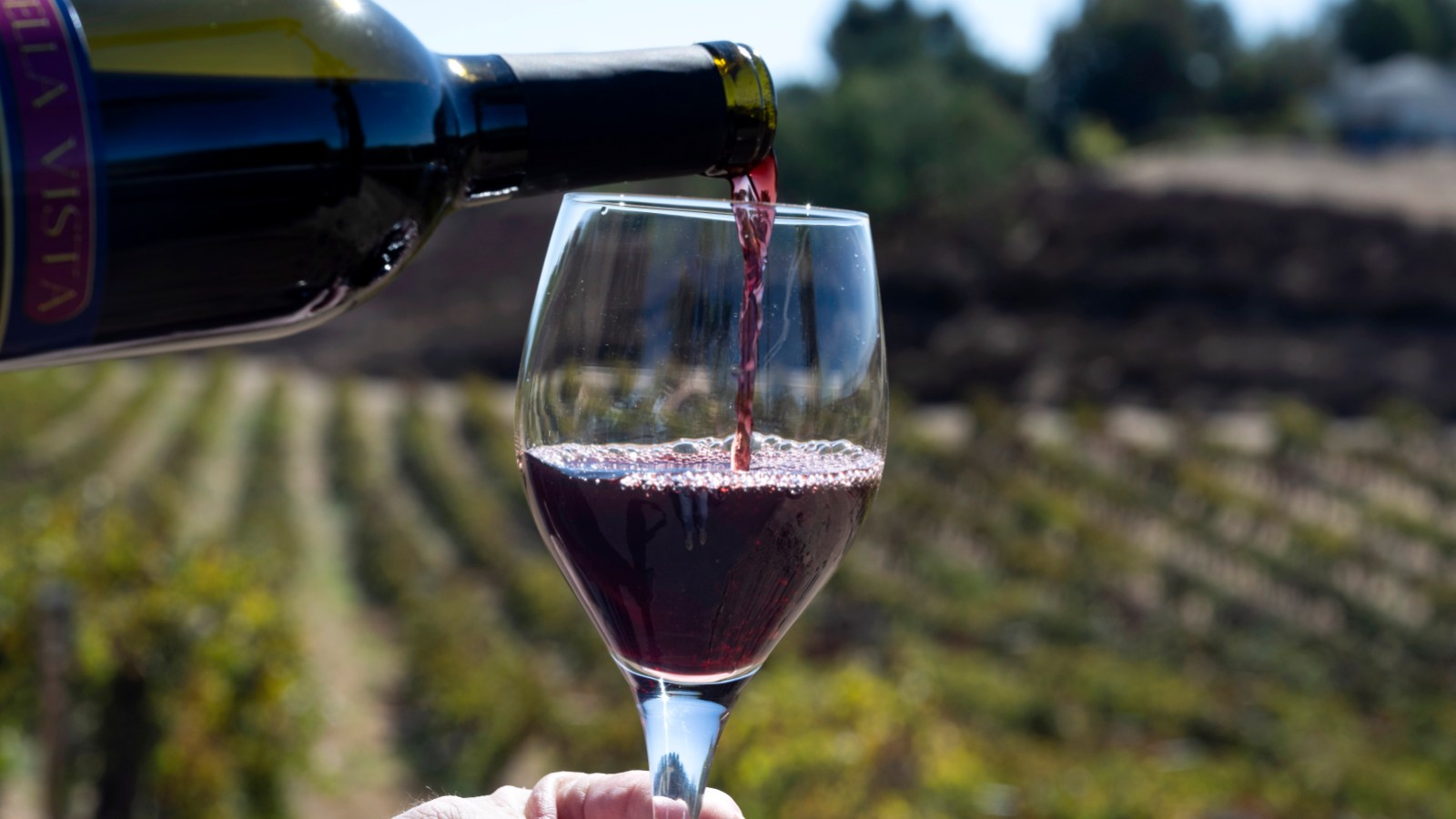
The Temecula Valley Wine Association has 47 members.
That number includes a mix of family-owned and operated wineries and larger properties.
Devin Parr, a representative for the association, called it a nice balance.
For visitors, that means choices.
Whether you want a quiet tasting room or a full-blown holiday party, there is a winery for you.
Dorian Linkogle, co-owner of Briar Rose Winery, said it plainly.
“There’s a winery in wine country for every person, whether they want ambiance or they’d like a festive party environment,” Linkogle said.
Briar Rose itself appeals to a very specific niche.
The winery occupies a house built by a Disney Imagineer.
It was designed to resemble Snow White’s cottage from the 1937 animated classic.
“Many, many, many adult Disney fans,” Linkogle said of the clientele.
Location is a big part of what makes Temecula Valley Wine Country work.
This part of southern Riverside County sits between the Mojave Desert and the coast.
That positioning creates warm days and cool nights.
Jon McPherson, master winemaker at South Coast Winery, explained the geography.
“Temecula has a unique positioning in its relationship to the coast and to the desert,” McPherson said in a phone interview.

“We have the Rainbow Gap, which is part of the end of the Santa Rosas that kind of open up going toward the coast such that there’s a great drainage coming into the valley from the Pacific Ocean.”
That drainage helps grapes thrive.
Phil Baily of Baily Winery & Vineyard put it even more simply.
“Almost everything grows around here,” Baily said.
Baily Winery & Vineyard was founded in 1986.
Baily calls it the oldest continuously owned family vineyard in the Temecula area.
The modern era of winemaking in Temecula began earlier, in 1968.
That year, Cilurzo Vineyard planted its first grapes.
That property at 41220 Calle Contento is now called Bella Vista Winery.
According to Visit Temecula Valley, the city’s official tourism organization, the timing lined up with a larger development.
Baily said Kaiser Aetna Development Company purchased the historic Vail Ranch around the same time and began developing it.
The company hired a consultant from UC Davis.
The consultant’s conclusion, according to Baily, was: “This is the perfect place for premium wine grapes. You can make great wine here.”
Callaway Vineyard & Winery, founded in 1976, put Temecula wine on the map in a notable way.
Queen Elizabeth II was served one of its white Rieslings at a luncheon in New York.
Today, the region’s wineries are gearing up for a year-end round of parties and special events.

Each property offers a different experience.
Some focus on the festive party environment Linkogle mentioned.
Others aim for a more personal, educational visit.
Linkogle described Briar Rose’s approach as being for “a wine connoisseur that’s looking for a personal experience and a wine education.”
The Temecula Valley Wine Association’s 47 members give visitors plenty to explore.
For holiday visitors, the key is knowing what kind of experience you want.
If you want a lively gathering with music and crowds, look for the larger properties.
If you want a quiet tasting with detailed explanations of the wine-making process, seek out the smaller family-owned spots.
Briar Rose offers a third option: a themed experience for Disney fans.
The Snow White cottage design draws visitors who want a fairy-tale backdrop with their wine.
The weather in November and December is another factor.
Temecula’s position between desert and coast means mild winter days.
Cool evenings make for comfortable conditions indoors and out.
Many wineries have indoor tasting rooms, patios, and event spaces.
Holiday parties often include live music, food pairings, and special wine releases.
McPherson’s description of the Rainbow Gap explains why the grapes here produce distinctive wines.
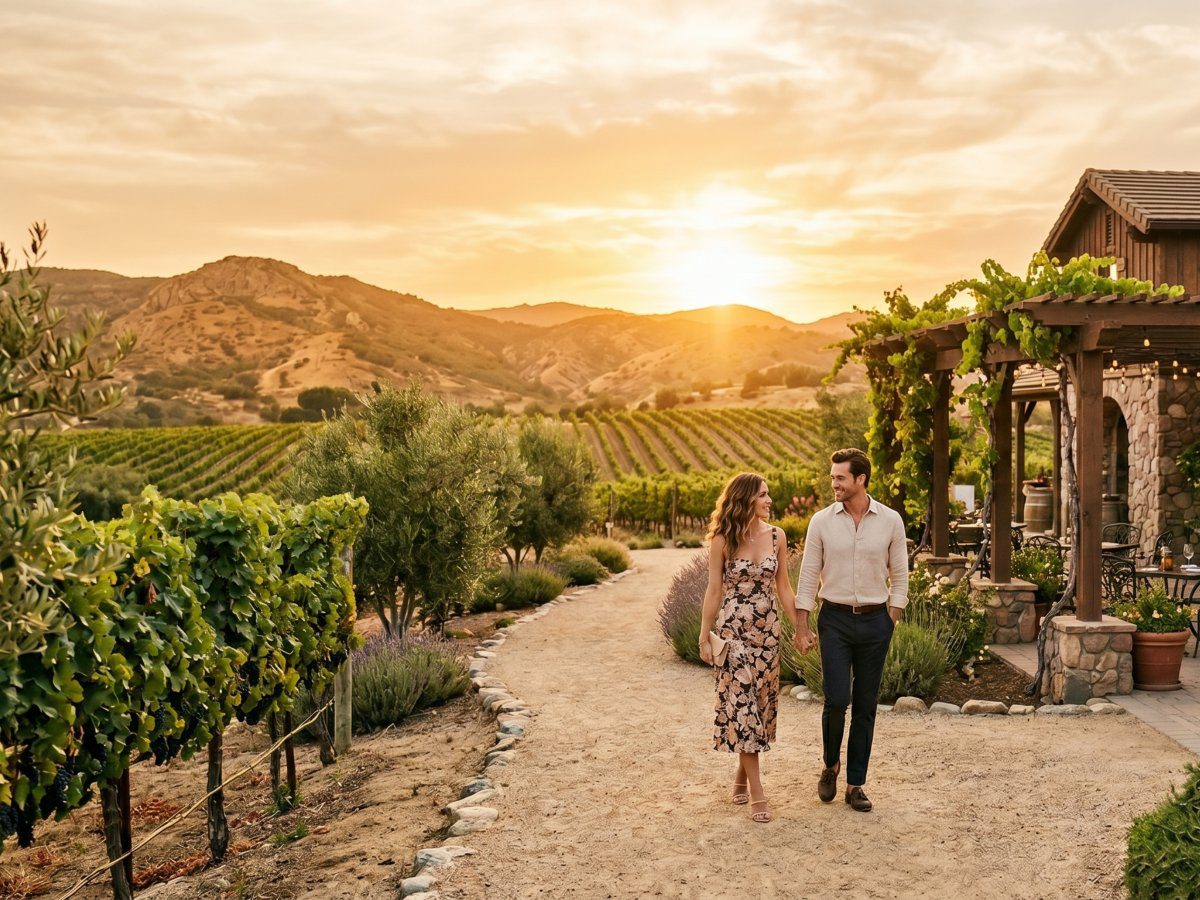
The cool air drainage from the Pacific Ocean moderates temperatures.
That allows grapes to develop complex flavors while retaining acidity.
The result is a range of wines, from bold reds to crisp whites.
Baily’s comment about almost everything growing in the region reflects the diversity of varietals planted.
The 1968 planting by Cilurzo Vineyard started a wave.
By the time Callaway served the Queen, Temecula was already gaining a reputation.
Today, the region competes with California’s more famous wine regions like Napa and Sonoma.
But it offers a different vibe.
Temecula Valley Wine Country is less crowded and more accessible from Southern California population centers.
It is about an hour’s drive from San Diego and about 90 minutes from Los Angeles.
That makes it a popular day trip or weekend destination.
For the holiday season, many wineries require reservations for tastings and events.
Visitors should check individual winery websites for hours, holiday closures, and special event schedules.
The Temecula Valley Wine Association’s website lists all 47 member wineries with links.
Some wineries offer food pairings or have restaurants on site.
Others allow visitors to bring their own picnic food to enjoy on the grounds.

Briar Rose, with its Disney-themed cottage, is one of the more unique stops.
Linkogle’s comment about adult Disney fans suggests the winery leans into the nostalgia factor.
But every winery in the valley has its own story.
Baily Winery & Vineyard’s history as the oldest continuously owned family vineyard gives it a sense of tradition.
South Coast Winery, where McPherson works, is one of the larger properties with a full resort and spa.
The variety means visitors can plan a route that hits several different styles in one day.
Many wineries are located close to each other along Rancho California Road and surrounding streets.
Tasting rooms are typically open from late morning to late afternoon.
Holiday events often extend into the evening.
For first-time visitors, the advice from growers is consistent: do your research and pick a few wineries that match your preferences.
The region’s history, from the UC Davis consultant’s assessment to the Queen’s luncheon, adds depth to the experience.
McPherson’s explanation of the Rainbow Gap gives visitors a scientific reason for the quality of the wine.
Baily’s comment about the consultant’s conclusion reinforces the idea that Temecula was destined for wine.
The holiday season is a particularly good time to visit because the wineries are decorated and the atmosphere is festive.
Some properties host tree-lighting ceremonies, carolers, or special holiday menus.
Others keep it simple with a fire pit and a glass of mulled wine.

The 47 members of the wine association ensure there is something for every budget and taste.
Tasting fees vary, but many wineries waive the fee with a purchase.
Bottle prices range from affordable to premium.
The region also produces olive oil, cheese, and other local products that make good holiday gifts.
For those who want a guided experience, several companies offer wine tours with transportation.
That allows visitors to taste without worrying about driving.
The tours often include stops at multiple wineries and a lunch break.
For independent visitors, designated drivers are a smart choice.
The holiday season in Temecula Valley runs from late November through December.
Events are concentrated on weekends, but many tasting rooms are open daily.
The weather in late fall is generally mild, with daytime temperatures in the 60s and 70s.
Evenings can be cool, so a jacket is a good idea.
The combination of good wine, pleasant weather, and holiday spirit makes Temecula Valley a strong choice for a seasonal outing.
Whether you are a wine connoisseur looking for education, a Disney fan seeking a fairy-tale setting, or someone who just wants a festive party, the region delivers.
As Linkogle put it, there is a winery for every person.
The growers are ready.
The grapes are ready.
The only question is which winery you will visit first.
Advertisement
You may also like
Stewart’s Protégé Breaks Silence on NASCAR Truck Return
Tony Stewart’s return to the NASCAR Truck Series has brought an old question back into the spotlight: could his most accomplished dirt-track protégé follow…
Taurasi’s Hall of Fame Induction Adds to UConn’s Storied Legacy
Diana Taurasi has added another honor to a career already stuffed with them. The Women's Basketball Hall of Fame announced on Thursday, November 5,…

Usyk Calls Out Benavidez as Wilder Faces Opetaia
Oleksandr Usyk has confirmed plans to return to cruiserweight for a blockbuster showdown with David Benavidez. The Ukrainian legend revealed his intentions during Canelo…

Paige Bueckers Wins 2026 WNBA Dawn Staley Leadership Award
Paige Bueckers has added another honor to her rapidly growing basketball résumé, but this one has almost nothing to do with what she does…

AOC’s new 4K 180Hz QD-OLED monitor is a game changer
AOC has launched the U32G5D gaming monitor in China. It is a 31.5-inch 4K QD-OLED display with a 180Hz refresh rate. The panel uses…

Skip Bayless destroys LeBron James' Lakers legacy as completely overrated
Skip Bayless emphatically tore down LeBron James' entire eight-year tenure with the Los Angeles Lakers on ESPN's First Take. He called the stretch 'completely…