Yankees warned Luis Garcia plan risks Ben Rice's future
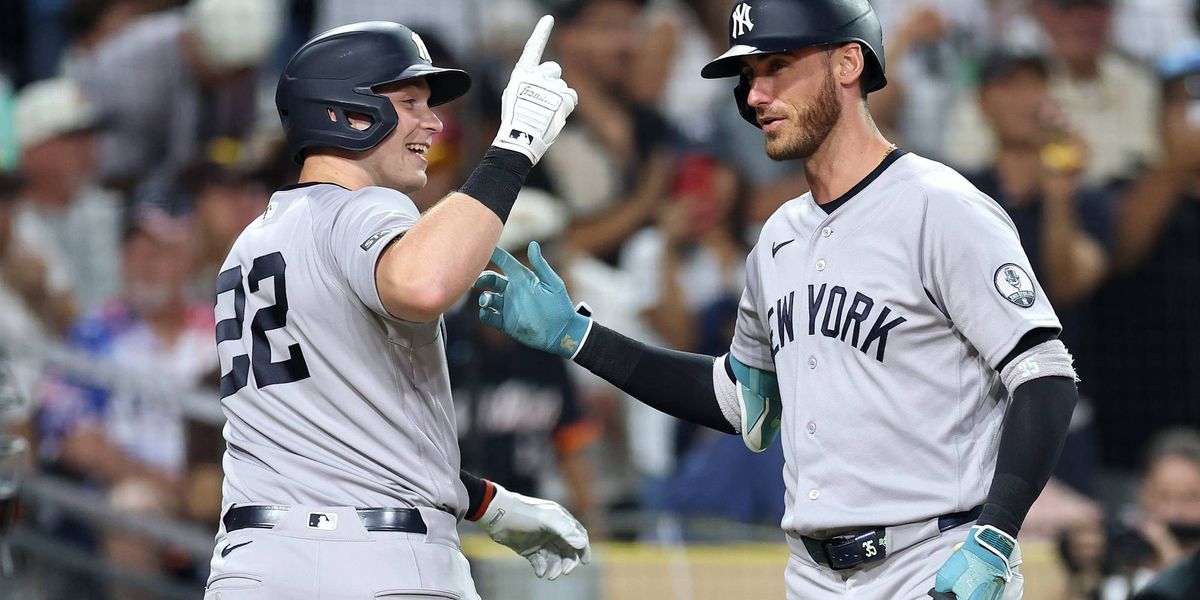
The New York Yankees enter the 2026-27 offseason with a roster that produced 71 home runs from two left-handed bats.
Ben Rice hit 41 of those.
Luis García Jr. hit the other 30.
Both players have a strong case for everyday playing time in 2027.
The difficulty is figuring out where to put them on the field.
Rice established himself as the Yankees' primary first baseman during a breakout season.
García, acquired from the Washington Nationals at the 2026 trade deadline, played first base after arriving in New York.
But his natural position for most of his major league career was second base.
The Yankees are now weighing a plan that would move García back to second base.
That would allow both Rice and García to start in the same infield.
It would also keep two productive left-handed bats in a lineup that sorely needed run production after Aaron Judge missed most of the season with an injury.
The idea sounds good on paper.
But baseball columnist Joel Sherman issued a direct warning about the defensive risks involved.
Sherman made his case on an episode of "The Show."
He argued that the Yankees should explore trading García rather than penciling him in at second base.
Sherman acknowledged that García's offense is real.
"I know the Yankees want the bats," Sherman said.
"But this idea that Luis Garcia Jr. is going to go play second base, like Washington knows him best, and to come off the second base, put him on first base, and suddenly his offense blossomed."
"If I were the Yankees, I would be trying very hard to trade Luis Garcia Jr., not because he's a bad player."
"I think it's quite the opposite."
"I think the offense is real."
"You have Ben Rice."
"I don't think they're just eating Stanton's money."
The warning centers on a fundamental question: can García handle the defensive demands of second base again?
García spent the majority of his time in Washington at second base before the Nationals moved him to first.
His offensive numbers improved after the position change.
In 2026, García finished the regular season batting .277 with 30 home runs, 92 RBIs and an .830 OPS.
Rice, meanwhile, hit .264 with 41 homers, 97 RBIs and an .897 OPS.
Combined, the two players accounted for 71 home runs and 189 RBIs.
Those numbers explain why the Yankees want both in the lineup.
But keeping every bat can require a compromise elsewhere.
The Yankees must decide whether an infield arrangement that maximizes offense would also withstand the defensive tests that exposed New York during its October elimination by the Tampa Bay Rays.
The Yankees were swept by the Rays in the American League Division Series.
It was a disappointing end to a season that saw Rice emerge as the team's most consistent offensive threat.
Rice was blunt in his reaction to the postseason exit.
"As far as I'm concerned, it's a failure since we weren't able to get the job done," Rice said, according to MLB.com.
"It's on to next year, unfortunately."
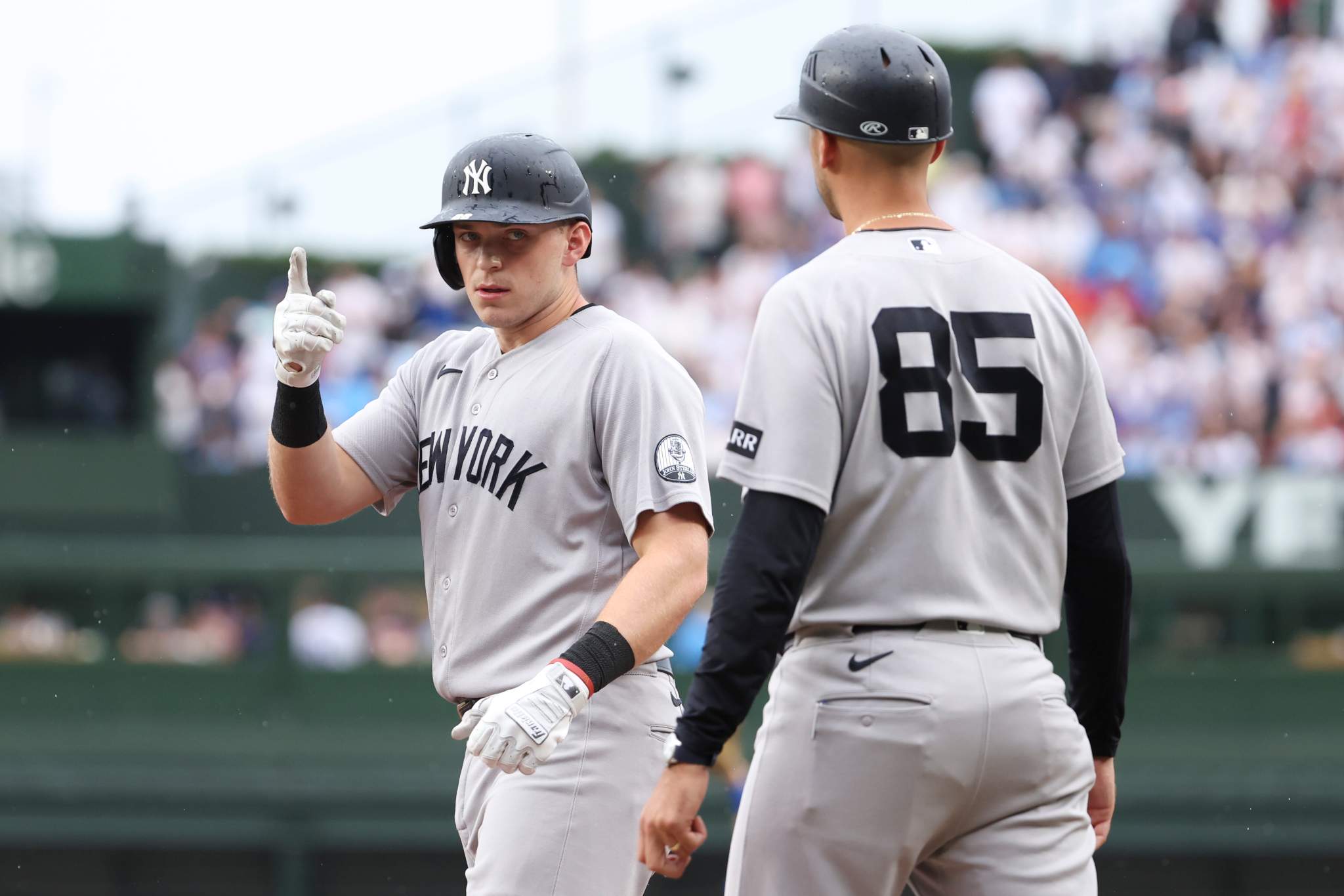
"They outplayed us, plain and simple."
"They outpitched us, outhit us."
"It's really that simple."
Despite the team's failure, Rice's individual performance in the postseason was historic.
He hit four home runs and drove in nine runs across five games.
His OPS for the postseason was 1.605.
He homered twice in AL Wild Card Game 1 against the Boston Red Sox.
He repeated the feat in Game 2 of the ALDS against Tampa Bay.
Rice became the first player in Yankees history to record two multihomer games in a single postseason.
According to baseball analyst Paul Hembekides, Rice recorded 21 of the Yankees' 61 total bases during the postseason.
That accounted for 34 percent of the team's total bases.
It was the highest share by any individual whose team played at least five games in a single postseason.
Rice's regular season numbers were also strong enough to earn him a Silver Slugger Award nomination.
He is a finalist at the designated hitter position.
His competition includes Yordan Alvarez, who is the favorite to win the American League MVP award after flirting with the Triple Crown.
Rice was not named one of the three AL MVP finalists.
The finalists are Bobby Witt Jr. of the Kansas City Royals, Yordan Alvarez of the Houston Astros, and Junior Caminero of the Tampa Bay Rays.
Yankees fans reacted sharply to the omission.
"Bobby Witt over Ben Rice, this list is so unserious," one fan wrote.
Witt hit .281 with 18 home runs and 54 RBIs in 143 games.
Rice hit .264 with 41 home runs and 97 RBIs in 154 games.
Witt's defensive excellence at shortstop likely secured his spot in the final three.
The Yankees' decision on García and Rice now adds another layer to an already complicated offseason.
Giancarlo Stanton remains under contract as the primary designated hitter.
Aaron Judge could require occasional time away from the outfield without leaving the batting order.
Jazz Chisholm Jr. is a free agent, creating uncertainty at second base.
That vacancy is what makes the García plan seem inviting.
But Sherman's warning suggests the Yankees should think twice before committing to a defensive alignment that could weaken the infield.
The Yankees' front office has not publicly commented on the plan.
No trade discussions involving García have been confirmed.
The team has not indicated whether it will pursue the second base experiment or explore other options.
For now, the debate remains inside the organization.
What is clear is that Rice has earned a central role in the Yankees' future.
His 41 home runs and his postseason performance make him a cornerstone piece.
The question is whether the Yankees can build an infield around him and García without sacrificing the defense that cost them in October.
The answer will shape the 2027 roster.
And it will determine whether the Yankees' best left-handed bats play together or apart.
Advertisement
You may also like
Luka Doncic just broke a legendary Michael Jordan record
Luka Doncic has surpassed one of Michael Jordan's most legendary early-season scoring records. The Los Angeles Lakers superstar accomplished the feat during Wednesday night's…
Curt Cignetti blasts ESPN for SEC bias in CFP rankings
Curt Cignetti claims ESPN’s SEC bias influences CFP rankings. The Indiana Hoosiers head coach did not hold back during his weekly radio show Wednesday…
Wembanyama matches Wilt Chamberlain in historic NBA feat
Victor Wembanyama did something only Wilt Chamberlain has done before. The San Antonio Spurs center put up 52 points, 24 rebounds, and 8 blocks…

Live Nation Settles Lawsuit Over Fan Injury at Luke Bryan Show
Luke Bryan and Billboard are taking a walk down memory lane, as part of the Billboard Chart History series. Since the start of his…
Darius Butler Exposes Justin Herbert’s Shocking 2026 Interception Record
Will Anderson Jr.: Justin Herbert is playing out of his mind. That is what the Houston Texans defensive end told reporters on Wednesday, ahead…
Boxing legend reveals Tyson Fury injury that may cancel Anthony Joshua fight
A boxing legend has publicly suggested that Tyson Fury is carrying an injury serious enough to cancel his December 11 fight with Anthony Joshua.…