Your Potted Perennials Need to Be Hardy Two Zones Colder

Perennials Spending Winter in Pots Need to Be Hardy Two Zones Colder Than the Yard, Penn State Master Gardeners Say.
A perennial that sails through winter in the ground can die in a pot on the same patio.
Penn State Extension Master Gardeners say the reason is the roots: in a container, they can drop to the same temperature as the winter air.
So plants meant to stay outdoors in pots should be hardy two zones colder than the yard around them.
For gardeners with pots of hostas, grasses or coneflowers still sitting on the deck, early November is the time to decide where each one spends the winter.
Why Pots Freeze Harder Than Beds.
Hardiness zones describe plants growing in the ground.
Barb Ryan, a Penn State Master Gardener in Lehigh and Northampton counties, explains in an October 2026 guide that a plant's zone rating applies to the plant in the ground.
Roots in a container can match the winter air temperature, she writes.
That leaves them far more exposed, which is why she advises going "two zones colder" for container plants.
Illinois Extension horticulture educator Ken Johnson makes the same point in a piece on overwintering potted plants.
"Most plants' roots are far less cold-hardy than their above-ground parts," he writes.
Soil in the ground insulates them, while the small amount of growing medium in a pot gets much colder.
In central Illinois, which sits in zone 5 or 6, he says perennials left outdoors in pots should be hardy to zone 3 or 4.
Option One: Bury the Pot.

The simplest fix is to put the ground back around the roots.
Ryan suggests burying the pot in the garden and covering it with soil or mulch.
Iowa State University Extension's Aaron Steil calls it heeling in: dig a hole, set the pot in and backfill around it as if planting.
"Soil is a good insulator and will protect the plant's roots from extreme cold," he writes in an Iowa State answer on perennials that can't be planted before winter.
Timing matters.
Steil says to heel in plants after they go dormant but before the soil freezes, typically within a few weeks after the first frost.
Dig them back up once the extreme cold has passed and the soil has thawed, usually several weeks before the last spring frost.
Colorado State University's PlantTalk recommends sinking the pot in a protected spot and mulching 6 to 12 inches deep with straw, leaves, hay or shredded bark.
Check moisture monthly through winter.
Option Two: An Unheated Garage or Shed.
Moving pots indoors works only if the space stays cold but above freezing.
An unheated garage, shed or basement can work, but temperatures must not drop below about 20 degrees Fahrenheit for extended periods.
The key is to keep roots from freezing solid while also preventing them from warming up enough to break dormancy.
If the space gets too warm, plants may start growing early and then die when moved back outside.
Option Three: The Cold Frame or Protected Corner.

A cold frame — a box with a glass or plastic top — can provide enough insulation for plants in milder zones.
Place the cold frame against a south-facing wall for extra warmth from the building.
Cover the pots with leaves or straw inside the frame.
Open the lid on sunny days to prevent overheating.
Which Plants Survive Best.
Perennials rated for zone 4 or colder are the safest bets for overwintering in pots in most of the northern United States.
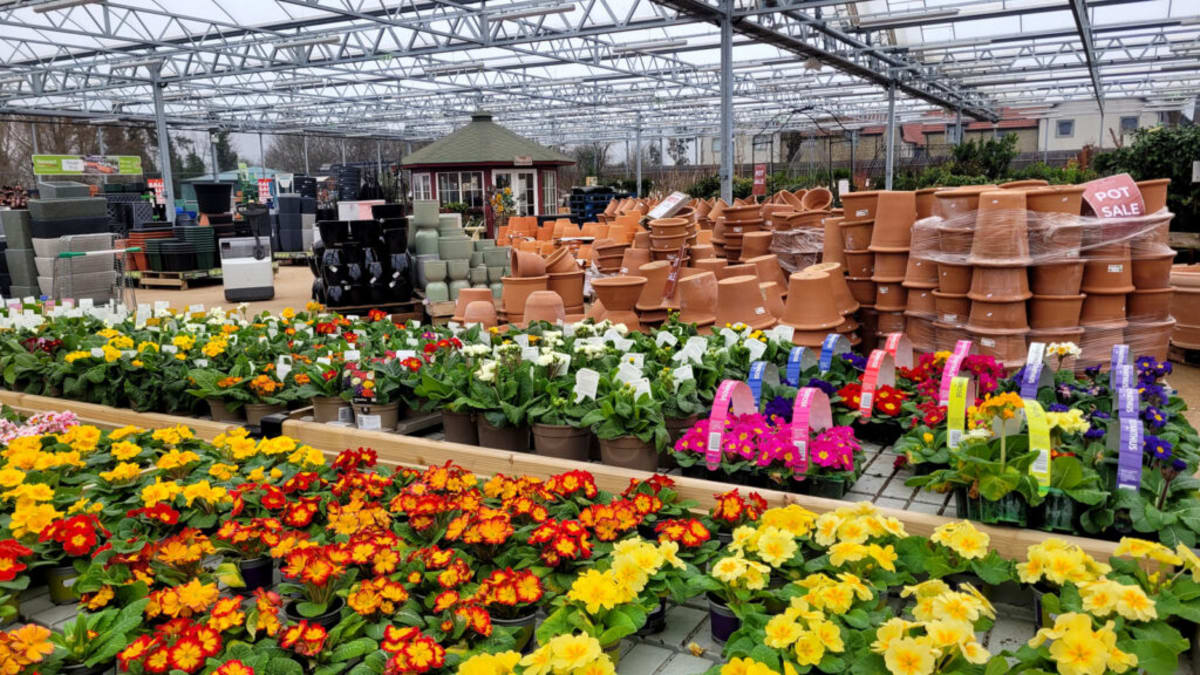
Hostas, daylilies, sedum, coneflowers and ornamental grasses are among the most commonly overwintered container plants.
But even these need protection: a pot left above ground in zone 5 will expose roots to temperatures equivalent to zone 2 or 3.
A hosta rated for zone 3 may survive; one rated for zone 5 likely will not.
What Happens If You Do Nothing.
Roots that freeze and thaw repeatedly can crack, rot or dry out.
Even if the top of the plant looks fine in spring, the root system may be too damaged to support new growth.
By mid-summer, the plant may collapse or fail to flower.
Some gardeners try to save money by leaving pots out, but the cost of replacing dead plants often exceeds the effort of winter protection.
Background on Hardiness Zones.

The USDA Plant Hardiness Zone Map divides North America into 13 zones, each representing a 10-degree Fahrenheit difference in average annual minimum temperature.
Zone 3 has winter lows of -30 to -40 degrees Fahrenheit.
Zone 5 has lows of -10 to -20 degrees.
Zone 7 has lows of 0 to 10 degrees.
Most perennials sold in the United States carry a zone rating on their label.
A plant rated for zone 4 can survive winter lows of -20 to -30 degrees when planted in the ground.
In a pot, that same plant may only survive to zone 6 temperatures — 0 to -10 degrees.
The Penn State recommendation of two zones colder means a gardener in zone 5 should choose plants rated for zone 3 or colder for outdoor containers.
Timing Is Everything.
Early November is the cutoff for most of the northern United States.
Plants need to be dormant before being moved to a protected location.
If moved too early, they may continue growing and become vulnerable to cold damage.
If moved too late, the soil in the pot may already be frozen solid, making it impossible to bury or move without breaking the pot.
The first hard frost — when temperatures drop below 28 degrees Fahrenheit for several hours — is the signal that dormancy has begun.
After that, gardeners have a window of a few weeks before the ground freezes.
What the Experts Say.
Barb Ryan, Penn State Master Gardener: "A plant's zone rating applies to the plant in the ground — roots in a container can match the winter air temperature."
Ken Johnson, Illinois Extension horticulture educator: "Most plants' roots are far less cold-hardy than their above-ground parts."
Aaron Steil, Iowa State University Extension: "Soil is a good insulator and will protect the plant's roots from extreme cold."
These three experts agree on the core problem: the small volume of soil in a pot provides almost no insulation.
A plant that survives -20 degrees in the ground may die at 0 degrees in a container.
The two-zone rule is not a guess — it is based on the difference between ground temperature and air temperature in winter.
Common Mistakes.
Wrapping pots in bubble wrap or burlap helps only a little.
The insulation must go around the roots, not just the pot.
Moving pots into a heated garage or basement is worse than leaving them outside.
Warmth breaks dormancy, and the plant uses up its energy reserves before spring.
Watering too much in winter can cause root rot.
Watering too little can cause roots to dry out and die.
The soil should be moist but not wet when the plant goes into winter storage.

What to Do Right Now.
Check the zone rating on every potted perennial.
Compare it to your local zone minus two.
If the plant is not hardy enough, choose one of the three protection methods.
If you cannot bury the pot or move it to an unheated space, consider treating the plant as an annual and replacing it next spring.
Some gardeners dig a trench and place pots side by side, then cover the whole trench with mulch.
Others group pots together in a protected corner and surround them with bales of straw.
The method matters less than the principle: roots must stay cold but not frozen solid, and they must not break dormancy early.
The Bottom Line.
A potted perennial needs two zones more cold tolerance than the same plant in the ground.
That means a gardener in USDA zone 5 should only keep perennials rated for zone 3 or colder in outdoor containers over winter.
Early November is the deadline to act.
After the ground freezes, the options shrink to moving pots into an unheated garage or accepting the loss.
Penn State Master Gardeners, Iowa State Extension and Illinois Extension all give the same advice: bury the pot, move it to an unheated space, or lose the plant.
The choice is straightforward, but the window is closing.
Advertisement
You may also like

Reds Get Major Update on Elly De La Cruz Trade
The Cincinnati Reds have received a new update on the Elly De La Cruz trade situation. A report from Chris Landers of FanSided outlines…
Charles Barkley’s blunt take on Wemby’s insane game says it all
Charles Barkley's reaction to Victor Wembanyama's unreal performance says everything you need to know. During Wednesday night's NBA game between the Dallas Mavericks and…

Luke Bryan & Megan Moroney to Headline Coastal Country Jam 2027
Coastal Country Jam is returning to Huntington Beach in 2027 with Luke Bryan and Megan Moroney headlining the SoCal beachside country festival. Activated Events,…
Watch Dallas Stars vs Blue Jackets Live Free on TV
NHL.LIVE: Dallas Stars vs Columbus Blue Jackets Live Free NHL Games On TV Channel Nov 6.2026. The Dallas Stars face the Columbus Blue Jackets…
Church Downs picks: Expert predictions for Friday, Nov 6
Churchill Downs Horse Racing Picks and Predictions Today for Friday, November 6. Mr. Ed has returned to his regular twice-a-week VSiN beat after a…

Garcia Exposes LIV Golf’s ‘Good, Bad and Ugly’ After Quitting
The PGA Tour and DP World Tour now have an obvious decision to make with the likes of Sergio Garcia and Lee Westwood. Garcia,…