Adam Silver’s 40-Minute NBA Game Idea Sparks Fierce Debate Over Protecting Stars Versus Integrity
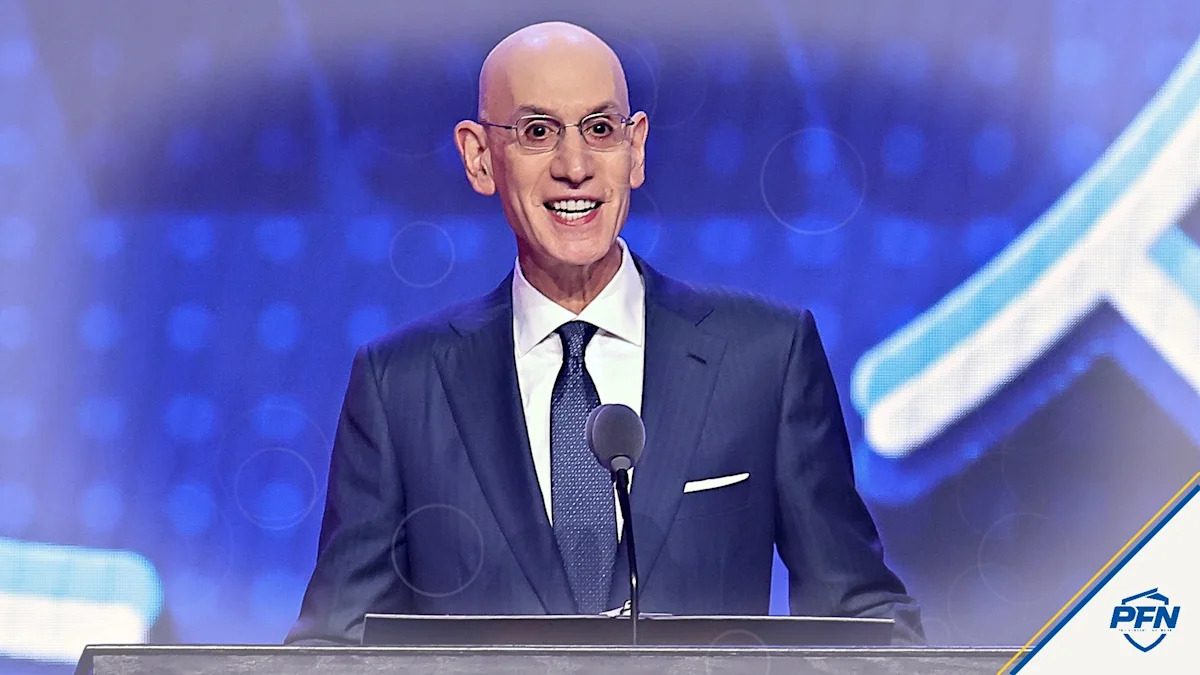
With stars like Anthony Edwards and Tyrese Haliburton already sidelined early in the season, Commissioner Adam Silver is seriously exploring cutting NBA games down to 40 minutes to match international basketball.
The health of the league's elite talent has returned to the forefront of basketball discussions.
Silver is actively weighing whether a shorter clock can provide a real remedy for physical attrition.
The logic behind the proposal rests on a simple calculation of court time.
Fewer minutes on the hardwood naturally means less physical strain on the human body over an arduous campaign.
Supporters view the potential change as a direct path to keeping marquee names healthy and available.
Yet the concept of slicing eight minutes off standard regulation play has generated intense pushback.
Critics argue that altering the foundational length of a game threatens the very integrity of professional basketball.
For many fans and analysts, the move feels like an unnecessary compromise of the sport's identity.
SHAVING MINUTES VERSUS TRADITION
Standard NBA regulation play has lasted 48 minutes throughout modern league history.
By contrast, international basketball governed by FIBA relies on 40-minute games divided into four 10-minute quarters.
Adopting the international format would represent one of the most radical structural shifts the NBA has ever seen.
Over the course of an 82-game campaign, cutting eight minutes per contest would remove 656 total minutes of playing time for each team.
That reduction equates to nearly 14 full 48-minute games erased from the court each year.
Advocates believe that lighter workload could dramatically limit soft-tissue strains and catastrophic breakdowns.
However, skeptics question whether reducing in-game minutes actually addresses the root causes of modern player fatigue.
Detractors also worry about how a shorter clock would distort historical statistics, records, and traditional benchmarks.
The debate has quickly divided observers into opposing philosophical camps.
Some prioritize preserving player availability by any practical means, while others insist the sport must protect its classic structure.
STEPHEN A. SMITH OFFERS AN ALTERNATIVE

Prominent commentators have wasted little time voicing their opposition to Silver's 40-minute concept.
Stephen A. Smith made it clear that he does not view shorter games as the proper answer for player durability.
Smith rejected Silver's pitch directly while discussing the matter on his YouTube channel.
Instead of trimming the game clock, Smith argued that the league should address travel and scheduling density.
"I think the priority should be eliminating as many back-to-back games as possible," Smith said.
Back-to-back sets have long been criticized by trainers and athletes as prime danger zones for player injuries.
Despite ongoing efforts to improve scheduling efficiency, consecutive game nights remain a routine fixture for every franchise.
NBA teams still face an average of 14.2 back-to-backs during the 2026–27 season.
Certain franchises across the league carry an even heavier burden, playing as many as 16 back-to-backs.
Smith believes targeting those grueling turnarounds would do far more for recovery than shortening individual games.
THE RESTRICTIONS ON PLAYER REST
The league office has already taken steps to soften the physical demands of the calendar in recent years.
The NBA successfully eliminated grueling four-games-in-five-nights stretches from its regular-season schedule.
At the same time, the league has clamped down on arbitrary resting policies that keep stars off the floor.
Under the NBA's Player Participation Policy, teams are barred from casually resting their biggest names at will.
Franchises generally cannot sit two designated star players in the same game without securing an approved exception.
Nationally televised broadcasts receive even greater scrutiny under the guidelines.
Star players are broadly expected to be suited up and available when the league takes center stage on national television.
The policy does allow exemptions for documented medical injuries and verified personal circumstances.
Approved rest restrictions are also permitted based on advanced age, extensive career workload, or a history of serious injuries.
These strict measures have left organizations caught between complying with league mandates and safeguarding player health.

BILL SIMMONS CONDEMNS THE SCHEDULE
While Smith focused on back-to-backs, other media figures have directed sharper criticism toward the league's top executive.
The Ringer founder Bill Simmons launched a scathing critique of Silver on Tuesday's episode of "The Bill Simmons Podcast."
Simmons argued that the 82-game slate itself is outdated and dangerous to athletes.
Rather than shaving eight minutes from games, Simmons advocated for slashing the schedule down to 70 regular-season contests.
He placed the blame directly on Silver and team ownership for failing to enact meaningful reform.
“Listen, I don’t know how many times I’ve talked about this on the pod about the schedule and about how this, to me, is just inexcusable and semi-reprehensible that whoever is in charge of the league, which I think is Adam Silver these days, that he doesn’t care,” Simmons said.
The veteran podcaster expressed frustration as star talents continue to suffer ailments early in the year.
“You’re ruining your players … and you’re hurting careers, and you’re shortening careers,” Simmons stated.
He insisted that there is wide consensus among competitors that the current slate is too demanding.
“This should be a 70-game season,” Simmons said.
“And if you talk to literally everybody who plays basketball, all of them would say the season needs to be shorter,” he added.
Simmons did not mince words when assessing the motives behind maintaining the status quo.
“And if you don’t do it at this point, I just think it’s negligent,” Simmons remarked.
“I really do,” he continued.
“I think it’s actual negligence and greed,” Simmons concluded.
THE 82-GAME HISTORY AND EXPANSION BILLIONS
The 82-game standard has defined the NBA regular season for well over half a century.
The league has maintained the 82-game framework consistently since the 1967-68 season.
Departures from that number have occurred only during seasons interrupted by labor disputes or major global disruptions.
Cutting 12 games from the schedule to reach a 70-game threshold would carry massive financial consequences for team owners.

Fewer games would mean fewer home dates, cutting directly into ticket revenue, arena concessions, and local broadcast value.
Simmons tied this reluctance directly to the league's impending expansion plans.
The NBA currently operates with 30 franchises across North America.
Adding teams in Las Vegas and Seattle would represent the league's first expansion since the Charlotte Bobcats entered in 2004.
Simmons pointed out the immense financial windfalls awaiting the 30 existing owners through incoming expansion fees.
“The question for me is, you’re gonna make all this money … that’s gonna be $9.5 billion for the [Las Vegas] expansion team … They’re gonna get a second thing from Seattle, which is gonna be $7.5 (billion), something like that,” Simmons said.
Those projected sums represent Simmons' personal estimates of the potential sale prices.
“So all these owners are getting, I don’t know, $16 billion in expansion fees,” he argued.
Outside reporting supports the notion of an unprecedented financial haul.
In March, the New York Post reported that expansion fees could land between $7 billion and $10 billion per new team.
Crucially, those multi-billion-dollar fees flow directly to current franchise owners rather than being divided with the players.
Simmons contended that these colossal windfalls give owners ample financial cushion to shorten the schedule without hurting their bottom line.
A DIVIDED FUTURE
The public reaction to Silver's 40-minute exploration underscores how difficult it is to balance modernization with historical standards.
Fans across social media have reacted with frustration, questioning whether altering the clock fundamentally degrades the viewing product.
Some commentators argue that cutting minutes treats the symptoms of wear and tear while avoiding the broader scheduling dilemma.
Shortening games to 40 minutes would preserve the lucrative 82-game inventory for television networks and ticket buyers.
Conversely, reducing the number of regular-season dates would protect the traditional 48-minute game while cutting into ownership profits.
As star athletes continue to miss time with injuries, Silver faces mounting pressure to deliver an effective solution.
The commissioner must decide whether preserving player health justifies altering the traditional parameters of professional basketball.
Would reducing NBA games to 40 minutes actually protect players from injuries, or would it damage the integrity of the sport?
Advertisement
You may also like

NBA champion Steve Kerr trolls Donald Trump with a savage jab
Golden State Warriors head coach Steve Kerr took a sharp, humorous jab at President Donald Trump during his Wednesday media availability, referencing a campaign…

John Cena’s subtle salute to Gunther after his return
John Cena made a surprise appearance on the Oct. 30, 2026 edition of WWE NXT. As he walked to the ring, he stopped in…

Braden Smith Makes NBA Debut With the Pacers
Purdue basketball alum Braden Smith makes NBA debut with the Pacers. Braden Smith, the former Purdue Boilermakers guard, stepped onto an NBA floor for…

Red Wings vs. Golden Knights Live Score and Game Updates
NHL.LIVE: Detroit Red Wings vs Vegas Golden Knights LIVE STREA.MS NHL Game On TV Coverage 6 Nov 2026. Puck drop is set for 7…

Business leaders face a tough choice with workplace monitoring.
Big Brother 2026 has officially crowned a winner. Rochelle took the title on the live final, hosted by AJ Odudu and Will Best on…

WWE Plans Huge 30th Anniversary Celebration for The Rock
WWE is planning to celebrate 30 years of The Rock this month. Plans include a commemorative championship belt. Special merchandise releases are also in…