Armenians edge closer to visa-free EU travel, official confirms
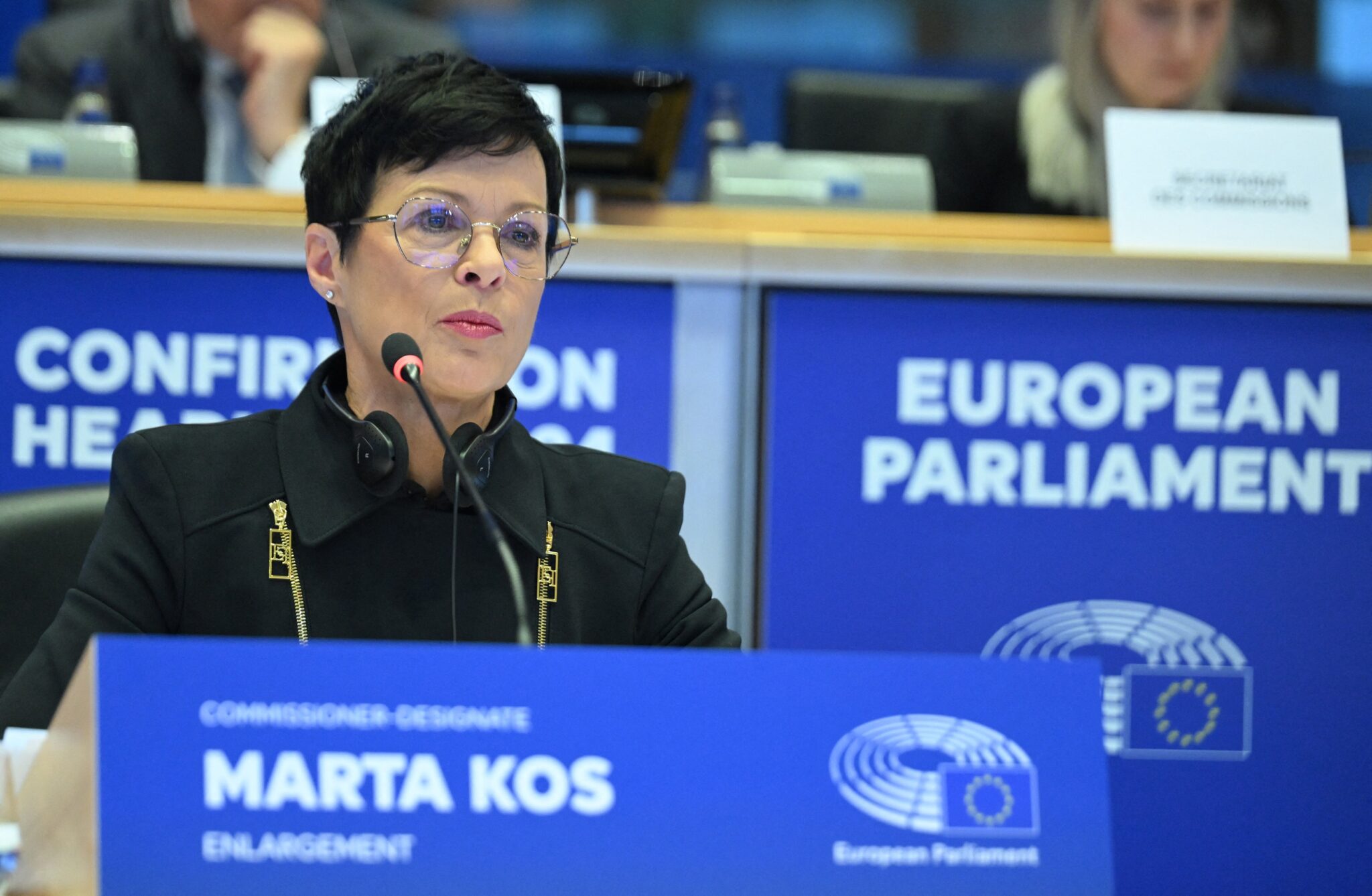
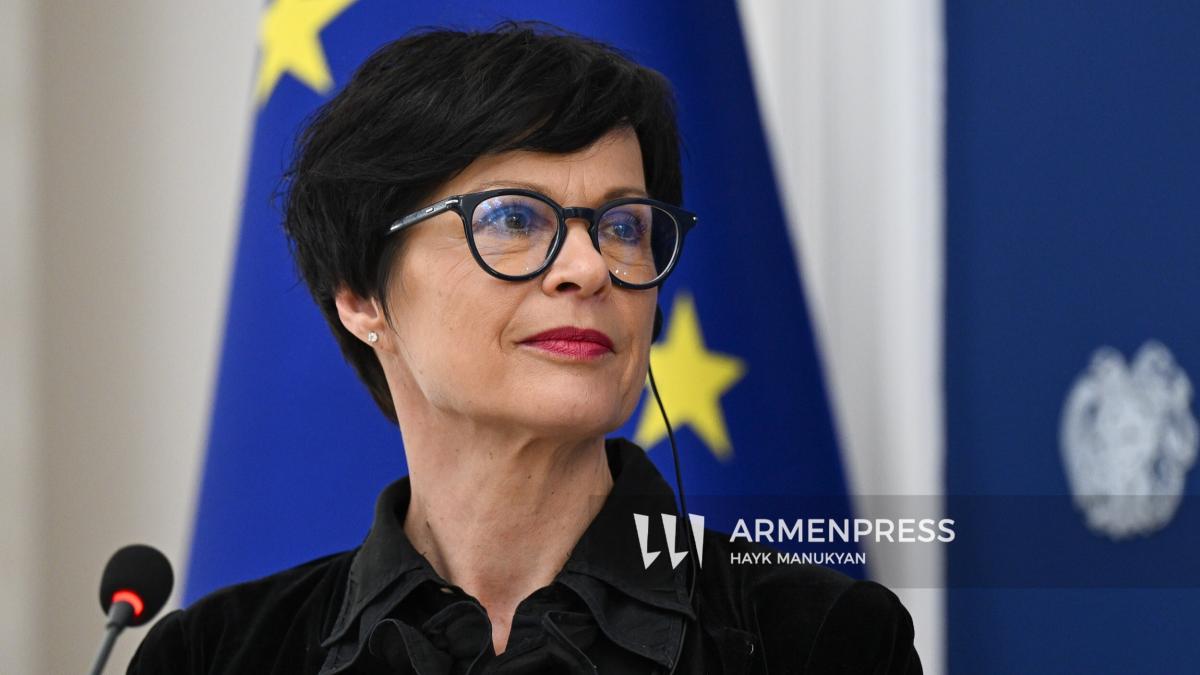
European Commissioner for Enlargement Marta Kos has confirmed that Armenian citizens are one step closer to being able to travel to the European Union without a visa.
Kos made the announcement on her official Facebook page.
“Armenians are one step closer to travelling to the European Union without a visa,” she wrote.
“With EU support, Armenians will now be able to get new biometric passports, making border checks faster and travel easier.”
“Armenia is choosing closer ties with Europe and we are making that choice count for its people,” Kos added.
The statement comes just days after Armenia launched its biometric passport issuance system on November 1, 2026.
The introduction of the biometric system is an important component of EU visa liberalisation for Armenian citizens.
Armenia is currently the only country engaged in a visa liberalisation dialogue with the European Union.
A visa liberalisation dialogue is a formal process between the EU and a non-EU country.
It involves a set of benchmarks the country must meet, covering document security, border management, migration, and fundamental rights.
Once all benchmarks are met, the European Commission proposes lifting the visa requirement for short stays of up to 90 days within any 180-day period.
The European Parliament and the Council of the European Union must then approve the proposal.

Armenia’s progress in this area has been closely watched since the dialogue officially began.
The EU has provided technical and financial support for Armenia’s biometric passport system.
Biometric passports contain an embedded microchip with the holder’s photograph and fingerprints.
They are considered more secure than older passport designs because they are harder to forge.
Many countries that have completed visa liberalisation with the EU, such as Georgia and Ukraine, first introduced biometric passports.
Georgia received visa-free access to the EU’s Schengen Area in 2017 after meeting the required benchmarks.
Ukraine followed in 2017 as well, after completing its own visa liberalisation action plan.
Armenia’s path mirrors those earlier cases, though the timeline remains uncertain.
Kos’s public confirmation is the highest-level signal from Brussels that the process is advancing.
The European Commissioner for Enlargement oversees EU accession and neighbourhood policy.
Her role includes managing the EU’s relationships with candidate countries and potential candidates.
Armenia is not currently an EU candidate country, but it has deepened cooperation with the bloc in recent years.
The Comprehensive and Enhanced Partnership Agreement (CEPA) between the EU and Armenia has been in force since 2021.
That agreement covers political dialogue, trade, and sectoral cooperation.
Visa liberalisation is seen as a tangible benefit for ordinary Armenians, demonstrating the practical advantages of closer ties with Europe.
The announcement was also covered by Armenpress, Armenia’s official news agency.
Public Radio of Armenia also reported on Kos’s statement, amplifying the news to a domestic audience.
The biometric passport system was launched on November 1, meaning Armenian citizens can now apply for the new passports.
Once a sufficient number of biometric passports are in circulation, the EU may accelerate its assessment of Armenia’s progress.
The European Commission is expected to include an update on Armenia’s visa liberalisation in its next enlargement package.
That package is typically published in the autumn of each year.
The next enlargement package is due in late 2026 or early 2027.
For now, Kos’s statement marks the clearest official indication that the EU intends to follow through on its commitment.
It also reinforces Armenia’s strategic orientation toward Europe, even as it maintains complex relationships with Russia and Iran.
Armenia has sought to diversify its foreign policy since the 2020 Nagorno-Karabakh war and the subsequent escalation in 2023.
The EU has positioned itself as a mediator and partner in the region, including through the EU Mission in Armenia (EUMA).
Visa liberalisation would be one of the most visible outcomes of this partnership.
Travel to the Schengen Area currently requires Armenians to apply for a visa, which involves paperwork, fees, and wait times.
Visa-free travel would allow Armenian citizens to enter the Schengen Area for short stays without prior authorisation.
The Schengen Area includes 27 European countries, most of which are EU members.
Kos’s remarks did not specify a timeline for when visa-free travel might take effect.
But the launch of biometric passports is widely considered a prerequisite step.
“Armenia is the only country currently in a visa liberalisation dialogue with the EU,” the European Commission has previously noted.
That status gives Armenia a unique position among its neighbours in the South Caucasus.
Neither Azerbaijan nor Georgia is currently in such a dialogue, though Georgia has already achieved visa-free travel.
The next steps will involve monitoring the rollout of biometric passports and assessing Armenia’s compliance with the remaining benchmarks.
The European Commission will then prepare a report for the European Parliament and the Council.
If approved, the regulation would amend the list of countries whose nationals are exempt from the visa requirement.
That list is updated by a qualified majority vote in the Council, with the consent of the European Parliament.
The process typically takes several months once the Commission makes a formal proposal.
Kos’s public statement suggests the Commission is confident enough in Armenia’s progress to signal the outcome in advance.
It also serves as encouragement for Armenian authorities to maintain momentum.
For Armenian citizens, the prospect of visa-free travel to Europe represents both a practical convenience and a symbolic milestone.
The announcement has been met with cautious optimism in Yerevan.
Officials there have not yet issued a formal response to Kos’s remarks.
But the launch of the biometric passport system on November 1 was itself a major logistical undertaking.
Armenia’s passport issuance system had previously relied on older technology.
The shift to biometrics required investment in new equipment, software, and training.
The EU provided funding and expertise through its technical assistance programs.
Those programs are part of the EU’s broader support for Armenia under the European Neighbourhood Instrument.
The total EU assistance to Armenia amounts to hundreds of millions of euros in grants and technical aid.
Visa liberalisation is considered one of the most effective tools for building people-to-people contacts.
It also supports business travel, tourism, and academic exchanges.
Armenia has a diaspora of several million people, many of whom live in EU countries.
Easier travel would also facilitate family visits and cultural ties.
The economic impact could be significant, as increased mobility often leads to more trade and investment.
For the EU, visa liberalisation with Armenia would demonstrate that the enlargement and neighbourhood policy delivers concrete results.
It would also strengthen the EU’s influence in the South Caucasus, a region where Russia and Turkey also compete for influence.
Kos’s statement is therefore as much a political signal as a technical update.
It tells both Armenia and the wider region that the EU rewards reform and alignment with European standards.
Whether Armenia can maintain the pace of reform will determine how quickly the promise becomes reality.
For now, the official word is clear: Armenians are one step closer.
Advertisement
You may also like

Meet the Brewers Who Won the 2026 World Series
After delivering Milwaukee its first title, the 2026 Brewers are sure to be immortalized and remembered for years to come. So let's meet the…

Dana White Eyes Volkanovski vs Gaethje But Needs His Answer
Dana White says he is down for the Alexander Volkanovski vs. Justin Gaethje fight, but he is still waiting on “The Highlight.” Last month…

7 Tom Hardy dramas critics call better than MobLand
Good Housekeeping has published a list of seven Tom Hardy dramas that critics are calling '5-star' — and one of them is described as…

Roy Keane's blunt response to replacing Carrick at Man Utd.
Didier Deschamps has told Manchester United he has no interest in becoming their next manager. It is understood United bosses sounded out the former…

O'Neill Blasts McAvennie for Disgusting Funeral Comment
Martin O’Neill has hit out at Frank McAvennie over his comments about Celtic defender Auston Trusty. The criticism came during McAvennie’s podcast, the Let…

Charles Leclerc’s Wife Revealed: Meet F1’s New Mom Alexandra Saint-Mleux
Charles Leclerc is now a father. The Ferrari driver and his wife, Alexandra Saint-Mleux, welcomed their first child this week — a daughter named…