Barred in Pennsylvania, Juan Vazquez Keeps Winning Across State Lines in West Virginia
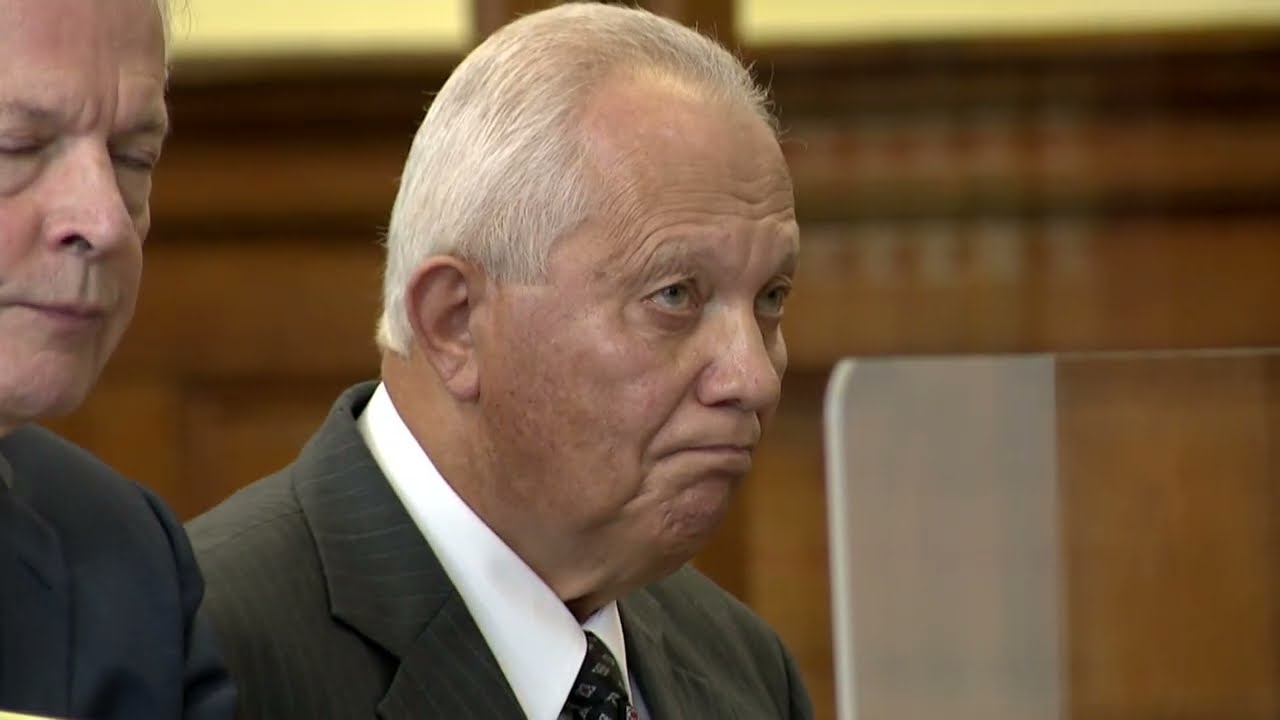
Since his Pennsylvania suspension expired in early 2025, Juan Vazquez has competed exclusively at West Virginia's Mountaineer, posting 44 wins from 243 starts as a trainer and 18 wins from 116 starts as an owner through October 2026.
Those numbers reflect an active and productive operation in West Virginia.
Yet just across the state border, racing regulators have taken an entirely different stance.
Pennsylvania officials have officially closed the door on Vazquez's attempt to rejoin their racing circuit.
In a formal ruling issued on Oct. 23, 2026, Pennsylvania regulators rejected his bid for an owner's license.
The decision established a clear boundary between the two neighboring jurisdictions.
While Vazquez has celebrated dozens of trips to the winner's circle at Mountaineer, Pennsylvania regulators ruled that his presence remains unacceptable.
SUCCESS AT MOUNTAINEER
The split between Vazquez's status in Pennsylvania and his career in West Virginia is stark.
Official Equibase records show that Vazquez resumed his training career at Mountaineer on April 27, 2025.
That return came three months after a multi-year disciplinary suspension had expired in Pennsylvania.
From the moment he saddled horses again, Mountaineer served as his sole racing base.
Equibase data confirms that he has operated exclusively at the West Virginia track as both a trainer and an owner.
Over the course of the first 10 months of 2026, his racing stable maintained a heavy schedule.
As a trainer, Vazquez sent horses to the post 243 times at Mountaineer through October 2026.
Those starts yielded 44 victories for his barn.
He expanded his footprint by competing as a racehorse owner as well.
In his capacity as an owner, Vazquez logged 116 starts at Mountaineer over that same 10-month span.
Those starts produced 18 additional wins under his ownership.
By traditional racing metrics, the stable was functioning at a high volume and finding regular success.
THE PENNSYLVANIA APPLICATION

While his stable racked up victories in West Virginia, Vazquez attempted to re-enter Pennsylvania racing.
On May 28, 2026, he submitted a formal application for a Pennsylvania owner's license.
Securing that license would have allowed him to enter and run horses under his own name at Pennsylvania tracks.
In horse racing, state commissions require separate occupational licenses for owners, trainers, and other industry professionals.
Pennsylvania regulators did not treat the application as a routine administrative request.
Instead, the Pennsylvania State Horse Racing Commission reviewed his complete regulatory history.
That review culminated in the Oct. 23, 2026 denial order.
Regulators concluded that Vazquez failed to satisfy the legal standards required of state licensees.
Specifically, the commission determined that Vazquez failed to demonstrate by clear and convincing evidence that he possesses good character, honesty, and integrity.
Regulators also determined that he failed to prove his activities would not threaten the public interest or the regulation of the sport.
THE SHINING COLORS CASE
The commission's refusal to grant Vazquez a license was anchored in past animal cruelty findings.
At the center of that disciplinary history sits the case of a Thoroughbred mare named Shining Colors.
The case dates back to a regulatory ruling issued by Pennsylvania stewards on July 7, 2022.
According to findings previously reported by the Paulick Report, Shining Colors was transported while suffering from severe chronic laminitis.
Laminitis is a painful, debilitating medical condition that affects the sensitive tissues within a horse's hooves.
Vazquez had the mare shipped across state lines from Belmont Park in New York to Parx Racing in Pennsylvania.
Upon her arrival at Parx Racing, the mare's condition was catastrophic.
Shining Colors was subsequently euthanized due to the severity of her ailment.
Pennsylvania racing stewards conducted an inquiry into the circumstances surrounding her transport and care.
The stewards concluded that Vazquez's conduct regarding the mare was grossly negligent, cruel, and abusive.

As a penalty for the incident, Pennsylvania stewards suspended Vazquez's training license for more than two years.
The suspension was scheduled to run through Jan. 26, 2025.
In addition to the multi-year suspension, regulators fined Vazquez $5,000 for the violation.
UNRESOLVED THREATS TO INTEGRITY
Vazquez completed his disciplinary suspension on Jan. 26, 2025.
Under regulatory law, the completion of a suspension does not automatically guarantee future licensing.
When Vazquez sought an owner's license in May 2026, Pennsylvania regulators evaluated whether his return was appropriate.
Their Oct. 23, 2026 ruling made it clear that the passage of time had not erased the past findings.
The commission stated that Vazquez presented no supporting information to refute the conclusion that his previous conduct remains a threat.
Regulators noted that his past actions posed an ongoing threat to the effective regulation of horse racing.
They also cited the health, safety, and welfare of racehorses and human participants.
The commission's written decision used uncompromising language regarding his standing in the commonwealth.
Regulators wrote that his presence at a licensed Pennsylvania track remains detrimental to the best interest of horse racing.
They added that his participation threatens the integrity of the betting public.
A HISTORY OF REGULATORY TROUBLE
The 2022 cruelty ruling was not an isolated incident in Vazquez's career.
Pennsylvania regulators pointed to a broader history of infractions across multiple jurisdictions.
Records from the industry regulatory database ThoroughbredRulings.com reveal an extensive paper trail.
The database contains 135 records relating to violations by Vazquez dating back to 2006.
In that system, some infractions generate multiple entries when stewards issue follow-up rulings, modifications, or rescissions.
Nevertheless, the total volume reflects years of regulatory scrutiny in various racing states.

His disciplinary history has also drawn scrutiny from private racetrack operators.
In 2015, track management at Delaware Park moved to ban Vazquez from their property.
That same year, track management at Laurel Park in Maryland also issued a property ban against him.
Racetracks possess private property rights that allow them to exclude individuals independently of state commission actions.
Those 2015 private track exclusions preceded the Pennsylvania cruelty case by seven years.
THE PENDING APPEAL
Vazquez has not accepted the Pennsylvania commission's decision as the final word.
Following the Oct. 23 denial, he filed a timely legal appeal to challenge the state's ruling.
The commission acknowledged the filing in a subsequent ruling dated Oct. 30, 2026.
In that Oct. 30 document, the regulatory body granted his request for an appeal.
The granting of an appeal initiates an administrative review process.
However, the commission noted that granting the appeal does not overturn the underlying denial.
It does not issue an owner's license to Vazquez while the legal process moves forward.
For now, the Pennsylvania ban against his ownership participation remains fully in effect.
A DIVIDED SPORT ACROSS STATE BORDERS
The contrast between Pennsylvania and West Virginia underscores a long-standing challenge in American horse racing.
Individual states govern the sport through separate racing commissions and distinct administrative frameworks.
Because of that structure, one state may deny a license while a neighboring state permits active participation.
Vazquez remains barred from entering horses as an owner in Pennsylvania.
At the same time, his stable continues to compile starts and victories just across the state line at Mountaineer.
Every win recorded in West Virginia highlights the jurisdictional divide between the two neighboring states.
Should an owner or trainer barred by one state still be allowed to run horses in neighboring jurisdictions?
Advertisement
You may also like

NBA champion Steve Kerr trolls Donald Trump with a savage jab
Golden State Warriors head coach Steve Kerr took a sharp, humorous jab at President Donald Trump during his Wednesday media availability, referencing a campaign…

John Cena’s subtle salute to Gunther after his return
John Cena made a surprise appearance on the Oct. 30, 2026 edition of WWE NXT. As he walked to the ring, he stopped in…

Braden Smith Makes NBA Debut With the Pacers
Purdue basketball alum Braden Smith makes NBA debut with the Pacers. Braden Smith, the former Purdue Boilermakers guard, stepped onto an NBA floor for…

Red Wings vs. Golden Knights Live Score and Game Updates
NHL.LIVE: Detroit Red Wings vs Vegas Golden Knights LIVE STREA.MS NHL Game On TV Coverage 6 Nov 2026. Puck drop is set for 7…

Business leaders face a tough choice with workplace monitoring.
Big Brother 2026 has officially crowned a winner. Rochelle took the title on the live final, hosted by AJ Odudu and Will Best on…

WWE Plans Huge 30th Anniversary Celebration for The Rock
WWE is planning to celebrate 30 years of The Rock this month. Plans include a commemorative championship belt. Special merchandise releases are also in…