BC Partners Scraps $300M LIV Golf Relaunch After Top Stars Refuse to Sign On
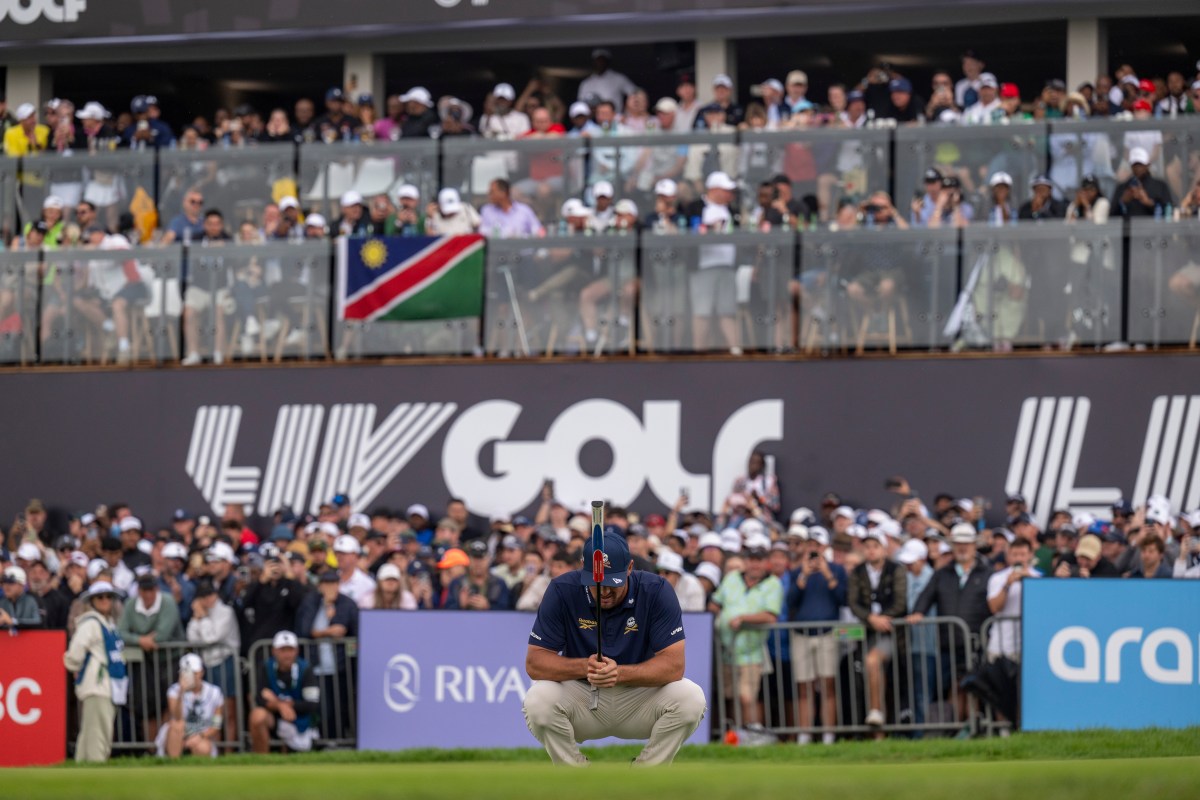
BC Partners Credit scrapped its planned $300 million investment into LIV Golf's 2.0 relaunch after an exodus of marquee names left the circuit short of the star power required to move forward.
The private equity firm abruptly decided to pull its funding lifeline after struggling to convince golf's biggest names to commit to the proposed league.
The sudden withdrawal has left the breakaway circuit facing imminent shutdown and asset liquidation.
Reports from both the Financial Times and The Athletic first confirmed that the London-based investment group chose to walk away on Wednesday.
The proposed deal would have provided between $300 million and $428 million to salvage the enterprise.
LIV Golf had initially turned to private capital after formally filing for Chapter 11 bankruptcy protection in September.
Now, the rebel tour appears to have completely run out of financial room to maneuver.
THE COLLAPSE OF LIV 2.0
The planned reboot was designed to alter the fundamental structure of the controversial circuit.
Under the proposed LIV 2.0 model, organizers envisioned a tighter calendar featuring at least 10 tournaments.
The revamped format placed a heavy emphasis on team franchises and promised direct equity stakes to participating competitors.
LIV chief executive Scott O'Neil had previously promoted the equity offering as an enticing second bite of the apple for players.
The tour also planned to feature a shorter overall schedule alongside reduced tournament prize money.
However, that entire operational framework depended entirely on securing sufficient player participation before strict deadlines.
BC Partners required a minimum threshold of established talent to justify deploying hundreds of millions of dollars.
Without recognizable superstars on the roster, the economic model of the reboot simply could not stand.
THE CRITICAL MASS THRESHOLD
League organizers and investors spent weeks attempting to gather a critical mass of competitors to validate the enterprise.
Reports indicated that BC Partners needed approximately 30 to 40 committed golfers to proceed with funding the upcoming season.
Golf Channel reporter Rex Hoggard revealed that league officials fell painfully short of securing the required star signatures.
"This feels like game over. I guess there is still manoeuvring to be done, and we are going to wait a few days to see what happens."
Hoggard noted that a hard October 30 deadline had initially been established by the Saudi Arabian Public Investment Fund.
That cut-off date was meant to produce a binding agreement between LIV Golf and BC Partners Credit.
Although the deadline was briefly extended to find common ground, negotiations finally reached an unresolvable impasse.
Sources indicated that while around 30 players agreed to stay, LIV could not lock down the marquee headliners.
Discussions were reportedly ongoing with another 10 golfers before the private equity group decided to pull the plug.
Only a handful of rank-and-file golfers, including Brendan Steele and Cameron Tringale, publicly affirmed their loyalty to the venture.

DEPARTURE OF MARQUEE STARS
The downfall of the rescue plan gained rapid momentum when LIV's most recognizable names began heading for the exits.
Two-time major winner Jon Rahm dealt a devastating blow to the project by securing his formal release.
Rahm's contract termination was scheduled for formal approval during bankruptcy proceedings in federal court.
Former Masters champion Sergio Garcia also publicly announced his decision to step away from the new circuit.
Chilean star Joaquin Niemann was among the other high-profile figures who decided against joining the 2.0 reboot.
Even Bryson DeChambeau, arguably the tour's primary driving force and commercial asset, became surrounded by widespread uncertainty.
While some reports suggested DeChambeau intended to back the league, other accounts revealed he never formally signed a contract.
His failure to commit publicly to the revised venture signaled that LIV had lost its essential pulling power.
Veterans were left reeling by the rapid unraveling of the circuit's financial foundation.
Former world number one Lee Westwood openly declared himself unemployed in the wake of the mounting financial fallout.
THE PRIVATE EQUITY GAMBLE
BC Partners Credit had initially expressed strong confidence that LIV's operational framework could turn a profit under new management.
Ted Goldthorpe, partner and head of BC Partners Credit, laid out his firm's thesis during a Sportico sports business conference.
"A lot of the money that was spent created the ecosystem and infrastructure that exists today. We think we can run this in a financially sustainable way because much of that spending went to getting the players, and the players are here."
Goldthorpe believed that the massive startup costs incurred by Saudi backers had already cleared the highest hurdle.
By retaining the existing player roster, BC Partners assumed it could manage a sustainable business on disciplined spending.
That entire investment hypothesis crumbled the moment top-tier golfers refused to sign the proposed agreements.
Once the star attraction evaporated, the commercial value of the team franchises vanished with it.
Private equity lenders quickly recognized that hosting tournaments without world-renowned figures would guarantee steep losses.
BANKRUPTCY COURT DEVELOPMENTS
The legal fallout is now moving into federal bankruptcy court in Trenton, New Jersey.
A scheduled hearing on Thursday was originally arranged to address player releases, operational leases, and vendor contracts.
Following the withdrawal of BC Partners, that court session is now expected to shift directly toward asset liquidation.
Chapter 11 reorganizations typically convert to Chapter 7 liquidations when debtor entities lose all viability and financing.
Under liquidation, remaining company property and physical assets are gathered and sold off to repay outstanding creditors.
LIV Golf New Jersey also filed formal paperwork on Wednesday to change its registered legal address.

The filing shifted its listed headquarters from an office in New York to a commercial property in Claymont, Delaware.
Tour representatives did not immediately issue public comments regarding the collapse of their financing arrangement.
EXTERNAL PRESSURES AND ISOLATION
The attempted relaunch faced aggressive resistance from traditional golf tours determined to protect their positions.
The European DP World Tour delivered a damaging blow by reversing an earlier compromise on dual-tour participation.
DP World Tour officials issued a strict ultimatum warning that anyone joining LIV 2.0 would lose European tour membership.
That barrier effectively forced international players like Rahm to abandon the rebel circuit to protect their wider careers.
DP World Tour chief executive Guy Kinnings made no secret of his aggressive stance against the breakaway group.
Kinnings stressed his legal duty to protect the historic tour against an entity that spent billions trying to destroy it.
PGA Tour star Rory McIlroy firmly endorsed Kinnings's position on the eve of the Abu Dhabi Championship.
McIlroy emphasized that LIV had aggressively targeted established players, tournament sponsors, and golf's professional ecosystem.
At the same time, the Asian Tour renewed its long-term alliance with the PGA Tour and the European circuit.
The Asian Tour had previously received significant financial support from LIV through its International Series events.
That regional realignment left LIV Golf completely isolated within the global sports landscape.
THE EXPENSIVE SAUDI EXPERIMENT
The imminent shutdown marks an astonishing conclusion to an enterprise that radically disrupted professional sports.
Saudi Arabia's Public Investment Fund originally bankrolled the enterprise during its headline-grabbing launch in 2022.
The sovereign wealth fund poured an estimated $5 billion into establishing the tour across three seasons.
Other industry estimates suggested the total spending exceeded $7 billion when accounting for global operations.
Run under original chief executive Greg Norman, the league spent unprecedented sums to recruit elite global talent.
Marquee champions were awarded massive guaranteed signing bonuses reaching well into nine figures.
Even modest PGA Tour winners received deals worth upwards of $30 million to leave the traditional ecosystem.
However, the sovereign backer dramatically changed its financial strategy in April following the start of regional conflict.
Saudi leadership announced it would no longer finance LIV Golf beyond the conclusion of the 2026 season.
Without bottomless sovereign wealth to cover enormous annual losses, the circuit filed for bankruptcy protection on September 8.
Now, the failure to secure replacement private equity leaves the entire organization on the brink of complete dissolution.
Civic leaders have taken note of the downfall, with South Australia Premier Peter Malinauskas conceding that LIV's demise is edging closer.
What began as a multibillion-dollar revolution has disintegrated into an unmanageable financial standoff in bankruptcy court.
Did LIV's biggest stars abandon ship the moment guaranteed Saudi money stopped flowing?
Advertisement
You may also like
NBA champion Steve Kerr trolls Donald Trump with a savage jab
Golden State Warriors head coach Steve Kerr took a sharp, humorous jab at President Donald Trump during his Wednesday media availability, referencing a campaign…
John Cena’s subtle salute to Gunther after his return
John Cena made a surprise appearance on the Oct. 30, 2026 edition of WWE NXT. As he walked to the ring, he stopped in…

Braden Smith Makes NBA Debut With the Pacers
Purdue basketball alum Braden Smith makes NBA debut with the Pacers. Braden Smith, the former Purdue Boilermakers guard, stepped onto an NBA floor for…
Red Wings vs. Golden Knights Live Score and Game Updates
NHL.LIVE: Detroit Red Wings vs Vegas Golden Knights LIVE STREA.MS NHL Game On TV Coverage 6 Nov 2026. Puck drop is set for 7…
Business leaders face a tough choice with workplace monitoring.
Big Brother 2026 has officially crowned a winner. Rochelle took the title on the live final, hosted by AJ Odudu and Will Best on…
WWE Plans Huge 30th Anniversary Celebration for The Rock
WWE is planning to celebrate 30 years of The Rock this month. Plans include a commemorative championship belt. Special merchandise releases are also in…