Brandel Chamblee says LIV Golf stars got a harsh reality check
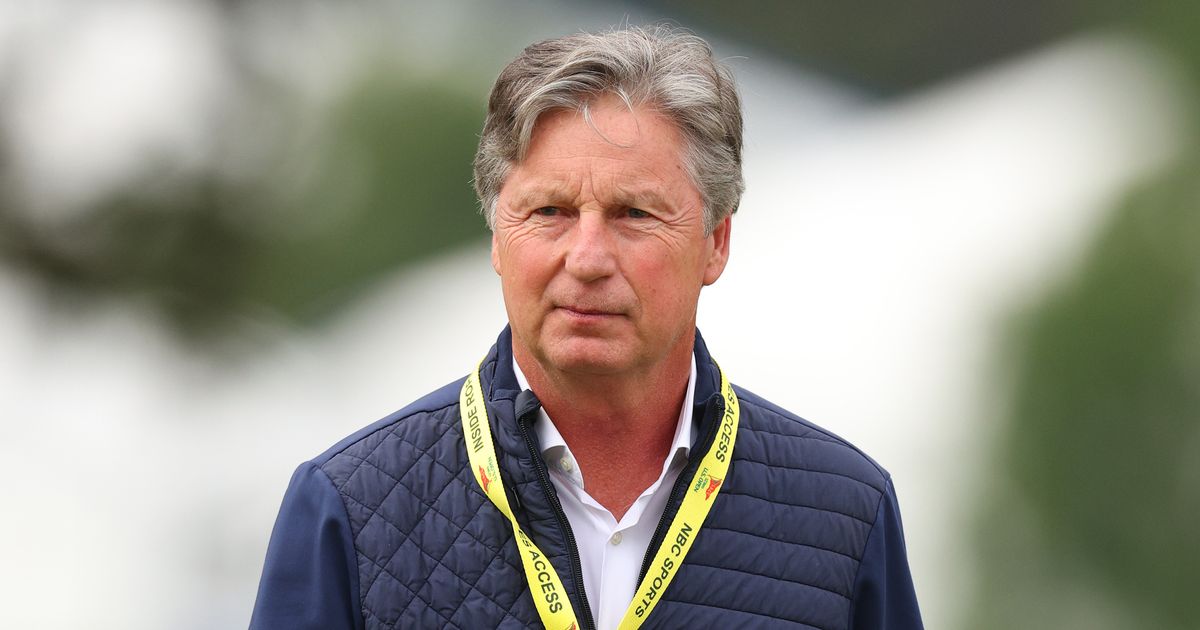
Brandel Chamblee says LIV Golf stars got a ‘slap in the face of reality’ as the breakaway league begins its shutdown.
The Golf Channel analyst did not hold back.
Speaking after news broke that LIV Golf is closing its doors for good, Chamblee said the players who demanded huge payouts from the league’s would-be saviors got exactly what they deserved.
“They all thought that they were beachfront property in Malibu, and the market was telling them, no, you’re timeshares in Toledo,” Chamblee said on Golf Channel.
“And maybe, finally, they’ve got a slap in the face of reality.”
LIV Golf launched in 2022 with massive financial backing from the Saudi Arabian Public Investment Fund (PIF).
The league lured some of the biggest names in golf — including Phil Mickelson, Dustin Johnson, Brooks Koepka and Bryson DeChambeau — with multi-million-dollar contracts that often dwarfed what the PGA Tour could offer.
But the PIF withdrew its financial support at the end of the 2026 season.
That left LIV Golf’s leadership, including CEO Scott O’Neil, scrambling to find new investors to keep the league from going bankrupt.
For months, O’Neil worked to secure a deal.
BC Partners, a London-based private capital firm, eventually stepped forward with a proposal to relaunch the league in 2027 under the name LIV 2.0.
The plan included a 17-tournament schedule that would keep the team format — the main feature that distinguished LIV Golf from traditional tours like the PGA Tour and DP World Tour.
But the deal fell apart.
BC Partners pulled its bid after failing to get commitment from the players.

Chamblee said the reason was clear: the players and their representatives made financial demands that the investors could not meet.
“You can point the finger in a lot of places,” Chamblee said.
“In order for it to move forward, you needed some cooperation from whatever players were going to make up LIV 2.0. The players and their representatives, from what I have read, were making financial demands that could not be met.”
Chamblee also pointed to a detail that he said revealed the players’ true lack of faith in the project.
According to reports, the players were offered a 52.5 percent ownership stake in the new league.
They turned it down.
“The fact that they were unwilling to take on that ownership tells you that they didn’t have any belief that it would work,” Chamblee said.
He contrasted the players’ self-image with the reality of the market.
“When you think about what the Saudis were paying these players, in essence I’d call it hazard pay,” he said.
“Because they knew that they were going to take on reputational damage. They knew it was going to be disrupted. They probably also knew that it was going to be disruptive for their careers.”
Chamblee was not the only voice in the golf world reacting to the collapse.
Golf Channel’s Rex Hoggard delivered a blunt assessment.
“Greed got it started and greed killed it,” Hoggard said.
Golf Digest’s Joel Beall questioned how a league could spend billions and still end up with nothing.

“Five years, more than $6 billion,” Beall wrote on social media.
“And in the end, LIV Golf couldn’t even give itself away.”
Beall also took aim at the players and their representatives for the role they played in the league’s demise.
“History will say golf’s schism was the money and greed but they only lit the flame,” he wrote.
The collapse of LIV Golf marks the end of a turbulent chapter in professional golf.
The league spent more than $5 billion over five years to attract talent and challenge the PGA Tour’s dominance.
It succeeded in forcing the PGA Tour to make changes — including increasing prize money and altering its schedule — but it never achieved long-term financial stability.
LIV Golf’s team format, which featured 12 four-man teams playing a mix of individual and team competition, was designed to appeal to a younger audience.
The league also experimented with a faster pace of play and shotgun starts, where all groups tee off simultaneously from different holes.
But the league struggled to secure television rights deals and sponsorship revenue that matched its spending.
Critics argued that the league was never a viable business — that it existed only because the PIF was willing to absorb massive losses.
When the PIF pulled out, the math became impossible.
BC Partners’ bid represented the last realistic chance to keep LIV Golf alive.
The firm’s decision to walk away after failing to get player commitment essentially sealed the league’s fate.

Chamblee said the players’ unwillingness to compromise showed that even they did not believe in the product.
“They all thought they were beachfront property in Malibu,” he said.
“But the market was telling them your timeshare is in Toledo.”
The question now is what happens to the players who signed with LIV Golf.
Many of them signed multi-year contracts that were supposed to run through 2027 or beyond.
With the league shutting down, those contracts are effectively void.
Some players may seek to return to the PGA Tour, which has not yet announced whether it will allow them back without penalties.
Others may pursue opportunities on the DP World Tour or other international circuits.
A few may retire.
Chamblee suggested that the players brought this situation on themselves.
“When you start to look at the players starting to want to take debt for equity, speculative ownership, they were going to have 52.5 percent, from what I’ve read, ownership going forward,” he said.
“And the fact that they were unwilling to take on that ownership tells you that they did not even have any belief that they, as a group of players, could make this work.”
He added that the players had been overvaluing themselves based on the inflated contracts they received from the Saudis.
“What the Saudis were paying these players, I would call hazard pay,” Chamblee said.

“They knew that they were going to take on reputational damage, they knew it would be disruptive and they knew it would be disruptive for their careers.”
For Chamblee, the collapse of LIV Golf is vindication.
He has been one of the most vocal critics of the league since its inception, often clashing with players and executives who defended the project.
He argued from the beginning that the league was unsustainable and that the players were damaging their careers by joining it.
Now, with the league shutting down, he says the players are finally facing the consequences.
“Maybe, finally, they’ve got a slap in the face of reality,” he said.
The legacy of LIV Golf is complicated.
On one hand, the league forced the PGA Tour to become more competitive and more responsive to player concerns.
On the other hand, it divided the sport, created bitter rivalries, and ultimately collapsed under the weight of its own spending.
Whether the players who left the PGA Tour for LIV Golf will be welcomed back remains an open question.
For now, the golf world is watching to see how the shutdown unfolds and what the long-term impact will be on the sport.
Chamblee made it clear that he believes the players have no one to blame but themselves.
“You can point the finger in a lot of places,” he said.
“In order for it to move forward, you needed some cooperation from whatever players were going to make up LIV 2.0.”
That cooperation never came.
And now, LIV Golf is done.
Advertisement
You may also like

NBA champion Steve Kerr trolls Donald Trump with a savage jab
Golden State Warriors head coach Steve Kerr took a sharp, humorous jab at President Donald Trump during his Wednesday media availability, referencing a campaign…

John Cena’s subtle salute to Gunther after his return
John Cena made a surprise appearance on the Oct. 30, 2026 edition of WWE NXT. As he walked to the ring, he stopped in…

Braden Smith Makes NBA Debut With the Pacers
Purdue basketball alum Braden Smith makes NBA debut with the Pacers. Braden Smith, the former Purdue Boilermakers guard, stepped onto an NBA floor for…

Red Wings vs. Golden Knights Live Score and Game Updates
NHL.LIVE: Detroit Red Wings vs Vegas Golden Knights LIVE STREA.MS NHL Game On TV Coverage 6 Nov 2026. Puck drop is set for 7…

Business leaders face a tough choice with workplace monitoring.
Big Brother 2026 has officially crowned a winner. Rochelle took the title on the live final, hosted by AJ Odudu and Will Best on…

WWE Plans Huge 30th Anniversary Celebration for The Rock
WWE is planning to celebrate 30 years of The Rock this month. Plans include a commemorative championship belt. Special merchandise releases are also in…