Bryson DeChambeau Defends LIV Golf's Franchise Model Despite Jon Rahm And Stars Leaving
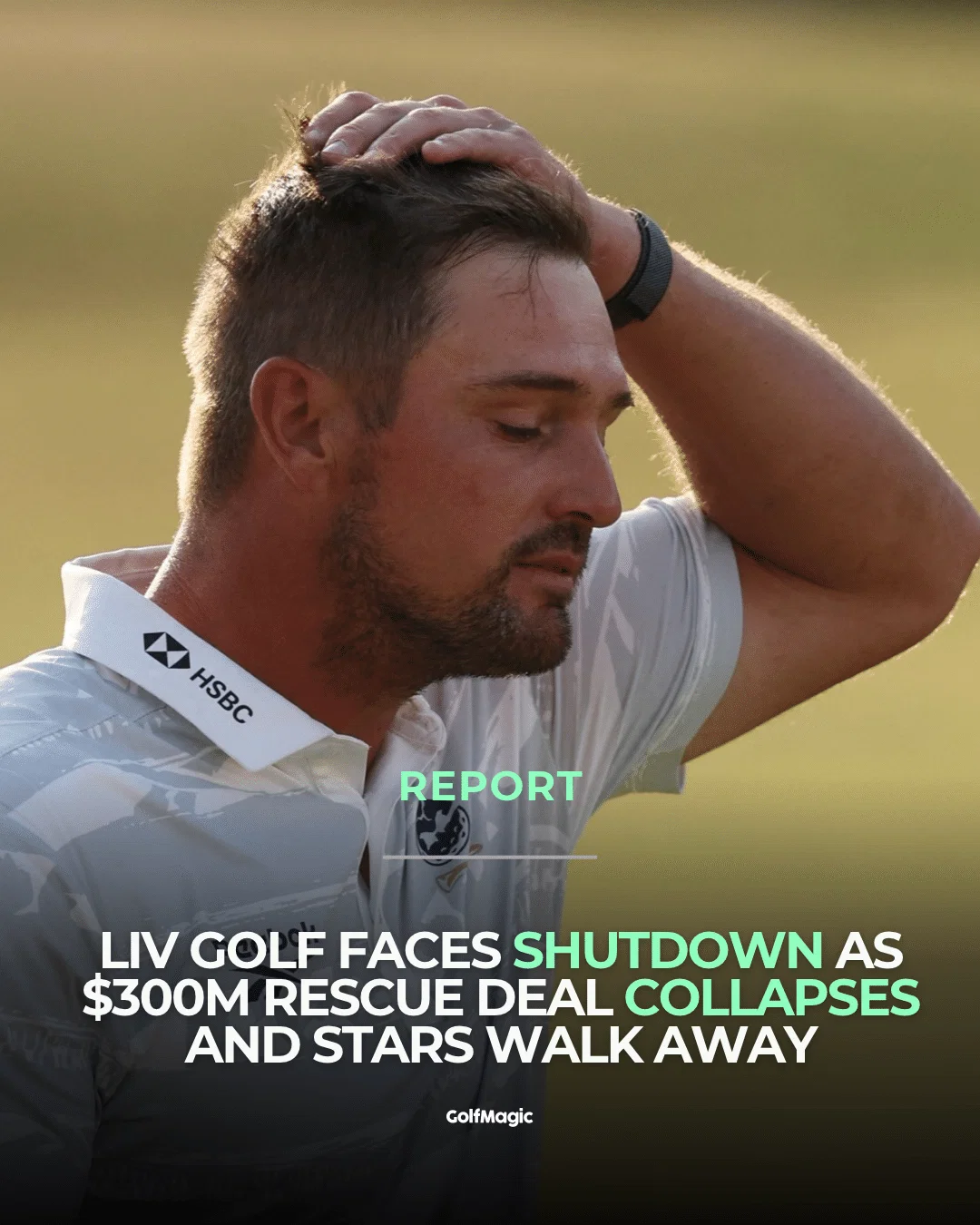
Bryson DeChambeau argued on the Figuring Out podcast that LIV Golf's team franchises have performed well financially, placing the blame for the league's Chapter 11 crisis on overall management rather than the concept itself.
The two-time US Open champion maintained that the fundamental structure behind the breakaway circuit remains commercially sound.
Speaking during an appearance with host Raj Shamani, the 33-year-old voiced persistent confidence in the venture.
"The business model makes a lot of sense," DeChambeau stated when breaking down the league's franchise system.
His public backing comes at arguably the darkest moment in the short, turbulent history of the Saudi-backed circuit.
LIV Golf is now facing liquidation and closure after its primary rescue package fell apart entirely.
Private equity firm BC Partners Credit had proposed a critical $300 million financing lifeline to fund an ambitious relaunch known as LIV 2.0.
That deal collapsed after marquee stars refused to sign on to reduced terms, triggering an immediate internal crisis.
Now, the breakaway circuit finds itself on life support with operations expected to wind down unless an emergency backer emerges.
A LEAGUE ON THE BRINK
The immediate threat of extinction follows months of mounting financial distress for the venture.
LIV Golf officially filed for Chapter 11 bankruptcy protection in September.
That filing occurred after Saudi Arabia's Public Investment Fund announced it would no longer bankroll the competition.
The sovereign wealth fund confirmed it planned to cut off funding after the conclusion of the 2026 season.
Since launching the tour in 2021, the PIF had poured an estimated $5 billion into the project.
Despite that massive cash injection, league revenues amounted to merely a tiny fraction of its overall expenditure.
The circuit failed to capture the broader public imagination throughout its run.
It also struggled to secure a significant, lucrative media rights contract to offset its staggering operational costs.
With Saudi backers closing the tap, finding a replacement investor willing to match previous spending levels proved impossible.
THE COLLAPSE OF LIV 2.0
Facing an existential deadline, league executives attempted to engineer a pathway toward genuine financial sustainability.
The planned relaunch, dubbed LIV 2.0, was designed to double down on the team-based competition format.
Under that blueprint, the league aimed to sell stakes in individual four-man franchises to third-party investors.
The new economic model also offered player equity in an effort to incentivize the roster.
Geographically, LIV 2.0 planned to build around tournament events hosted in international markets historically underserved by traditional tours.
BC Partners Credit stepped forward to anchor that transition with a proposed $300 million investment.
Under the proposed restructuring terms, BC Partners would have taken ownership of nearly half of the entire league.
The participating players, meanwhile, were slated to hold the majority of the remaining equity.
LIV Golf chief executive Scott O’Neill had strongly promoted the viability of that new franchise plan.
Just last month, O’Neill appeared on stage alongside BC Partners representatives at the Leaders Week sports business conference in London.
During that conference, the prospective backers expressed confidence that individual LIV teams could eventually be worth $100 million each.
Yet despite that optimism on stage, the proposed investment came with stringent conditions attached.
STARS WALK AWAY
The entire $300 million BC Partners lifeline was strictly contingent on LIV securing enough elite player commitments.
Specifically, the private equity firm needed a critical mass of recognizable names to ensure the competition remained viable.
However, LIV's business reality required stars to accept drastically reduced financial terms compared to their original contracts.
Many of golf's biggest names had originally been lured to the breakaway league with record-breaking, guaranteed signing bonuses.
When asked to accept smaller paydays in exchange for franchise equity, several marquee names flatly refused.

Spanish superstar Jon Rahm opted to move away from the proposed LIV 2.0 project rather than sign on.
Former Masters champion Sergio Garcia also chose not to join the rebooted framework.
Major champion Louis Oosthuizen similarly departed the project as the league pushed for contract concessions.
Reports indicated that roughly 30 players had initially signed up for the proposed 2027 season.
Another 10 players remained entirely undecided as deadlines approached.
Without its full roster of top-tier talent, the commercial viability of the competition evaporated for prospective financiers.
BC Partners concluded that the project was no longer realistic and officially withdrew its rescue package.
DECHAMBEAU'S STANCE UNDER FIRE
DeChambeau’s personal position during the restructuring has drawn intense scrutiny across the golf world.
Reports surrounding the deal collapse noted that DeChambeau himself was among the star players who refused to sign on to the LIV 2.0 terms.
Other industry reporting suggested the American had remained on the fence and had never formally signed on before investors pulled the plug.
Throughout the turmoil, however, DeChambeau has continued to publicly defend the underlying franchise vision.
He has maintained that the concept of team golf possesses untapped commercial value.
His unwavering optimism has raised eyebrows among veteran golf commentators and analysts.
Golf Channel analyst Rex Hoggard addressed DeChambeau's posture during a recent podcast appearance.
Hoggard admitted that he was shocked by DeChambeau's confidence regarding LIV's ability to survive its current financial crisis.
"It seems to me he continues to be on the fence, leaning towards 2.0," Hoggard observed on the Golf Channel Podcast.
"And it seems to me that he's made it clear that the team model, the franchises, the equity that players have been offered in whatever 2.0 is going to look like, that's appealing to him," Hoggard continued.
Hoggard openly questioned whether any golf league could attract fans without a deep stable of prominent stars.
"The other half of it is though what in the world could that league possibly look like with Bryson DeChambeau and fill in the blank for, I think we've come to the conclusion that you probably need 35, 40 other players to make the league, look like?" Hoggard noted.
"I don't know about you, I haven't seen one name out of those other 35, 40 players that would be compelling," Hoggard said.
"But maybe that's not important to him either, maybe he feels like he can build that product on his own," the analyst added.
Hoggard went even further in critiquing DeChambeau's apparent willingness to carry the brand forward.
"That's a level of narcissism that shocks me a little bit," Hoggard remarked regarding the golfer's mindset.
"I can see Bryson DeChambeau looking round and thinking to himself, yes, I can make this work even with this group of players," Hoggard said.
"That is shocking to me, but it's clear that he's leaning in that direction," the analyst concluded.
AN UNCERTAIN FUTURE FOR GOLF
With BC Partners officially walking away, the immediate consequences for LIV Golf have been swift.
Crisis talks have unfolded behind closed doors as executives assess remaining options.
Scheduled venue contracts and future tournament plans have already faced cancellations.
South Australia Premier Peter Malinauskas publicly commented that the demise of the circuit is edging closer.
The collapse of the private equity rescue package effectively marks the end of an era defined by division.
LIV’s initial launch in 2022 sparked an unprecedented civil war across professional golf.
The venture divided players, fractured traditional tour schedules, and sparked intense legal battles.
A proposed merger framework between LIV Golf, the PGA Tour, and the European Tour had previously been agreed.
However, despite years of extensive negotiations, that unification deal was never completed.
Now, with billions in sovereign capital spent and external lifelines vanished, the league appears destined for liquidation.
DeChambeau's defense of the franchise model stands in stark contrast to the harsh financial realities unfolding around him.
Was Bryson DeChambeau right that LIV's team ownership model makes sense, or was the concept flawed from the start?
Advertisement
You may also like

NBA champion Steve Kerr trolls Donald Trump with a savage jab
Golden State Warriors head coach Steve Kerr took a sharp, humorous jab at President Donald Trump during his Wednesday media availability, referencing a campaign…

John Cena’s subtle salute to Gunther after his return
John Cena made a surprise appearance on the Oct. 30, 2026 edition of WWE NXT. As he walked to the ring, he stopped in…

Braden Smith Makes NBA Debut With the Pacers
Purdue basketball alum Braden Smith makes NBA debut with the Pacers. Braden Smith, the former Purdue Boilermakers guard, stepped onto an NBA floor for…

Red Wings vs. Golden Knights Live Score and Game Updates
NHL.LIVE: Detroit Red Wings vs Vegas Golden Knights LIVE STREA.MS NHL Game On TV Coverage 6 Nov 2026. Puck drop is set for 7…

Business leaders face a tough choice with workplace monitoring.
Big Brother 2026 has officially crowned a winner. Rochelle took the title on the live final, hosted by AJ Odudu and Will Best on…

WWE Plans Huge 30th Anniversary Celebration for The Rock
WWE is planning to celebrate 30 years of The Rock this month. Plans include a commemorative championship belt. Special merchandise releases are also in…