Chad Baker-Mazara Settles Lawsuit With USC After Suing Over Harm To NBA Draft Stock
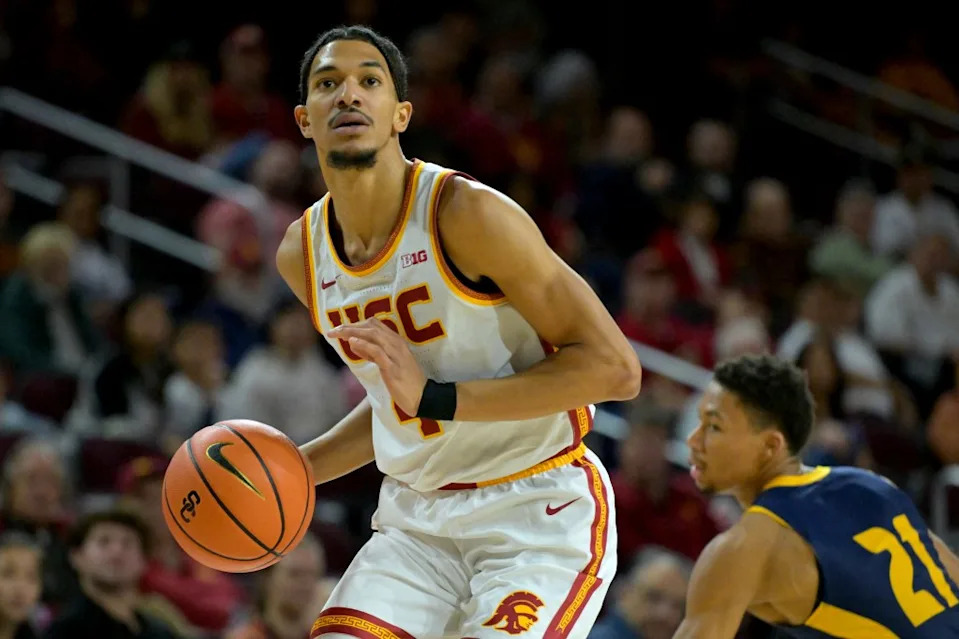
Beyond the money left on his original NIL agreement, Baker-Mazara sought financial damages for what he argued was significant harm done to his professional basketball future.
The high-stakes legal battle between former USC men's basketball player Chad Baker-Mazara and the university reached a conclusion on Friday.
Both parties agreed to a formal settlement that brings an end to the disputed breach of contract claims.
Following the agreement, the school released a concise public statement addressing the resolution.
“USC is pleased to resolve this matter and will have no further comment,” the university said in a statement.
The development was first reported publicly on X by Los Angeles Times reporter Ryan Kartje.
The settlement effectively closes a contentious chapter that began late during the previous collegiate season.
At the heart of the lawsuit was not merely unpaid compensation, but the broader trajectory of an aspiring professional athlete.
Baker-Mazara argued that the university's actions actively derailed his professional trajectory at a pivotal moment.
DAMAGE TO DRAFT STOCK
In collegiate athletics, late-season exposure is often considered essential for prospects hoping to enter the NBA Draft.
When a player is removed from competition before postseason tournaments, NBA scouts lose valuable opportunities to evaluate game performances.
Baker-Mazara specifically sought damages in court for the quantifiable harm caused to his NBA Draft stock.
His legal filing claimed that the timing of his removal stripped him of crucial national visibility.
Without game tape from key late-season contests, professional evaluation can become far more challenging for front offices.
In addition to those lost draft opportunities, the lawsuit sought the remainder of his promised name, image, and likeness compensation.
By settling the case, the university avoids a public trial over how collegiate roster decisions affect future professional earnings.
A HEATED LOCKER ROOM INCIDENT
The dispute originally stems from events surrounding a regular-season basketball game against Nebraska.
USC dismissed Baker-Mazara from the basketball program following a loss on February 28.
According to the lawsuit, head coach Eric Musselman directed a profanity-laced tirade toward the player after that defeat.
Baker-Mazara alleged in the filing that Musselman screamed: “Go back to the f—ing Dominican Republic! Nobody wants you here!! F— you.”
The lawsuit emphasized that Baker-Mazara is originally from the Dominican Republic.
The legal filing stated that Baker-Mazara viewed the head coach's remarks as blatantly racist and discriminatory.
The complaint drew a direct parallel, stating the phrase was akin to telling an African American player “to go back to Africa.”
The emotional confrontation marked the sudden end of the player's active participation with the Trojans.
BARRED FROM THE FACILITY
The consequences of that postgame incident unfolded almost immediately the following morning.
On the morning after the loss to Nebraska, representatives for Baker-Mazara received word that he had been officially dismissed.
Furthermore, the university immediately barred the player from accessing the team's training facility.
Losing access to team facilities severely limits any athlete's ability to prepare for professional pre-draft workouts.
Without practice courts, strength equipment, or medical staff, maintaining peak athletic condition becomes exceptionally difficult.
Baker-Mazara's legal team argued that the sudden exile caused immediate disruption to his training routine.
THE COLLAPSE OF THE SEASON
The lawsuit claimed the program's decision was motivated by a rapidly fading postseason outlook.
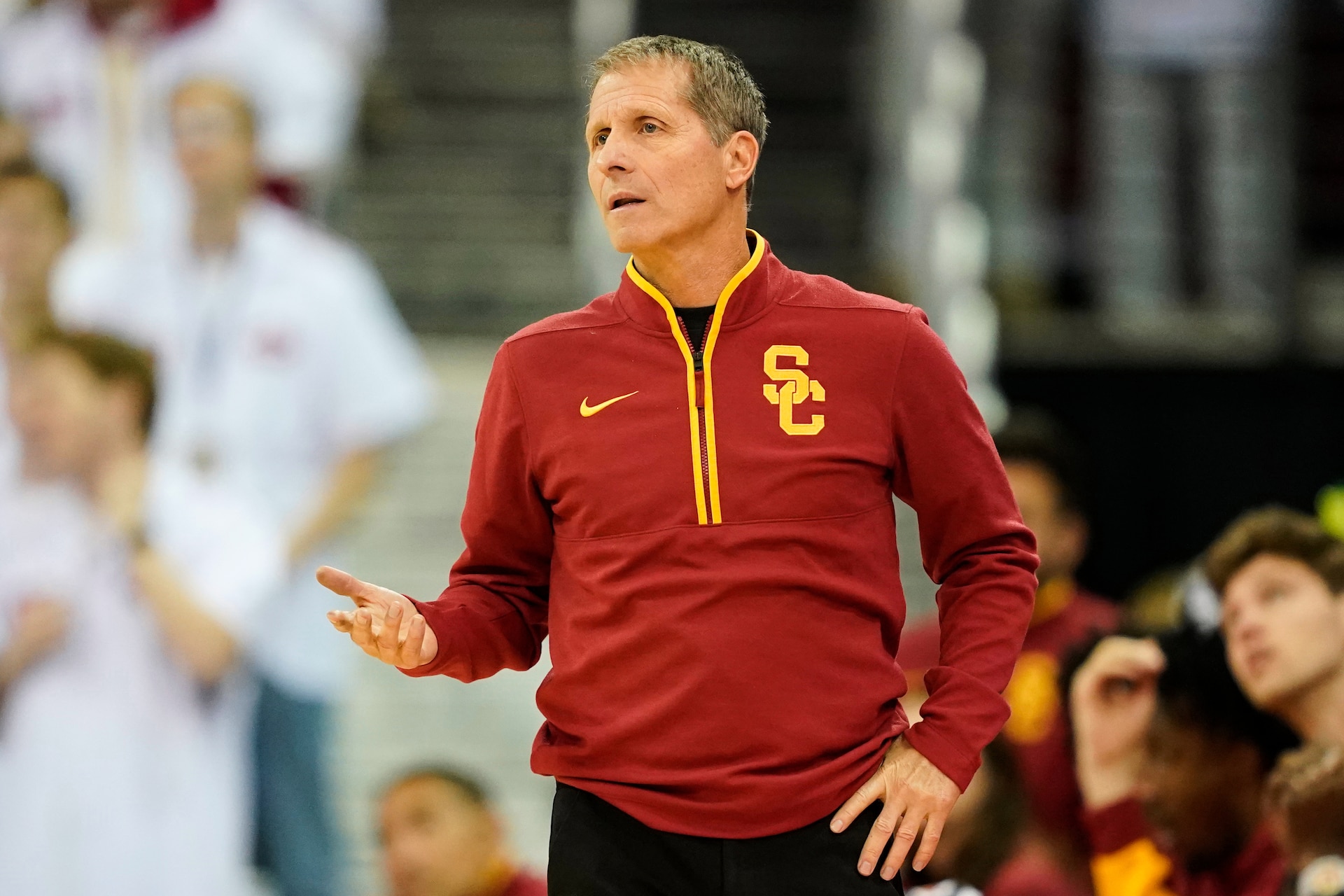
The filing alleged that USC dismissed him once it “became likely that the Trojans would not make the NCAA Tournament.”
At the time of the February 28 game, the Trojans held an overall record of 18-11.
The loss to Nebraska represented the team's fifth consecutive defeat during a brutal late-season stretch.
Because of that extended slump, USC had fallen firmly to the wrong side of the NCAA Tournament bubble.
Following the dismissal, the team struggled through its remaining schedule without Baker-Mazara on the floor.
The Trojans had two regular-season games left on their calendar and lost both of them.
They subsequently dropped their opening contest in the Big Ten tournament.
Those consecutive postseason losses officially eliminated USC from contention for an NCAA Tournament berth.
THE MORALS CLAUSE CONTROVERSY
The dispute soon expanded beyond team personnel decisions into direct financial agreements.
On March 13, USC's NIL collective moved to void Baker-Mazara's existing financial contracts.
The collective purported to terminate the agreements pursuant to a morals clause contained in the contracts.
The morals clause granted the collective authority to terminate the deal under specific behavioral conditions.
Under the clause, termination was permitted if an athlete committed acts deemed “immoral, deceptive, scandalous or obscene.”
The language also covered any actions that “could adversely affect USC, HOV, the USC athletic department, the USC men’s basketball program, or any related parties or entities.”
However, the player's lawsuit alleged that USC and its collective never provided an explanation of what conduct violated the clause.
The lack of documented justification formed a central pillar of Baker-Mazara's breach of contract argument.
Contracts tied to third-party collectives remain a relatively new frontier across the collegiate sports landscape.
When a collective pulls funding late in a season, an athlete faces both financial loss and reputational damage.
THE HIGH STAKES OF PRE-DRAFT EVALUATION
For any player preparing for professional scouting, public accusations can carry heavy consequences.
NBA scouts and front offices routinely evaluate personal background and locker room dynamics before investing draft capital.
When an athlete is terminated under a morals clause, outside observers often assume severe off-court misconduct.
The lawsuit asserted that this unclarified termination cast an unfair shadow over Baker-Mazara's professional reputation.
Uncertainty regarding character can cause a prospect to slide down draft boards or fall out of consideration entirely.
That loss of projected draft standing directly influenced the financial damages sought by Baker-Mazara.
By securing a settlement, Baker-Mazara achieves legal closure on the disputed claims.
MOVING FORWARD IN LOS ANGELES
With the legal matter formally settled, both the player and the program are looking ahead.
USC men's basketball has already launched its latest campaign under Eric Musselman.
Musselman is currently navigating his third season as the head coach of the Trojans.
The program opened its season on Monday with a commanding 95-63 victory over Milwaukee.
The settlement ensures that the coaching staff and athletic department avoid further depositions or courtroom proceedings.
Nevertheless, the case highlights the complex overlap between collegiate coach conduct, NIL agreements, and professional aspirations.
As the business of college sports evolves, roster cuts now carry multi-million-dollar professional ramifications.
Can an abrupt midseason dismissal realistically derail a college player's chances of reaching the NBA Draft?
Advertisement
You may also like
Aminata Gueye and Tiffany Hayes Sparked Angel Reese Trolling Right After Game 7
The mocking of Angel Reese did not start at the parade. It began immediately after Game 7 when Valkyries forward Aminata Gueye and guard…
LIV 2.0 Collapses as League Secures Only 30 of the 40 Players Required by Backers
Potential backer BC Partners required roughly 40 players to commit to LIV 2.0, but the tour only managed to secure around 30 sign-ups with…
Is Rick Barnes Entering His Final Season As Tennessee Chases Its First Final Four?
As Rick Barnes embarked on his 12th season as Tennessee's head coach, sports radio discussions immediately shifted to whether this campaign could mark his…
Lee Westwood Admits He Is Unemployed After Rejecting LIV 2.0 But Has Zero Regrets
Lee Westwood confirmed he is currently unemployed after turning down LIV 2.0, while asserting that he would have been stupid to decline the massive…
BC Partners Pulls Out Of $300M Deal, Pushing LIV Golf Into Bankruptcy Liquidation
Private credit firm BC Partners has pulled out of a proposed $300 million deal to finance LIV 2.0, effectively leaving the tour to be…
Damian Lillard Torches Dillon Brooks With a Reverse Layup and Step-Over on Next Play
On the very next play following their heated exchange, Damian Lillard blew past Dillon Brooks for a reverse layup and had choice words for…