Chad Baker-Mazara Sued USC For Damaged NBA Draft Stock Beyond Unpaid NIL Money
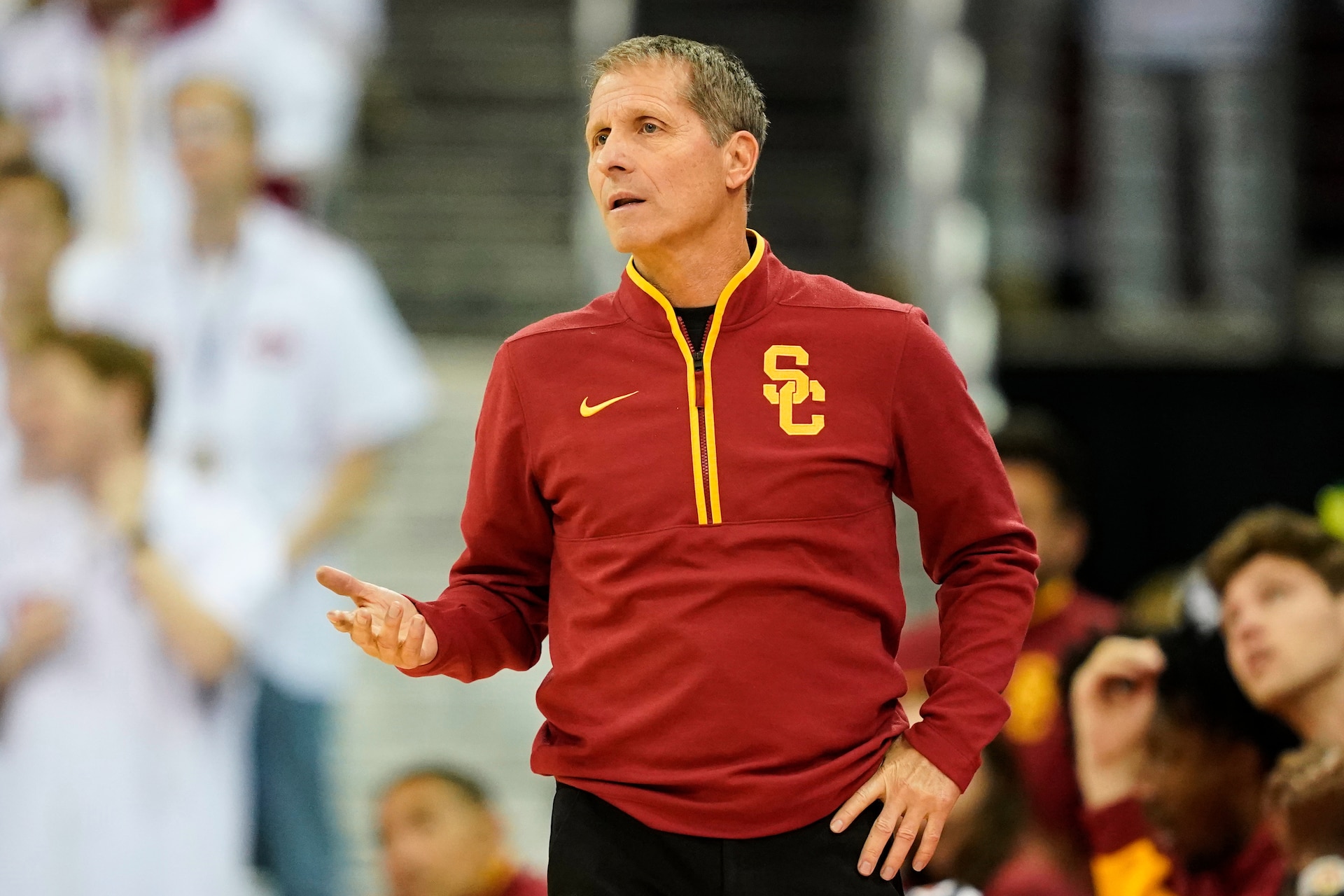
Beyond the money remaining on his NIL agreement, Chad Baker-Mazara's lawsuit against USC sought financial damages for the harm his sudden dismissal caused to his NBA Draft prospects.
That core claim pushed the legal dispute well past a routine contractual disagreement over college sports earnings.
On Friday, USC and the former basketball player officially agreed to settle the legal complaint.
The university announced the resolution through a concise public statement.
"USC is pleased to resolve this matter and will have no further comment," the school confirmed.
The settlement effectively brings an end to a high-profile legal dispute that spanned name, image, and likeness compensation and an abrupt team removal.
The development was first reported by Los Angeles Times reporter Ryan Kartje on social media platform X.
While the terms of the settlement remain undisclosed, the allegations detailed inside the legal filing laid bare intense friction inside the program.
At the center of Baker-Mazara's complaint was a push for compensation covering both unpaid money and long-term professional fallout.
THE ROAD TO THE DISMISSAL
The dispute originated late in the college basketball regular season following a pivotal loss to Nebraska on February 28.
At that specific juncture, the Trojans held an 18-11 record.
The defeat to Nebraska marked the program's fifth consecutive loss during a critical stretch of the season.
With that losing streak mounting, the Trojans found themselves trending firmly toward the wrong side of the NCAA Tournament bubble.
Baker-Mazara alleged in the filing that his removal arrived precisely when it became apparent the team would fall short of the postseason.
The lawsuit directly claimed that USC chose to dismiss him when it "became likely that the Trojans would not make the NCAA Tournament."
On the morning immediately following the Nebraska defeat, representatives for Baker-Mazara received word that he was off the team.
The communication went further than simply cutting ties on the court.
Baker-Mazara was officially barred from accessing the USC team facility.
Following his departure, the Trojans played their final two regular-season contests and lost both.
The team subsequently dropped its opening matchup in the Big Ten tournament.
Those concluding results sealed the program's fate as USC officially failed to secure a bid to the NCAA Tournament.
ALLEGATIONS AGAINST ERIC MUSSELMAN
The court filing described an intense confrontation between the player and head coach Eric Musselman following the Nebraska game.
Baker-Mazara claimed that Musselman targeted him with a profanity-laced, racially charged tirade.
According to the lawsuit, Musselman told Baker-Mazara to "Go back to the f—ing Dominican Republic! Nobody wants you here!! F— you."
Baker-Mazara is a native of the Dominican Republic.
The complaint explained that the athlete viewed those remarks as inherently racist and overtly discriminatory.
The legal filing drew a comparison, stating that the comments were akin to telling an African American "to go back to Africa."
Those accusations formed the emotional and cultural core of the filed grievance against the program and its leadership.
THE MORALS CLAUSE CONTROVERSY
The legal battle soon extended directly into the commercial arrangements governing collegiate sports.
Nearly two weeks after the dismissal, on March 13, the school's NIL collective intervened.
The lawsuit stated that USC's NIL collective "purported to terminate the Agreements pursuant to the purported morals clause contained in the respective Agreements."
In modern collegiate sports contracts, morals clauses serve as conditional safety nets for funding entities.
These clauses establish legal boundaries designed to protect institutions and affiliated commercial collectives from severe reputational harm.
The specific morals clause in Baker-Mazara's contract outlined clear criteria for an early termination.
It permitted the cancellation of the contract if the athlete engaged in acts deemed "immoral, deceptive, scandalous or obscene."
The clause also covered conduct that "could adversely affect USC, HOV, the USC athletic department, the USC men’s basketball program, or any related parties or entities."
Despite the collective invoking this language, the lawsuit asserted that proper protocol was not respected.
The complaint alleged that Baker-Mazara was never provided an actual explanation detailing how he allegedly violated the morals clause.
Without an explicit accounting of the alleged misconduct, the player argued the termination of the financial agreements lacked legitimate contractual grounds.
PURSUING DAMAGES FOR NBA DRAFT STOCK
While unpaid NIL money represented a significant financial issue, the lawsuit added another substantial layer of legal damages.
Baker-Mazara took the unusual step of seeking formal damages for what he argued was distinct harm to his professional basketball evaluation.
The lawsuit explicitly claimed that the program's actions caused direct harm to his NBA Draft stock.
In professional basketball scouting, team evaluations depend heavily on late-season performances, tournament visibility, and team background checks.
When a player is abruptly dismissed from a roster in late February, front offices across the NBA inevitably take notice.
An unexplained removal from a high-major roster can spark immediate questions among pro scouts concerning temperament, culture fit, and professionalism.
Furthermore, an outright ban from team facilities prevents an athlete from using essential training resources at the exact moment pre-draft preparations begin.
Losing access to elite training courts, weight rooms, and institutional coaching can significantly disrupt a prospect's physical readiness.
Because draft position dictates the financial value of guaranteed professional rookie contracts, any drop in draft standing can cost a player millions of dollars.
By including draft stock depreciation in the legal claim, Baker-Mazara argued that the dismissal caused lasting harm that extended far beyond his college eligibility.
THE AFTERMATH AND CURRENT LANDSCAPE
The settlement reached on Friday closes the book on what could have been an arduous, public discovery process.
By settling, both the university and the player avoid a protracted trial over the spoken words and contractual interpretations.
USC has turned its focus back to the current collegiate campaign on the court.
The Trojans launched their new season on Monday by securing a 95-63 victory over Milwaukee.
Musselman is now in his third season directing the USC program.
The university's brief statement ensures that the institution will not offer further public explanations regarding the allegations or the settlement.
Yet the case itself highlights the evolving complexities surrounding college athletics, player dismissals, and commercial NIL contracts.
Can an abrupt midseason dismissal and facility ban genuinely ruin a college player's chances in the NBA Draft?
Advertisement
You may also like

NBA champion Steve Kerr trolls Donald Trump with a savage jab
Golden State Warriors head coach Steve Kerr took a sharp, humorous jab at President Donald Trump during his Wednesday media availability, referencing a campaign…

John Cena’s subtle salute to Gunther after his return
John Cena made a surprise appearance on the Oct. 30, 2026 edition of WWE NXT. As he walked to the ring, he stopped in…

Braden Smith Makes NBA Debut With the Pacers
Purdue basketball alum Braden Smith makes NBA debut with the Pacers. Braden Smith, the former Purdue Boilermakers guard, stepped onto an NBA floor for…

Red Wings vs. Golden Knights Live Score and Game Updates
NHL.LIVE: Detroit Red Wings vs Vegas Golden Knights LIVE STREA.MS NHL Game On TV Coverage 6 Nov 2026. Puck drop is set for 7…

Business leaders face a tough choice with workplace monitoring.
Big Brother 2026 has officially crowned a winner. Rochelle took the title on the live final, hosted by AJ Odudu and Will Best on…

WWE Plans Huge 30th Anniversary Celebration for The Rock
WWE is planning to celebrate 30 years of The Rock this month. Plans include a commemorative championship belt. Special merchandise releases are also in…