Chamblee says LIV Golf stars face harsh reality as shutdown looms
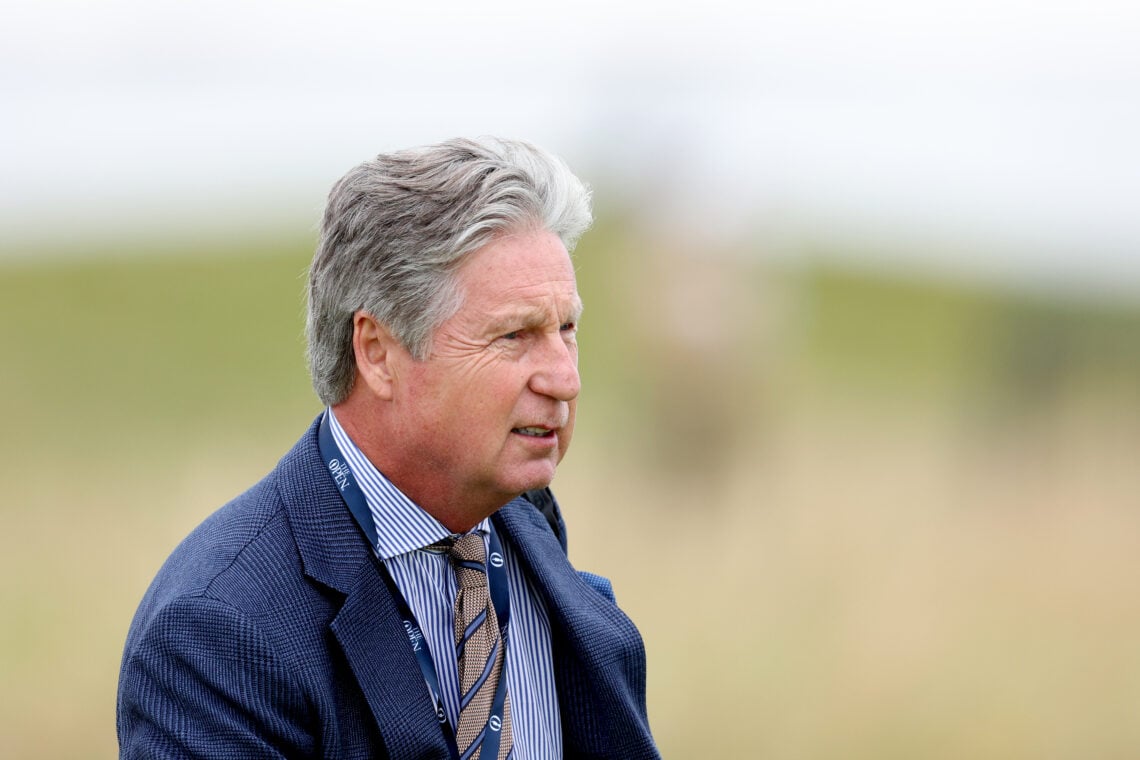
Brandel Chamblee says LIV Golf stars got a "slap in the face of reality" as the breakaway tour officially shuts its doors.
The Golf Channel analyst did not hold back.
LIV Golf is set to close after private capital firm BC Partners pulled its bid to relaunch the league in 2027.
The London-based investment firm cited a lack of player support necessary to hold competition in the new year.
The news comes after a months-long fight by LIV Golf to stay above water.
The Saudi Arabian Public Investment Fund (PIF), which launched the league back in 2022, withdrew its financial support at the end of the 2026 season.
PIF attracted some of golf’s biggest stars with multi-million dollar contracts.
Losing that backing was a major blow to LIV Golf’s leadership, including CEO Scott O’Neil.

O’Neil worked for several months to secure investment partners and keep the project from going bankrupt.
BC Partners agreed to relaunch the league with a 17-tournament schedule that maintained the team format.
That team format distinguishes LIV Golf from traditional golf organizations like the PGA Tour and DP World Tour.
But after failing to get player commitment, BC Partners withdrew their bid.
Chamblee, a longtime critic of LIV Golf and those who agreed to join it, made his feelings clear after the tour reached the end of the road this week.
“You can point the finger in a lot of places,” Chamblee said.
“In order for it to move forward, you needed some cooperation from whatever players were going to make up LIV 2.0.”
“The players and their representatives, from what I have read, were making financial demands that could not be met.”

Chamblee then explained what he thinks the Saudi money really was.
“What the Saudis were paying these players, I would call hazard pay,” he said.
“They knew that they were going to take on reputational damage, they knew it would be disruptive and they knew it would be disruptive for their careers.”
The players were offered significant ownership in the new league.
“These players were going to have 52.5 percent ownership of the product going forward,” Chamblee said.
“And the fact they were unwilling to take on that ownership tells you that they didn't have any belief that it would work.”
He delivered his sharpest line about their sense of self-worth.
“They all thought they were beachfront property in Malibu but the market was telling them your timeshare is in Toledo.”

“Finally they got a slap in the face of reality.”
The amount of money flowing to LIV Golf players was enormous.
Contracts and tournament prize money — $25 million or more was awarded to the individuals and teams who won each tournament — was the main draw.
Players like Bryson DeChambeau and Jon Rahm left the PGA Tour for a brand-new, unproven breakaway league.
Many like Chamblee were critical of golfers like DeChambeau and Rahm for their choices.
Chamblee claimed the players were fueled by greed rather than continuing to play at the highest level of competition in the PGA Tour.
Now, with LIV Golf set to fold, Chamblee is having the last laugh.
The league will leave an incredibly complex legacy.

Starting with the positives, the league did force the PGA Tour to abandon its complacency.
Those at Ponte Vedra certainly took the loyalty of their members for granted.
The appointment of Brian Rolapp was a big step in the right direction.
It is probably fair to say that LIV forced the PGA Tour to get its act together.
However, the league highlighted the greed within the game.
Many players who were already incredibly wealthy were prepared to turn a blind eye to the problems associated with where LIV’s funding was coming from.
It is likely that the PGA Tour and DP World Tour will endure some difficult times as they handle the consequences of the game’s civil war over the last five years.
It is going to be some time before it becomes fully apparent just what a mess LIV made.

Chamblee’s closing thought was blunt.
He suggested the players finally understood their position when it was too late.
They had no belief that they, as a group of players, could make the league work.
The ownership offer of 52.5 percent was a test, and the players failed it.
Now the league is gone.
The question that remains is what happens to the players who left the PGA Tour.
Will they be allowed back?
Should Bryson DeChambeau be allowed back on the PGA Tour unpunished?
That debate is just beginning.
For now, Chamblee’s voice is the one ringing loudest over the collapse.
He called it exactly what he saw: a slap in the face of reality.
Advertisement
You may also like
Kim Kardashian’s co-stars call her the greediest woman on set.
Kim Kardashian's All's Fair co-stars brand her the 'greediest woman' they have ever met. Niecy Nash-Betts said it on Good Morning America. Kim eats…
Kyle Larson's Secret Marathon Plan for NASCAR Title Revealed
“More Thought Behind This Than the Chase”—Kyle Larson Reveals Unorthodox Marathon Regimen Fueling Championship Bid Kyle Larson is training for his first marathon. He…
WTA Finals Drama: Group Photo Canceled Over Svitolina-Andreeva Feud
Road to the WTA Finals: The eight doubles teams heading to Indian Wells. The 2026 WTA Finals Indian Wells doubles field is a mix…
WWE Blocked Chad Gable’s GCW Debut at the Last Minute
GCW promoter Brett Lauderdale revealed on November 5, 2026 that WWE superstar Chad Gable was booked for Josh Barnett's Bloodsport X in April 2024.…
Sophie Cunningham shuts down 'dumb' internet fury over Team USA no-shows
Sophie Cunningham, a shooting guard for the Indiana Fever, has publicly questioned why WNBA players miss so many wide-open layups. She did not hold…
Shedeur Sanders Sparks Backlash Before Even Taking the Field
BEREA — Quarterback Deshaun Watson missed his second straight practice Thursday due to a concussion. That makes it increasingly likely Shedeur Sanders will start…