CJ Gunn Ruled Ineligible by SEC After Court Order Expires Over Canadian Pro Contract
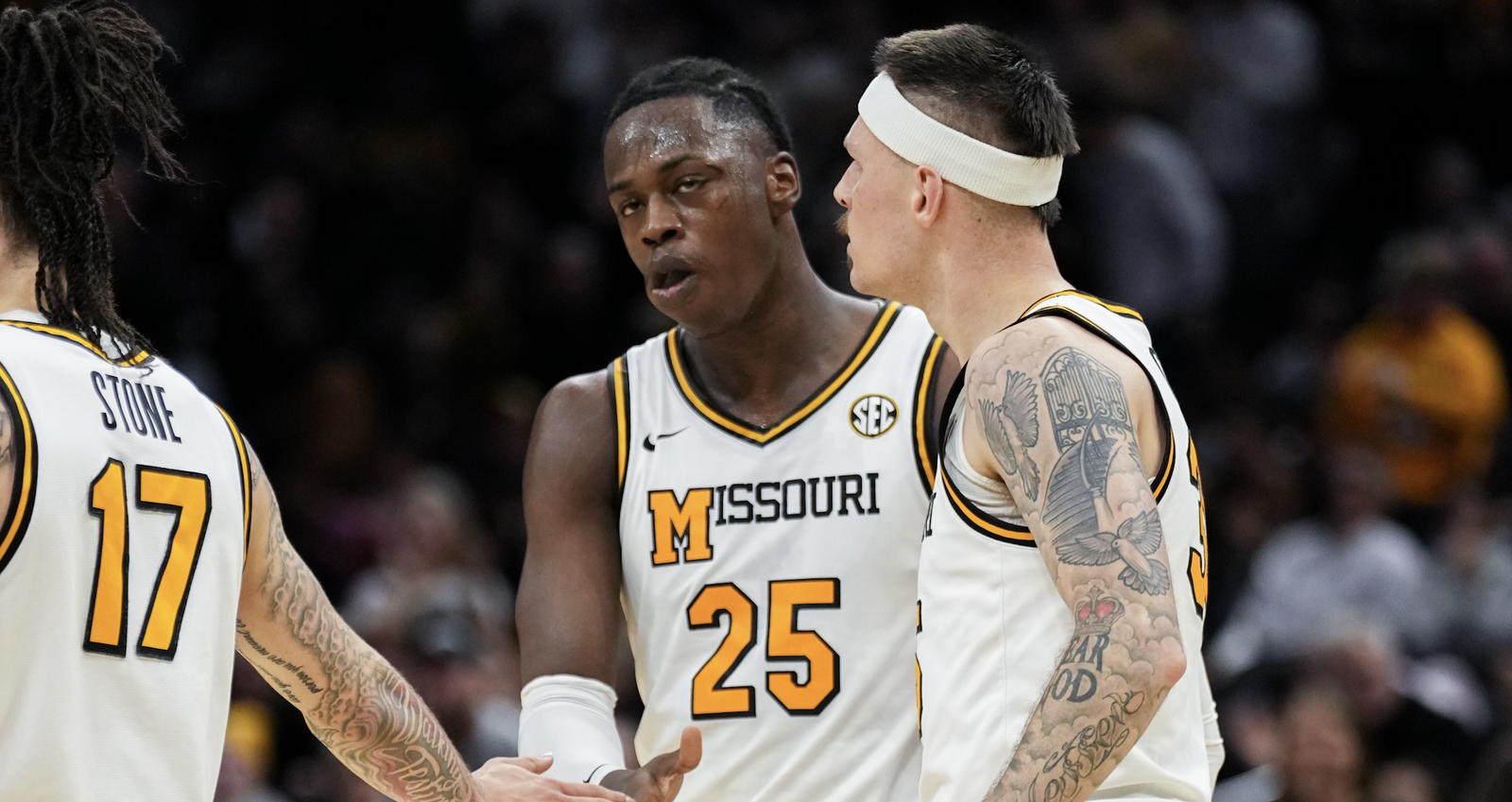
DePaul transfer CJ Gunn has been ruled ineligible by the SEC after a temporary restraining order expired, leaving him off Missouri's final roster following a three-game professional stint in Canada.
The Southeastern Conference made the ruling official just ahead of the start of the 2026-27 men's college basketball regular season.
Matt Norlander of CBS Sports first reported the conference's decision regarding the Missouri guard.
The development marks a sudden and costly conclusion to Gunn's pursuit of immediate college eligibility.
Missouri faced a strict deadline to deliver its official team roster to the conference office on Monday evening.
A university athletics spokesperson confirmed to The Star that Gunn was not included on the final submission.
THE LEGAL CLOCK RUNS OUT
Gunn had turned to the legal system to challenge existing governing regulations and secure his place on the court.
His primary aim was to obtain a preliminary injunction against the National Collegiate Athletic Association.
Such an injunction would have allowed the guard to play under the governing body's newest five-year eligibility rule.
To advance his claim, Gunn initially participated in a legal challenge based in the state of Texas.
He subsequently withdrew from that lawsuit to pursue an individual filing within Boone County, Missouri.
The local court granted Gunn a temporary restraining order, commonly referred to as a TRO in legal proceedings.
A temporary restraining order serves as emergency relief designed to preserve the status quo until formal hearings occur.
In collegiate athletics litigation, such orders frequently allow athletes to practice or compete while arguments are prepared.
Gunn's restraining order had already received an extension from the court during the preseason period.
However, that legal protection carried a firm expiration time of 5 p.m. on Monday.
When the court clock hit that deadline without further legal relief in place, Gunn lost the shield permitting his clearance.
THE CANADIAN PRO CONTRACT
The central issue surrounding Gunn's eligibility stems from his brief tenure in professional basketball north of the border.
Following the conclusion of the 2025-26 collegiate basketball campaign, Gunn pursued opportunities at the professional level.
He earned formal pre-draft workouts with multiple NBA franchises, including the Indiana Pacers and the Golden State Warriors.
Despite those evaluations, Gunn went unselected during the annual NBA Draft.
Following the draft, Gunn chose to sign a contract to play in the Canadian Elite Basketball League.
Known as the CEBL, the league operates as a professional basketball organization throughout the summer months across Canada.
Gunn joined the Calgary Surge, appearing in three total contests for the franchise.
For his participation in those three games with Calgary, Gunn received compensation totaling $524.
That professional agreement proved to be the decisive obstacle under the conference's governing framework.
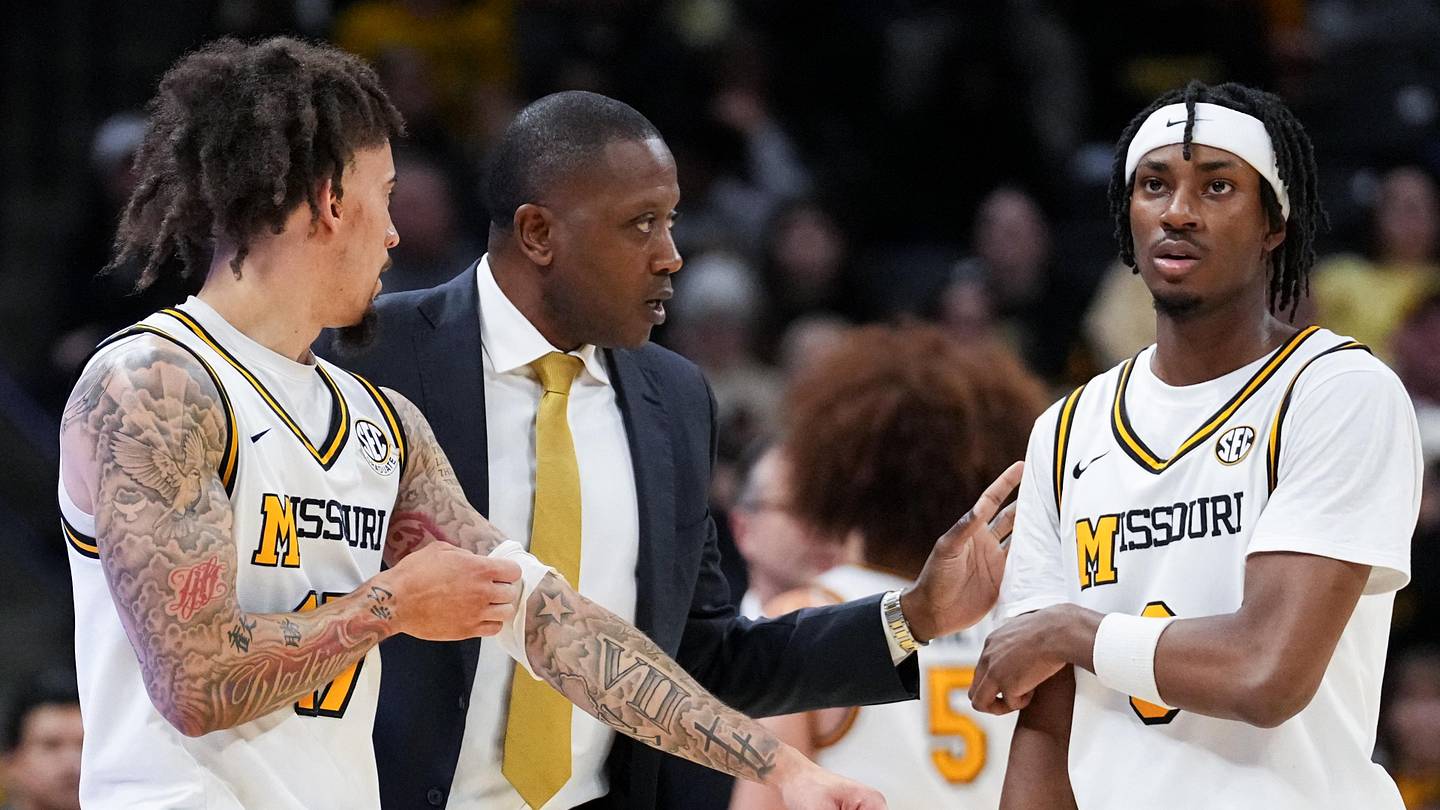
Signing a professional contract directly violates the latest eligibility standards established by the Southeastern Conference.
Under college sports governance, conferences maintain the authority to enforce eligibility requirements that can be stricter than federal court pauses.
During his court proceedings, Gunn took active steps to address the financial component of his time in Canada.
Norlander reported that Gunn repaid the entire $524 he had earned with the Surge as part of the temporary restraining order terms.
Yet despite returning those earnings, the initial signing of the deal left him vulnerable once the court order expired.
With no active judicial ruling superseding the conference regulations, the league officially barred him from competition.
CURRENT STATUS WITH THE PROGRAM
Despite being ruled ineligible for competition this season, Gunn is not departing the University of Missouri.
The university spokesperson confirmed that while left off the SEC roster submission, Gunn remains part of the program.
Gunn continues to be listed as a member of the roster on the athletic department's official website.
He is expected to remain connected to the team in a non-competing capacity as the season unfolds.
Gunn had already been held out of game action during Missouri's preseason preparation schedule.
He did not participate in either of the Tigers' public exhibition games against Kansas State or UNLV.
DOUBLE TROUBLE FOR MIZZOU
The loss of Gunn represents only half of a difficult roster update announced by Missouri head coach Dennis Gates on Monday.
The Tigers also learned they will be without senior forward Jaylen Carey for the foreseeable future.
Gates announced that Carey has received an indefinite suspension due to an undisclosed violation of team rules.
Carey arrived in Columbia as a transfer from the University of Tennessee ahead of the current season.
Missouri marks the fourth different collegiate program in four seasons for the 6-foot-8 frontcourt player.
During his previous campaign with Tennessee, Carey established himself as a reliable contributor in the frontcourt rotation.
He averaged 7.4 points and 6.0 rebounds per game for the Volunteers throughout the previous season.
When pressed by reporters for further context surrounding the suspension, Gates declined to elaborate.
Gates offered a lighthearted reaction while keeping the internal details private.
"Choose not to," Gates said regarding whether he would share details on the suspension.
"I shared that one, and I usually don't share it," Gates added with a smile.
"Y'all shocked that I shared it."
Carey joined Gunn as a spectator during the exhibition matchups against Kansas State and UNLV.
THE MARK MITCHELL PRECEDENT

While Gunn's legal effort ended in a roster omission, Missouri has navigated a parallel courtroom scenario with Mark Mitchell.
Mitchell, an All-SEC fifth-year forward and Kansas City, Kansas native, remains eligible for the Tigers.
His eligibility status also traces back to the courtroom, though under a different legal jurisdiction.
On Oct. 16, a Kentucky court granted Mitchell and several other state-connected college athletes an injunction against the NCAA.
Gates actively supported his forward by testifying in person on Mitchell's behalf during that judicial hearing.
The NCAA has formally appealed that injunction, leaving the dispute in the hands of an appellate court.
It remains undetermined when that appellate court will issue its definitive ruling on the matter.
Because an appellate decision could theoretically reverse the injunction at any moment, Gates faces tactical uncertainty.
Gates confirmed that Mitchell will play significant starter minutes in the regular season opener against Cleveland State.
However, the head coach acknowledged he has not determined whether Mitchell will be introduced in the starting five.
"I have to still build a program while thinking of the risk," Gates explained to reporters.
"So how do I keep the integrity of the team, right?"
"I have to figure out if I'm gonna start him or not, and I have not made a decision."
"So those things play a role because you don't want interruption and growth taken away from the guys that long term can benefit from that, like a freshman in Toni Bryant or even a sophomore in Bryson Tiller."
"I want guys to be able in their first year to operate in a way that they're not interrupted."
"Mark has done a great job."
"The team has done a great job, but me as a head coach, that's the risk that I have to look into and figure out what I'm gonna do."
Unlike Gunn, Mitchell competed in both preseason exhibition contests for Missouri.
LOOKING AHEAD TO THE OPENER
Missouri enters its season-opening contest against Cleveland State on Tuesday night with an altered squad.
Dennis Gates must navigate the loss of two veteran rotational pieces who were expected to contribute immediately.
Carey remains sidelined indefinitely, waiting for a resolution to his internal team suspension.
Gunn's collegiate path faces an insurmountable roadblock due to the league's strict stance on professional play.
The contrast between Mitchell's active injunction and Gunn's expired restraining order illustrates the precarious nature of modern eligibility battles.
Athletes increasingly rely on local judges to maintain their status on university rosters.
When those emergency judicial orders lapse, conference bylaws assert full control over who steps on the floor.
For CJ Gunn, repaying three game checks was not enough to satisfy the league's front office.
Do you agree with the SEC ruling CJ Gunn ineligible after he repaid the $524 he earned in Canada?
Advertisement
You may also like

NBA champion Steve Kerr trolls Donald Trump with a savage jab
Golden State Warriors head coach Steve Kerr took a sharp, humorous jab at President Donald Trump during his Wednesday media availability, referencing a campaign…

John Cena’s subtle salute to Gunther after his return
John Cena made a surprise appearance on the Oct. 30, 2026 edition of WWE NXT. As he walked to the ring, he stopped in…

Braden Smith Makes NBA Debut With the Pacers
Purdue basketball alum Braden Smith makes NBA debut with the Pacers. Braden Smith, the former Purdue Boilermakers guard, stepped onto an NBA floor for…

Red Wings vs. Golden Knights Live Score and Game Updates
NHL.LIVE: Detroit Red Wings vs Vegas Golden Knights LIVE STREA.MS NHL Game On TV Coverage 6 Nov 2026. Puck drop is set for 7…

Business leaders face a tough choice with workplace monitoring.
Big Brother 2026 has officially crowned a winner. Rochelle took the title on the live final, hosted by AJ Odudu and Will Best on…

WWE Plans Huge 30th Anniversary Celebration for The Rock
WWE is planning to celebrate 30 years of The Rock this month. Plans include a commemorative championship belt. Special merchandise releases are also in…