Dale Jr. Reveals Historic 59-Race Martinsville Stat as Fans Clash Over Green-Flag Action
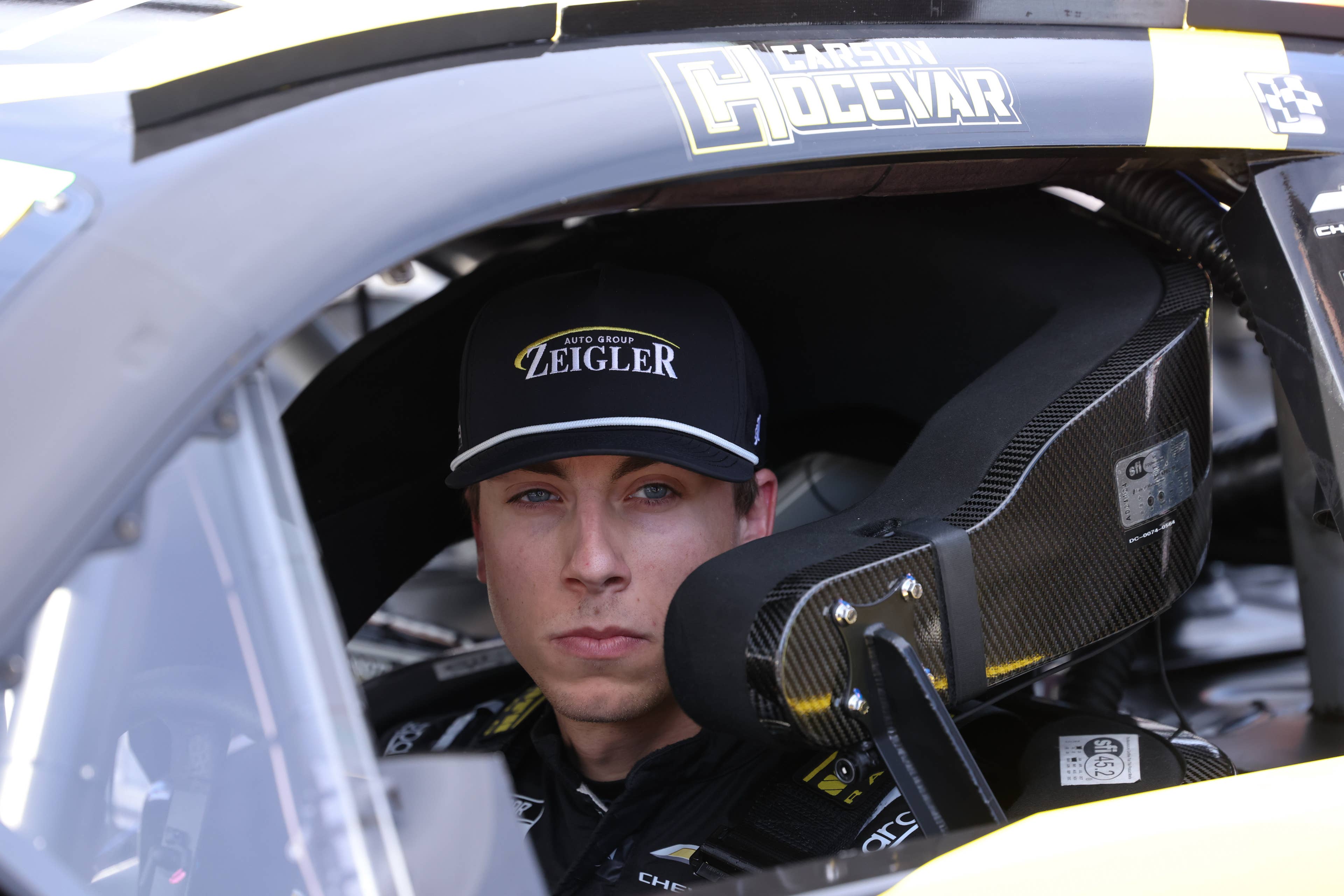
Dale Earnhardt Jr. revealed that Sunday's race at Martinsville featured the track's longest green-flag run since September 1987, spanning 59 Martinsville races.
The NASCAR Hall of Fame driver uncovered the remarkable historical statistic while reflecting on the 500-lap Cup Series showdown during a recording of Denny Hamlin's podcast, Actions Detrimental.
"You talk about the lack of yellows, in this first stage, also at the back half of the race; that was the longest green-flag run at Martinsville since September 1987, 59 Martinsville races ago. I would have never guessed that," Earnhardt Jr. said.
For a historic half-mile track renowned for constant yellow flags and bumper-to-bumper aggression, an uninterrupted run of that magnitude had not been recorded in nearly four decades.
Yet, rather than uniting spectators in appreciation for long-run driving skill, the absence of caution flags ignited a fierce debate across the racing world.
NASCAR fans found themselves sharply divided over whether the marathon green-flag stretch showcased authentic racing or ruined the overall entertainment value of the event.
AN UNTIMELY PRAISE ON SOCIAL MEDIA
The fan backlash began after Earnhardt took to X to share an optimistic reaction while watching the competition unfold.
Seeing what he felt were positive signs of passing and tire wear, the JR Motorsports co-owner felt compelled to compliment the on-track product.
Earnhardt wrote on X: "Martinsville used to be one of the hardest races to watch with the Next Gen. It was follow the leader. No one could get within a car length of each other. Just horrid. It’s greatly improved this season. Some of it is tire, some is car. Good direction to keep going in tho."
His message was intended to highlight genuine progress regarding NASCAR's ongoing technical development for short tracks.
Ever since the debut of the Next Gen platform, short tracks have posed a continuous challenge for drivers trying to make competitive passes.
Earnhardt recognized that mechanical and tire modifications had finally allowed cars to get closer to one another than in previous years.
However, the timing of his public post proved unfortunate as the flow of the race took a sharp and unexpected turn.
"I sent out a social media post. I said, ‘Martinsville has been unwatchable. This is way better. Good direction. Whatever we’re doing, keep going. Tire, car, there’s been a lot of changes.’ And then as soon as I said that, we had like 250 laps straight at Green Flag Run. People apparently didn’t seem to enjoy it," Earnhardt told Hamlin on Actions Detrimental.
FANS VENT AS THE GOOD RACE POLL COLLAPSES

Within hours of the checkered flag, frustrated viewers flooded Earnhardt's timeline with sharply critical replies.
The long, uninterrupted run allowed the leader to build a massive gap over the field, minimizing chaotic restarts and dramatic lead changes.
Fans who tuned in expecting traditional Martinsville carnage were left watching cars tick off lap after lap in single-file rhythm.
Earnhardt realized the extent of the audience's frustration when he checked industry polling the following morning.
Journalist Jeff Gluck's weekly "Was It a Good Race?" poll quickly became a referendum on the afternoon's lack of interruptions.
"I got on Jeff Gluck’s social media this morning, seeing the good race poll. Where is it at? Below 50%. It is in the tank," Earnhardt acknowledged during the broadcast.
The sub-50 percent score confirmed that a majority of responding viewers felt disappointed by the marathon green-flag stretches.
HAMLIN EXPLAINS THE MODERN AUDIENCE
Sitting across the table, Denny Hamlin offered a direct explanation for why contemporary viewers react so negatively to clean racing.
"They just don’t like it when someone gets control of the race and never relinquishes it. It’s midway through the race. Not a fan," Hamlin stated.
The Joe Gibbs Racing veteran suggested that modern spectator habits have shifted dramatically over the past several racing generations.
Today's audiences are accustomed to high-stakes late restarts, double-file scrambles, and frequent cautions bunching up the field.
When a single competitor seizes complete control and stretches their lead over hundreds of circuits, home viewers quickly grow impatient.
Hamlin pointed out that technical nuance and mechanical endurance often take a backseat to raw conflict in the minds of today's spectators.
THE ONGOING SHORT TRACK CONUNDRUM
The conversation between the two veteran drivers highlighted the ongoing identity crisis facing NASCAR's premier short tracks.
Martinsville Speedway represents the absolute foundation of stock car racing history, having hosted premier events since the sport's earliest days.
Its tight paperclip layout was built around heavy braking zones where drivers traditionally used the chrome bumper to complete difficult overtakes.
The arrival of the Next Gen car introduced independent rear suspension, rack-and-pinion steering, wider tires, and massive aluminum brakes.
Those advanced performance components significantly shortened braking zones, making it far harder to dive underneath an opponent without severe aerodynamic consequences.
NASCAR and Goodyear responded by testing varied tire compounds and aerodynamic alterations to restore multi-groove capability and tire degradation.
Earnhardt was convinced that the adjustments produced tangible gains on Sunday, even if the lack of yellows masked the achievement.
He insisted that drivers were racing closer than before, even though the historic 59-race green-flag anomaly made the race feel monotonous to critics.
CHAOS IN THE MIDDLE: THE CARSON HOCEVAR FALLOUT
Despite the long stretches of green-flag racing, the afternoon was not completely devoid of short-track chaos.
A dramatic controversy erupted during the middle stages involving Spire Motorsports rookie Carson Hocevar and Team Penske driver Austin Cindric.
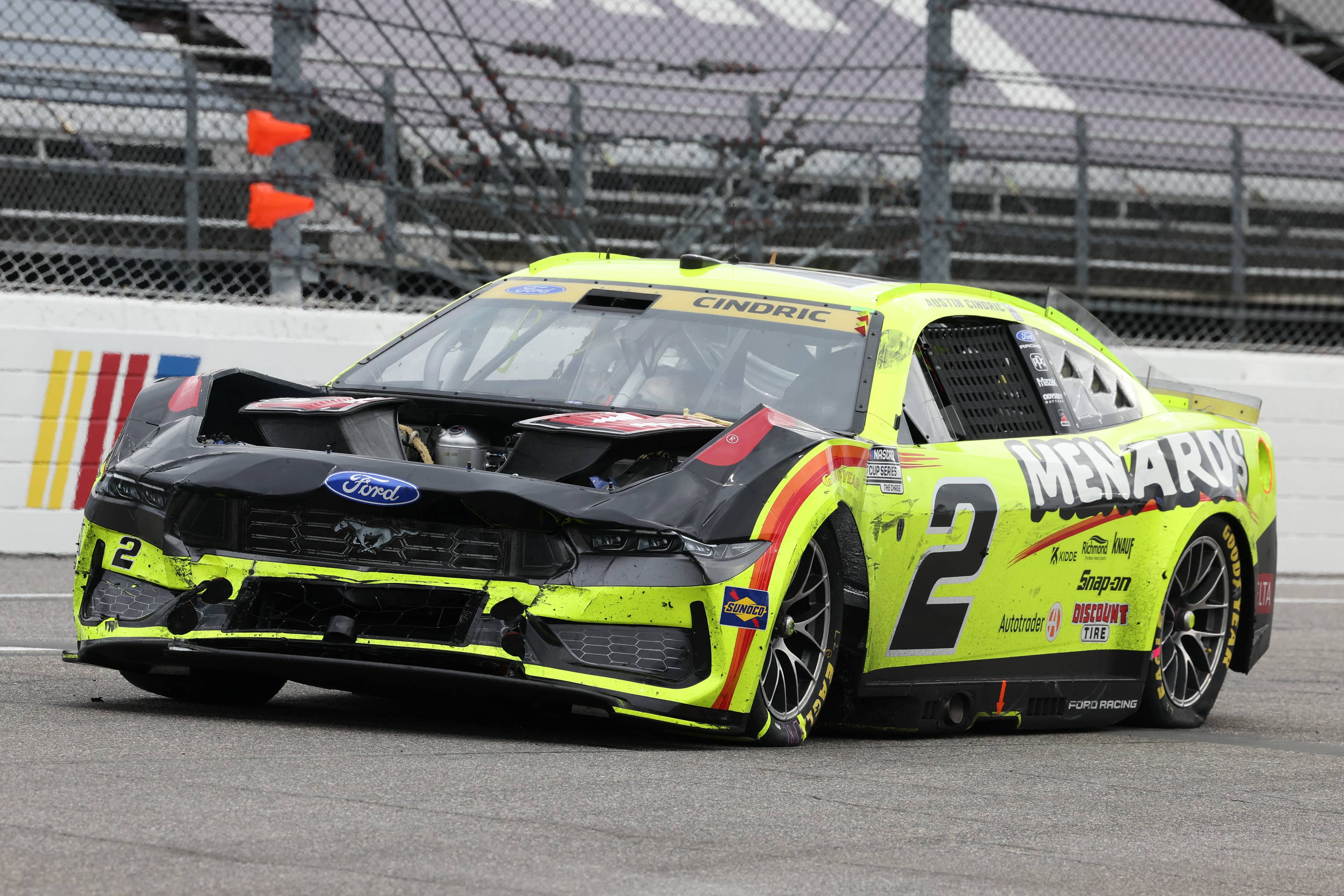
Hocevar repeatedly brake-checked Cindric during their battle, resulting in severe front-end damage to the No. 2 Penske Ford.
The damage effectively ended Cindric's race, prompting widespread fury throughout the garage and setting off intense debates over driver discipline.
That confrontation triggered its own sharp exchange between Hamlin and Earnhardt during their podcast appearance.
Hamlin openly criticized Dale Jr. on air regarding his views on the matter, stating: "this is the part of you that I don't like."
While industry observers debated whether NASCAR officials should issue a suspension, Spire Motorsports stepped in with internal discipline.
Spire announced that Hocevar has been suspended for the upcoming 2026 NASCAR Cup Series Championship Race at Homestead-Miami Speedway.
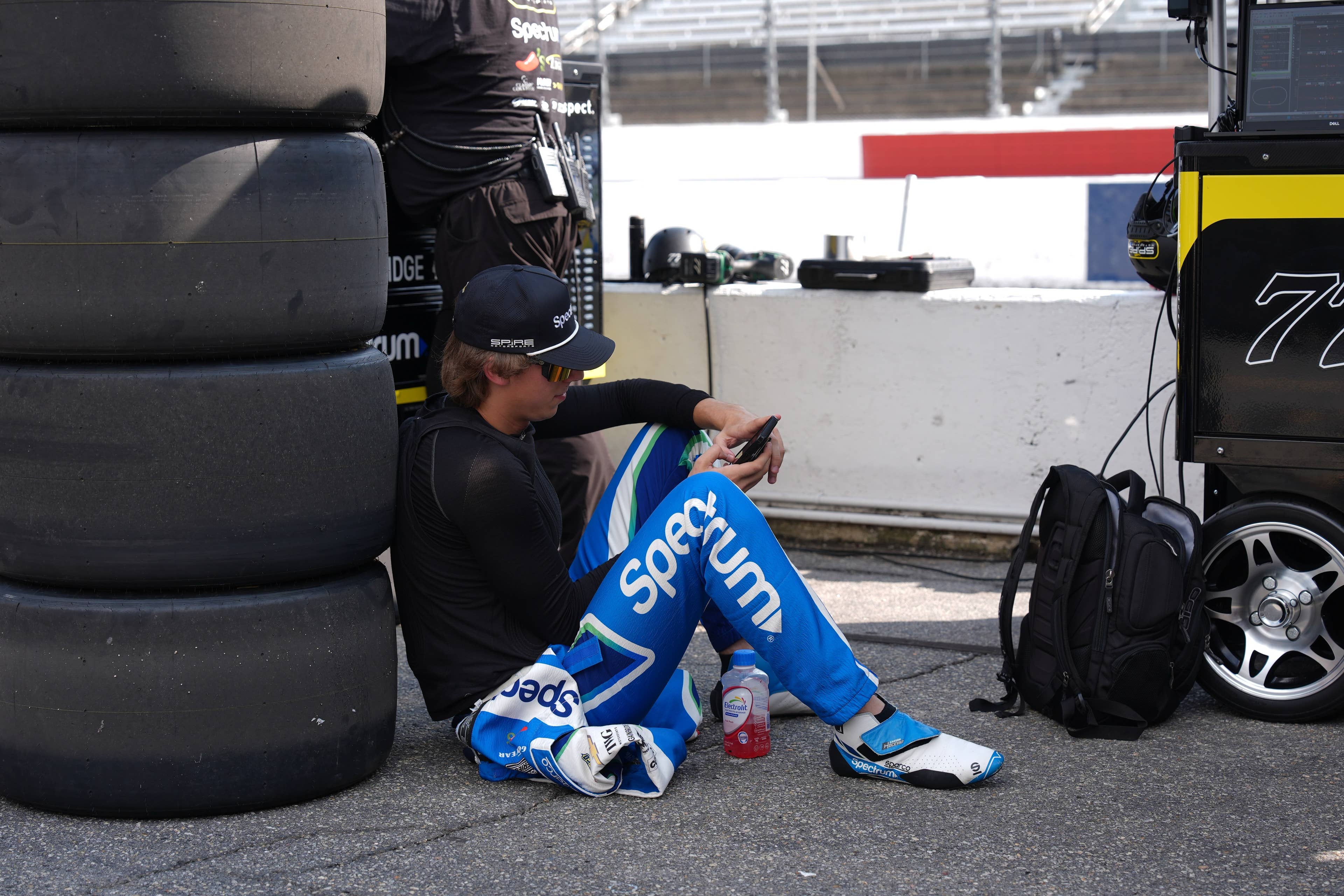
The team confirmed that Justin Haley will pilot the No. 77 Spectrum Chevrolet Camaro ZL1 in Hocevar's place for the season finale.
Spire co-owner Jeff Dickerson published an extensive statement explaining the organization's firm stance.
"A decision like this has a lot of variables and a cascading effect across an organization like ours. The easy thing would have been to leave this in NASCAR’s hands and let them decide what any penalty should be. To us, however, this isn’t about money or points. We believe in respect. Our integrity matters. This is the right decision for Spire Motorsports," Dickerson said.
Dickerson emphasized that the team's affection for the young driver did not excuse conduct that breached professional standards.
"Everyone here loves working with Carson, and we’ve enjoyed watching him thrive alongside our team. Sometimes the right decision for someone you care about hurts in the short term. The way Carson conducted himself at Martinsville doesn’t meet the standard we set for our drivers, team members, or employees, and there are consequences for that. That doesn’t mean we don’t love him and support him," Dickerson added.
Dickerson concluded by reminding competitors that driving in the Cup Series remains an earned privilege that requires accountability.
"Racing at the Cup level is a privilege, and it comes with an expected level of professionalism from everyone who represents Spire Motorsports," Dickerson stated.
PURE MOTORSPORT VERSUS THE ENTERTAINMENT ERA
The contrast between the Hocevar controversy and the 250-lap green-flag stretch captures NASCAR's central modern dilemma.
Traditional racing purists revere long green-flag stretches because they reward tire management, physical stamina, and mechanical reliability.
When cars run uninterrupted for hundreds of laps, drivers must navigate lap traffic, preserve equipment, and execute flawless green-flag pit stops.
The fact that Sunday marked the longest green-flag run at Martinsville since 1987 underscores how truly historic the occasion was.
Back in September 1987, Cup Series machinery lacked modern telemetry and relied on raw, bias-ply tire management.
Yet the modern audience, conditioned by stage cautions and overtime shootouts, increasingly views prolonged green-flag stints as uninteresting.
Earnhardt's revelation of the 59-race milestone proved that while history was made on the track, history alone does not satisfy every fan.
As the series heads into Homestead-Miami Speedway, the debate over how short tracks should race will remain front and center.
Do you enjoy rare, marathon green-flag runs at short tracks like Martinsville, or does the lack of cautions ruin the entertainment?
Advertisement
You may also like

NBA champion Steve Kerr trolls Donald Trump with a savage jab
Golden State Warriors head coach Steve Kerr took a sharp, humorous jab at President Donald Trump during his Wednesday media availability, referencing a campaign…

John Cena’s subtle salute to Gunther after his return
John Cena made a surprise appearance on the Oct. 30, 2026 edition of WWE NXT. As he walked to the ring, he stopped in…

Braden Smith Makes NBA Debut With the Pacers
Purdue basketball alum Braden Smith makes NBA debut with the Pacers. Braden Smith, the former Purdue Boilermakers guard, stepped onto an NBA floor for…

Red Wings vs. Golden Knights Live Score and Game Updates
NHL.LIVE: Detroit Red Wings vs Vegas Golden Knights LIVE STREA.MS NHL Game On TV Coverage 6 Nov 2026. Puck drop is set for 7…

Business leaders face a tough choice with workplace monitoring.
Big Brother 2026 has officially crowned a winner. Rochelle took the title on the live final, hosted by AJ Odudu and Will Best on…

WWE Plans Huge 30th Anniversary Celebration for The Rock
WWE is planning to celebrate 30 years of The Rock this month. Plans include a commemorative championship belt. Special merchandise releases are also in…