Daniil Medvedev Threatens To Retire In Paris After Seven Consecutive Weeks On Tour
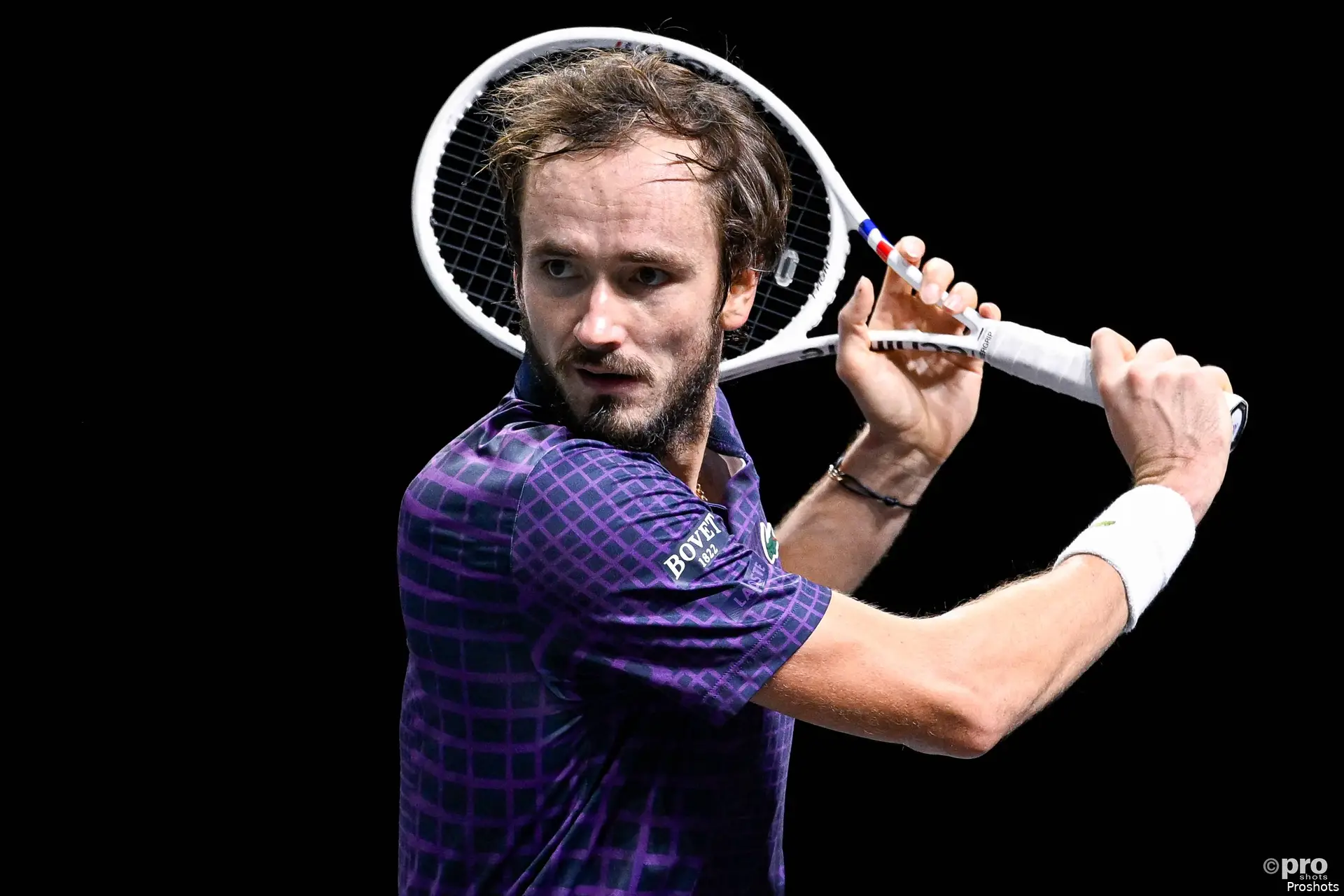
During his heated changeover at the Paris Masters, Daniil Medvedev claimed he had torn his adductor and questioned whether he should retire from the match after seven straight weeks of competition.
The dramatic scene unfolded during what turned out to be an abrupt exit from the French capital.
Medvedev suffered a straight-sets defeat at the hands of Ignacio Buse, falling 6-4, 6-4 in his opening contest.
Yet the scoreboard told only part of the story on a chaotic afternoon in Paris.
The former world number one found himself locked in an explosive confrontation with tournament officials.
Tensions flared after chair umpire Adel Nour issued an unsportsmanlike conduct code violation against the Russian.
Medvedev immediately protested the ruling and brought both the umpire and supervisor into a tense debate.
CONFRONTATION AT THE CHANGEOVER
The dispute began when Medvedev took issue with the umpire penalizing him for scraping his racket against the court surface.
Visibly furious, Medvedev demanded immediate answers from tournament supervisor Cédric Mourier.
The Russian spoke in fluent French as he directed his grievances toward the tournament's senior official.
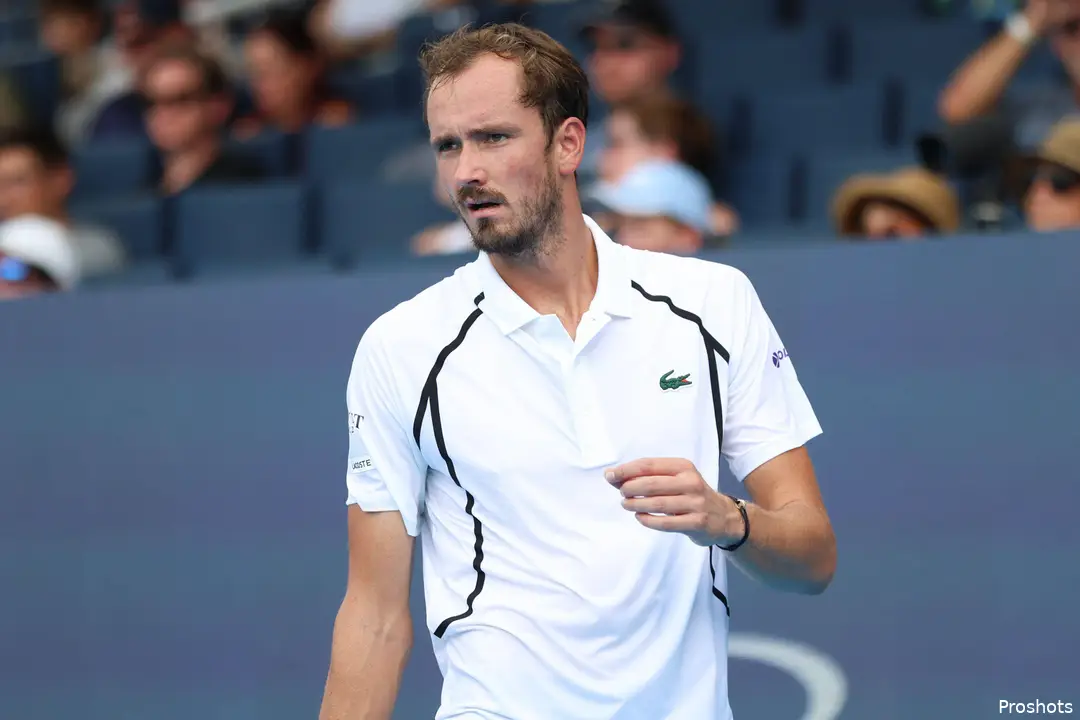
Medvedev openly questioned what the consequences would be if he simply stopped playing right then and there.
“If I retire, what do I get? My legs hurt really badly. I'm in a lot of pain, I can't play. Do we call the physio? Physio!”
Supervisor Mourier pressed Medvedev to clarify whether he intended to continue competing in the match.
Medvedev made it clear that his frustration with the warning was tied directly to his physical agony.
“No! That's a racket scrape and I get an unsportsmanlike warning for nothing? I don't feel like playing, I'm calling the physio,” Medvedev vented.
“I just tore something in my leg. If the physio decides there's nothing wrong, I'll play. But I tore my adductor, and I've been playing for seven weeks.”
THE DISPUTED CODE VIOLATION
The dispute quickly pivoted back to chair umpire Adel Nour and the mechanics of the penalty call.
Medvedev argued passionately that his actions on court did not warrant an official sanction.
“I can't hit the ground? Every time it's something new? How many times? Five times? What happens if it's not five? Do you apologize after the match?”
According to explanations provided during the on-court discussion, Nour had counted five distinct gestures toward the court surface.

The umpire also noted two visible marks left on the indoor court as justification for the warning.
Medvedev maintained that he had been penalized unfairly and voiced deep skepticism over the umpire's tally.
In professional tennis, chair umpires hold the authority to issue code violations for racket abuse or unsportsmanlike conduct if court surfaces are damaged.
Such warnings usually carry escalating penalties, beginning with a point penalty for a second offense and escalating to game penalties or defaults.
Medvedev felt the threshold had been applied inconsistently against him in front of the Paris crowd.
A FRUSTRATING PARIS TRACK RECORD
The defeat to Ignacio Buse continued a deeply frustrating trend for Medvedev at the Paris Masters.
Although he previously reached the tournament final, the venue has delivered repeated disappointment in recent seasons.
Medvedev has now been eliminated in the second round in four of the last five editions of the Paris event.
His latest loss to Buse halted what had otherwise been an exceptional run of form on the ATP Tour.
Prior to this week, Medvedev had reached at least the semifinal stage in four consecutive tournaments.

He had also claimed two singles titles during that blistering stretch of late-season tennis.
The opening-round loss to Buse represented his first failure to make the final four across his last five events.
FATIGUE AND A RELENTLESS SCHEDULE
The physical breakdown Medvedev reported on court highlights the immense toll of the modern professional calendar.
Medvedev arrived in Paris having endured seven consecutive weeks of continuous competition on tour.
A non-stop itinerary across multiple time zones and court surfaces places heavy stress on an athlete's body.
The adductor muscles in the inner thigh are especially vulnerable during sudden lateral stops and sliding movements on hard courts.
An adductor strain or tear severely limits a player's ability to push off, change direction, or maintain balance.
Medvedev had pushed his body relentlessly over the preceding two months to secure vital ranking points.
That exhaustive push accomplished its primary sporting objective by locking up his qualification for the season-ending ATP Finals.
Yet the accumulation of physical fatigue left him vulnerable and visibly agitated during his opening match in France.
COURT CONDITIONS DRAW SCATHING CRITIQUE
Following his loss, Medvedev did not hold back in his assessment of the conditions inside the arena.
Speaking to BB Tennis in his post-match interview, the Russian expressed deep bewilderment regarding court speed.
He revealed that the practice courts at the National Tennis Centre felt vastly different from the competition courts at the venue.
"Personally, I was having a blast at the NTC yesterday. The courts there… even though people say they're fast, they actually felt slow to me."
"I just arrived here today, and it's ten times faster, which, again, raises some questions. Why is the court over there so much slower? It was really tough to get into a rhythm and play well."
Discrepancies in indoor surface speed frequently disrupt baseline rhythm and timing for top players.
For a counterpuncher like Medvedev, who relies on deep court positioning and prolonged rallies, unexpected pace creates major tactical hurdles.
NO DESIRE FOR THE ATP FINALS
Perhaps the most startling admission from Medvedev came when discussing the remaining tournament on his 2024 calendar.
The ATP Finals feature only the top eight singles players in the world and offer substantial ranking points and prize money.
While rivals like Novak Djokovic have battled vigorously to secure qualification, Medvedev claimed he feels completely drained.
"To be honest, I don't really have the desire to play anymore this season, but I'll have to."
His candid remarks reflected a player battling complete mental and physical exhaustion after months of unrelenting competition.
The ATP tour rules mandate that qualified players must participate in the season finale unless sidelined by verified injury.
With huge financial rewards available for an undefeated run, Medvedev's complete apathy toward the event startled tennis observers.
A PATTERN OF ON-COURT VOLATILITY
This dramatic episode in Paris is not the first time Medvedev has expressed a desire to walk away mid-match recently.
During his run at the Shanghai Masters, Medvedev similarly threatened to retire during his semifinal contest.
He also recently suffered a disqualification from a match amid rising tensions with match officials.
Following his exit in Paris, Medvedev turned his fury toward the ATP's penalty and fine structure.
He slammed the current disciplinary system as unfair and incorrect, claiming players are unjustly penalized.
His recent grievances suggest an escalating rift between the former Grand Slam champion and governing body regulations.
Whether his adductor injury will permit him to take the court at the ATP Finals remains an open question.
If the Russian does compete, he faces the daunting task of rediscovering his motivation and physical health against the world's elite.
Given how many weeks players compete late in the season, does the ATP tour schedule push athletes past their physical breaking points?
Advertisement
You may also like
Sabalenka stars in holiday ad with Brady, Beckham, Hart
Aryna Sabalenka flexes acting chops in holiday ad with Tom Brady, David Beckham, Kevin Hart. WTA World No. 2 tennis player Aryna Sabalenka is…

Atlanta Braves Beat Earnings but the Season Is Far From Over
Atlanta Braves Holdings Reports Third Quarter Earnings: A Successful Season, Not Yet Completed. The publicly traded company that owns the Atlanta Braves and its…
Dylan Larkin trade hinges on one prospect: James Hagens
James Hagens is the dealbreaker in potential Dylan Larkin trade. The Boston Bruins want suspended Detroit Red Wings center Dylan Larkin. But the Red…

Mahomes Snub Ignites Fan Fury Over Rodgers' Playoff Take
Michael Fedele, founder and CEO of Throne SPORT COFFEE, has been working closely with Patrick Mahomes for years. In an interview with Chiefs Wire's…

Kerr compares Warriors rookie to Michael Jordan
Steve Kerr has seen greatness up close. As a player, he won three championships alongside Michael Jordan on the Chicago Bulls. As a coach,…
James Blunt Reveals Cut Celebrity Traitors Interrogation of James Acaster
James Blunt has lifted the lid on James Acaster’s dramatic Celebrity Traitors downfall, claiming the comedian faced a much tougher grilling than BBC viewers…