Darren Till Exposes Daniel Cormier’s Commentary Bias
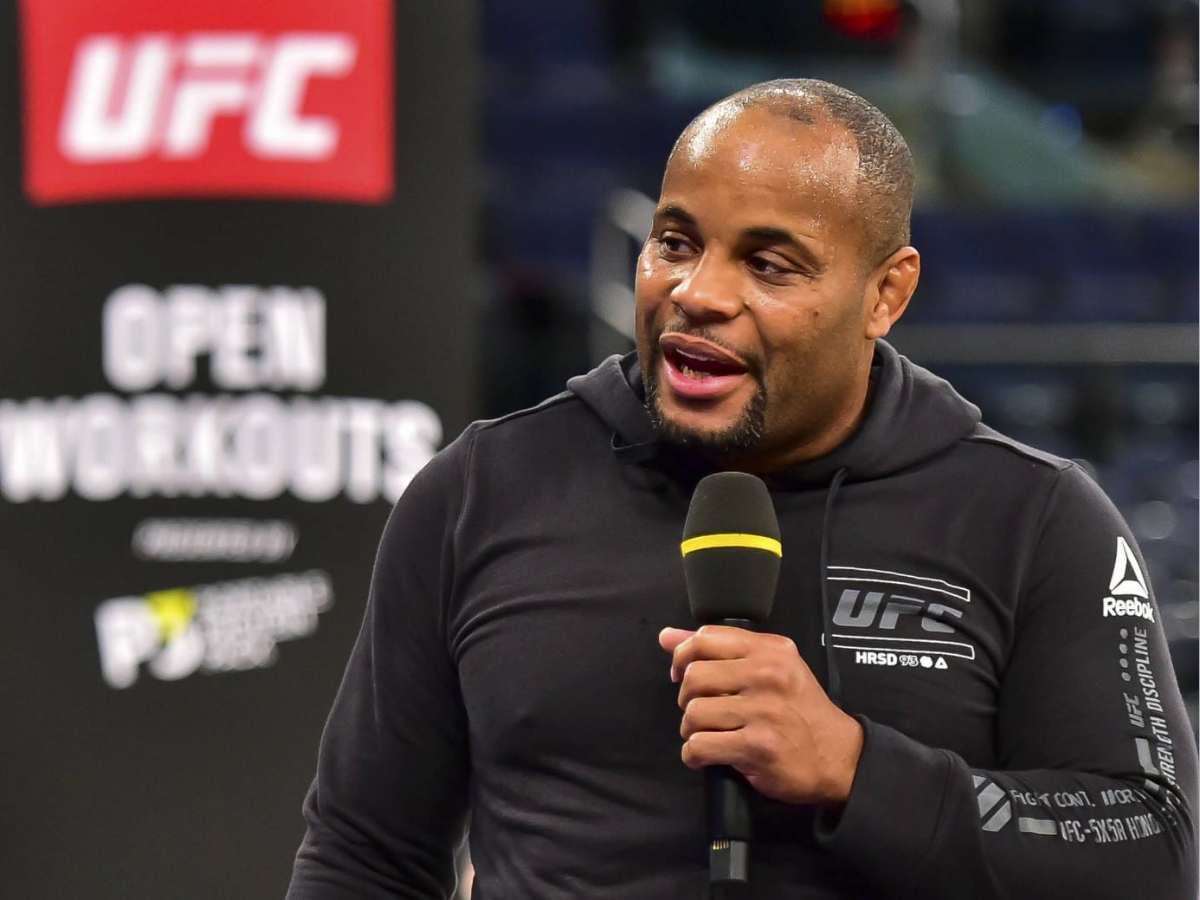
Daniel Cormier’s Commentary Career Is Hurting His Legacy.
Daniel Cormier earned his place among MMA’s elite through grit and skill.
He won UFC titles at heavyweight and light heavyweight.
He beat Anderson Silva and Stipe Miocic.
He has an Olympic wrestling pedigree.
But his post-retirement run as a UFC commentator is creating friction that risks redefining how fans remember him.
The pattern is consistent.
Cormier offers real-time analysis that crosses from insight into confrontation.
His recent clash with Sean O’Malley at UFC 333 required a public clearing of the air.
Darren Till accused him of commentary bias.

Most recently, DC called for sanctions against referee Dan Miragliotta over a controversial stoppage, then doubled down by claiming the error cast a shadow over the winner’s performance.
These aren’t isolated incidents.
They’re a feature of how Cormier operates in the booth.
The problem isn’t passion.
Joe Rogan brings emotion to broadcasts without starting feuds with active fighters.
Jon Anik delivers strong opinions without undermining officials.
Cormier’s approach feels personal, as if he’s still competing rather than observing.
When he criticized Miragliotta’s judgment, he positioned himself as a higher authority than the Nevada State Athletic Commission.
That stance invites pushback and distracts from the sport itself.
His chemistry with Rogan remains strong, and casual fans appreciate his fighter’s perspective.

But the commentary role demands a different skill set than cage work.
Cormier’s ability to break down technique is genuine.
Yet his tendency to inject himself into storylines creates unnecessary drama.
Till’s complaint about bias wasn’t baseless.
Perception matters in broadcasting.
When multiple fighters question your neutrality, the issue transcends any single call.
Till’s latest attack came after Dominick Reyes called out Cormier’s commentary following his UFC 333 knockout of Azamat Murzakanov.
Reyes gave Cormier an “F-plus.”
Till has gone after Cormier before.
He ripped him in September for defending Usman Nurmagomedov’s cage jump at UFC Shanghai.

“It’s not that I don’t like him,” Till said.
“I just see right through his bulls***.”
“I wouldn’t say it to his face, mind you, because he’s a f***ing animal of a fighter, but you can just see through his bulls***.”
“Any guy who’s got the second name ‘Magomedov,’ he’s just always biased.”
“He’s just a company man.”
“He doesn’t say what he should really say on his mind.”
“I can smell that bulls*** from over this corner of the world.”
“F*** off with your bulls***, mate.”
“I’ve got no time for that whatsoever.”
Cormier has heard criticism from others lately too.

Sean O’Malley and coach Tim Welch took issue with Cormier pushing for a Song Yadong title shot.
They later cleared the air.
But the broader pattern remains.
The cruel irony is that Cormier’s greatest strength as a fighter — his competitive fire — becomes a liability behind the desk.
He could still course-correct.
Dial back the referee criticism.
Let fights breathe without inserting personal narratives.
Recognize that commentary immortality comes from enhancing moments, not creating them.
Otherwise, the post-fight arguments will drown out the in-cage accomplishments.
Daniel Cormier’s legacy will be defined by the controversies he started from the broadcast position rather than the titles he earned in the Octagon.
Advertisement
You may also like
Hot mic catches Pegula calling Andreeva a "diva" before WTA Finals.
Jessica Pegula was caught on a live microphone criticizing Mirra Andreeva and her coach during a WTA Finals practice session in Indian Wells. The…
Garth Brooks Skips Dublin on 2027 Ireland Tour Amid Lawsuit
Country music star Garth Brooks will skip Dublin during his 2027 Ireland tour. The 64-year-old singer announced a 10-night run across five Irish cities.…
Prince Harry returns to UK amid Thomas Markle child abuse storm
Prince Harry made his first public appearance in the United Kingdom since child abuse allegations against his father-in-law, Thomas Markle Sr., became public knowledge.…
Diana Taurasi Leads 2027 Women’s Hall of Fame Class
Diana Taurasi headlines 2027 Women’s Basketball Hall of Fame class. Two elite scorers, a pair of championship-winning WNBA coaches, a longtime referee and a…
DP World Tour vet’s Q School dream crushed in brutal finish
Marcel Siem’s hopes of regaining his full DP World Tour card are over. After a testing season out on the Wentworth-based circuit, Siem was…
Rory McIlroy admits two-shot penalty video "doesn't look very good
Rory McIlroy says the video that led to a two-shot penalty in the opening round of the Abu Dhabi Championship “doesn’t look very good.”…