DP World Tour Shuts the Door on Returning LIV Players Ahead of 2027 Season

As uncertainty pushes LIV golfers to seek a path back to mainstream circuits, the DP World Tour announced that LIV players will be barred from membership for the 2027 season.
The decision delivers a major blow to players who had hoped for an immediate route back into European golf.
The DP World Tour has said that LIV players will not be eligible for membership on its circuit for 2027.
That clear stance closes off a primary sanctuary for athletes who now find themselves stranded between tours.
With LIV Golf facing imminent collapse, several golfers had already begun exploring opportunities to rejoin the DP World Tour or the PGA Tour.
Yet the European circuit has chosen to firmly hold its regulatory line.
NO WAY BACK FOR 2027
For players seeking competitive stability, the announcement removes any hope of an early reprieve.
Membership on the DP World Tour provides golfers with exemptions, tournament starts, and crucial access to world ranking points.
Without official tour membership, players are largely locked out of regular tour schedules across Europe, the Middle East, and Asia.
Historically, tour membership requires players to comply with strict event releases and general circuit regulations.
Competing in non-sanctioned events without official conflicting-event waivers has traditionally triggered fines, suspensions, or outright bans.
Now, the DP World Tour is keeping those administrative barriers firmly intact for the 2027 campaign.
The timing leaves dozens of professional golfers in sporting limbo as their current league rapidly disintegrates.

THE COLLAPSE OF LIV 2.0
The rush to find alternative competitive homes began when LIV Golf’s proposed financial rescue package abruptly vanished.
LIV Golf is expected to wind down operations after private capital firm BC Partners Credit pulled its proposed $300 million investment.
The private equity package had been designed to fund a planned relaunch of the circuit known as LIV 2.0.
BC Partners was looking to replace Saudi Arabia’s Public Investment Fund as the primary financial backer of the circuit.
The league has spent months attempting to navigate a path out of bankruptcy.
However, BC Partners withdrew its financing bid as deadlines approached and questions mounted over the league's commercial viability.
Without that critical influx of private capital, the venture has run out of financial options.
A FAILED QUEST FOR CRITICAL MASS
The collapse of the $300 million deal stemmed directly from a failure to recruit enough committed golfers.
BC Partners reportedly required a guarantee of roughly 40 players to sign up for LIV 2.0 before releasing its funds.
Scott O’Neil, the chief executive officer of LIV Golf, had explicitly stated that moving forward depended on securing that critical mass.
Saudi Arabia’s Public Investment Fund had originally set a hard deadline of October 30 to finalize a binding agreement.
While the sovereign fund initially postponed that deadline to allow more time, negotiations eventually hit a dead end.
Golf Channel reporter Rex Hoggard described the final breakdown during a recent broadcast.
Hoggard noted that the venture had reached an impasse trying to assemble the necessary roster size.
According to reports from The Athletic and the Financial Times, around 30 golfers had committed to the planned LIV 2.0 roster.
Another 10 players remained undecided while discussions continued behind closed doors.
Falling short of the full 40-player threshold proved fatal to the entire private equity agreement.
THE FLIGHT OF MAJOR CHAMPIONS
The shortfall in commitments followed an unprecedented wave of departures by the league's most prominent stars.
Several marquee names left LIV Golf this year as the organization's financial future grew uncertain.
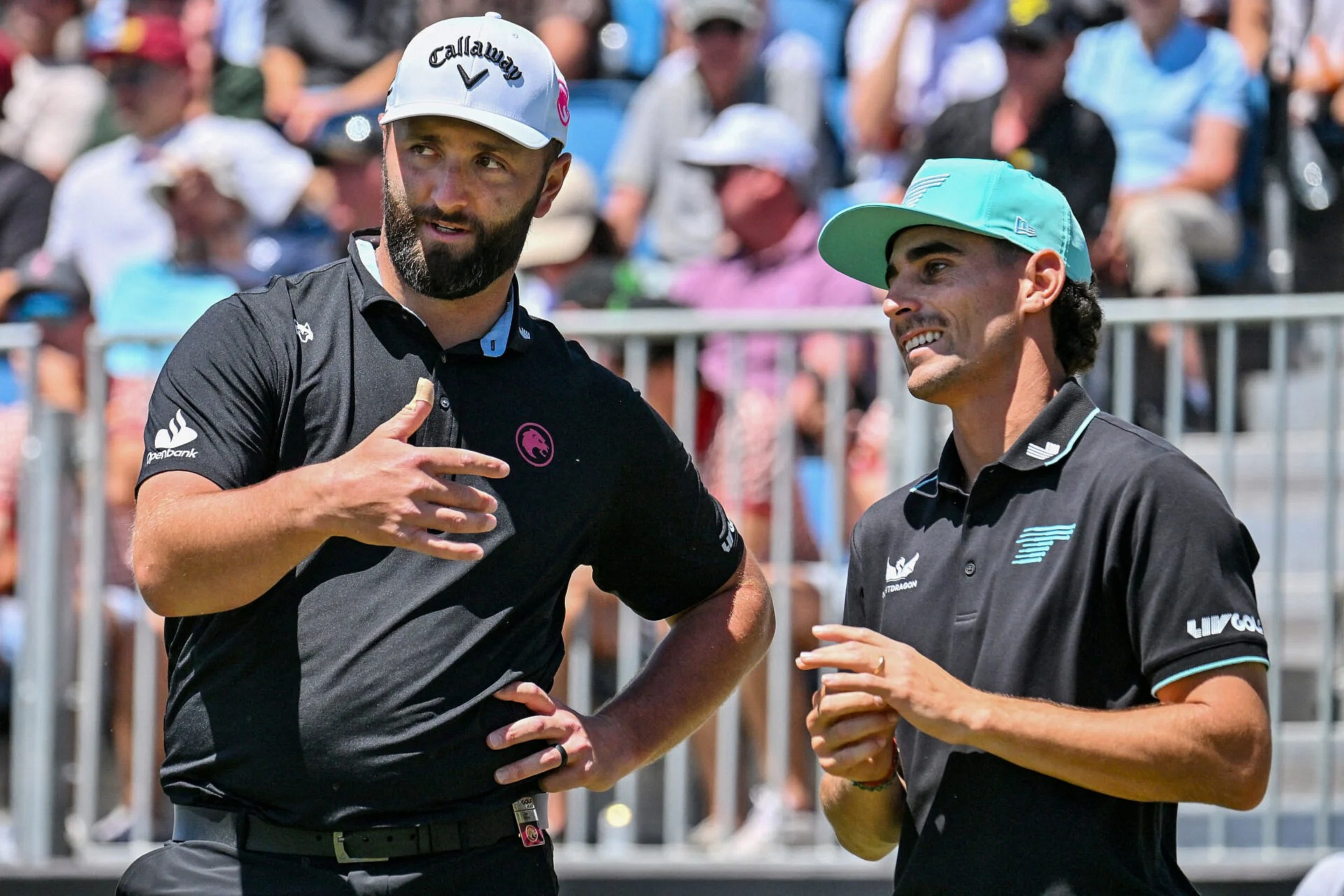
Former Masters champion Jon Rahm parted ways with the Saudi-backed circuit during the recent exodus.
Spanish veteran Sergio Garcia also exited the circuit after competing in its events since the inaugural campaign.
Ryder Cup stalwart Ian Poulter has departed LIV Golf as well.
Englishman Tyrrell Hatton joined the ranks of notable players who stepped away this year.
Chilean golfer Joaquin Niemann was among the key performers who opted out of continuing with the league.
With multiple top draws walking away, the venture lost the star power that private investors demanded.

CONFUSION OVER BRYSON DECHAMBEAU
The uncertainty surrounding the league's remaining roster was further compounded by contradictory accounts regarding Bryson DeChambeau.
Initial reports suggested that DeChambeau had committed to competing on the tour next season.
However, subsequent reports indicated that DeChambeau never actually signed onto the LIV 2.0 project.
The lack of clarity around one of golf’s biggest names dealt another severe blow to investor confidence.
When high-profile figures declined to put pen to paper, BC Partners saw little reason to risk $300 million.
BANKRUPTCY HEARINGS AND LIQUIDATION
LIV Golf had already filed for bankruptcy back in September, seeking protection under American corporate law.
In standard United States bankruptcy cases, a debtor attempts to restructure its debts under judicial supervision.
When a restructuring plan fails due to lost financing, bankruptcy cases typically transition directly into liquidation.
A crucial hearing is scheduled for a United States Bankruptcy Court in New Jersey on Thursday.
Legal authorities indicate that the formal liquidation process could begin immediately during that session.
The Saudi Arabian Public Investment Fund had been paying for LIV Golf's ongoing bankruptcy hearings up until this point.
With the rescue deal dead, that financial lifeline appears to have reached its conclusion.

When contacted by The Athletic and ESPN, a LIV Golf spokesperson did not immediately provide comment on the impending court actions.
GLOBAL REACTION TO THE DEMISE
News of LIV Golf's impending downfall has already drawn public reactions across international sports markets.
South Australia Premier Peter Malinauskas publicly commented on the development, stating that the demise of LIV Golf is edging closer.
South Australia had previously hosted well-attended LIV events in Adelaide over recent seasons.
Despite having established successful tournament stops, the league's overarching economic structure could not survive without sovereign or private funding.
Observers across the sports business industry now expect the organization to wind down its global operations entirely.
THE HARD ROAD AHEAD FOR DEFECTORS
As liquidation looms, the golfers who departed traditional tours face an unprecedented career dilemma.
Many competitors gave up active tour cards and exemptions when they joined LIV Golf in search of guaranteed prize money.
Now, with that alternative circuit crumbling, returning to their former workplaces is proving exceptionally difficult.
The DP World Tour’s firm decision to bar LIV players from 2027 membership creates a multi-year void for those affected.
European players who harbored aspirations of playing their home circuit will have to wait for any potential rule changes.
Traditional tours maintain complex qualification structures, fine mechanisms, and tournament entry criteria.
By ruling out 2027 eligibility, the DP World Tour has signaled that it will not easily grant exceptions to those who left.
Whether the PGA Tour will maintain a similar exclusionary stance remains a critical subject of industry debate.
For now, players who jumped ship are finding that mainstream golf is in no rush to roll out the welcome mat.
Should the traditional tours allow former LIV players back immediately, or keep the door shut?
Advertisement
You may also like

NBA champion Steve Kerr trolls Donald Trump with a savage jab
Golden State Warriors head coach Steve Kerr took a sharp, humorous jab at President Donald Trump during his Wednesday media availability, referencing a campaign…

John Cena’s subtle salute to Gunther after his return
John Cena made a surprise appearance on the Oct. 30, 2026 edition of WWE NXT. As he walked to the ring, he stopped in…

Braden Smith Makes NBA Debut With the Pacers
Purdue basketball alum Braden Smith makes NBA debut with the Pacers. Braden Smith, the former Purdue Boilermakers guard, stepped onto an NBA floor for…

Red Wings vs. Golden Knights Live Score and Game Updates
NHL.LIVE: Detroit Red Wings vs Vegas Golden Knights LIVE STREA.MS NHL Game On TV Coverage 6 Nov 2026. Puck drop is set for 7…

Business leaders face a tough choice with workplace monitoring.
Big Brother 2026 has officially crowned a winner. Rochelle took the title on the live final, hosted by AJ Odudu and Will Best on…

WWE Plans Huge 30th Anniversary Celebration for The Rock
WWE is planning to celebrate 30 years of The Rock this month. Plans include a commemorative championship belt. Special merchandise releases are also in…