Drake Bell Blasts Nickelodeon Over Zero Sitcom Residuals And Lost Union Health Insurance
Drake Bell did not hold back when asked by YouTuber N3on why he received no residuals from his hit sitcom Drake & Josh, bluntly responding that Nickelodeon sucks.
The former child star laid bare the stark financial reality that followed his years as a network staple.
His candid remarks arrived during a recorded dinner with the popular internet streamer.
The conversation took place over a meal at the Smoke House restaurant in Burbank, California.
While sitting at the table, the host pressed the 40-year-old actor on how television contracts actually compensated him during his peak years on screen.
Bell was the co-lead of the wildly successful Nickelodeon series Drake & Josh, which ran from 2004 to 2007.
Despite the program remaining an enduring pop culture touchstone, Bell explained that the monetary rewards ended almost as soon as the cameras stopped rolling.
THE BURBANK DINNER CONVERSATION
N3on asked the former teen idol directly about how compensation worked while starring on the iconic comedy.
“You get a weekly check, and that's it,” Bell explained.
He then made sure to underscore the finality of that structure.
“That's it,” Bell added.
“Unfortunately, no residuals and all that kind of stuff.”
The admission surprised the streamer, who immediately wondered whether such an arrangement was standard practice in the television industry.
N3on asked Bell if going without residual compensation was considered normal for a lead performer.
“No, it's not normal,” Bell replied without hesitation.
When the interviewer pushed further to find out why such an arrangement had been put in place, Bell did not mince words.
“Because Nickelodeon sucks,” Bell responded.
The blunt answer caught the content creator off guard.
“Oh s**t,” N3on exclaimed in response to the unfiltered critique.
Bell then glanced over toward the recording camera with a small smile.
“Oh, can I not say that?” the actor asked playfully.
A HARSH POST-SITCOM REALITY
The conversation exposed a growing gulf between public perception and the financial realities of veteran television performers.
Fans often assume that headlining a globally recognized comedy series guarantees financial security for decades.
In reality, Bell recently revealed that he no longer holds health insurance through the Screen Actors Guild, SAG-AFTRA.
For professional actors, union health coverage is directly tethered to annual earnings generated under union contracts.
Performers must consistently clear a specific monetary threshold each year to qualify for union health plan eligibility.
Residual payments traditionally serve as a critical safety net that helps working actors maintain that baseline income during dry spells.
Residuals represent ongoing payments distributed to performers when television episodes are rerun, sold into syndication, or streamed online.

When a performer receives no backend payments from reruns, their union income stops the moment active production wraps.
Without an ongoing flow of residual earnings, maintaining guild health coverage becomes an uphill battle whenever new roles do not materialize.
For an actor who carried a flagship network series for four seasons, losing union healthcare highlights the precarious nature of the industry.
THE LEVERAGE BEHIND TEEN CONTRACTS
During the Burbank discussion, Bell attempted to explain the broader mechanics behind those lopsided agreements.
The veteran performer noted that whether an actor receives ongoing residuals often comes down to the initial contract negotiations.
“It's not great,” Bell stated plainly while reflecting on the terms he agreed to years ago.
He pointed out that young performers entering the entertainment industry possess virtually no negotiating leverage.
Aspiring child stars and their families are often eager to secure a breakthrough opportunity at any cost.
Production networks frequently hold all the cards when dealing with unproven young talent.
Bell vividly illustrated that power imbalance through an analogy about replaceable young performers.
“You don't sign the contract, well, the next kid that gets off the Greyhound bus from Wichita, Kansas, he'll take the job,” Bell said.
That intense competition often pressures incoming actors into signing away lucrative long-term rights just to get cast.
Studios can offer take-it-or-leave-it buyout terms, replacing backend royalties with a flat weekly rate.
For an eager newcomer arriving in Hollywood, turning down a network offer over future rerun terms is rarely seen as an option.
WEIGHING THE GOOD AND THE BAD
Despite the long-term financial sting, Bell acknowledged that the experience brought valuable opportunities into his life.
“There's good and bad from it,” he admitted during the interview.
The show established his personal brand and introduced his work to an international audience of millions.
Decades later, that early exposure continues to provide a platform for his current creative pursuits.
“It's like, well, I have the opportunity to now do things that I love to do, and [it] opens doors, and I have fans,” Bell explained.
The massive popularity of Drake & Josh created a loyal fan base that still follows his musical and creative endeavors.
Yet the structural absence of fair residual compensation remains a lingering grievance.
Bell has repeatedly called out the network in recent times, arguing that the treatment of child performers was deeply flawed.
His latest remarks add to a wider public reckoning surrounding how youth-oriented networks managed and compensated young talent.
While network executives generated massive commercial value from merchandise, broadcast reruns, and international licensing, the talent on screen often walked away with only their original weekly wages.
Now, at age 40, Bell is dealing with the lasting fallout of those early agreements.
Navigating adulthood without basic union benefits like healthcare serves as a stark reminder of the business behind the laughter.
Bell continues to speak out about his personal history, refusing to sugarcoat his assessment of the company that launched his career.
His blunt honesty has resonated with audiences who grew up watching him on television screens every week.
Are you surprised that the lead star of a massive teen sitcom like Drake & Josh no longer has SAG-AFTRA health insurance?
Advertisement
You may also like
Referees and Blazers coaches separate Damian Lillard and Dillon Brooks after third-quarter confrontation
Referees and Portland coaching staff had to immediately step in between Damian Lillard and Dillon Brooks when Lillard aggressively confronted the Suns forward for…
Kid Rock Claims NFL Brought In Jay-Z As "A Little Bit Of A DEI Hire"
Kid Rock argued that NFL Commissioner Roger Goodell partnered with Jay-Z in 2019 as a diversity hire to repair the league's standing with Black…
Dana White Reveals Alexander Volkanovski Superfight Depends Entirely On Justin Gaethje’s Decision
UFC CEO Dana White confirmed he is eager to grant featherweight champion Alexander Volkanovski a superfight against lightweight champion Justin Gaethje, but stated the…
Jemele Hill Calls Out Inherent Gender Bias After Liberty Fire Chris DeMarco
Commentator Jemele Hill argued on the Flagrant & Funny podcast that Chris DeMarco being handed the New York Liberty head coaching job with zero…
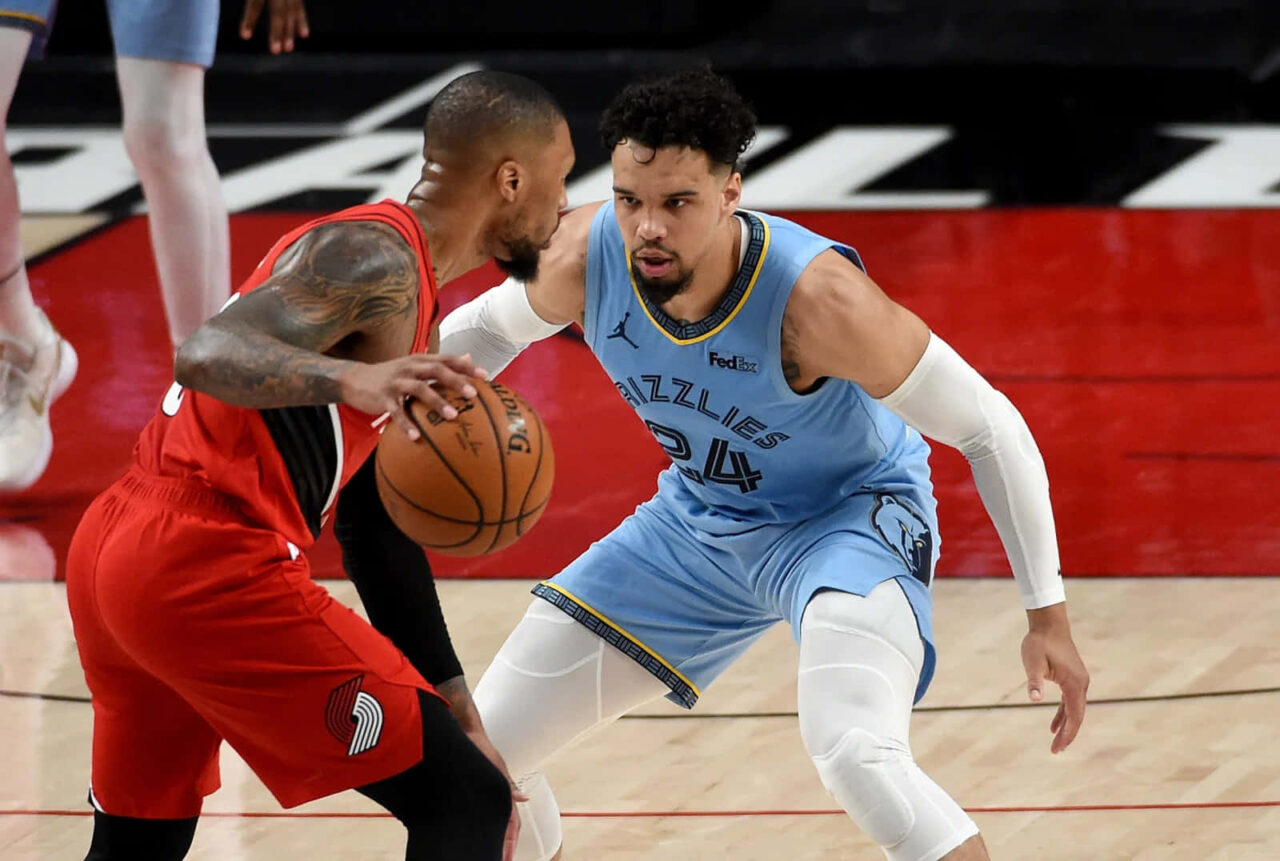
Dillon Brooks Sparks Outrage Over Altercations As 73 Million Dollar Suns Plunge To 1-5
After signing a three-year, $73 million extension over the summer, Dillon Brooks has seen his Phoenix Suns slump to a 1-5 start while he…
Paul Bissonnette Calls Out Julien BriseBois Over Mishandling Nikita Kucherov Trade Drama
Paul Bissonnette argued on NHL on TNT that Tampa Bay Lightning general manager Julien BriseBois could have prevented Nikita Kucherov's trade request simply by…