Referees and Blazers coaches separate Damian Lillard and Dillon Brooks after third-quarter confrontation
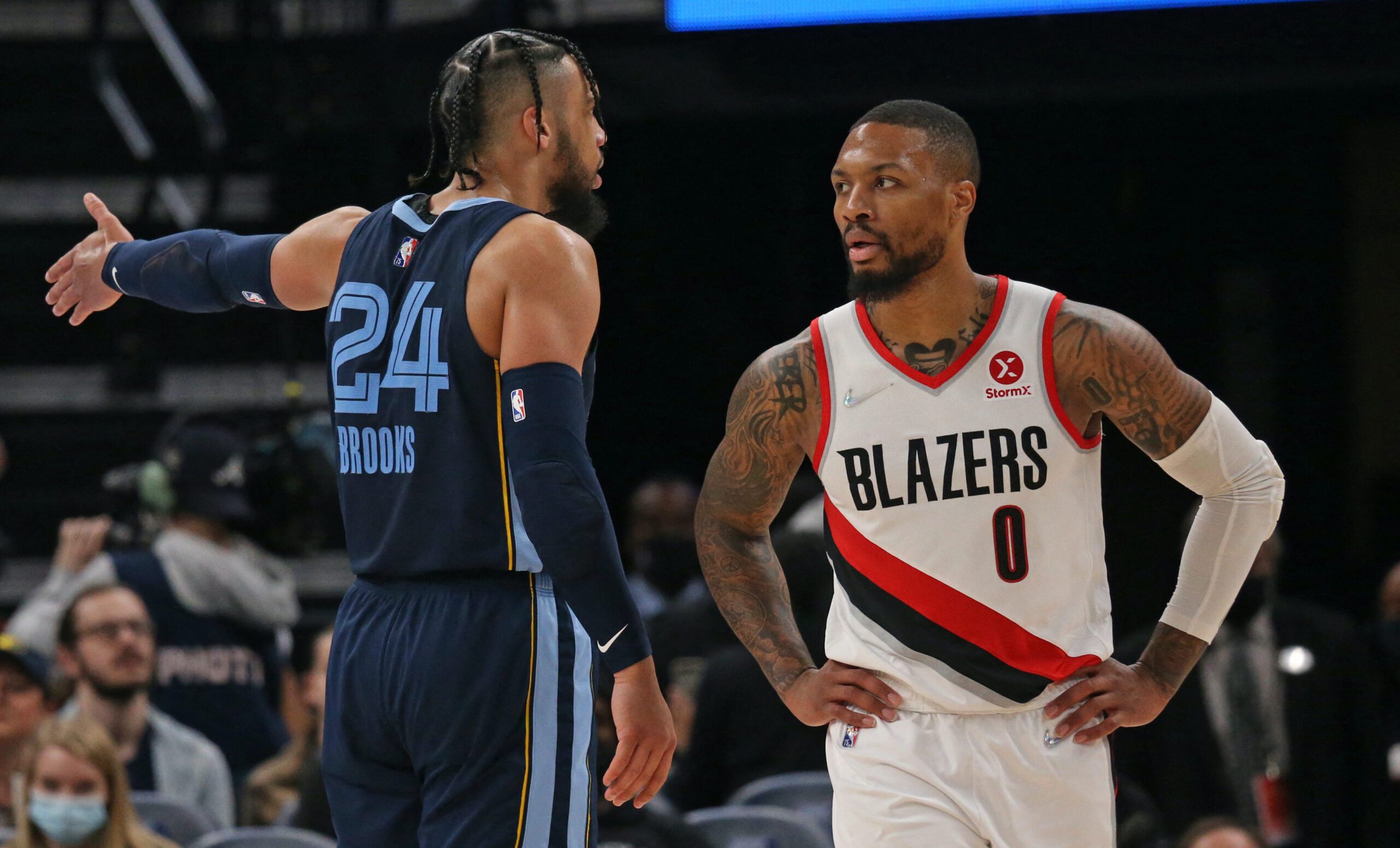
Referees and Portland coaching staff had to immediately step in between Damian Lillard and Dillon Brooks when Lillard aggressively confronted the Suns forward for kicking at his leg after the whistle.
The high-tension moment occurred during the third quarter at Mortgage Matchup Center.
Officials blew the whistle after Brooks stepped out of bounds on the sideline.
Brooks had attempted a pump-fake while being contested closely by Lillard.
Even though play was halted, Brooks continued his shooting motion to launch an unofficial three-pointer.
Lillard stretched out a hand to contest the dead-ball attempt.
Brooks then extended his foot toward Lillard's lower body.
Video replays confirmed Brooks kicked the back of Lillard's left leg in the sensitive Achilles area.
Lillard spun around instantly and marched directly into the face of the Suns forward.
Seeing the explosive confrontation brewing, the game officials rushed in to position themselves between both players.
Members of the Portland coaching staff also sprinted onto the floor to restrain Lillard and keep the teams apart.
The swift intervention from the referees and bench personnel prevented the altercation from turning into a full-scale physical fight.
A HEATED MOMENT ON THE SIDELINE
Brooks stood his ground as Lillard shouted at him over the dangerous contact.
The two players continued exchanging sharp verbal barbs while officials maintained a physical barrier between them.
Coaches worked vigorously to push Lillard back toward the Portland bench area.
Brooks remained calm amid the fury, a reaction familiar to those who track his career on the court.
Fans inside the arena and viewers watching the broadcast quickly voiced outrage at the incident.
The dead-ball kick appeared to directly target the same area that once put Lillard's playing career in jeopardy.
Lillard was fortunate to escape any physical harm from the swipe.
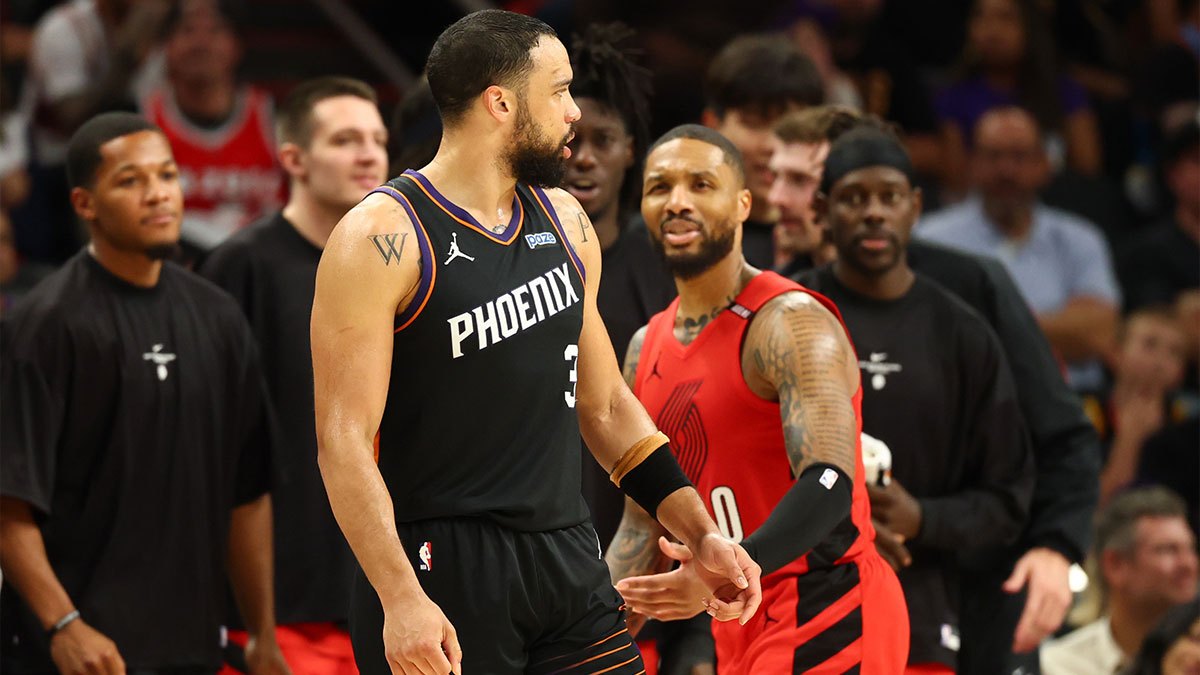
The situation ultimately de-escalated enough for play to resume without punches being thrown.
THE SENSITIVITY OF LILLARD'S ACHILLES RECOVERY
Lillard's furious reaction stemmed directly from his grueling medical history.
The 36-year-old guard suffered a torn left Achilles tendon during Game 4 of the 2025 playoff series between the Milwaukee Bucks and the Indiana Pacers.
That devastating injury forced the nine-time All-Star to miss the entire 2025-26 NBA season.
An Achilles tear is widely recognized across professional sports as one of the most grueling injuries an athlete can endure.
Recovery demands extensive surgical repair followed by nearly a full year of intensive, painful rehabilitation.
Many veteran guards struggle to ever regain their trademark burst and lateral agility after suffering an Achilles rupture.
Lillard had worked relentlessly behind the scenes to regain his elite conditioning and return to NBA action.
Now back with the Portland Trail Blazers, he has looked like his vintage self by delivering steady 20-point performances.
He has repeatedly showcased his signature "Dame Time" late-game execution during the early stretch of the season.
Having an opponent kick or step toward that specific tendon naturally crossed a line for the veteran playmaker.
BROOKS CONTINUES HIS AGITATING PATTERN
For Brooks, the altercation added another chapter to an extensive record of on-court controversies.
The 30-year-old forward has long held a league-wide reputation as one of basketball's premier instigators.
His physical, antagonistic approach frequently places him at the center of heated confrontations.
Brooks has repeatedly drawn ejections, flagrant fouls, and widespread criticism for contentious tactics throughout his career.
Just days earlier, Brooks found himself embroiled in another tense clash with Golden State Warriors forward Draymond Green.
That incident took place during Phoenix's 116-113 loss to Golden State on Monday.
Critics across the basketball world have argued that Brooks has completely surrendered any benefit of the doubt regarding accidental contact.

The Phoenix Suns invested heavily in Brooks during the offseason by signing him to a three-year, $73 million contract extension.
Yet his early tenure in Phoenix has garnered far more attention for disciplinary scuffles than productive basketball.
LILLARD DELIVERS HIS RETALIATION ON THE COURT
Rather than letting his anger derail his focus, Lillard channeled his frustration directly into the game.
On the very next possession after the altercation, Lillard attacked the Suns' defense aggressively.
He drove into the paint, absorbed contact, and converted an acrobatic, double-clutch and-one layup.
Brooks ended up knocked down to the hardwood on the scoring play.
As Brooks lay on the court, Lillard demonstratively stepped over his fallen opponent.
The theatrical gesture immediately drew comparisons across social media to Allen Iverson's iconic step-over against Tyronn Lue in the 2001 NBA Finals.
Lillard's emphatic response electrified the Trail Blazers and decisively shifted the game's momentum.
He continued to dominate the contest down the stretch to secure the ultimate revenge.
STATISTICAL BREAKDOWN AND SEASON SERIES SWEEP
Lillard finished the night with 25 points on 9-of-17 shooting from the field.
He added three rebounds and five assists to anchor Portland's commanding offensive display.
The Trail Blazers cruised to a decisive 132-119 victory over Phoenix.
The win officially completed a regular-season series sweep for the Blazers over the Suns.
Portland had previously dismantled Phoenix in a 124-83 blowout victory during their season-opening clash.
Brooks struggled to make a positive impact in both matchups.
He managed just 10 points in the opening meeting and scored 15 points on 7-of-15 shooting in Wednesday's defeat.
Brooks also tallied six rebounds, two assists, and one steal on the night.

The loss dropped the Suns to a dismal 1-5 record to start the regular season.
Phoenix was widely projected to be near the bottom of the league standings, and their sluggish opening indicates severe structural struggles.
NBA RULES AND DEAD-BALL CONTACT PROTOCOL
The clash placed renewed attention on how the NBA officiates dead-ball interactions.
League rules strictly prohibit players from initiating physical contact with an opponent after an official has blown the whistle.
When contact occurs during dead-ball situations, referees have the discretion to assess technical fouls for unsportsmanlike conduct.
If an official deems the contact unnecessary or excessive, the play can be escalated to a flagrant foul review via instant replay.
Dead-ball strikes aimed near vulnerable areas like the legs or ankles frequently prompt immediate league scrutiny.
Bench personnel are also strictly regulated during live-game stoppages.
While coaches frequently step on the floor to restrain their own agitated players, non-playing athletes who leave the bench area face severe automatic penalties.
The quick presence of mind from Portland's staff and the officiating crew ensured that the confrontation was contained strictly to the two active players.
WHAT COMES NEXT FOR BOTH SQUADS
The Phoenix Suns have little time to regroup after another turbulent performance.
They remain at Mortgage Matchup Center to host the Orlando Magic on Thursday night at 9 p.m. Eastern Time.
With Phoenix sitting at 1-5, head coach and team leadership face mounting pressure to stabilize their play on the floor.
Brooks in particular will remain under an intense public microscope following back-to-back games marred by physical confrontations.
Meanwhile, the Trail Blazers continue to ride the momentum of Lillard's successful return to full health.
Portland validated their season-opening blowout by outscoring the Suns once again to capture the season series.
Lillard's ability to maintain his composure and dominate after the scare provides a massive boost to the Blazers' locker room.
Should the referees have assessed Dillon Brooks a technical or flagrant foul right away for making dead-ball contact with Lillard?
Advertisement
You may also like

Miyu Yamashita chases sixth global win after sharing lead in Japan.
OMITAMA, Japan — Miyu Yamashita, fresh off a victory at the LPGA's Maybank Championship in Malaysia last weekend, is tied for the lead after…
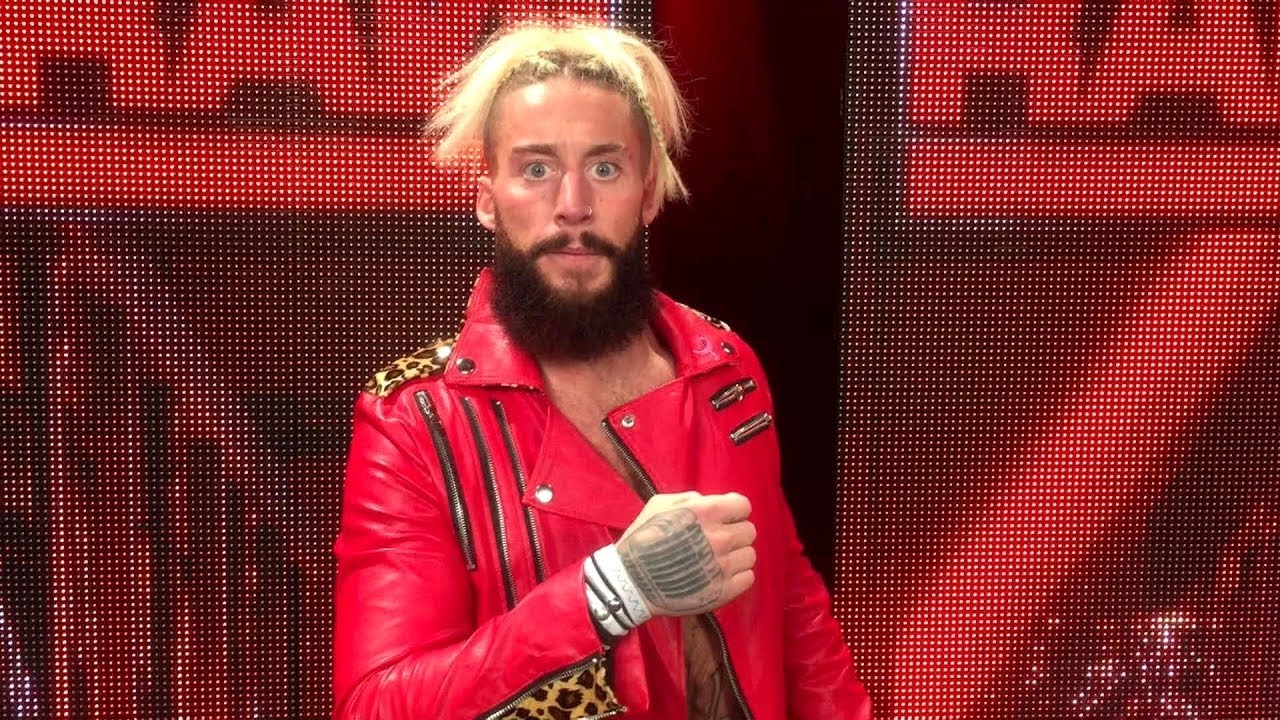
Enzo Amore Reportedly Back in WWE After Surprise New Deal
Some in WWE reportedly believe Enzo Amore signed with the company within the last week. That is according to a new report from PWInsider…
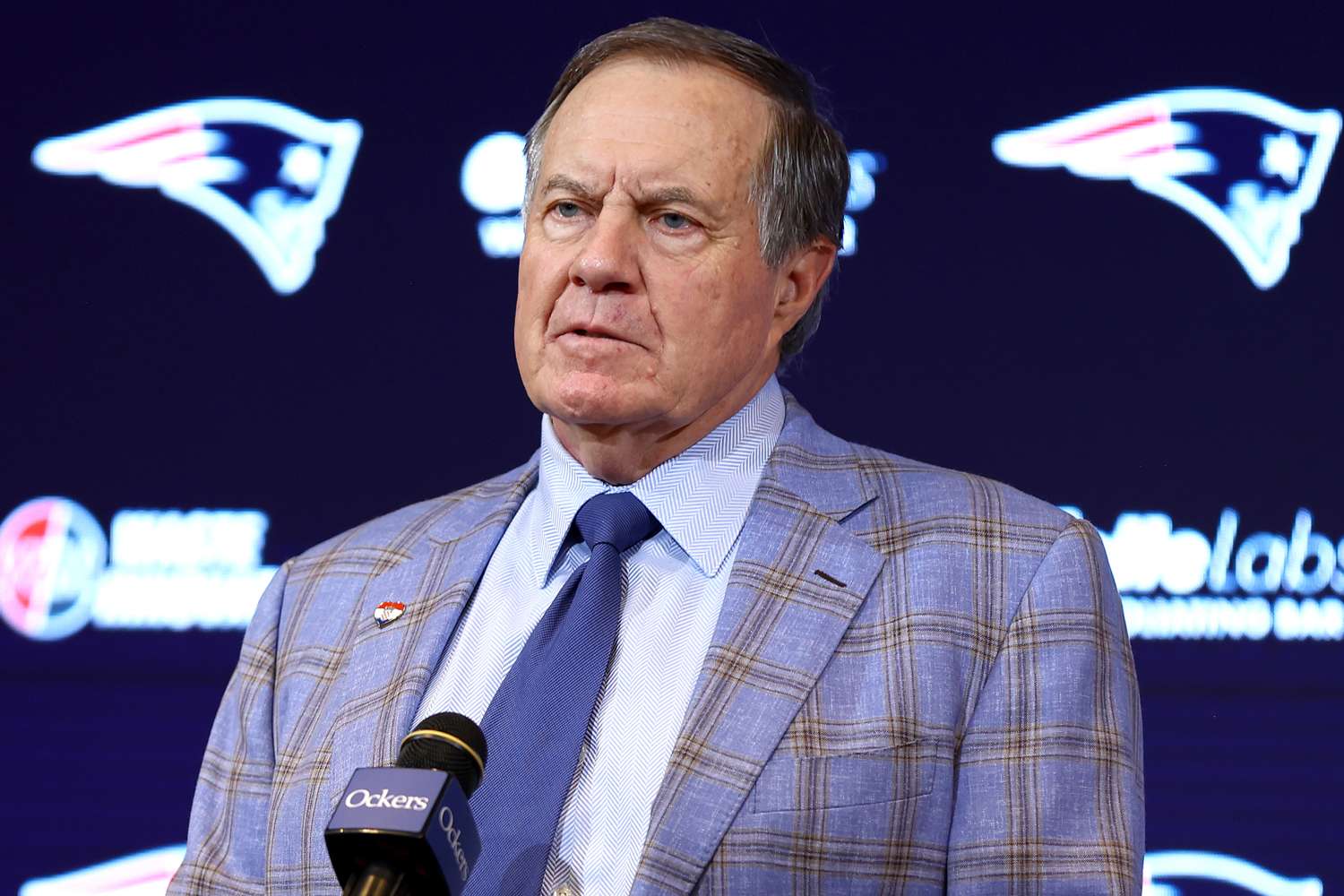
Belichick Explodes at Reporters Over Hudson Breakup Questions
Cam Newton called out Bill Belichick on his podcast Monday, accusing the legendary coach of hypocrisy for demanding privacy about his personal life after…
Urban Meyer says Ohio State is on life support after CFP ranking
Urban Meyer says Ohio State football is on 'life support' with CFP rank. Former Ohio State coach Urban Meyer used a blunt medical metaphor…
Aston Martin slams media for fear-mongering over Stroll's illness
Aston Martin has confirmed Lance Stroll will miss media day at the São Paulo Grand Prix due to a viral infection contracted in Mexico.…
Miyu Yamashita Chases Back-to-Back LPGA Wins in Japan
Miyu Yamashita shares the first-round LPGA lead in Japan as she tries for two wins in a row. Yamashita, who won the LPGA's Maybank…