Drake Bell Calls Out Nickelodeon Over Zero Residuals From Drake & Josh
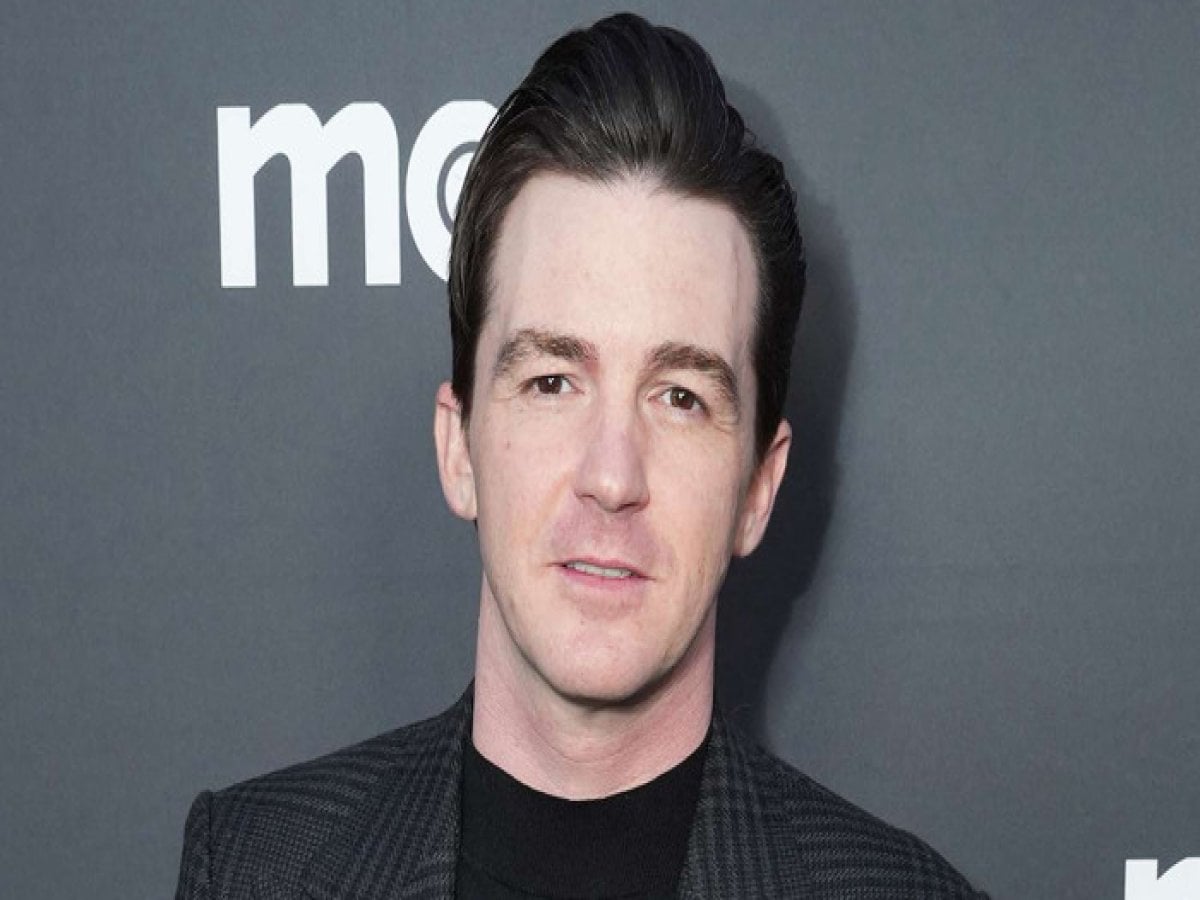
During a meal at Smoke House in Burbank with YouTuber N3on, Drake Bell revealed that he received no ongoing residual payments for starring on the hit series Drake & Josh.
The former child star offered a candid look into the financial realities behind one of cable television's most recognizable comedy shows.
Bell headlined the popular Nickelodeon sitcom from 2004 through 2007.
While the program remains deeply ingrained in pop culture, the actor indicated that the long-term compensation did not match the project's enduring footprint.
During their sit-down discussion, N3on asked how payment actually worked during his tenure on the series.
"You get a weekly check, and that's it," Bell explained.
The actor was clear about what followed once production wrapped.
"That's it," Bell continued.
"Unfortunately, no residuals and all that kind of stuff."
SURPRISE OVER CONTRACT STANDARDS
The revelation caught the digital creator off guard during the Burbank meal.
N3on asked Bell if working without residual income was considered normal in entertainment.
"No, it's not normal," Bell replied.
When pressed on why that happened with the network, Bell did not hesitate to voice his displeasure.
"Because Nickelodeon sucks," Bell answered.
The blunt response prompted a startled reaction from N3on, who responded with expletives.
Bell glanced toward the recording camera with a small smile.

"Oh, can I not say that?" the actor asked.
THE LEVERAGE BEHIND YOUTH CONTRACTS
Bell clarified that residual arrangements usually come down to the specifics of individual contracts.
Reflecting on the terms attached to his past deal, he admitted the situation was far from ideal.
"It's not great," Bell acknowledged.
He then shed light on the intense pressure and structural realities that young performers face when entering Hollywood.
Beginners often lack the leverage or bargaining power to demand royalties or back-end compensation.
Bell pointed out that networks hold significant advantages over incoming talent.
"You don't sign the contract, well, the next kid that gets off the Greyhound bus from Wichita, Kansas, he'll take the job," Bell said.
For many hopeful performers, the fear of instant replacement overshadows any contractual negotiation.
Desperation to secure a breakthrough role frequently forces families and child performers to accept whatever terms a studio presents.
HOW RESIDUALS FUNCTION IN ENTERTAINMENT
In the entertainment business, residuals represent royalty payments made to actors for reruns, syndication, home video releases, and streaming.
Under standard union guidelines, performers traditionally earn additional compensation whenever an episode airs beyond its original broadcast run.
These royalty streams are meant to provide lasting financial stability after a production concludes.
For decades, major network television comedies generated considerable long-term wealth for lead actors through secondary syndication markets.
However, cable networks during the late 1990s and early 2000s often operated under distinct contract frameworks.

Many agreements for children's basic cable television relied on flat upfront pay structures rather than lucrative syndication royalties.
Under such terms, performers were paid for production weeks without sharing in the sustained revenue generated by reruns.
While the networks continued to broadcast episodes across multiple global territories, the original stars often received nothing beyond their base pay.
THE ENDURING FOOTPRINT OF DRAKE & JOSH
Drake & Josh premiered on Nickelodeon in 2004 and quickly grew into a ratings anchor for the network.
Across four seasons that concluded in 2007, the sitcom became a definitive part of millennial and Gen-Z television.
The show established Bell and his co-stars as household names among teenage audiences.
Its popularity spawned television movies, commercial merchandise, and continuous marathon broadcasts.
Reruns of the series filled television schedules for years after production officially ended.
Despite that ongoing screen presence, Bell emphasized that the extensive airtime did not translate into financial returns for him.
THE ONGOING CHALLENGES FOR WORKING ACTORS
The 40-year-old actor's comments come at a time of increased personal and professional reflection.
Bell recently revealed that he no longer receives health insurance coverage through SAG-AFTRA.
Union health plans in the entertainment industry require performers to meet strict annual income thresholds from covered work.
When an actor cannot secure enough union-eligible work within a given calendar year, health coverage lapses.
Without an ongoing flow of union residual payments, maintaining eligibility can become increasingly difficult for veteran performers.
Bell's disclosures underscore the precarious nature of life after teenage fame.

BALANCING THE PROS AND CONS
Even while criticizing the network and the financial structure of his past employment, Bell acknowledged that the experience brought positive outcomes.
"There's good and bad from it," Bell noted during the conversation.
The immense platform provided him with a lasting fanbase that follows his work decades later.
"It's like, well, I have the opportunity to now do things that I love to do, and [it] opens doors, and I have fans," Bell added.
That visibility helped him transition into music, live performances, and independent creative endeavors.
Yet the structural disparity remains an open subject of discussion among former youth stars.
INDUSTRY SCRUTINY OVER CHILD ACTOR PROTECTIONS
Contract conditions for young performers have faced heightened public scrutiny in recent years.
Advocates have frequently noted that minors enter entertainment without fully understanding long-term labor economics.
Parents and novice representatives often prioritize getting on the air over safeguarding future residual rights.
Because studios possessed an endless supply of aspiring child performers, they maintained absolute control over negotiating terms.
As Bell highlighted, an actor who pushed back risked losing the role to another hopeful child arriving in town.
That dynamic enabled networks to build billion-dollar programming libraries on cost-effective talent agreements.
Today, discussions surrounding streaming payments and fair compensation continue to shape union negotiations across Hollywood.
Bell's remarks add another direct perspective to the continuing debate over how legacy children's networks compensated their most famous stars.
Do you think networks like Nickelodeon should be required to pay ongoing residuals to child stars whose hit shows continue to air?
Advertisement
You may also like

NBA champion Steve Kerr trolls Donald Trump with a savage jab
Golden State Warriors head coach Steve Kerr took a sharp, humorous jab at President Donald Trump during his Wednesday media availability, referencing a campaign…

John Cena’s subtle salute to Gunther after his return
John Cena made a surprise appearance on the Oct. 30, 2026 edition of WWE NXT. As he walked to the ring, he stopped in…

Braden Smith Makes NBA Debut With the Pacers
Purdue basketball alum Braden Smith makes NBA debut with the Pacers. Braden Smith, the former Purdue Boilermakers guard, stepped onto an NBA floor for…

Red Wings vs. Golden Knights Live Score and Game Updates
NHL.LIVE: Detroit Red Wings vs Vegas Golden Knights LIVE STREA.MS NHL Game On TV Coverage 6 Nov 2026. Puck drop is set for 7…

Business leaders face a tough choice with workplace monitoring.
Big Brother 2026 has officially crowned a winner. Rochelle took the title on the live final, hosted by AJ Odudu and Will Best on…

WWE Plans Huge 30th Anniversary Celebration for The Rock
WWE is planning to celebrate 30 years of The Rock this month. Plans include a commemorative championship belt. Special merchandise releases are also in…