Elton Sawyer Confirms NASCAR Exploring Real-Time In-Race Penalties To Eliminate Controversy
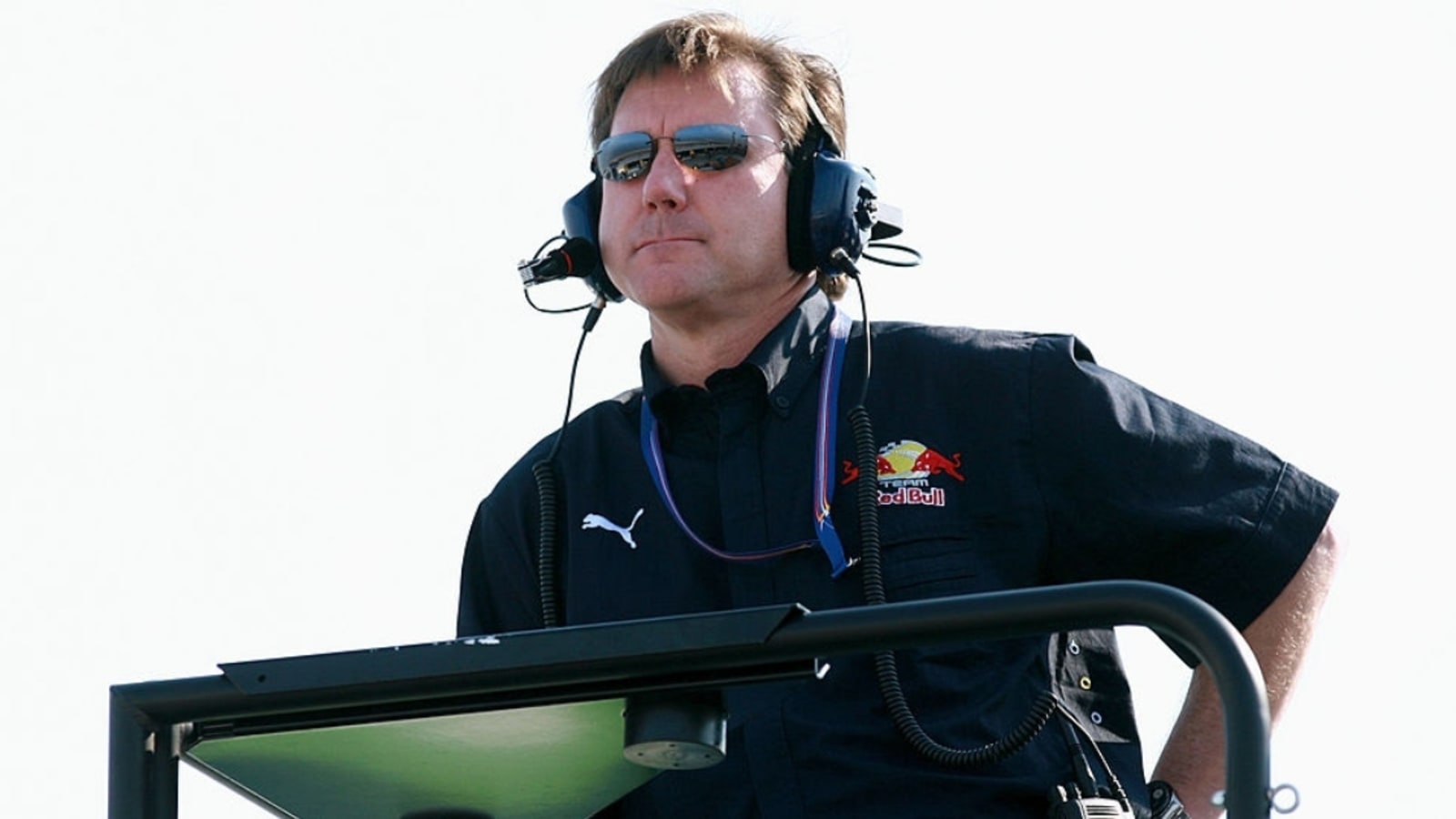
NASCAR Senior Vice President of Competition Elton Sawyer confirmed the sanctioning body is exploring real-time on-track penalties to resolve controversies during the race rather than days later.
The major announcement follows intense public backlash over prolonged post-race investigations and delayed driver penalties.
Recent events at Martinsville Speedway exposed a clear gap in how the sanctioning body handles on-track retaliation in live situations.
Now, league officials are actively working to modernize their disciplinary process through upgraded technology.
The goal is to intervene before checkered flags fly, eliminating days of debate and uncertainty for competitors and fans alike.
MARTINSVILLE FALLOUT
The ongoing debate reached a boiling point after multiple driver disputes disrupted the Xfinity 500 at Martinsville.
Two separate retaliatory brake-checking incidents on the short track sparked widespread criticism across the racing garage.
Carson Hocevar found himself at the center of the controversy after repeatedly targeting Team Penske driver Austin Cindric.
During the event, Josh Berry executed an identical aggressive maneuver against championship contender Ryan Blaney.
The sudden deceleration damaged the front bumper of Blaney's No. 12 Team Penske Ford.
Blaney was forced down pit road and into the garage area so his crew could patch up the damaged car.
By the time the No. 12 machine rejoined the field, Blaney was running more than fifty laps down.
The title hopeful ultimately finished thirty-fifth, which brought an abrupt and devastating end to his championship campaign.
Berry avoided any immediate consequence during the event and drove his car to a fourth-place finish.
Fans and teams expressed intense frustration as several days passed before the governing body announced any official sanctions.
INVESTIGATING THE INCIDENTS
Sawyer addressed the mounting frustration during an appearance on the November 3 episode of SiriusXM NASCAR Radio Interviews.
He explained that issuing penalties demands conclusive proof of driver intent rather than hasty assumptions.
NASCAR officials spent days analyzing detailed telemetry data, in-car camera footage, and internal team radio chatter.
Sawyer emphasized that the sanctioning body must avoid penalizing an innocent driver over an accidental racing incident.
The data review for Hocevar revealed four distinct instances of severe straightaway braking right in front of Cindric.
Furthermore, audio recordings captured Hocevar's spotter, Tyler Green, repeatedly telling him over the radio to stop the dangerous behavior.
The telemetry and radio communications established unmistakable intent, proving that Hocevar brake-checked his rival on purpose.

Officials also confirmed that Berry deliberately slowed in front of Blaney, inflicting terminal damage on the playoff car.
NASCAR ultimately disciplined both drivers for behavioral violations under Section 4.4a of the official rulebook.
Hocevar received a substantial fine of $100,000 alongside a deduction of twenty-five championship points.
Berry was assessed a $50,000 fine and also docked twenty-five championship points.
TEAM DISCIPLINE PRECEDES OFFICIAL ACTION
Before NASCAR unveiled its penalties, Spire Motorsports intervened with internal disciplinary action.
Spire announced the suspension of Hocevar from piloting the No. 77 car for the season finale at Homestead-Miami Speedway.
Hocevar had initially tried to laugh off the incident on track, claiming publicly that the drivers were just having fun.
The young driver subsequently reversed course, apologizing for letting down his team and Spire while pledging to do better.
The racing community widely commended Spire Motorsports for acting swiftly and holding its competitor accountable.
However, the team's decisive suspension amplified questions regarding why NASCAR took so long to penalize the drivers.
Sawyer stepped in to clarify the differences between team actions and independent regulatory enforcement.
He reiterated that governing bodies must substantiate every penalty with verifiable facts and irrefutable evidence.
PUSHING FOR REAL-TIME DECISIONS
Despite defending the thorough investigation, Sawyer conceded that NASCAR must accelerate its decision-making timeline.
Officials recognize that waiting days to resolve on-track hostility harms the credibility of the competition.
Sawyer confirmed that NASCAR is actively exploring live penalties to police aggressive moves directly within the race.
"The world that we live in today with the amount of data we can pull off the cars and go back and review that, you know, we can make better decisions."
"The one thing that I would add something that we're looking at is how we can do a better job, we as NASCAR do a better job and officiate this within the race."
Sawyer voiced profound frustration that regulatory penalties continue to overshadow the crowning of series champions.
"Would love to not be talking about this today."
"Would love to be talking about going to Homestead Miami, to crown, you know, three very deserving champions, whoever they may be, Friday night, Saturday, or Sunday."
"But unfortunately, we're talking about this today."
Officials want the focus firmly centered on championship battles across all three national touring divisions.

TECHNOLOGY AND IN-RACE DATA
To issue penalties before the checkered flag, officials must process massive volumes of vehicle information instantaneously.
Sawyer praised the ongoing advancements taking place inside the dedicated NASCAR production facility.
He credited former executive and competition official Scott Miller and his team for developing new analytical systems.
"But what we really strive is to get it right."
"And sometimes you have to wait just a little bit to get all the data and get all the information to be able to do that."
"But I will give our team credit that the NASCAR production facility, Scott Miller and his team, and how we're starting to be able to process data, and be able to have this information live so we could have made a decision in race."
"But that's something for the future, but we'll work on our side on that."
Instead of waiting until Monday or Tuesday to extract data, series directors want telemetry feeds transmitted instantly to race control.
Immediate access to throttle, brake, and steering inputs would enable officials to confirm intentional crashes in real time.
SHIFTING AWAY FROM 'HAVE AT IT'
The push for faster officiating marks a significant departure from NASCAR's longstanding cultural philosophy.
For more than a decade, the sanctioning body embraced a permissive "Boys, have at it" policy regarding driver rivalries.
NASCAR encouraged competitors to police themselves on track and settle personal disputes without excessive administrative interference.
Over time, however, drivers began domesticating and weaponizing that freedom, shifting from having no bounds to knowing no bounds.
Sawyer acknowledged that competitors are now testing the limits of safety by deliberately wrecking competitors to settle grudges.
Martinsville Speedway has long carried a reputation for heavy contact, tight stack-ups, and legendary bump-and-run passes.
Drivers frequently use their front bumpers to move leading cars out of the preferred racing groove on short tracks.
However, deliberate brake-checking on straightaways crossed the line from hard racing into blatant sabotage.
WEAPONIZING THE SOFT BUMPER
The controversy was further complicated by new technical specifications introduced specifically for short tracks this year.
NASCAR introduced a softened front bumper package in response to direct requests from the drivers themselves.
Many racers wanted softer bumper components to lessen the violent physical impacts transmitted through the chassis.
Other competitors believed the forgiving structure would discourage divebombing maneuvers and foster cleaner passing opportunities.

Instead of encouraging better racing, drivers quickly discovered a way to exploit the modification against rivals.
NASCAR concluded that Hocevar and Berry used the softer front structure as a weapon during the Martinsville race.
By braking violently on straight sections of track, the leading drivers damaged the fragile front noses of trailing vehicles.
That intentional damage degraded cooling systems and aerodynamic balance, wrecking the afternoons of unsuspecting opponents.
NASCAR now faces the challenging task of separating creative racing maneuvers from dangerous, calculated sabotage.
HISTORICAL RETALIATION PRECEDENTS
Intentional retaliation has repeatedly forced NASCAR to examine its officiating standards in recent seasons.
In 2022, Bubba Wallace engaged in a high-profile feud with Kyle Larson at Las Vegas Motor Speedway.
After sustaining contact against the outside wall, Wallace retaliated by turning Larson directly into the barriers at high speed.
NASCAR subsequently suspended Wallace for one race following an intensive post-race safety review.
A similar crisis emerged during the 2024 Cup Series event at Richmond Raceway involving Austin Dillon.
Dillon deliberately took out Joey Logano and Denny Hamlin in the final corner to steal a controversial victory.
NASCAR penalized Dillon days later by stripping his playoff eligibility, sparking fierce debates across the sport.
The events at Las Vegas, Richmond, and Martinsville demonstrated that post-race penalties do not repair ruined championship runs.
By delaying punishments, NASCAR allowed drivers who committed blatant fouls to celebrate on track while victims were eliminated.
WHAT COMES NEXT FOR NASCAR
NASCAR leadership now carries an ambitious agenda of competition reforms ahead of the 2027 racing season.
Officials are reevaluating the design of the softened short-track bumper to prevent future exploitation.
The sanctioning body is also examining potential adjustments to stage one racing to improve overall field dynamics.
Most importantly, the technical team will continue developing real-time data integration with the race control tower.
Implementing live in-race penalties represents a massive philosophical leap for stock car racing officiating.
Immediate penalties could instantly reshape race outcomes, deter reckless moves, and safeguard championship contenders.
However, quick decisions increase the risk of penalizing a driver before all mitigating factors are understood.
Should NASCAR issue on-track penalties immediately during the race, or do officials need post-race time to review telemetry and radio audio?
Advertisement
You may also like

NBA champion Steve Kerr trolls Donald Trump with a savage jab
Golden State Warriors head coach Steve Kerr took a sharp, humorous jab at President Donald Trump during his Wednesday media availability, referencing a campaign…

John Cena’s subtle salute to Gunther after his return
John Cena made a surprise appearance on the Oct. 30, 2026 edition of WWE NXT. As he walked to the ring, he stopped in…

Braden Smith Makes NBA Debut With the Pacers
Purdue basketball alum Braden Smith makes NBA debut with the Pacers. Braden Smith, the former Purdue Boilermakers guard, stepped onto an NBA floor for…

Red Wings vs. Golden Knights Live Score and Game Updates
NHL.LIVE: Detroit Red Wings vs Vegas Golden Knights LIVE STREA.MS NHL Game On TV Coverage 6 Nov 2026. Puck drop is set for 7…

Business leaders face a tough choice with workplace monitoring.
Big Brother 2026 has officially crowned a winner. Rochelle took the title on the live final, hosted by AJ Odudu and Will Best on…

WWE Plans Huge 30th Anniversary Celebration for The Rock
WWE is planning to celebrate 30 years of The Rock this month. Plans include a commemorative championship belt. Special merchandise releases are also in…