Eric Musselman Delivers 95-63 Win As USC Resolves Chad Baker-Mazara Lawsuit
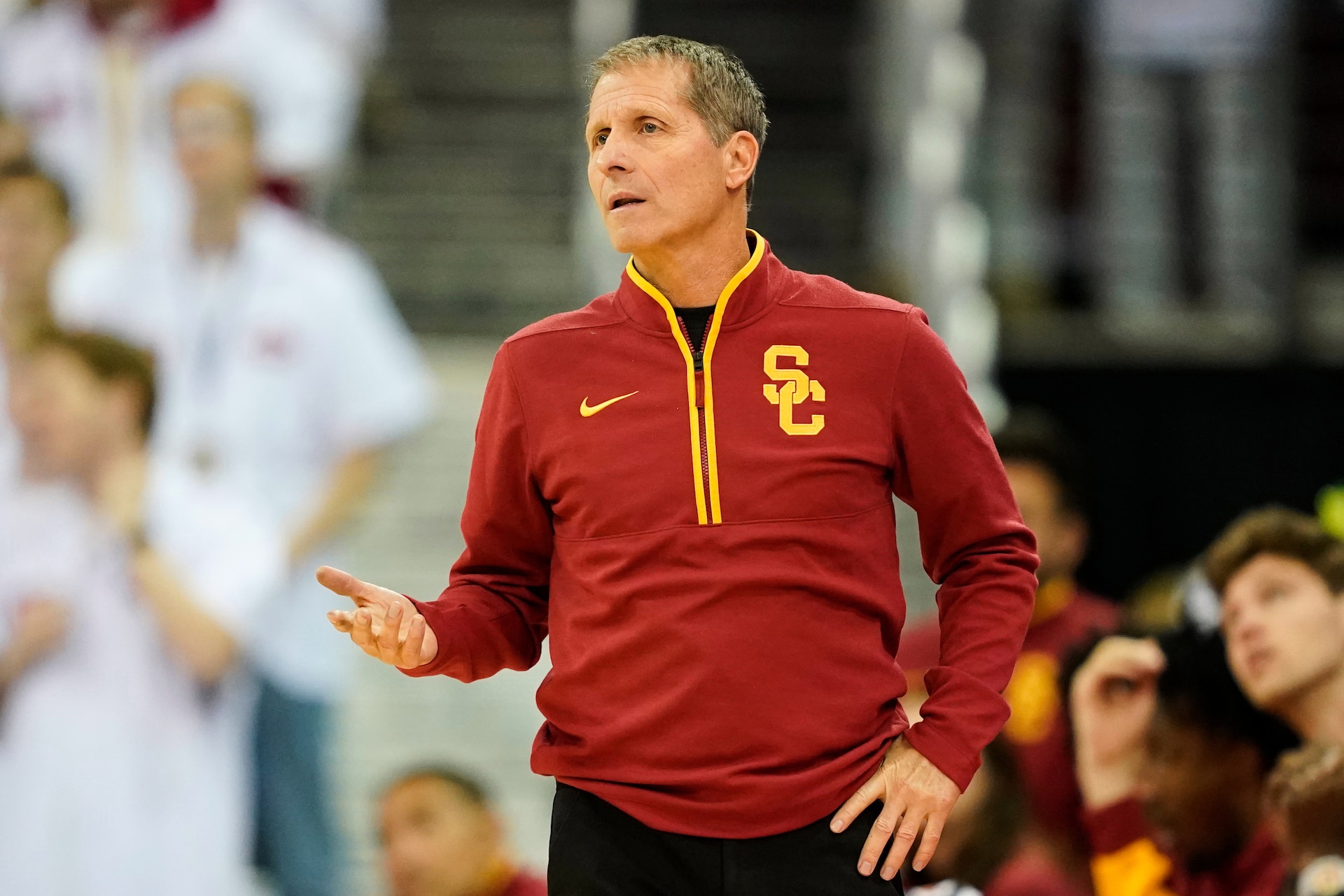
USC opened its men's basketball season with a 95-63 victory over Milwaukee as head coach Eric Musselman entered his third year with the program.
The lopsided win delivered a promising start on the floor for the Trojans.
The on-court victory arrived alongside a significant legal resolution for the university off the court.
USC and former men's basketball player Chad Baker-Mazara agreed on Friday to settle a high-profile lawsuit.
The legal dispute had centered on unpaid name, image, and likeness compensation and the circumstances surrounding Baker-Mazara's dismissal from the team.
The news of the settlement was first reported by Los Angeles Times reporter Ryan Kartje on X.
Following the agreement, the university confirmed the matter had concluded through a formal statement.
“USC is pleased to resolve this matter and will have no further comment,” the university said in a statement.
The resolution closed a contentious chapter for the basketball program just days before Musselman's squad took the floor on Monday night.
THE ROOTS OF THE LAWSUIT
The legal confrontation stemmed from events that unfolded late in the previous college basketball season.
Baker-Mazara sought outstanding NIL payments along with damages following his abrupt removal from the roster.
His dismissal occurred immediately after USC suffered a regular-season loss to Nebraska on February 28.
In his legal complaint, Baker-Mazara claimed that USC dismissed him once it became likely that the Trojans would not make the NCAA Tournament.
The lawsuit contained serious allegations regarding the aftermath of that February 28 defeat against the Cornhuskers.
Baker-Mazara alleged that Musselman directed a profanity-laced and racially charged tirade directly at him.
According to the complaint, Musselman shouted: “Go back to the f—ing Dominican Republic! Nobody wants you here!! F— you.”
Baker-Mazara is a native of the Dominican Republic.
The lawsuit stated that Baker-Mazara viewed the coach's remarks as inherently racist and discriminatory.
In the court filing, the player's legal team likened the phrase to telling an African American individual to go back to Africa.
The morning after the Nebraska contest, the confrontation translated into immediate administrative action against the student-athlete.
Representatives for Baker-Mazara were officially informed that the player had been dismissed from the basketball program.
Baker-Mazara was subsequently barred from entering or using the university's team athletic facilities.
A CRUMBLING SEASON ON THE BUBBLE
The dismissal took place during a critical juncture when USC's season was falling apart on the hardwood.
At the time of the loss to Nebraska, the Trojans carried an 18-11 overall record.
The defeat against Nebraska marked the team's fifth consecutive loss during a late-season collapse.
With losses accumulating, USC was sliding rapidly toward the wrong side of the NCAA Tournament bubble.
In college basketball, the bubble represents the precarious zone where fringe teams compete for a limited number of at-large tournament bids.
Selection committees evaluate late-season trends, quality victories, and conference tournament outcomes to determine the final tournament bracket.
A multi-game losing streak in late February almost always erodes a program's postseason resume.
Following Baker-Mazara's departure, the Trojans had only two regular-season games remaining on their schedule.
USC dropped both of those regular-season contests to extend its losing slide to seven games.
The slump carried directly into postseason play when the Trojans lost their opening game in the Big Ten tournament.
That final conference tournament defeat sealed USC's fate, leaving the Trojans outside the NCAA Tournament field entirely.

THE NIL COLLECTIVE AND THE MORALS CLAUSE
While the team's season came to an end, the financial dispute between the player and the program intensified.
Under modern NCAA regulations, student-athletes are legally allowed to profit from their name, image, and likeness.
These financial frameworks frequently operate through third-party university collectives that contract directly with athletes.
Collectives gather contributions from donors and corporate partners to distribute payments to collegiate players.
According to the lawsuit, USC's NIL collective moved to terminate Baker-Mazara's financial contracts on March 13.
The collective purported to terminate the agreements pursuant to a morals clause contained in the signed contracts.
Morals clauses are standard contractual terms used across sports and entertainment law to hold individuals accountable for their public behavior.
These clauses grant organizations the legal authority to cancel contracts if a party engages in conduct that harms the entity's public reputation.
The specific morals clause in Baker-Mazara's contract permitted termination if an athlete committed acts that were immoral, deceptive, scandalous, or obscene.
The provision also covered any behavior that could adversely affect USC, HOV, the athletic department, the men’s basketball program, or related entities.
HOV is the third-party collective associated with the university's athletic compensation structure.
Despite the invocation of the morals clause, Baker-Mazara's lawsuit alleged that he never received an explanation regarding how he had violated its terms.
The legal filing emphasized that the collective canceled the agreements without providing specific conduct violations.
As a result, Baker-Mazara filed suit seeking the full balance of the money left on his remaining NIL agreement.
The lawsuit also sought additional monetary damages for what Baker-Mazara claimed was significant harm to his NBA Draft stock.
Professional basketball prospects rely heavily on team visibility, positive program evaluations, and end-of-season exposure ahead of the draft process.
Baker-Mazara argued that an unexpected team dismissal and contract revocation severely damaged his professional basketball prospects.
TURNING THE FOCUS BACK TO BASKETBALL
Friday's settlement brings a definitive conclusion to a legal conflict that threatened to overshadow the program.
Out-of-court settlements allow legal parties to resolve claims privately and avoid protracted public trials.
With the university choosing not to comment further, the exact terms and financial details of the agreement remain confidential.
The settlement effectively wipes the slate clean off the court just as Musselman embarks on his third season at USC.
Musselman was hired to restore competitive consistency and national prominence to the Trojan basketball program.
Navigating the modern landscape of collegiate athletics requires head coaches to manage both locker room chemistry and complex NIL dynamics.
Monday's season opener against Milwaukee provided the program with an immediate opportunity to establish a fresh narrative.
The Trojans delivered an emphatic 95-63 victory over Milwaukee to secure a 1-0 start to the campaign.
The 32-point blowout gave USC an early boost following the turmoil of the previous spring.
Opening the year with a commanding win allows the coaching staff to highlight execution and team cohesion.
However, a long non-conference schedule and a challenging Big Ten slate will test the roster in the coming months.
The Big Ten represents one of the most physically demanding basketball conferences in the nation.
Every regular-season outcome will carry heavy implications as the Trojans aim to avoid another late-season bubble collapse.
With the courtroom proceedings behind them, the Trojans have cleared their largest administrative hurdle entering the winter.
The focus now shifts entirely to whether the team can replicate Monday's dominance against tougher competition.
Can Eric Musselman and the Trojans keep their focus entirely on the court this season now that the legal battle with Chad Baker-Mazara is resolved?
Advertisement
You may also like

NBA champion Steve Kerr trolls Donald Trump with a savage jab
Golden State Warriors head coach Steve Kerr took a sharp, humorous jab at President Donald Trump during his Wednesday media availability, referencing a campaign…

John Cena’s subtle salute to Gunther after his return
John Cena made a surprise appearance on the Oct. 30, 2026 edition of WWE NXT. As he walked to the ring, he stopped in…

Braden Smith Makes NBA Debut With the Pacers
Purdue basketball alum Braden Smith makes NBA debut with the Pacers. Braden Smith, the former Purdue Boilermakers guard, stepped onto an NBA floor for…

Red Wings vs. Golden Knights Live Score and Game Updates
NHL.LIVE: Detroit Red Wings vs Vegas Golden Knights LIVE STREA.MS NHL Game On TV Coverage 6 Nov 2026. Puck drop is set for 7…

Business leaders face a tough choice with workplace monitoring.
Big Brother 2026 has officially crowned a winner. Rochelle took the title on the live final, hosted by AJ Odudu and Will Best on…

WWE Plans Huge 30th Anniversary Celebration for The Rock
WWE is planning to celebrate 30 years of The Rock this month. Plans include a commemorative championship belt. Special merchandise releases are also in…