FIFA Pushes to Restrict Women's Olympic Soccer to Under-23 Squads in Controversial Move
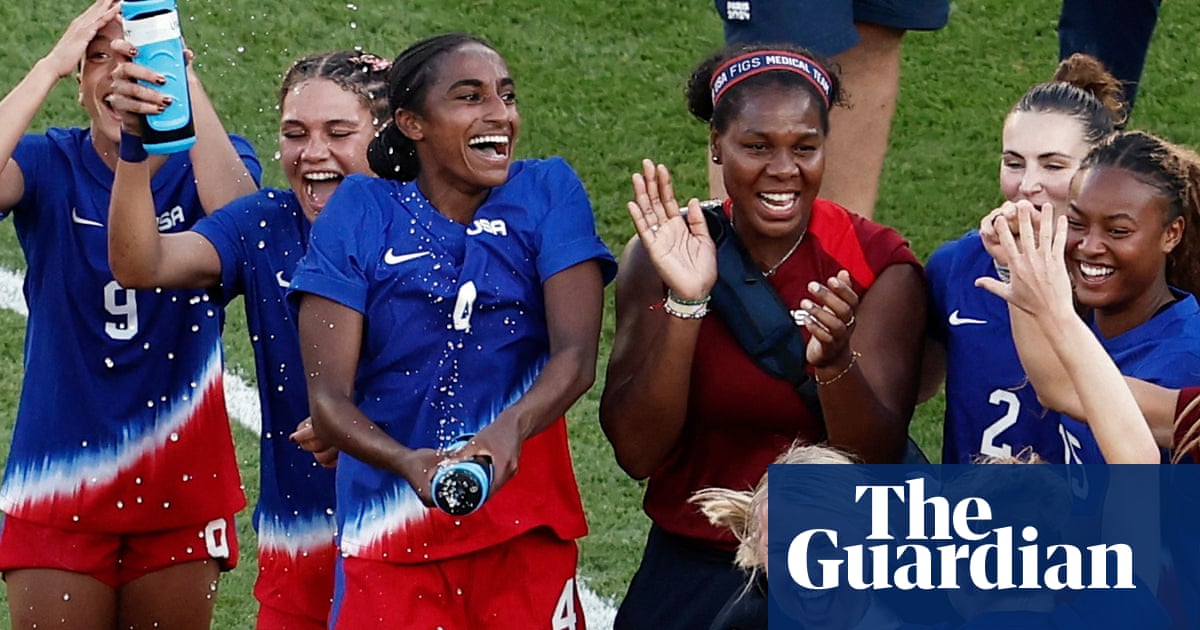
FIFA is seeking to restrict the women's Olympic football tournament to under-23 squads, a move that would fundamentally alter one of the premier competitions in women's international sports.
The global governing body wants the International Olympic Committee to adopt the age restriction to address growing concerns over fixture congestion and player workload.
While the concept has sparked immediate debate across the sport, no formal proposal has been submitted to the Olympic organizers yet.
Sources from both FIFA and the IOC have confirmed that the two governing bodies remain open to dialogue regarding the competition's future.
Any potential transition cannot happen quickly because the qualification cycle and regulatory framework for the 2028 Olympic Games in Los Angeles are already locked in place.
Regional qualification events have already begun, which means the earliest possible tournament that could feature an under-23 restriction is the Brisbane Games in 2032.
Even so, the prospect of altering the eligibility rules has raised alarm bells among players, coaches, and national federations.
Both FIFA and the IOC declined to comment on the discussions when approached about the potential shift.
A MONUMENTAL SHIFT FOR THE WOMEN'S GAME
Unlike the men's Olympic tournament, the women's event has stood as a full senior international championship since its inception.
The competition was introduced to the Olympic program at the 1996 Atlanta Games as an amateur event.
Because it began without professional player restrictions, the women's tournament never adopted the age caps that came to define the men's Olympic competition.
Over the last three decades, the Olympic Games developed into one of the crown jewels of international women's soccer.
National sides routinely deploy their strongest available senior rosters to pursue gold medals on the world stage.

That prestige is especially resonant for the United States Women's National Team, which has historically dominated the event.
The Olympic women's soccer title has been contested eight times since 1996.
The American squad has captured five of those eight gold medals, establishing the tournament as a central pillar of its program's heritage.
Most recently, manager Emma Hayes led the United States to a gold medal at the Paris Games two years ago.
Capping the Olympic roster at under-23 players would fundamentally change the tournament from a marquee world championship into a youth development showcase.
HOW THE MEN'S FORMAT TOOK SHAPE
The history of football at the Olympic Games has long been defined by tension between the IOC and FIFA over sporting authority.
Football first entered the official Olympic program in 1908.
For decades, the IOC barred professional players from participating, protecting the amateur ethos of the Olympic movement.
FIFA actively supported those limitations because the world governing body wanted to maintain the absolute primacy of the Men's World Cup.
Professional players were finally granted entry to the Olympic men's tournament in 1984 under specific restrictions.
Under persistent pressure from FIFA, the IOC adopted a formal under-23 age restriction for men's teams ahead of the 1992 Games in Barcelona.
By 1996, the IOC slightly modified the regulation to allow three overage players per squad, creating the current hybrid structure.
Applying a similar under-23 cap to the women's tournament would officially bring Olympic women's soccer into alignment with the men's format.
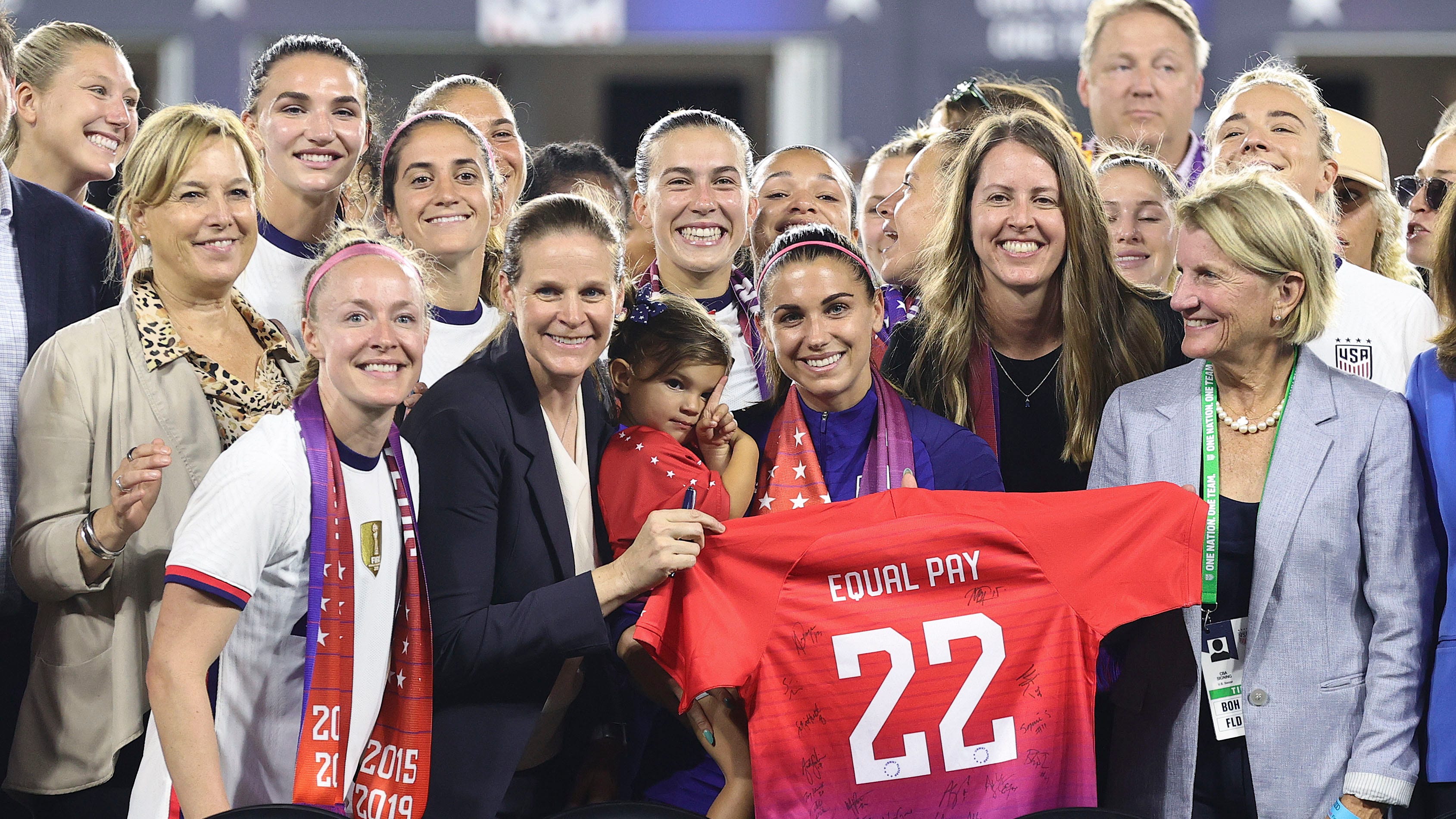
However, the women's game developed along a completely different historical trajectory, making the potential change far more disruptive.
COMMERCIAL CONFLICT AND THE IOC'S INTERESTS
The IOC may present significant resistance to FIFA's suggestions because women's soccer is an immense commercial draw for the Olympic movement.
The sport drives television viewership, ticket sales, and fan engagement across major global markets, particularly in the United States, Europe, and Australia.
Those commercial dynamics are reflected directly in the structure of the upcoming Los Angeles Games.
In 2028, the women's Olympic tournament will be larger than the men's tournament for the very first time in history.
The women's event in Los Angeles will feature 16 participating teams, whereas the men's competition will include only 12 sides.
That configuration marks a direct reversal from the Paris 2024 Games, underlining the sport's rapid commercial growth.
Because the tournament delivers such substantial value, the IOC has little incentive to dilute the product by removing world-famous senior players.
Any structural change would require thorough analysis, consultation, and approval through intricate governance committees inside both organizations.
FIXTURE CONGESTION AND CALENDAR CHAOS
FIFA's stated motivation for considering the age restriction centers on player welfare and an overcrowded international schedule.
The rapid professionalization and expansion of women's soccer over the past decade have drastically increased the physical demands placed on elite athletes.
Top international players now face grueling schedules that combine domestic leagues, continental club championships, and national team tournaments.

The upcoming 2028 sports calendar is already projected to be the most congested in women's soccer history.
Critics point out, however, that FIFA itself is heavily responsible for crowding the calendar.
The world governing body chose to launch a brand-new 16-team Women's Club World Cup in the exact same year as the 2028 Olympics.
The inaugural club tournament is scheduled to take place in the United States between January 5 and January 30, roughly six months before the Los Angeles Games begin.
That January competition will inflict major disruptions on the European domestic club season.
Top English clubs such as Arsenal, Chelsea, or Manchester City could miss up to a month of regular action if they make the tournament's final rounds.
Such an absence would force those clubs to miss as many as four Women's Super League matches alongside the FA Cup fourth round.
Players and unions argue that introducing new FIFA tournaments while trying to downgrade the Olympics creates an unnecessary contradiction.
ESCALATING LABOR TENSIONS AND EQUAL PAY BATTLES
The Olympic discussions unfold against a backdrop of escalating legal and financial tensions between FIFA and international players.
Leading women's footballers have warned FIFA that they are prepared to take legal action over prize money disparities ahead of next summer's World Cup in Brazil.
The dispute intensified following a joint letter delivered to FIFA this past September.
The formal letter was co-authored by global players' union FIFPRO alongside representatives from 45 different nations.
Signatories include players from the reigning world champions Spain, European champions England, the USWNT, and the rest of the current top 10 ranked nations.

The letter presents three mandatory proposals to establish financial parity across the sport.
First, players demand proportional equal prize money for the Men's and Women's World Cups, maintaining a guaranteed minimum 30 percent allocation directly to participating players.
Second, the letter calls for the co-development with FIFPRO of a global minimum standards framework for all national team assemblies.
Third, the players require a binding, global collective agreement between FIFA and FIFPRO to enshrine these rights.
In the letter, the players emphasized that these changes are necessary to secure equal pay for equal work between women and men.
They stated their collective goal is to leave the women's game in better shape than they found it so future generations enjoy proper competitive resources.
THE PRIZE MONEY GAP
At the 2023 Women's World Cup in Australia and New Zealand, FIFA paid out a record $110 million in performance prize money.
The governing body also distributed $40 million in preparation funds and club benefits to support the event.
Those payouts are expected to more than double for next summer's tournament in Brazil, yet total compensation will still fall far short of the men's figures.
At the men's World Cup in North America earlier this year, FIFA distributed a record-breaking $871 million in total funding.
That payout included $655 million awarded purely as performance-based prize money across the 48 participating teams.
In 2023, FIFA president Gianni Infantino committed to an ambition of reaching prize money equality by 2027.
Despite that public promise, FIFA has not finalized any binding agreement with FIFPRO or the players.

Negotiations have also incorporated plans for an uplift in payments to national federations that fail to qualify for the tournament.
PREPARING FOR A LEGAL BATTLE
Frustrated by the slow pace of talks, FIFPRO and national player unions have sought formal legal counsel on their options.
Union representatives from one country confirmed they are actively preparing to take FIFA to court if the organization fails to show clear commitment to gender equality.
The players are demanding transparent negotiations over prize money rather than having financial packages dictated solely by FIFA leadership.
Active discussions regarding coordinated legal steps are ongoing across several national unions.
Any eventual court action would be filed directly by individual players working together rather than by FIFPRO as an entity.
Those organizing the legal challenge argue that FIFA's compensation limits violate Article 23 of its own Code of Ethics, which prohibits gender discrimination.
They contend that FIFA applies strict, objective revenue caps solely to the women's tournament while treating the men's event differently.
Player representatives have shared internal research showing that FIFA possesses projected cash reserves totaling $6 billion.
Based on those reserves, the unions argue that FIFA holds more than enough capital to fund equal prize money immediately.
AN UNCERTAIN FUTURE FOR OLYMPIC PRESTIGE
The converging fights over prize money and Olympic eligibility demonstrate a growing divide between FIFA and the world's best players.
While senior stars fight for equitable pay on the World Cup stage, FIFA's ambition to restrict the Olympics threatens another elite platform.
For decades, Olympic gold has represented the pinnacle of international sporting achievement alongside the World Cup.
Stripping senior teams of Olympic eligibility could alter player career paths, national team schedules, and the tournament's overall global stature.
With discussions open between FIFA and the IOC ahead of 2032, the soccer community faces a pivotal debate over the identity of the Olympic tournament.
Would turning Olympic women's soccer into an under-23 tournament diminish its prestige, or is it time to align it with the men's format?
Advertisement
You may also like

NBA champion Steve Kerr trolls Donald Trump with a savage jab
Golden State Warriors head coach Steve Kerr took a sharp, humorous jab at President Donald Trump during his Wednesday media availability, referencing a campaign…

John Cena’s subtle salute to Gunther after his return
John Cena made a surprise appearance on the Oct. 30, 2026 edition of WWE NXT. As he walked to the ring, he stopped in…

Braden Smith Makes NBA Debut With the Pacers
Purdue basketball alum Braden Smith makes NBA debut with the Pacers. Braden Smith, the former Purdue Boilermakers guard, stepped onto an NBA floor for…

Red Wings vs. Golden Knights Live Score and Game Updates
NHL.LIVE: Detroit Red Wings vs Vegas Golden Knights LIVE STREA.MS NHL Game On TV Coverage 6 Nov 2026. Puck drop is set for 7…

Business leaders face a tough choice with workplace monitoring.
Big Brother 2026 has officially crowned a winner. Rochelle took the title on the live final, hosted by AJ Odudu and Will Best on…

WWE Plans Huge 30th Anniversary Celebration for The Rock
WWE is planning to celebrate 30 years of The Rock this month. Plans include a commemorative championship belt. Special merchandise releases are also in…