Gymnast in Jordan Chiles medal fight banned two years for doping.

Romanian gymnast Ana Barbosu, who was awarded the bronze medal in the floor exercise at the Paris Olympics after Jordan Chiles was stripped of hers, has been suspended from competition for two years.
The Court of Arbitration for Sport (CAS) partially upheld the provisional suspension handed down by the International Testing Agency (ITA) in May.
The ban means Barbosu, 20, will miss the 2028 Summer Olympics in Los Angeles.
CAS ruled that Barbosu committed three whereabouts failures within a 12-month period, which constitutes an anti-doping violation under the World Anti-Doping Code.
Under the rules, athletes must provide a 60-minute time slot each day specifying their exact location so they can be available for unannounced drug testing.
Missing three such slots — or failing to update the information — within any 12-month window triggers a violation, regardless of whether a prohibited substance was ever found.
Barbosu’s three failures occurred between late 2024 and early 2025, according to the ITA.
The CAS panel partially upheld the suspension but allowed Barbosu’s competitive results from December 2025 onward to stand, according to The Athletic.
This means any medals or scores she earned after that date will not be stripped.
Barbosu, a sophomore at Stanford University, appealed the provisional suspension in August.
In May, she addressed the violation on her Instagram Stories.
“I wanted to share and clarify some information that has been circulating,” she wrote.
“As you can imagine, moving to the US and starting college [at Stanford within the last year] has been a big transition.”
“Navigating through all the changes has been challenging, and I’m continuing to learn and grow through each experience.”
She added: “To be clear, this situation has nothing to do with prohibited substances, and I have been grateful for the guidance and support throughout the process.”

The CAS decision was issued on Wednesday, November 4, 2026.
Barbosu was thrust into the global spotlight in August 2024 during the floor exercise final at the Paris Olympics.
In that event, Chiles initially finished fifth with a score of 13.666.
Barbosu and her Romanian teammate, Sabrina Maneca-Voinea, finished third and fourth with scores of 13.700.
Soon after, Chiles’ coach submitted an inquiry into the scoring decision, arguing that Chiles’ difficulty score had been too low.
Judges agreed and updated Chiles’ score, moving her to third place ahead of Barbosu and Maneca-Voinea.
The Romanian Olympic committee then contested the decision, and CAS ultimately ruled that the inquiry had been filed four seconds past the one-minute deadline allowed under the rules.
As a result, Chiles was stripped of the bronze medal, and Barbosu was elevated to third place.
The controversy sparked a fierce public debate about judging procedures, deadline rules, and the emotional toll on all three gymnasts.
Chiles later said she felt “heartbroken” and “unjustly treated,” while Barbosu expressed relief but also sympathy for her rival.
The saga became one of the most talked-about moments of the Paris Games.
Now, Barbosu faces a two-year ban that effectively removes her from Olympic contention until at least 2030.
The next Summer Games are in Los Angeles in 2028, which fall squarely within her suspension period.
The CAS ruling also raises questions about how the bronze medal will be treated going forward.
Since Barbosu’s results from December 2025 onward remain valid, her Olympic medal itself — awarded in August 2024 — is not affected by this suspension.
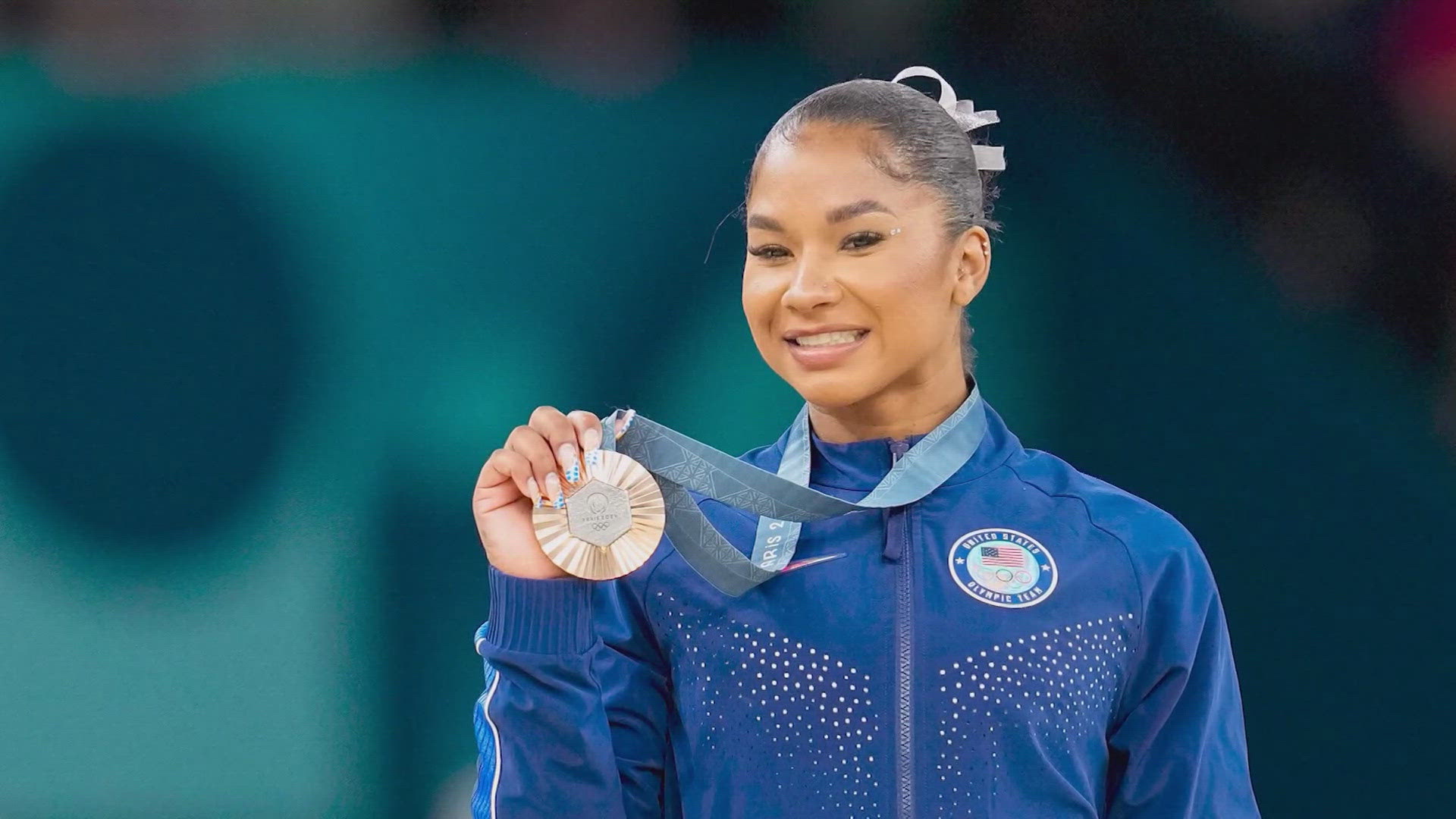
But with Barbosu sidelined, the International Gymnastics Federation (FIG) and the International Olympic Committee (IOC) may face renewed calls to revisit the original medal allocation.
Neither the FIG nor the IOC has issued a statement on the matter as of this writing.
Chiles, meanwhile, has continued her gymnastics career and competed in the 2025 World Championships.
The whereabouts rule that caught Barbosu is a standard part of the global anti-doping system.
Athletes in the registered testing pool must update their whereabouts information every quarter.
A failure can be either a missed test — when the athlete is not at the specified location during the 60-minute window — or a filing failure, when the information is not submitted correctly or on time.
Three such failures in 12 months constitute an anti-doping rule violation, regardless of whether any doping occurred.
The rule is designed to ensure athletes can be tested at any time, without notice, to catch those who might use banned substances.
Barbosu’s case is a reminder that the system catches violations even when no drugs are involved.
Stanford University, where Barbosu is a student-athlete, has not publicly commented on the suspension.
The NCAA, which governs college sports in the United States, typically follows WADA standards but may apply its own rules for eligibility.
It remains unclear whether Barbosu will be allowed to compete for Stanford during her ban.
Barbosu has not indicated whether she plans to appeal the CAS decision to the Swiss Federal Tribunal, which is the only remaining avenue for overturning a CAS ruling.
The tribunal’s review is limited to procedural errors and does not re-evaluate the facts of the case.
For now, Barbosu’s competitive future is on hold until at least November 2028.
The gymnastics world is watching to see how this latest twist in the long-running medal saga will unfold.
Advertisement
You may also like

Richard Hardy Barrows Jr.’s Shocking Final Act Revealed
Richard Hardy Barrows Jr. died on November 1, 2026. His obituary, published by The Bradenton Times, describes a life built around family, faith, friendships,…
ESPN Legend Calls Liberty's Brondello Firing a Huge Mistake
An ESPN legend has called the New York Liberty’s decision to fire head coach Sandy Brondello a “big, big, big mistake.” The criticism comes…
Prince William and Prince George Fly Commercial to Spain
Prince William and Prince George were spotted on a commercial flight to Barcelona, Spain, during the 13-year-old’s half-term break from Eton College. The Prince…

Draymond Green Unleashes Brutal Verbal Attack on Kendrick Perkins
Draymond Green blasts Kendrick Perkins in brutal rant after latest ejection. It started with a loss of composure on the court and ended with…
Valkyries mock Angel Reese with pacifier taunt at parade
The Golden State Valkyries made sure Angel Reese's Game 3 taunt didn't get forgotten. During the team's WNBA championship parade Wednesday in San Francisco,…
Hamilton Refuses to Apologize as Lawson Drops a Bombshell Admission
Lewis Hamilton has refused to back down after his explosive criticism of Ferrari teammate Charles Leclerc, while Liam Lawson has made a major admission…