Harvick warns NASCAR could ban Hocevar for dirtiest trick
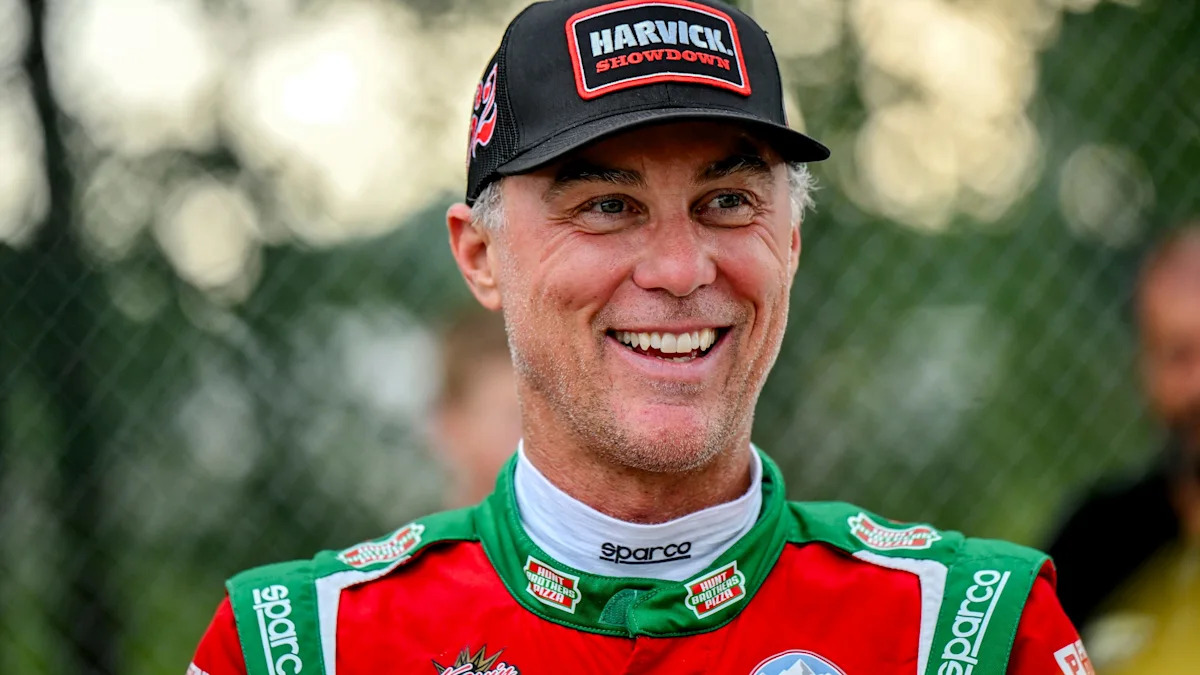
Kevin Harvick says Carson Hocevar has put NASCAR in a bind after the aggressive brake-checking that knocked Austin Cindric out of the Cup Series race at Martinsville Speedway on Sunday.
The 2014 champion turned FOX analyst compared the move to an intentional right-rear hook, a tactic NASCAR has historically punished with suspensions.
Harvick made the comments Monday on his weekly show SPEED with Harvick and Buxton, alongside IndyCar play-by-play voice Will Buxton.
“Yeah, usually you hold that for your worst enemies,” Harvick said on the show.
“Been there, done that with the brake-check thing. And usually that is leading to the last source of, ‘Hey, middle finger, I don’t care what you think. I’m going to tear your day up.’”
Harvick said he went back and watched the video multiple times.
“There wasn’t a lot of contact from the 2 car, leaning on the back bumper,” he said.
“And then you saw what he did to Austin Cindric and the three or four brake-checks.”
Harvick said the situation is unusual because there was no retaliation afterward.
“I’ve been in this scenario where you use that method,” Harvick said.
“But usually it’s where you’re completely mad at a situation or a person to be able to cause a war. And there was no war afterwards.”
Harvick also referenced NASCAR’s decision earlier this season to make front bumpers softer.
The change was made for safety and competitive reasons, but Harvick said drivers are now weaponizing it.

“I think it’s definitely something that, as a driver, when you have that in your tool bag, I know what I held that for,” he said.
On NASCAR’s Inside the Race, Steve Letarte and Jamie McMurray broke down the SMT data from Hocevar’s car.
“You’re going to see him come to the bottom and you’re going to see the stomp on the brakes,” Letarte said.
“That is 1,000 pounds of brake pressure on the 77 car.”
“That is as simple as driving down I-77 and stomping on the brakes,” he added.
McMurray said the hit came so fast that Cindric could barely react.
“The max pressure is the same as what you saw on entry,” McMurray said.
“So it’s all that Carson can give it.”
“If you’re in the 2’s position, it happens so quick, you almost can’t defend against it.”
Letarte was definitive about what the data shows.
“The evidence for me is 100% clear,” he said.
McMurray agreed, saying “there’s no denying it because of the data we have on the car.”
McMurray also said he understands why drivers do not admit to such tactics.

“I think there could be some consequences that come from it,” he said.
Harvick compared the brake-check to a right-rear hook, which NASCAR has punished with suspensions in the past.
“I think when you look at it from a NASCAR standpoint, it’s detrimental to the way that you want to see things race and probably falls into the right-rear hook category,” Harvick said.
“That’s the dirtiest of dirty tricks that you can possibly use on the racetrack,” he added.
Harvick said Hocevar’s own spotter, Tyler Green, was aggravated during the incident.
In real time, Green kept telling Hocevar to stop brake-checking Cindric, and that went ignored.
“He was trying to tell him to move on and start racing again,” Harvick said.
Hocevar has said it was just Martinsville racing.
Jeff Burton and Dale Jarrett did not accept that answer on the NBC broadcast.
Harvick retired from Cup after 2023 and was elected to the NASCAR Hall of Fame in May.
He now works as a FOX analyst and co-owns the zMAX CARS Tour, a short-track late model series.
As of Tuesday morning, NASCAR had not announced a decision on Hocevar.
The incident happened during the Xfinity 500 at Martinsville Speedway, a short track known for aggressive racing.
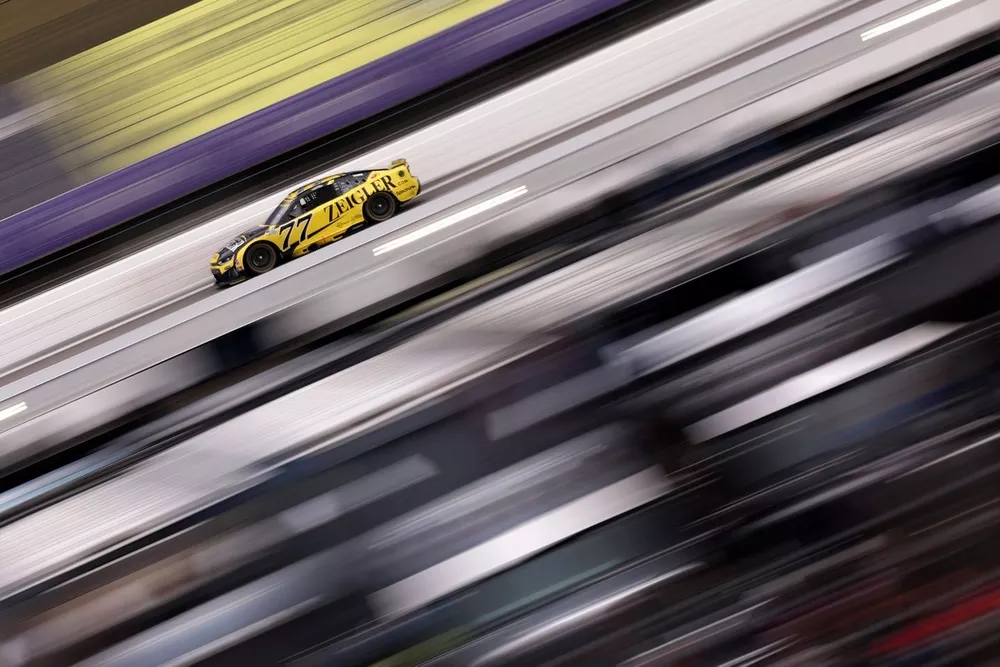
Brake-checking is considered one of the most dangerous moves in stock car racing because it causes a sudden, unavoidable rear-end collision.
A right-rear hook, which Harvick compared this to, is when a driver intentionally turns right into another car’s left rear quarter panel, spinning them out.
NASCAR has suspended drivers for right-rear hooks in the past, including Bubba Wallace in 2022 for hooking Kyle Larson at Las Vegas.
Wallace received a one-race suspension for that incident.
The brake data from Hocevar’s car shows he applied maximum brake pressure, the same amount used to slow the car entering a corner.
Letarte explained that the stomp on the brakes was deliberate and not a racing incident.
McMurray noted that Cindric had no time to react or avoid the contact.
Harvick said the lack of contact from Cindric beforehand made Hocevar’s actions even more puzzling.
“There wasn’t a lot of contact from the 2 car, leaning on the back bumper,” he said.
Harvick admitted he has used a brake check himself in his career.
“Been there, done that with the brake-check thing,” he said.
But he said he reserved it for his worst enemies and situations where he was ready for a war.
He said Hocevar’s actions did not fit that pattern.

“There was no war afterwards,” Harvick said.
Spire Motorsports has not commented on the incident beyond Hocevar’s initial statement.
The sport now waits to see if NASCAR will issue a penalty before the season finale.
The Cup Series season ends at Phoenix Raceway in November.
Martinsville is one of the oldest tracks on the circuit, known for its paperclip shape and tight corners.
Contact is common there, but deliberate brake-checking is rare and considered beyond the norms of short-track racing.
NASCAR has access to the same SMT data that Letarte and McMurray analyzed on the broadcast.
The sanctioning body can use that data as evidence in determining whether a penalty is warranted.
Harvick’s public comments add pressure on NASCAR to act.
As a Hall of Famer and current analyst, his opinion carries weight in the garage.
The question now is whether NASCAR will treat this as a right-rear hook equivalent or issue a lesser penalty.
Drivers and fans are watching closely.
Harvick made it clear he believes the move crossed a line.
“That’s the dirtiest of dirty tricks that you can possibly use on the racetrack,” he said.
Advertisement
You may also like

NBA champion Steve Kerr trolls Donald Trump with a savage jab
Golden State Warriors head coach Steve Kerr took a sharp, humorous jab at President Donald Trump during his Wednesday media availability, referencing a campaign…

John Cena’s subtle salute to Gunther after his return
John Cena made a surprise appearance on the Oct. 30, 2026 edition of WWE NXT. As he walked to the ring, he stopped in…

Braden Smith Makes NBA Debut With the Pacers
Purdue basketball alum Braden Smith makes NBA debut with the Pacers. Braden Smith, the former Purdue Boilermakers guard, stepped onto an NBA floor for…

Red Wings vs. Golden Knights Live Score and Game Updates
NHL.LIVE: Detroit Red Wings vs Vegas Golden Knights LIVE STREA.MS NHL Game On TV Coverage 6 Nov 2026. Puck drop is set for 7…

Business leaders face a tough choice with workplace monitoring.
Big Brother 2026 has officially crowned a winner. Rochelle took the title on the live final, hosted by AJ Odudu and Will Best on…

WWE Plans Huge 30th Anniversary Celebration for The Rock
WWE is planning to celebrate 30 years of The Rock this month. Plans include a commemorative championship belt. Special merchandise releases are also in…