How Saudi Arabia's PIF Strategy Shift After Iran War Triggered LIV Golf's Collapse
Months after the start of the Iran war, Saudi Arabia's Public Investment Fund changed its investment strategy in April and decided it would stop funding LIV Golf after the 2026 season.
That strategic pivot in Riyadh set off a chain reaction that has now pushed the breakaway golf circuit to the brink of complete liquidation.
The sovereign wealth fund had served as the sole financial engine of the venture since its launch in 2022.
Over the course of its existence, the league had absorbed an estimated $5 billion in direct backing from the Kingdom.
DP World Tour chief executive Guy Kinnings recently stated that the total spending figure was told to be over $7 billion.
That vast financial reserve had allowed the circuit to shock the sporting landscape by luring top-tier talent away from traditional tours.
Major champions Dustin Johnson, Brooks Koepka, Bryson DeChambeau, and eventually Jon Rahm were signed to massive contracts featuring nine-figure signing bonuses.
Even mid-tier professional golfers with only a single PGA Tour victory secured guaranteed contracts worth $30 million.
Those payouts regularly exceeded the entire career earnings of the players involved.
However, the sudden geopolitical shifts and the onset of the Iran war prompted the PIF to fundamentally reassess its capital allocation.
When the Saudi fund declared that its underwriting would expire after 2026, the entire operational foundation of the tour cracked.
THE ALLIES BEGIN TO RETREAT
The ripple effects of the Saudi financial withdrawal quickly shattered the international partnerships that LIV had constructed.

Among the earliest and most vital partners was the Asian Tour.
LIV Golf had previously revitalized the Asian Tour by injecting millions into its marquee International Series events.
That financial bridge had offered the breakaway league vital pathways, schedule integration, and global ranking credibility.
Yet just months after the PIF announced its impending departure, the Asian Tour made a dramatic move.
In July, the Asian Tour officially decided to renew its formal alliance with the PGA Tour and the European tour.
That decision severed LIV's regional safety net and left the organization diplomatically isolated in the Eastern hemisphere.
Without continued sovereign wealth guarantees, LIV lost the leverage required to maintain its rebellious coalition.
THE CHAPTER 11 FILING
Deprived of guaranteed long-term Saudi funding, LIV Golf was forced into federal court.
The league officially filed for Chapter 11 bankruptcy protection on September 8.
Chapter 11 is a legal mechanism in the United States designed to allow an insolvent organization to reorganize its debts while attempting to stay operational.
To manage the proceedings, LIV Golf New Jersey recently altered its legal address in bankruptcy court from an office in New York to a commercial property in Claymont, Delaware.
Even amidst insolvency, league leadership attempted to mount an ambitious rescue plan.

LIV chief executive Scott O’Neil spearheaded an initiative known as LIV 2.0.
The revamped concept proposed a streamlined schedule of at least 10 tournaments with an intensified focus on team franchises.
To entice players to stay without massive upfront guaranteed cash, the new structure offered equity stakes in the league.
O'Neil publicly characterized this equity arrangement to players as a second bite of the apple.
THE PRIVATE EQUITY LIFELINE
To replace the missing Saudi billions, LIV turned to private capital markets.
Private equity firm BC Partners Credit stepped forward as the proposed lead financial savior for the relaunch.
The investment firm pledged a financial commitment ranging from $300 million up to a potential $428 million.
BC Partners intended to finance the circuit starting with the planned restructure through the 2027 campaign.
In September, Ted Goldthorpe, partner and head of BC Partners Credit, laid out his investment thesis at a Sportico conference.
Goldthorpe argued that the heavy lifting of building an alternative golf infrastructure had already been financed by the Saudis.
He stated that a lot of the money spent had created the ecosystem and infrastructure that exists today.
Goldthorpe maintained that the venture could operate in a financially sustainable way because the original spending had already secured the athletes.

He declared at the conference that the players were already there.
THE CRITICAL MASS REQUIREMENT
That crucial assumption quickly collided with reality.
The entire BC Partners financial commitment was strictly contingent upon player participation.
The private equity firm required LIV 2.0 to secure commitments from a critical mass of professional golfers.
Industry insiders and league executives established that target number at roughly 30 to 40 committed players.
According to Golf Channel reporter Rex Hoggard, the Saudi PIF had imposed a hard deadline of October 30 to establish a binding agreement between LIV Golf and BC Partners.
When that deadline arrived, LIV was believed to have gathered around 30 golfers willing to play, while negotiating with roughly 10 others.
Public support, however, was strikingly absent from the circuit's top performers.
Only four players, including Brendan Steele and Cameron Tringale, stepped forward to publicly endorse the LIV 2.0 concept.
CRUSHING OPPOSITION FROM EUROPE
While LIV scrambled to hit its player quota, the established golf tours moved to block any potential revival.
The DP World Tour delivered what proved to be an existential blow to the player recruitment drive.

The European tour abruptly reversed its previous stance that had allowed players to compete across both platforms.
Instead, tour leadership issued a strict ultimatum to its membership.
The DP World Tour warned that any golfer who signed a contract with LIV 2.0 would be barred from applying for DP World Tour membership.
Guy Kinnings explained his hardline position by stating he held a duty to protect his tour against an adversary that had sought to destroy it.
PGA Tour star Rory McIlroy voiced total support for Kinnings’s aggressive policy ahead of the Abu Dhabi Championship.
McIlroy emphasized that LIV had taken players and corporate sponsors while fundamentally destabilizing the professional golf landscape.
THE MARQUEE STARS DEFECT
The European ultimatum and the reduction of prize purses triggered a mass exodus of the tour's headline attractions.
Jon Rahm negotiated a release from his lucrative contract, a settlement scheduled for approval in federal court.
Spanish compatriot Sergio Garcia also publicly announced his decision to walk away from the proposed LIV 2.0 roster.
Chilean star Joaquin Niemann departed the fold as well.
Bryson DeChambeau, who had served as the circuit’s most visible champion, did not commit publicly to the new venture.
Reports indicated that marquee figures like DeChambeau ultimately never signed on to the proposed LIV 2.0 terms.
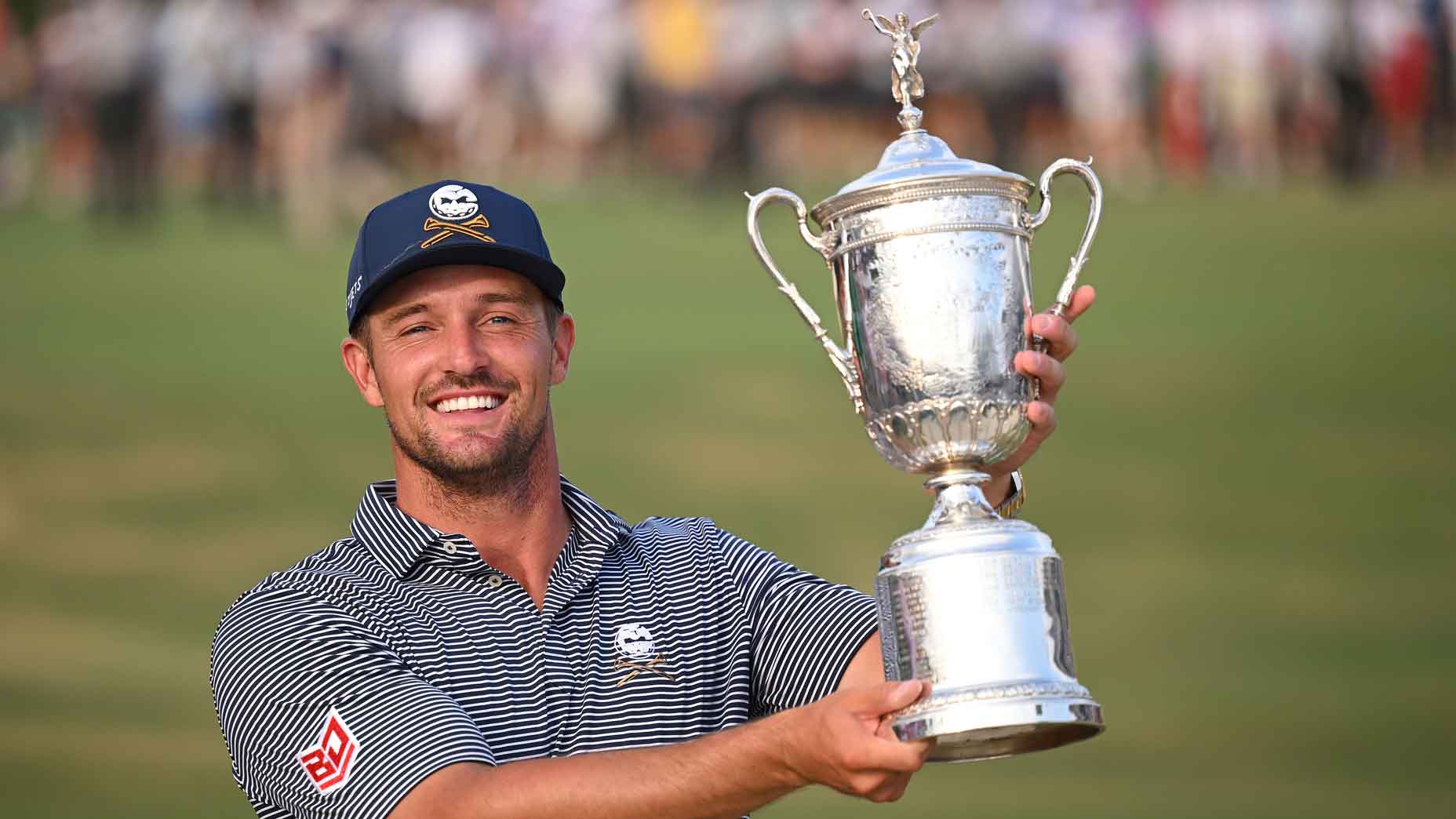
While LIV reportedly reached near 30 total players, the roster had lost the star power required by commercial investors.
THE LIFELINE SNAPS
Faced with a roster devoid of major championship headliners, BC Partners pulled the plug.
The private equity backer formally scrapped its plans and withdrew its proposed funding lifeline.
The withdrawal leaves the breakaway tour without any alternative capital source to navigate its bankruptcy.
The consequences have hit the tour's rank-and-file golfers immediately.
Former world number one Lee Westwood openly declared himself unemployed in the wake of the financial collapse.
South Australia Premier Peter Malinauskas publicly acknowledged that the demise of LIV Golf was edging closer.
THE GAVEL FALLS IN TRENTON
The legal venue that was intended to approve LIV’s reorganization will now oversee its end.
A scheduled hearing in the U.S. Bankruptcy Court in Trenton, New Jersey, was originally set to resolve contracts and leases for the relaunch.
That hearing has now shifted toward seeking the complete liquidation of LIV Golf’s corporate assets.
Once the auction of assets begins, the venture that once threatened to conquer professional golf will effectively cease to exist.
The entire enterprise was constructed upon an endless flow of sovereign capital that vanished the moment foreign policy priorities changed.
Could LIV Golf have ever survived sustainably without endless multi-billion-dollar backing from Saudi Arabia's PIF?
Advertisement
You may also like
Sean Payton confirms J.K. Dobbins is still key to Broncos' plans
Sean Payton says J.K. Dobbins remains "a huge part of what we're doing" in Denver. That statement came Wednesday when reporters asked the Broncos…
Kris Jenner Breaks Silence on Kim's Scary Health Diagnosis
Kim Kardashian's ultra-plunging latex dress is so rare it will send fans wild. But behind the glamorous photo shoots and vintage Paco Rabanne looks,…

UNC Athletics Unveils Golfing Rameses Logo, Finley Collection Of Merch
The University of North Carolina Department of Athletics has introduced a new golfing Rameses logo, Carolina and deputy athletic director/chief revenue officer Rick Barakat…
Jessica Pegula Slammed as "Outrageous" After Shading Coco Gauff and Mirra Andreeva
“Jessica Pegula Should Be Banned.” “Outrageous.” That is the reaction flooding social media after a courtside microphone picked up the World No. 5 criticizing…
Perkins: Draymond Green is now more liability than asset
Kendrick Perkins has delivered a blunt verdict on Draymond Green. "Draymond Green has been more of a liability than an asset," Perkins said. The…
Adrian Meronk reveals 4 reasons LIV Golf players are leaving
LIV Golf star Adrian Meronk has revealed the four major reasons why players are leaving the embattled league. Meronk, a one-time winner on the…