Jason Isbell Takes A Stand Against Suno, Targeting Artist Voiceprints Over Traditional Copyright
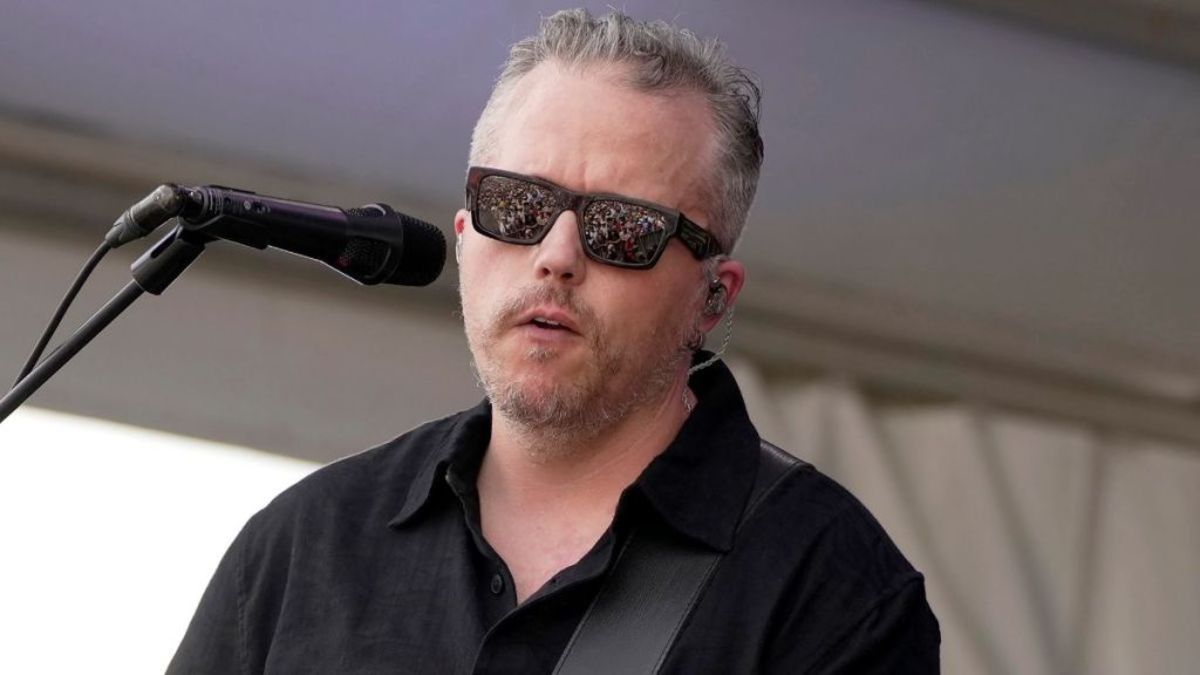
Unlike typical music copyright disputes, Jason Isbell's proposed class action targets Suno under state publicity laws, accusing the AI company of extracting performers' identities and bypassing guardrails.
The country and Americana singer-songwriter is leading a challenge that pivots away from the well-trodden ground of federal infringement claims.
Instead, the legal battle centers directly on whether artificial intelligence platforms can harvest and monetize the unique vocal characteristics and personal identities of working artists.
Isbell filed the 84-page proposed class action complaint on August 31 in federal court.
He is not standing alone in the legal offensive.
Joining Isbell as plaintiffs are David Lowery, the frontman of Cracker and Camper Van Beethoven, alongside Texas blues artist Guy Forsyth and Florida saxophonist Eduardo Calle.
Together, the group represents musicians whose names and creative traits have allegedly been ingested and deployed by Suno's generative music engine.
The lawsuit asserts claims under the right-of-publicity statutes of more than a dozen different states.
A NEW LEGAL PLAYBOOK
For months, the broader debate surrounding artificial intelligence and the music industry has focused heavily on traditional copyright statutes.
Major record labels, including Universal Music Group and Sony Music Entertainment, have previously launched lawsuits challenging whether tech companies can train models on recorded catalogs without compensation.
Yet Isbell and his co-plaintiffs chose an entirely different path when drafting their 84-page complaint.
The plaintiffs deliberately omitted copyright infringement claims from their filing.
The musicians explicitly stated that they claim no ownership over country music, Americana music, or any specific genre or musical idea.
Instead, their complaint argues that "no one may commercially exploit another’s right of publicity in their name and identity."
Right-of-publicity laws traditionally protect an individual's name, image, and likeness from unauthorized commercial use.
By framing the lawsuit around identity, the musicians contend that personal performance traits belong to the performer regardless of licensing deals or catalog ownership.
The plaintiffs argue that a singer's distinct vocal presence and mannerisms remain inextricably tied to their legal personhood.
TARGETING VOICEPRINTS AND GUARDRAILS
The core of the complaint alleges that Suno actively indexed musicians by their actual names.
According to the musicians, the platform trained its artificial intelligence models by extracting identifying attributes directly from artist recordings.
The plaintiffs claim that this training process enabled the software to retain what they describe as artist voiceprints.

Furthermore, the lawsuit alleges that Suno produces text descriptions, generated cover images, and audio outputs that clearly evoke the targeted artists.
While Suno operates an internal system designed to block direct artist-name prompts, the musicians argue those measures are fundamentally flawed.
Under Suno's internal filters, entering a specific artist name is supposed to trigger an automated conversion into general genre tags.
For instance, the platform is designed to convert a prompt for "Pantera" into a broader descriptive label like "aggressive metal."
A prompt requesting music in the style of Isbell is translated by the platform into "contemporary Americana singer-songwriter."
However, the lawsuit claims users can routinely bypass these guardrails to generate music that clearly imitates a specific performer.
The plaintiffs argue that users easily circumvent the system by requesting tracks that emulate a specific performer's vocal tone and phrasing.
Users can also evade restrictions by typing an artist's legal name rather than their well-known stage moniker, as seen with the rapper Common.
Other simple evasion tactics cited in the complaint include inserting spaces between letters, such as typing "t a y l o r s w i f t" to access Taylor Swift's musical profile.
Through these methods, the plaintiffs claim users successfully unlock voiceprints stored deep inside Suno's underlying models.
SUNO DEMANDS DISMISSAL IN BOSTON
Suno responded aggressively to the lawsuit on Tuesday, November 3, by filing a formal motion to dismiss in Boston federal court.
The artificial intelligence company argues that the musicians' right-of-publicity claims fail completely as a matter of law.
Suno asserts that referencing an artist's name during a musical prompt is standard human behavior and forms protected speech under the First Amendment.
In the court filing, Suno attorney Andrew Gass argued that artist names have long served as universal shorthand for broader musical movements.
“When people describe styles of music, they often use artists’ names as shorthand for the genre they perform in,” Gass wrote in the filing.
The filing compared prompting an AI tool to everyday conversations between human musicians and studio producers.
Rather than describing an idea as late 1980s arena rock with glam metal influences, Suno noted that people naturally say a song sounds like Guns N’ Roses.
Suno argues that using an artist's name to identify a style does not infringe rights or trick listeners into believing the original artist performed the track.
The company maintains that its synthetic outputs could never be mistaken for genuine performances by Isbell or his co-plaintiffs.
THE BATTLE OVER GENRES AND STYLES
Suno's legal team contends that Isbell's lawsuit seeks to monopolize entire creative genres under the guise of publicity rights.

According to Suno's motion, granting Isbell's legal theory would effectively confer exclusive ownership over broad musical categories.
The tech firm argues that federal intellectual property statutes deliberately excluded artistic styles from copyright protection.
In the filing, Gass stated that Congress made a deliberate policy choice not to grant monopoly rights over a style so subsequent creators could freely build on prior works.
Suno warns that applying state publicity laws to musical genres would establish a conflicting shadow legal regime over federal copyright law.
Because federal copyright law does not protect abstract musical styles, Suno argues that state-level claims are completely preempted.
Suno also pointed to public statements by its leadership to reinforce its position on artist protection.
The motion referenced an August blog post from Suno co-founder and chief executive officer Mikey Shulman.
In that post, Shulman maintained that the platform has never allowed user prompts for specific artists or copyrighted songs.
However, Suno previously addressed the mechanics of its platform during separate litigation filed by Universal Music Group and Sony Music Entertainment.
In an October 20 court filing in that case, Suno admitted that it previously prevented users from entering artist names as prompts.
Suno acknowledged in that document that users may be allowed to include artist names in prompts starting in January 2026.
Even so, Suno denied that those prompts generate raw audio without first translating the artist's name into a general style description.
HIGH STAKES FOR THE DIGITAL ERA
The clash between Isbell and Suno represents a critical testing ground for the limits of artificial intelligence in commercial entertainment.
If the Boston federal court allows the right-of-publicity claims to proceed, it could reshape how tech companies handle performer data.
Major record labels often hold the underlying copyrights to an artist's master recordings.
Because labels own the recordings, artists do not always control how those master files are licensed or settled in court.
By focusing on identity and voiceprints, Isbell's group is attempting to secure legal protection that remains directly in the hands of the performers themselves.
Suno, meanwhile, insists that restricting descriptive prompts would stifle creative expression and upend centuries of established artistic tradition.
An attorney representing the musician plaintiffs did not immediately respond to requests for comment regarding Suno's dismissal motion.
The federal judge in Boston must now decide whether using an artist's signature sound constitutes a standard stylistic reference or an unlawful commercial appropriation.
As the court reviews the motion, the dispute continues to draw immense attention across both Silicon Valley and the music capitals of the world.
Should artists have legal ownership over their distinct tone, phrasing, and musical identity when it comes to AI?
Advertisement
You may also like

NBA champion Steve Kerr trolls Donald Trump with a savage jab
Golden State Warriors head coach Steve Kerr took a sharp, humorous jab at President Donald Trump during his Wednesday media availability, referencing a campaign…

John Cena’s subtle salute to Gunther after his return
John Cena made a surprise appearance on the Oct. 30, 2026 edition of WWE NXT. As he walked to the ring, he stopped in…

Braden Smith Makes NBA Debut With the Pacers
Purdue basketball alum Braden Smith makes NBA debut with the Pacers. Braden Smith, the former Purdue Boilermakers guard, stepped onto an NBA floor for…

Red Wings vs. Golden Knights Live Score and Game Updates
NHL.LIVE: Detroit Red Wings vs Vegas Golden Knights LIVE STREA.MS NHL Game On TV Coverage 6 Nov 2026. Puck drop is set for 7…

Business leaders face a tough choice with workplace monitoring.
Big Brother 2026 has officially crowned a winner. Rochelle took the title on the live final, hosted by AJ Odudu and Will Best on…

WWE Plans Huge 30th Anniversary Celebration for The Rock
WWE is planning to celebrate 30 years of The Rock this month. Plans include a commemorative championship belt. Special merchandise releases are also in…