Keisha Lance Bottoms pushes Medicaid expansion after historic Georgia win
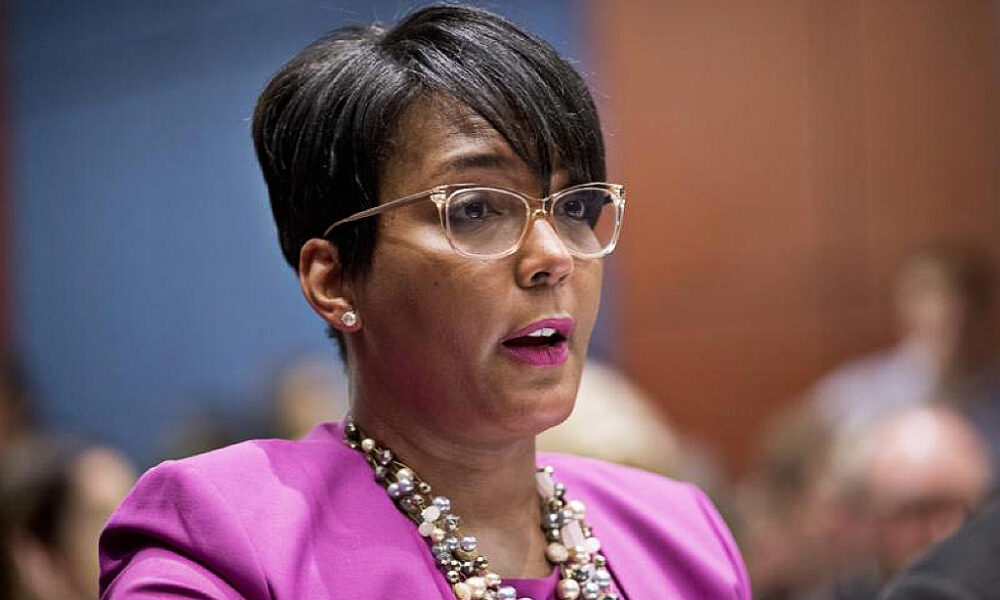
Keisha Lance Bottoms is making Medicaid expansion a priority after her historic win in Georgia’s governor race.
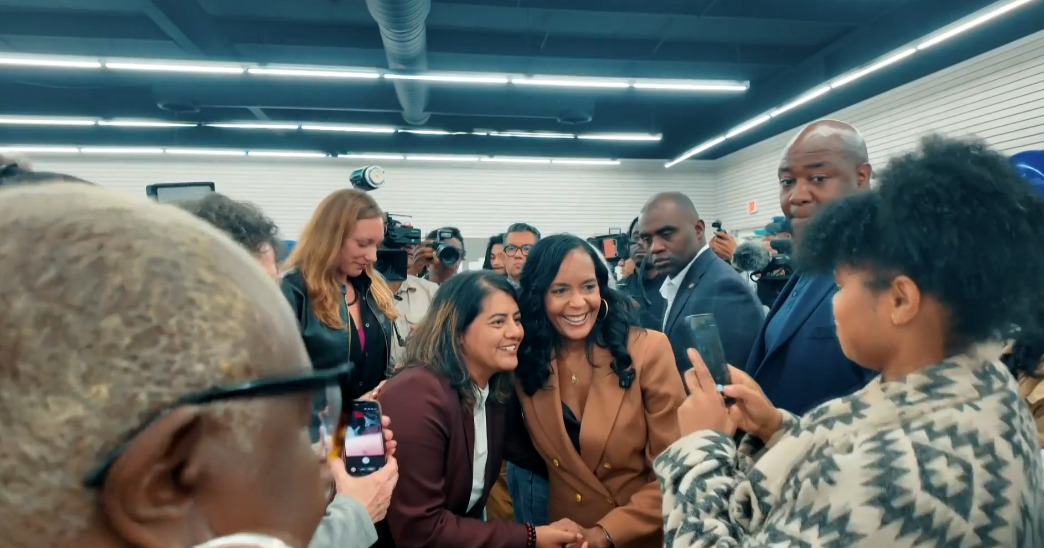
Speaking to supporters at her Cascade Road campaign office Wednesday, Bottoms basked in her victory as Georgia’s governor-elect.
“Y’all. It feels good to be a winner,” Bottoms said.
“This win is for all of us. So thank you, thank you, thank you, thank you.”
Bottoms said working with state lawmakers across the aisle will be crucial in her first 100 days.
She pointed specifically to broadening access to health care.
“I truly believe that this is an issue we can get bipartisan support with,” Bottoms said.
“I know that there are many Republican leaders who support Medicaid expansion.”
She noted other Republican-led states that have expanded Medicaid.
Those states could serve as examples, she said.
“And given that there are even more people expected to drop their coverage under the ACA, we know that the need for access to health care is going to be even greater,” Bottoms said.
“So I’m an optimist. I think it will get done.”
Bottoms’ win is historic on several fronts.
She will become Georgia’s first Black governor and first female governor.
She is also the first Black woman to serve as governor in the country.
She is the first Democrat elected Georgia’s governor since 1998.
Tanisha Cameron worked on Bottoms’ campaign for governor.
“We’re ecstatic, and it’s because Keisha went across the state talking to voters everywhere about her plans to expand Medicaid, to invest in education and to stand up to [President Donald] Trump,” Cameron said.
“And she really didn’t take a single voter for granted.”
Volunteers for Bottoms’ campaign said it was rewarding to see several other Black women win key offices alongside her.

State Rep. Tanya Miller, chair of the House Democratic Caucus, defeated state Sen. Brian Strickland in the race for attorney general.
In another high-profile race, Penny Brown Reynolds, a former Fulton County State Court judge, defeated state Rep. Tim Fleming in the race for secretary of state.
“This time, people were educated about the need to vote from the top to the bottom,” Sue Ross said.
“Don’t stop at Jon Ossoff and Keisha Lance Bottoms. Go all the way through.”
“It’s absolutely, what do they call, ‘just due’ when we worked so hard,” said Lisa Baker, another volunteer for Bottoms’ campaign.
“When we’ve carried so much.”
“When we’ve always come to the aid or to the rescue of other folks, of other situations that we finally get a chance to show everybody why people rely on us so much.”
Bottoms’ victory over Republican businessman Rick Jackson represents a defining moment in American politics.
It breaks a barrier that has stood since the nation’s founding.
It places Georgia at the center of a historic political transformation.
For generations, Black women have played a critical role in American democracy.
They have organized communities, led movements, mobilized voters and shaped public policy.
Yet despite their contributions, no Black woman had ever been elected governor of a U.S. state.
Until now.
Bottoms’ election also makes her the first woman and first Black person elected governor of Georgia.
Georgia is a state whose political history has been deeply shaped by slavery, segregation, the civil rights movement and the long struggle for equal representation.
Her victory carries particular significance in a state where Black women have been among the most influential forces in voter registration, political organizing and Democratic electoral success.
A fifth-generation Georgian, Bottoms previously served as Atlanta’s 60th mayor from 2018 to 2022.
During her administration, she led the city through the COVID-19 pandemic.
She also led through nationwide protests over racial injustice.
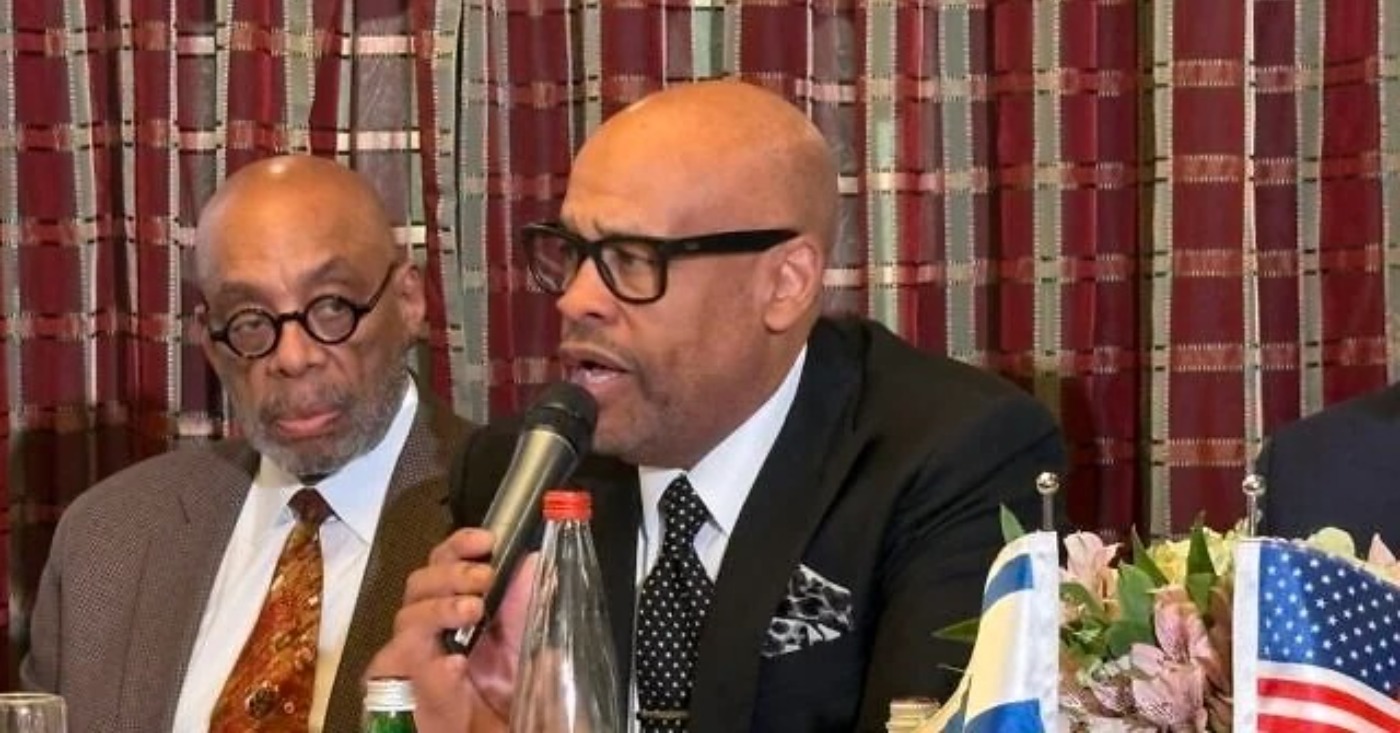
And she led through a period of significant economic and population growth.
Following her time as mayor, Bottoms served as a senior adviser in President Joe Biden’s administration.
She then returned to Georgia politics to pursue the governorship.
Her campaign focused on expanding access to health care.
She also focused on strengthening public education.
She advocated for increasing wages.
And she addressed the rising cost of living.
She specifically advocated for expanding Medicaid.
She called for raising Georgia’s minimum wage to $15 an hour.
She called for increasing compensation for teachers and other public employees.
Bottoms faced Jackson, a wealthy health care executive who invested heavily in his campaign.
Jackson positioned himself as a political outsider.
The contest drew national attention as Democrats sought to hold the governorship.
In a rarity among political races, both candidates have a personal relationship to the child welfare system.
Jackson is a former foster youth.
Bottoms is a former guardian ad litem and attorney representing children in juvenile court.
She is also an adoptive parent.
She adopted all four of her children.
Jackson cycled through five foster homes and a now-shuttered “orphan’s home” beginning at age 13.
The current governor, Republican Brian Kemp, is term-limited.
During her victory speech, Bottoms acknowledged her family’s slavery roots dating back to a Crawfordville plantation.
That plantation, she said, “produced the Confederacy’s vice president.”
But now, she said, “your next governor.”
“No matter what community we come from, Georgia is not defined by one moment in time or one person,” Bottoms said during her speech.
“It’s been defined by us all, and I will be a governor for everyone in this state.”
Melissa Carter, director of Emory University’s Barton Child Law and Policy Center, called Bottoms’ victory “historic.”
Carter said “Georgia needs equally consequential change” to repair its child welfare system.
“The state faces serious financial and operational challenges that demand strong, competent leadership, fiscal transparency and an unwavering commitment to better,” Carter said.
Bottoms captured 54% of the vote, defeating Jackson.
Her win is the first time a Democrat has won Georgia’s governorship since 1998.
That was when Roy Barnes won the office.
Medicaid expansion remains a key legislative priority for Bottoms.
Georgia is one of 10 states that have not expanded Medicaid under the Affordable Care Act.
The ACA, also known as Obamacare, was signed into law in 2010.
It allowed states to expand Medicaid coverage to adults with incomes up to 138% of the federal poverty level.
The federal government covers 90% of the cost for the expansion population.
Republican-led states that have expanded Medicaid include Arkansas, Arizona, Indiana, Louisiana, Michigan, Montana, New Hampshire, North Dakota, Ohio, Oklahoma and West Virginia.
Bottoms referenced these states as examples of bipartisan possibilities.
She said she believes many Republican leaders in Georgia support expansion.
She acknowledged that more people are expected to drop their coverage under the ACA.

That, she said, makes the need for health care access even greater.
Bottoms said she is an optimist.
She said she thinks it will get done.
The first 100 days of her administration will be critical.
She has said working across the aisle will be essential.
Her transition team is already preparing legislative strategy.
The Georgia General Assembly will be in session when she takes office.
Bottoms will need to negotiate with Republican legislative leaders.
Republicans currently hold majorities in both the Georgia House and Senate.
But some Republican lawmakers have previously expressed openness to Medicaid expansion.
The political landscape in Georgia has shifted dramatically in recent years.
Georgia voted for a Democratic presidential candidate in 2020 for the first time since 1992.
It elected two Democratic U.S. senators in 2020 and 2022.
Now it has elected a Democratic governor for the first time in 28 years.
Bottoms’ victory speech acknowledged the long arc of history.
She referenced her family’s roots in slavery.
She said Georgia is not defined by one moment or one person.
She pledged to be a governor for everyone in the state.
The crowd at her Cascade Road campaign office cheered.
Volunteers hugged each other.
Some cried.
Tanisha Cameron said the campaign never took a single voter for granted.
Sue Ross said people were educated about voting from the top to the bottom.
Lisa Baker said it was “just due” after so much hard work.
Baker said Black women have always come to the aid of others.
She said this is the chance to show everybody why people rely on them so much.
Bottoms’ win is now part of American history.
She will be sworn in as governor of Georgia.
The date has not yet been announced.
Her administration will begin with a focus on Medicaid expansion.
She will also work on education funding, wage increases and cost of living.
The child welfare system will also be a priority given her personal history.
Bottoms is an adoptive mother of four.
She served as a guardian ad litem and juvenile court attorney.
She knows the system from the inside.
Jackson, her opponent, also knew it from the inside as a former foster youth.
But it was Bottoms who won the election.
And it is Bottoms who will now lead Georgia.
The nation is watching.
History has been made.
Advertisement
You may also like

NBA champion Steve Kerr trolls Donald Trump with a savage jab
Golden State Warriors head coach Steve Kerr took a sharp, humorous jab at President Donald Trump during his Wednesday media availability, referencing a campaign…

John Cena’s subtle salute to Gunther after his return
John Cena made a surprise appearance on the Oct. 30, 2026 edition of WWE NXT. As he walked to the ring, he stopped in…

Braden Smith Makes NBA Debut With the Pacers
Purdue basketball alum Braden Smith makes NBA debut with the Pacers. Braden Smith, the former Purdue Boilermakers guard, stepped onto an NBA floor for…

Red Wings vs. Golden Knights Live Score and Game Updates
NHL.LIVE: Detroit Red Wings vs Vegas Golden Knights LIVE STREA.MS NHL Game On TV Coverage 6 Nov 2026. Puck drop is set for 7…

Business leaders face a tough choice with workplace monitoring.
Big Brother 2026 has officially crowned a winner. Rochelle took the title on the live final, hosted by AJ Odudu and Will Best on…

WWE Plans Huge 30th Anniversary Celebration for The Rock
WWE is planning to celebrate 30 years of The Rock this month. Plans include a commemorative championship belt. Special merchandise releases are also in…