Kia Builds a Full-Size EV4 GT from Tennis Court Clay for Nadal
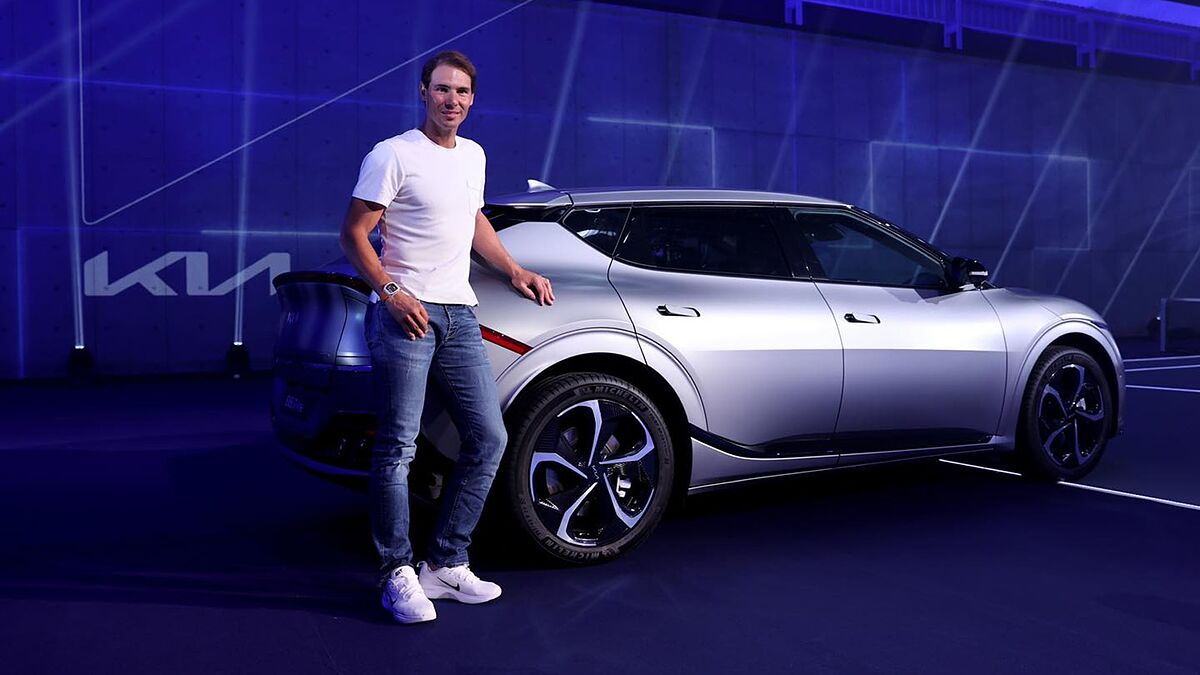
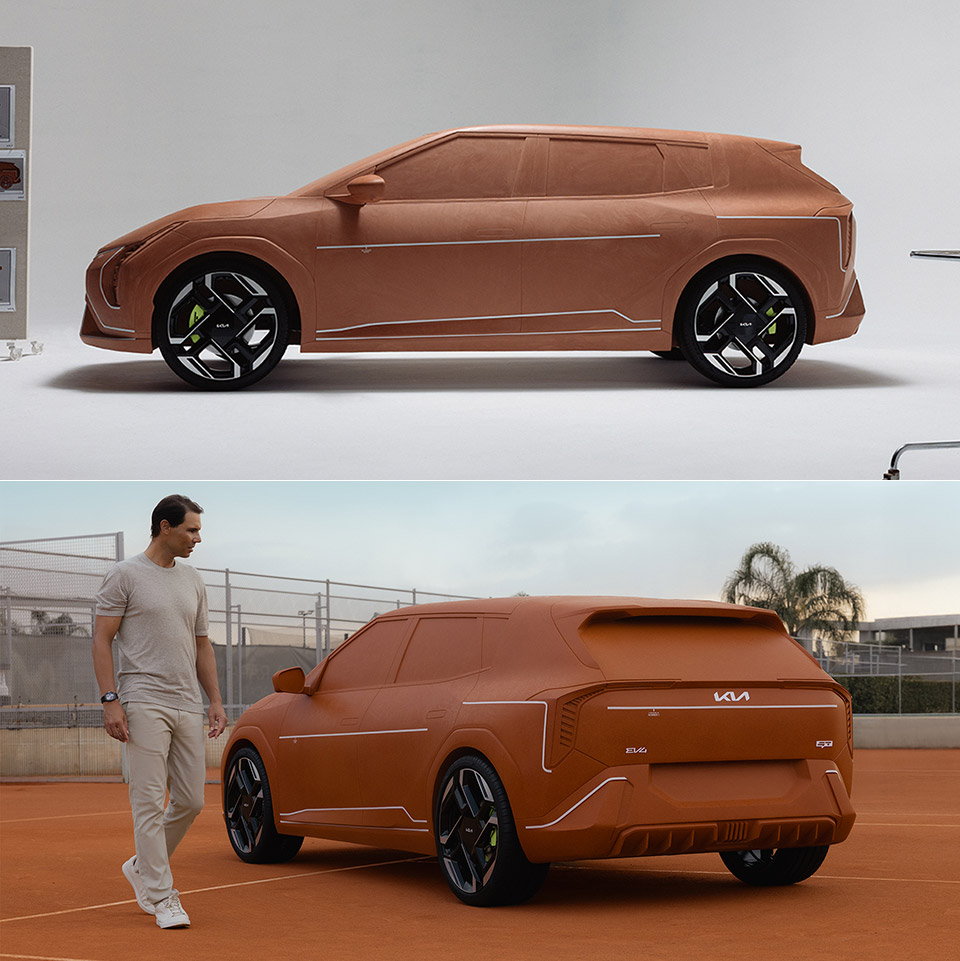
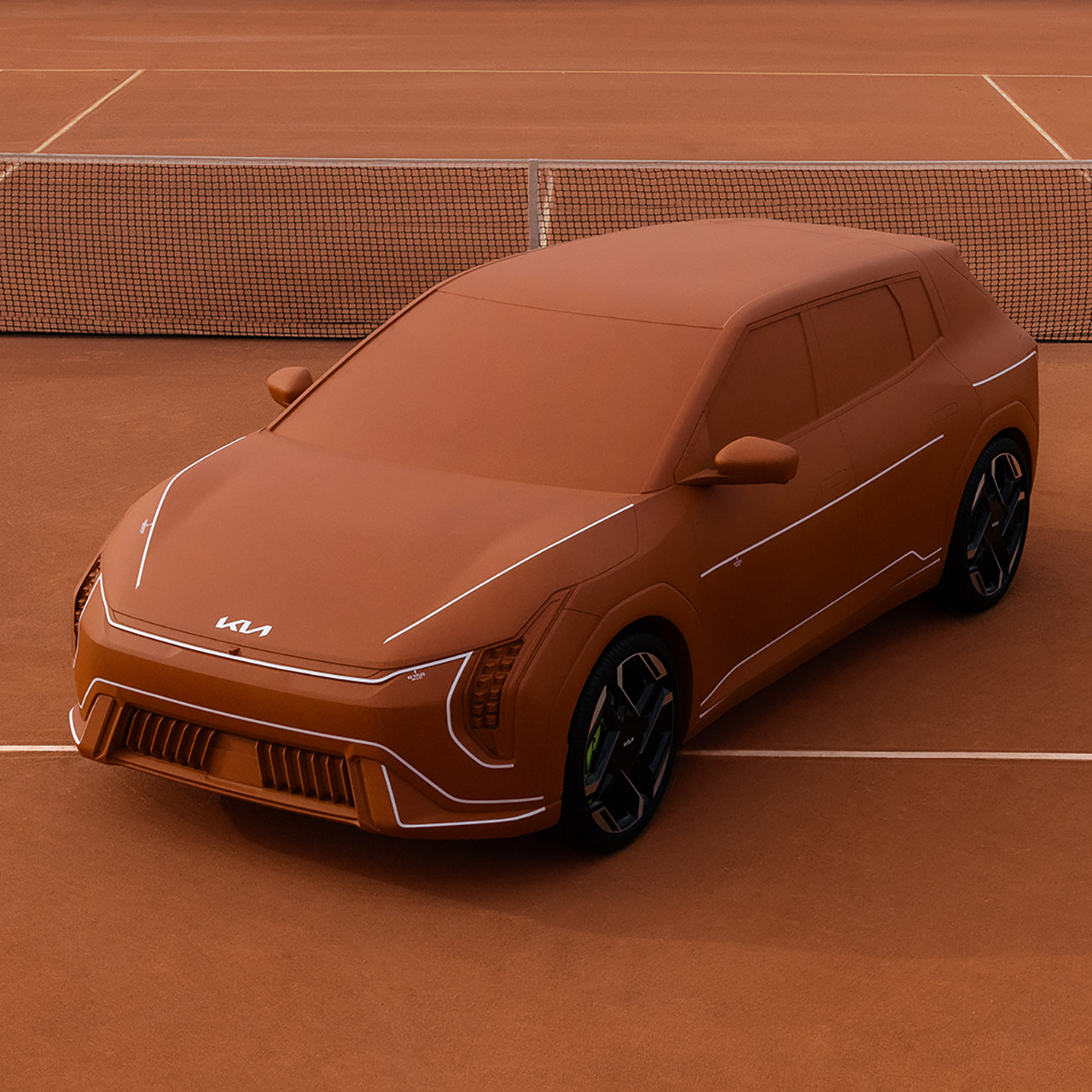
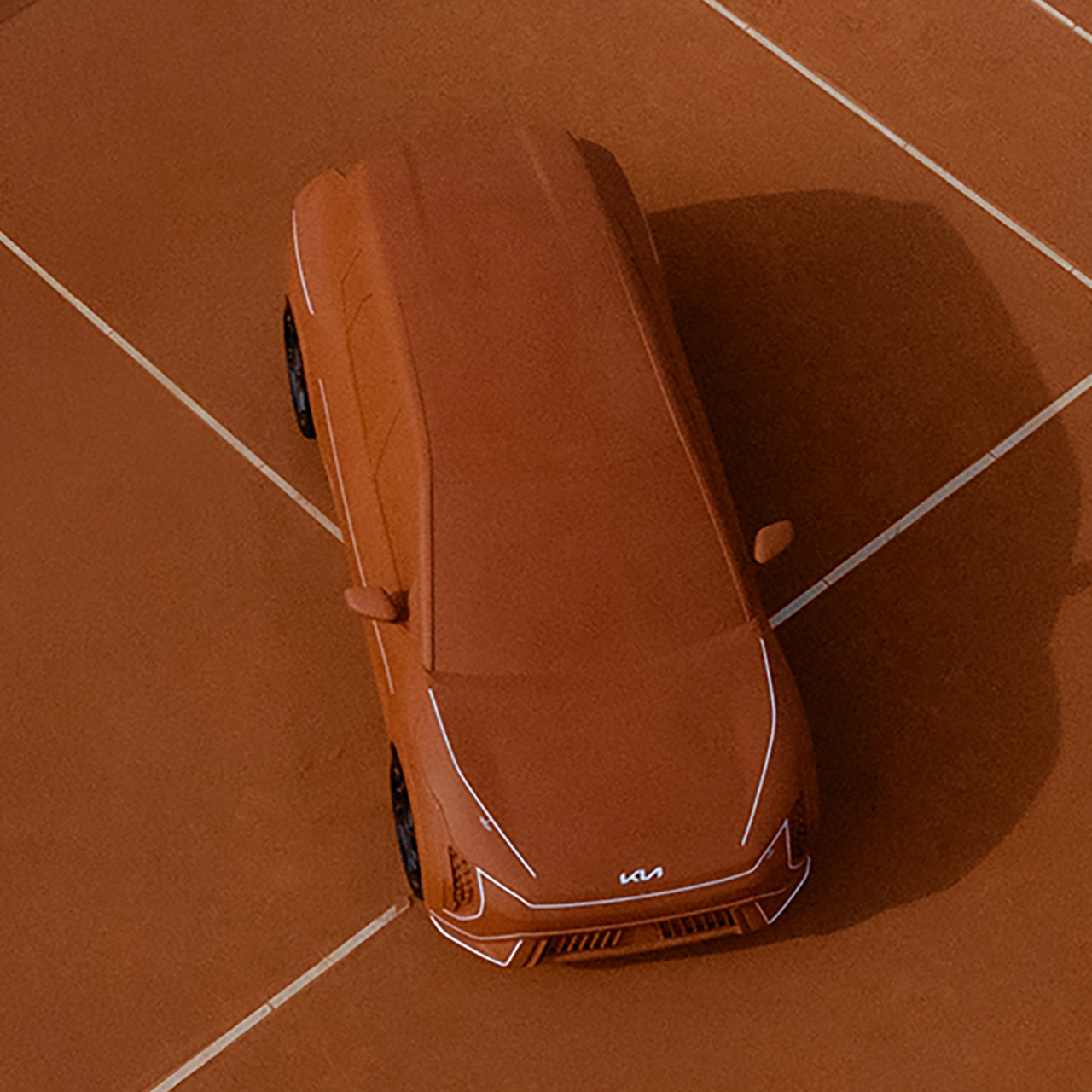
Kia has sculpted a full-size EV4 GT from a blend of industrial modeling clay and earth taken directly from the tennis courts where Rafael Nadal won his greatest titles.
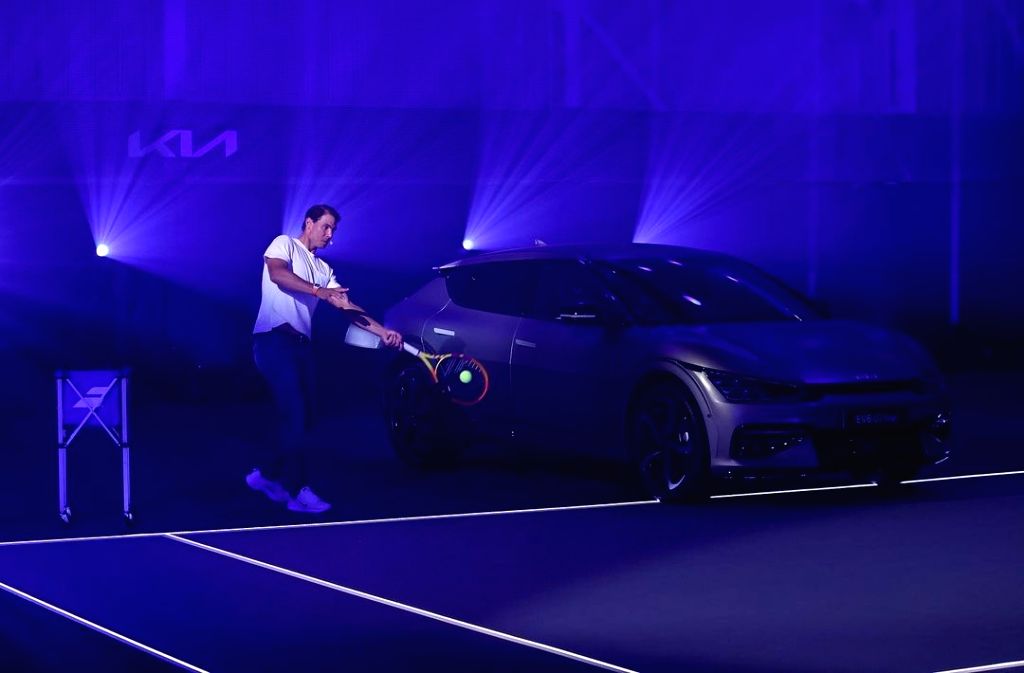
The one-of-a-kind sculpture now sits at the Rafa Nadal Academy in Manacor, Mallorca, where a large group gathered to present it to the man himself.
Designers mixed the standard clay used in automotive development with soil collected from the surfaces in Monte Carlo, Rome, Madrid and Roland-Garros in Paris.
Those four venues produced 63 of Nadal’s singles titles, including a record 14 French Open victories that earned him the nickname King of Clay.
The car’s body is outlined in white tape, which also serves as the boundary marks for a tennis court, with the design mirroring the game’s regulations.
Additional text on the artwork commemorates Nadal’s 50 consecutive clay-court wins and five seasons as the top-ranked player in the world.
His autograph is tucked into the rear of the sculpture.
Although the EV4 GT is based on a production car, it has been stripped of everything but its body.
There is no cabin, no seats, no drivetrain — it is a stationary piece that cannot be driven off the showroom floor.
Some observers have pointed out that it is mounted on production-style wheels and tires, which made it much easier for the crew to get it into position than a standard clay model.
Clay still plays an important role in automotive development, particularly in the early phases of design.
A digital tool cannot provide the same sense of surface tension or reflections, and sometimes designers simply want to reach out and grip the material to make it work better.

In this case, the standard modeling clay was combined with the hefty substance used for tennis courts, giving the finished piece a real link to the surface Nadal competed on.
Kia Spain has sponsored Nadal since 2004, the year before he won his first Grand Slam title.
He has served as the brand’s global ambassador since 2006.
Nadal eventually resigned from professional tennis last year, after spending 209 weeks atop the global rankings.
His professional career ended at the Davis Cup Finals in November 2024.
During his career, he won 22 Grand Slam singles titles, including the record 14 French Open championships.
He also won two Olympic gold medals, five Davis Cup titles with Spain and 92 individual titles overall.
Nadal was the world’s No. 1 player in the ATP rankings for 209 weeks and is one of the most successful players in tennis history.
The sculpture was presented at the Rafa Nadal Academy, where a large group gathered to pass it on to the man himself.
Nadal stated that receiving the sculpture was a meaningful gesture that connected his tennis legacy with his long-time sponsor.
The EV4 GT is Kia’s latest electric vehicle model, part of the brand’s push toward electrification under its Plan S strategy.
Kia has not announced any plans to produce a clay version of the EV4 GT for sale — the sculpture is a one-off art piece.
Automotive clay modeling has been a standard practice in car design for decades, used to create full-size prototypes before production tooling begins.
The technique allows designers to evaluate proportions, surface reflections and details in a way that digital screens cannot replicate.
By mixing actual tennis court clay into the modeling material, Kia created a direct physical connection between the car and the surface that defined Nadal’s career.
The white tape outlining the body serves a dual purpose: it defines the car’s shape and also marks the boundaries of a tennis court, reinforcing the theme.
Nadal’s 50 consecutive clay-court wins remain one of the most dominant streaks in professional tennis history.
He achieved that streak between 2005 and 2007, winning every clay-court match he played for more than two years.
His five seasons as the world’s top-ranked player came in 2008, 2010, 2013, 2017 and 2019.
The sculpture at the academy will remain on display as a permanent tribute to Nadal’s career and his relationship with Kia.
Kia has not released the exact composition of the clay blend, but confirmed that the earth from the four clay-court venues was mixed with industrial modeling clay.
The process required careful handling to ensure the foreign material did not compromise the sculpture’s structural integrity.
Designers worked with the material in the same way they would with standard modeling clay, shaping it by hand and with tools to achieve the desired form.
The result is a car that cannot move, cannot be driven and has no interior — but carries the literal dirt of Nadal’s greatest victories.
Advertisement
You may also like

NBA champion Steve Kerr trolls Donald Trump with a savage jab
Golden State Warriors head coach Steve Kerr took a sharp, humorous jab at President Donald Trump during his Wednesday media availability, referencing a campaign…

John Cena’s subtle salute to Gunther after his return
John Cena made a surprise appearance on the Oct. 30, 2026 edition of WWE NXT. As he walked to the ring, he stopped in…

Braden Smith Makes NBA Debut With the Pacers
Purdue basketball alum Braden Smith makes NBA debut with the Pacers. Braden Smith, the former Purdue Boilermakers guard, stepped onto an NBA floor for…

Red Wings vs. Golden Knights Live Score and Game Updates
NHL.LIVE: Detroit Red Wings vs Vegas Golden Knights LIVE STREA.MS NHL Game On TV Coverage 6 Nov 2026. Puck drop is set for 7…

Business leaders face a tough choice with workplace monitoring.
Big Brother 2026 has officially crowned a winner. Rochelle took the title on the live final, hosted by AJ Odudu and Will Best on…

WWE Plans Huge 30th Anniversary Celebration for The Rock
WWE is planning to celebrate 30 years of The Rock this month. Plans include a commemorative championship belt. Special merchandise releases are also in…