Kid Rock Joins Country Stars to Headline Alternative Halftime Show for Frustrated Fans
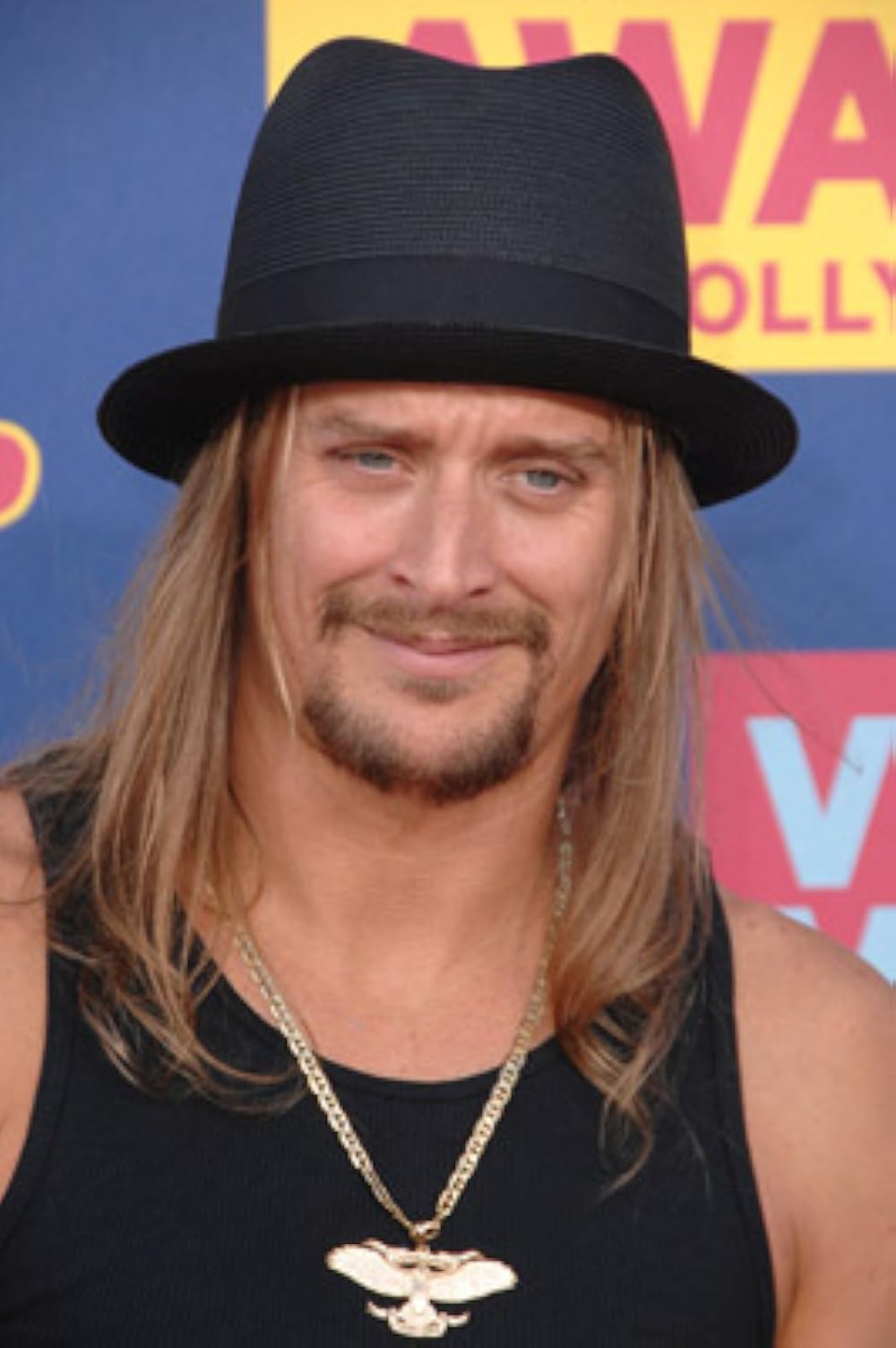
Frustrated with recent NFL halftime entertainment, Kid Rock teamed up with country artists Brantley Gilbert, Lee Brice, and Gabby Barrett to headline Turning Point USA's alternative halftime concert.
The special production targeted football fans who felt increasingly alienated by the league's flagship musical bookings.
Turning Point USA officially branded the broadcast as the "All-American Halftime Show."
The event was organized as direct counter-programming to the official Super Bowl entertainment.
Organizers designed the alternative show for viewers looking for a more traditional lineup during the game's intermission.
AN ALTERNATIVE STAGE FOR DISSATISFIED FANS
The conservative group put together the concert following growing friction over the NFL's mainstream booking choices.
Frustrations peaked around the February 2026 Super Bowl halftime performance.
For that event, the NFL selected Puerto Rican global superstar Bad Bunny as its main headliner.
Bad Bunny delivered a vibrant set that celebrated Puerto Rican music and cultural heritage.
The official halftime broadcast captured massive commercial success, drawing a reported 128.2 million viewers.
Despite those historic viewing numbers, the booking choice prompted sharp criticism among conservative audiences.
Many fans felt that recent Super Bowl entertainment had moved too far from the preferences of middle America.
Turning Point USA stepped in to offer a musical alternative tailored specifically to those dissatisfied viewers.
The lineup brought together several prominent figures from the contemporary country and southern rock scenes.
Country singer Brantley Gilbert took part to provide his signature southern rock sound.
Hitmaker Lee Brice contributed to the performance with his catalog of radio-friendly anthems.
Rising country star Gabby Barrett joined the stage to round out the country-focused bill.
Kid Rock anchored the lineup as the headline act of the entire counter-programming project.
CONTROVERSY ON THE SCREEN
Kid Rock, 55, has long been recognized as an outspoken supporter of Donald Trump.
His role at the alternative event aligned with his frequent appearances at conservative political gatherings.
During the alternative broadcast, Rock performed his well-known anthem "Bawitdaba."

The segment quickly drew heavy public scrutiny and ridicule across online platforms.
Viewers and critics mocked the performance after accusing the singer of lip-syncing through his set.
Rock addressed the public backlash by claiming that an audio synchronization error disrupted the broadcast.
Critics responded by highlighting that the concert was entirely prerecorded before airing.
Skeptics questioned why an audio sync flaw was not corrected during post-production before the show reached viewers.
Even with the technical fallout, the performance served as a rallying cry for fans demanding alternative programming.
CULTURE WARS AND THE NFL
Rock openly shared his frustrations with the sports entertainment industry during an interview on Fox News.
Host Laura Ingraham spoke with Rock in February about his concert and his view of the league.
During the conversation, Rock claimed that recent halftime selections felt like "another middle finger to conservatives and MAGA supporters."
The rocker argued that the NFL has systematically drifted away from its core conservative fan base.
Rock traced this cultural disconnect back to the 2016 football season.
That year, former San Francisco 49ers quarterback Colin Kaepernick began kneeling during the national anthem.
Kaepernick used the protest to call national attention to police brutality and systemic racial injustice.
Rock stated that he disagreed with Kaepernick's anthem protests on the football field.
However, Rock clarified that he fully respected Kaepernick's constitutional right to demonstrate.
THE SHARP ATTACK ON JAY-Z
Rock then directed his criticism toward the league's high-level entertainment partnerships.
He argued that NFL Commissioner Roger Goodell altered the league's entertainment strategy after the Kaepernick protests.
Rock asserted that Goodell brought in hip-hop icon Jay-Z in 2019 to rebuild trust with Black players and audiences.
The singer offered measured praise for the rapper's business acumen before delivering a controversial barb.
"Nothing against Jay-Z. I respect him for his hustle and music," Kid Rock stated during the interview.
He then sparked intense debate by describing Jay-Z's league partnership as "a little bit of a DEI hire."

The acronym DEI stands for diversity, equity, and inclusion programs commonly used across corporate spaces.
Rock's comment quickly drew widespread criticism from across the music and sports communities.
Many commentators argued that the dismissive label overlooked one of the most successful careers in entertainment history.
JAY-Z'S UNMATCHED RESUME
Jay-Z, 56, stands as a foundational pillar of modern global music and enterprise.
The hip-hop mogul has earned 25 Grammy Awards across more than three decades of recorded music.
He has built a sprawling business empire that includes sports management, fashion, and streaming ventures.
His wife, Beyoncé, is widely regarded as one of the preeminent global superstars in music history.
Through his entertainment company, Roc Nation, Jay-Z has overseen the production of NFL halftime shows since 2019.
On October 26, the league announced that Jay-Z will headline the Super Bowl LXI halftime show himself.
The landmark performance is scheduled to take place on February 14, 2027, at SoFi Stadium in Inglewood, California.
Industry analysts have argued that the NFL turned to Jay-Z for his unmatched influence and commercial credibility.
Corporate partnerships frequently target visionary leaders who can attract massive audiences and maintain relevancy.
Rather than an experimental diversity appointment, business observers viewed the pact as a standard commercial strategy.
Many analysts maintained that the NFL relied on Jay-Z's cultural capital far more than Jay-Z needed the league.
HISTORICAL PARALLELS IN AMERICAN MUSIC
Rock's remarks also ignited a wider conversation about the complex racial history of American popular music.
Cultural historians have noted that Black musicians spent generations developing sounds that later enriched White performers.
The foundation of rock and roll was built upon blues, gospel, and rhythm-and-blues traditions.
Early pioneers frequently missed out on equal financial compensation and mainstream recognition for their work.
Elvis Presley built his monumental musical legacy by drawing heavily from Black musical styles.
Blues singer Big Mama Thornton recorded the original version of "Hound Dog" in 1952.
Presley subsequently recorded the song four years later in 1956, turning it into a massive crossover pop phenomenon.

Similarly, Arthur "Big Boy" Crudup recorded the track "That's All Right" back in 1946.
Presley recorded his own interpretation eight years later to help launch his historic music career.
To his credit, Presley openly acknowledged the debt he owed to Black artists who came before him.
In a 1957 interview with Jet magazine, Presley pushed back against claims that he created the rock genre.
"A lot of people seem to think I started this business," Presley told the publication.
"But rock 'n' roll was here a long time before I came along," Presley added during the interview.
Presley concluded: "Nobody can sing that kind of music like colored people."
Other White musicians enjoyed similar mainstream success adapting songs created by Black artists.
Pop singer Pat Boone recorded Little Richard's song "Tutti Frutti" in 1956 and achieved a major hit.
During that era, widespread industry segregation determined which musicians received radio play and mainstream exposure.
The Smithsonian Institution has extensively chronicled how racial barriers shaped the early American recording industry.
Many Black originators were cheated out of vital songwriting royalties and trapped in restrictive contracts.
Those systemic inequities allowed record labels to make immense profits while originators received meager compensation.
Modern political figures have increasingly clashed over how this national history should be presented to the public.
The Trump administration has targeted Smithsonian museum content it viewed as divisive or woke.
Officials reviewed museum presentations dealing with race, sparking nationwide debates over American cultural history.
THE FUTURE OF HALFTIME BROADCASTS
The ongoing debate demonstrates how the Super Bowl halftime stage has evolved into a national cultural arena.
The annual championship spectacle commands the largest simultaneous viewing audience on the American television calendar.
Alternative events organized by groups like Turning Point USA highlight the deep divide among football audiences.
Dissatisfied viewers now look to parallel platforms to find entertainment that matches their cultural sensibilities.
Traditional country music continues to serve as a refuge for fans resisting current mainstream entertainment trends.
At the same time, the NFL continues to embrace globally recognized music icons capable of delivering record ratings.
With Jay-Z slated to take the stage at SoFi Stadium in 2027, the debate shows no signs of slowing down.
Football fans remain deeply divided over whether the intermission should feature mainstream pop, hip-hop, or country.
Would you rather watch country artists on an alternative halftime broadcast or stick with the official Super Bowl show?
Advertisement
You may also like

NBA champion Steve Kerr trolls Donald Trump with a savage jab
Golden State Warriors head coach Steve Kerr took a sharp, humorous jab at President Donald Trump during his Wednesday media availability, referencing a campaign…

John Cena’s subtle salute to Gunther after his return
John Cena made a surprise appearance on the Oct. 30, 2026 edition of WWE NXT. As he walked to the ring, he stopped in…

Braden Smith Makes NBA Debut With the Pacers
Purdue basketball alum Braden Smith makes NBA debut with the Pacers. Braden Smith, the former Purdue Boilermakers guard, stepped onto an NBA floor for…

Red Wings vs. Golden Knights Live Score and Game Updates
NHL.LIVE: Detroit Red Wings vs Vegas Golden Knights LIVE STREA.MS NHL Game On TV Coverage 6 Nov 2026. Puck drop is set for 7…

Business leaders face a tough choice with workplace monitoring.
Big Brother 2026 has officially crowned a winner. Rochelle took the title on the live final, hosted by AJ Odudu and Will Best on…

WWE Plans Huge 30th Anniversary Celebration for The Rock
WWE is planning to celebrate 30 years of The Rock this month. Plans include a commemorative championship belt. Special merchandise releases are also in…