King Charles becomes Britain’s secret political weapon
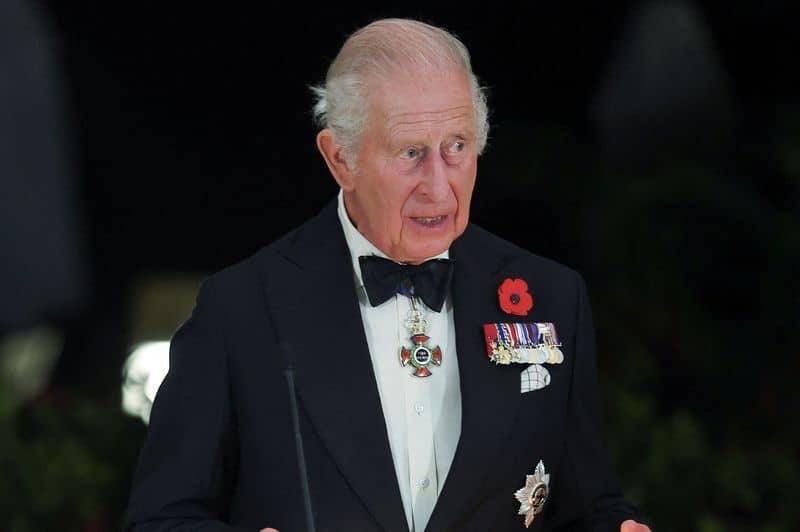
A senior royal aide has described King Charles as “a secret weapon” being increasingly deployed by the British government to handle diplomatically challenging situations.
The remark came after the monarch completed a politically charged 10-day tour of the Caribbean from October 27 to November 4, 2026.
The trip included a meeting of the Commonwealth of Nations, which Charles heads as its ceremonial leader.
Slavery reparations dominated the agenda throughout the tour.
Many Caribbean nations have been pressing Britain for an official apology and financial compensation for its historic role in the transatlantic slave trade.
King Charles did not issue an apology in any of his speeches, following official British government policy.

But he did express “personal sorrow” about the horrors of slavery, a move broadly welcomed by leaders of the 56-nation Commonwealth as a positive step forward.
In unusually candid remarks, the senior aide — speaking on condition of anonymity — told reporters the king “had demonstrated his statecraft both by word and deed.”
“It’s a great secret weapon to send the king,” the aide said.
The monarch “is able to reach the parts that, dare I say, politicians probably couldn’t quite have reached,” the aide added.
King Charles became king in September 2022 upon the death of his mother, Queen Elizabeth II.
He is Britain’s symbolic head of state but is constitutionally required to remain politically neutral.

Yet in recent years, as Britain’s global influence has diminished, the government has increasingly turned to the monarch to lead diplomatic strategies.
One prominent example involves tensions with U.S. President Donald Trump, most recently over the Iran war.
The British government enlisted Charles to help smooth relations with Washington.
Charles hosted Trump on a state visit to the UK and later paid a reciprocal state visit to the United States.
“We’re just in the fifth year of the reign and I think what we’re seeing is a very clear pattern emerging of the government asking the king to head into quite politically charged situations, quite challenging situations,” the senior aide said.
Dealing with the tough part of the job is what Charles relishes, according to the aide.

“Refreshing and reinvigorating relationships with nations where there have been some complex political issues at play, that is what he lives and breathes for,” the aide said.
The Caribbean tour was thrown a potential curveball when UK Prime Minister Andy Burnham published an op-ed in the Guardian saying he was “open” to issuing a formal apology for slavery.
That statement marked a potential shift in government policy.
Palace officials insisted the king was not blindsided by the op-ed, which was published on the Friday night as Charles landed in Antigua and Barbuda for the final leg of his tour.
“We were told in a timely manner by the Prime Minister,” a senior aide said.
“We were told the terms in which he was proposing to write his op-ed and he’s perfectly entitled to do that.”
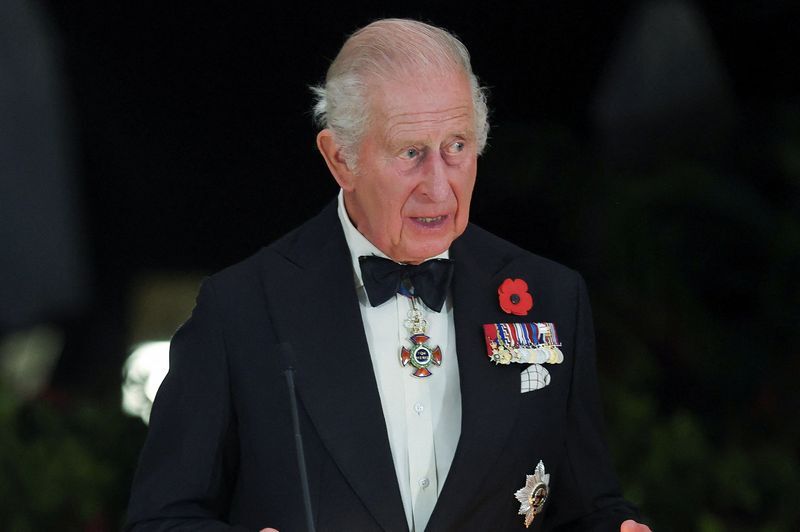
The aide added that the change in position did not cause a rift between the palace and the government.
“That’s how our democracy functions,” the aide said.
“If that’s what elected politicians want to do, it’s not for us to get in the way.”
Any comments the king makes on slavery reflect the government’s position, not his personal views, due to the issue having caused sharp political division in the UK.
Asked whether Charles could ever personally apologize for slavery, the aide deferred to the constitutional structure.
“The King is the crown, the crown is the state, the state is run by an elected government, so we have to see how this whole situation plays through,” the aide said.

During the Caribbean tour, Charles acknowledged “the great suffering of the past” within hours of arriving in the Bahamas.
In Guyana, he visited the site where slaves were publicly executed.
In Antigua and Barbuda, he viewed enslavement artifacts and former slave quarters.
In his Commonwealth Heads of Government Meeting speech, Charles said the UK’s role in the slave trade “fills my heart with horror and my soul with the most profound personal sorrow.”
King Charles and Queen Camilla arrived back in the UK on November 5, 2026.
The tour marks a high point in what has been another difficult year for the monarchy, which also faced the release of a biography of Charles’ first wife, Princess Diana, written by her brother, featuring criticisms of the king.
The “secret weapon” label raises questions about the blurring line between constitutional neutrality and active political diplomacy.
For now, the pattern is clear: when Britain needs a delicate diplomatic touch, the palace door opens.
And the king, by all accounts, is happy to walk through it.
Advertisement
You may also like
Kim Kardashian’s co-stars call her the greediest woman on set.
Kim Kardashian's All's Fair co-stars brand her the 'greediest woman' they have ever met. Niecy Nash-Betts said it on Good Morning America. Kim eats…
Kyle Larson's Secret Marathon Plan for NASCAR Title Revealed
“More Thought Behind This Than the Chase”—Kyle Larson Reveals Unorthodox Marathon Regimen Fueling Championship Bid Kyle Larson is training for his first marathon. He…

WTA Finals Drama: Group Photo Canceled Over Svitolina-Andreeva Feud
Road to the WTA Finals: The eight doubles teams heading to Indian Wells. The 2026 WTA Finals Indian Wells doubles field is a mix…
WWE Blocked Chad Gable’s GCW Debut at the Last Minute
GCW promoter Brett Lauderdale revealed on November 5, 2026 that WWE superstar Chad Gable was booked for Josh Barnett's Bloodsport X in April 2024.…
Sophie Cunningham shuts down 'dumb' internet fury over Team USA no-shows
Sophie Cunningham, a shooting guard for the Indiana Fever, has publicly questioned why WNBA players miss so many wide-open layups. She did not hold…
Shedeur Sanders Sparks Backlash Before Even Taking the Field
BEREA — Quarterback Deshaun Watson missed his second straight practice Thursday due to a concussion. That makes it increasingly likely Shedeur Sanders will start…