King Charles' estate sues UK's oldest Indian restaurant.
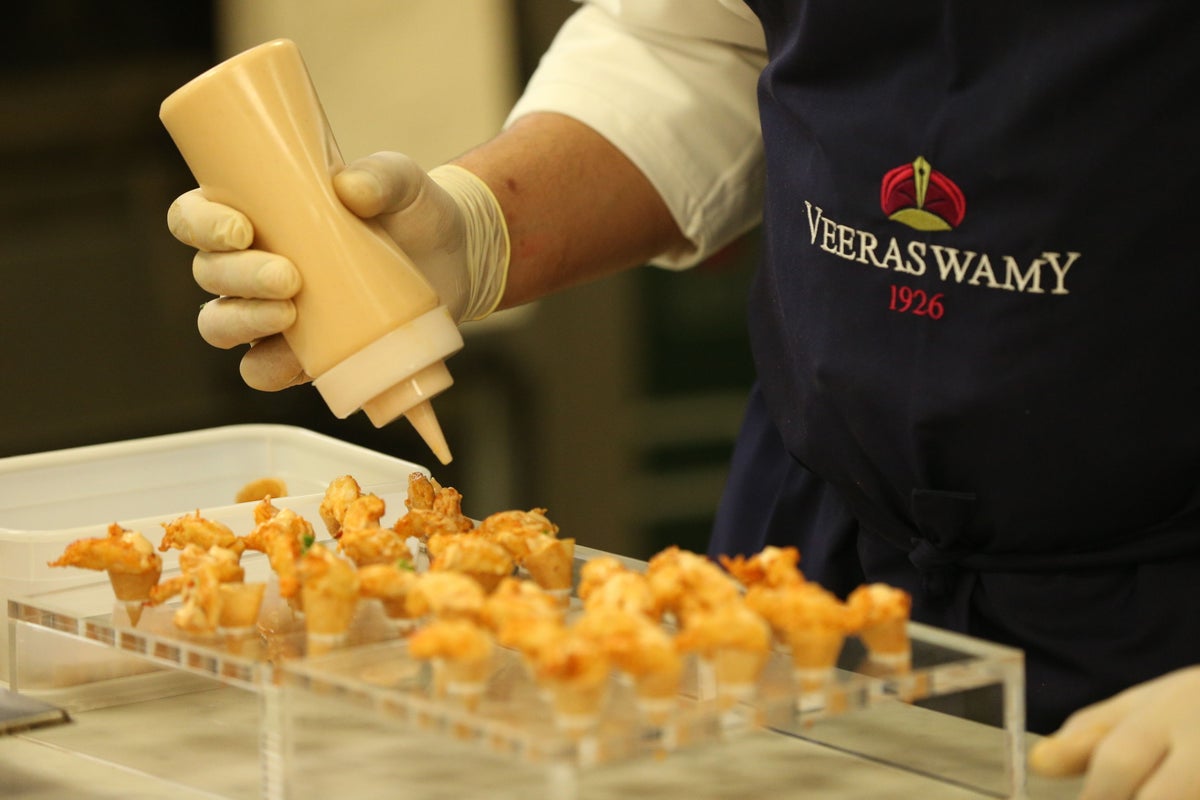
King Charles’s estate in court battle to evict UK’s oldest Indian restaurant.
The Crown Estate, the property portfolio owned by the monarch, wants the restaurant out of its Regent Street home.
Veeraswamy has operated from Victory House since 1926.
It is the oldest Indian restaurant in the United Kingdom.
It holds a Michelin star.
Its guest list includes Winston Churchill, Marlon Brando, Charlie Chaplin, Princess Anne, Lord David Cameron and Mahatma Gandhi.
Its chefs have twice catered for Queen Elizabeth II at Buckingham Palace.
The restaurant is thought to be where Britain’s love of lager with curry originated — Prince Axel of Denmark shipped in Carlsberg to have with his meals there.
The lease ran out in 2025.
The Crown Estate told the restaurant in 2024 that it would not renew.
The stated reason: a “comprehensive refurbishment” of the building is needed.
Part of the building has vacant office space after a flood.
The Crown Estate says the entire premises requires a full revamp.
It argues that Veeraswamy’s entrance area is in the way.
Knocking through that entrance would create an additional 11 square meters of space.
Without its own entrance, the restaurant cannot operate.
The Crown Estate says it would be unsafe to carry out renovations while the restaurant remains in place.
It also says it can secure higher rents from office tenants.

The restaurant’s parent company, MW Eat Ltd, has sued.
The case reached Central London County Court on Thursday, November 5, 2026.
The owners asked a judge to rule that the Crown Estate is “precluded from objecting to the grant of a new tenancy” under the Landlord and Tenant Act 1954.
That act gives commercial tenants a right to renew their lease unless the landlord has a valid objection.
Ranjit Mathrani chairs MW Eat.
He is a former investment banker.
He told the Financial Times: “We have done everything to meet their concerns.”
He said the landlord’s position shows a lack of regard for the restaurant’s tradition and culinary heritage.
He asked: “Would they actually have taken the same stance had it been a cuisine with which they were more familiar?”
He added: “Would they have done that to Gordon Ramsay? No.”
Namita Panjabi, another restaurant director, told the court that the Crown Estate had proposed unnecessary renovation works to force the business out.
She said the real goal is to replace the restaurant with high-end office space.
The restaurant’s legal team argued that the only conceivable reason for the eviction is that “the landlord simply does not wish its hoped-for smart new offices to have an Indian restaurant in their midst.”
The Crown Estate is managed by the Crown Estate Commissioners.
It generates income for the Treasury and the royal family.
The Regent Street eviction is part of a £1 billion regeneration plan for the area.
The Crown Estate wants to turn the upper floors of Victory House into “high-class” offices.
Lawyers for the Crown Estate insist there is “nothing remotely improper” about their bid to oust the restaurant.
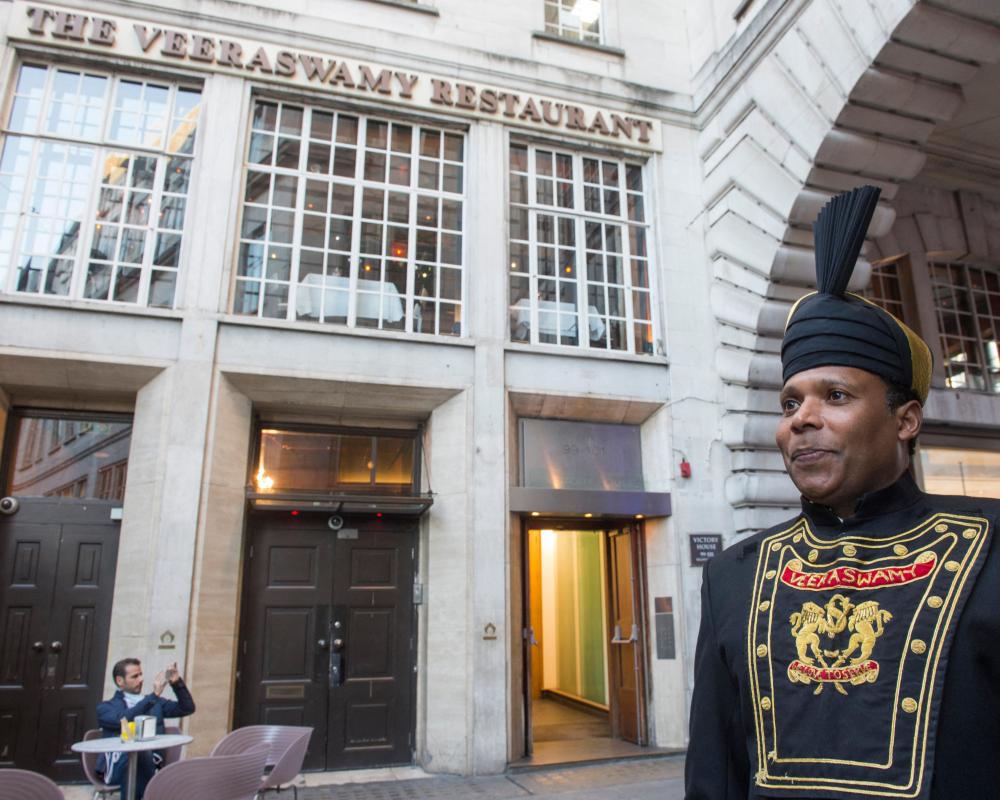
The Crown Estate issued a statement: “We strongly refute any suggestion that The Crown Estate prefers particular types of cuisine.”
It added: “We are proud to have a diverse dining offer across our West End portfolio, reflecting the diversity of London itself.”
The restaurant was founded by Edward Palmer in 1926.
Palmer was the great-grandson of General William Palmer, secretary to the first Governor General of India, and the Moghul Princess Faisan Nissa Begum.
Veeraswamy is based on several floors of Victory House, including the mezzanine level.
The building also houses a basement nightclub.
The hearing is ongoing.
The judge has not yet ruled on the renewal application.
If the Crown Estate wins, Veeraswamy will have to leave the premises.
If the restaurant wins, it will be allowed to stay under a new lease.
The case raises a broader question about how the Crown Estate treats historic tenants during large-scale redevelopment.
The Landlord and Tenant Act 1954 was designed to protect businesses from arbitrary eviction.
It gives tenants a presumptive right to renew unless the landlord can prove one of seven statutory grounds for refusal.
One of those grounds is that the landlord intends to redevelop the property.
But the tenant can argue that the landlord’s intention is not genuine.
That is what Veeraswamy’s owners are doing.
They say the redevelopment plan is a pretext.
They point to the timing: the lease expired just as the Crown Estate announced its £1 billion Regent Street regeneration.

They also point to the specific language used in internal communications, which they say reveals a preference for a different type of tenant.
The court will have to decide whether the Crown Estate’s redevelopment plan is genuine or a cover for discrimination.
The case has drawn attention because of the royal connection.
King Charles does not personally manage the Crown Estate.
It operates independently under a board of commissioners.
But the portfolio is owned by the monarch in right of the Crown.
Any income from the estate goes to the Treasury, which then funds the royal family through the Sovereign Grant.
So the outcome of this case affects both the public finances and the royal household’s budget.
The restaurant’s supporters argue that Veeraswamy is a cultural institution worth preserving.
They note that it has survived wars, economic crises and changing food trends.
They say its eviction would be a loss for London’s culinary heritage.
The Crown Estate argues that it has a duty to maximize the value of its properties for the benefit of the nation.
It says the Regent Street regeneration will create jobs and improve the area.
It says the restaurant’s lease has expired and it has no automatic right to stay.
The next court date has not been announced.
Both sides are expected to call expert witnesses on property valuation and renovation feasibility.
The judge’s decision could take weeks or months.
Until then, Veeraswamy continues to serve its curries on Regent Street.
But the clock is ticking.
Advertisement
You may also like

Tom Hardy and Taron Egerton's gritty thriller that will blow you away is now streaming
Tom Hardy and Taron Egerton are dynamic. That's what viewers are saying about Legend, the gritty 2015 crime thriller that has just landed on…

Travis Kelce Can’t Wait for First Christmas as a Married Man With Taylor Swift
Travis Kelce is ready to deck the halls with his wife, Taylor Swift. The Kansas City Chiefs tight end shared his excitement for the…

Udonis Haslem Exposes LeBron James’ Surprising Frugal Lifestyle
Udonis Haslem has finally put a word to something LeBron James’ closest teammates have whispered about for years. He calls it frugal. Haslem and…

AC Milan vs Ferencváros Europa League stats and head-to-head preview
AC Milan vs Ferencváros: UEFA Europa League stats & head-to-head The numbers tell a story that few predicted before Matchday 4. AC Milan, the…

Live Nation Settles Luke Bryan Concert Injury Lawsuit
Luke Bryan is taking a walk down memory lane with Billboard. It’s part of the Billboard Chart History series. Since the start of his…

Paige Bueckers Wins 2026 WNBA Community Leadership Award
Paige Bueckers has added another honor to her growing basketball résumé, but this one has little to do with what she does on the…