Lawsuit Claims USC Dismissed Chad Baker-Mazara Once NCAA Tournament Hopes Began Slipping Away
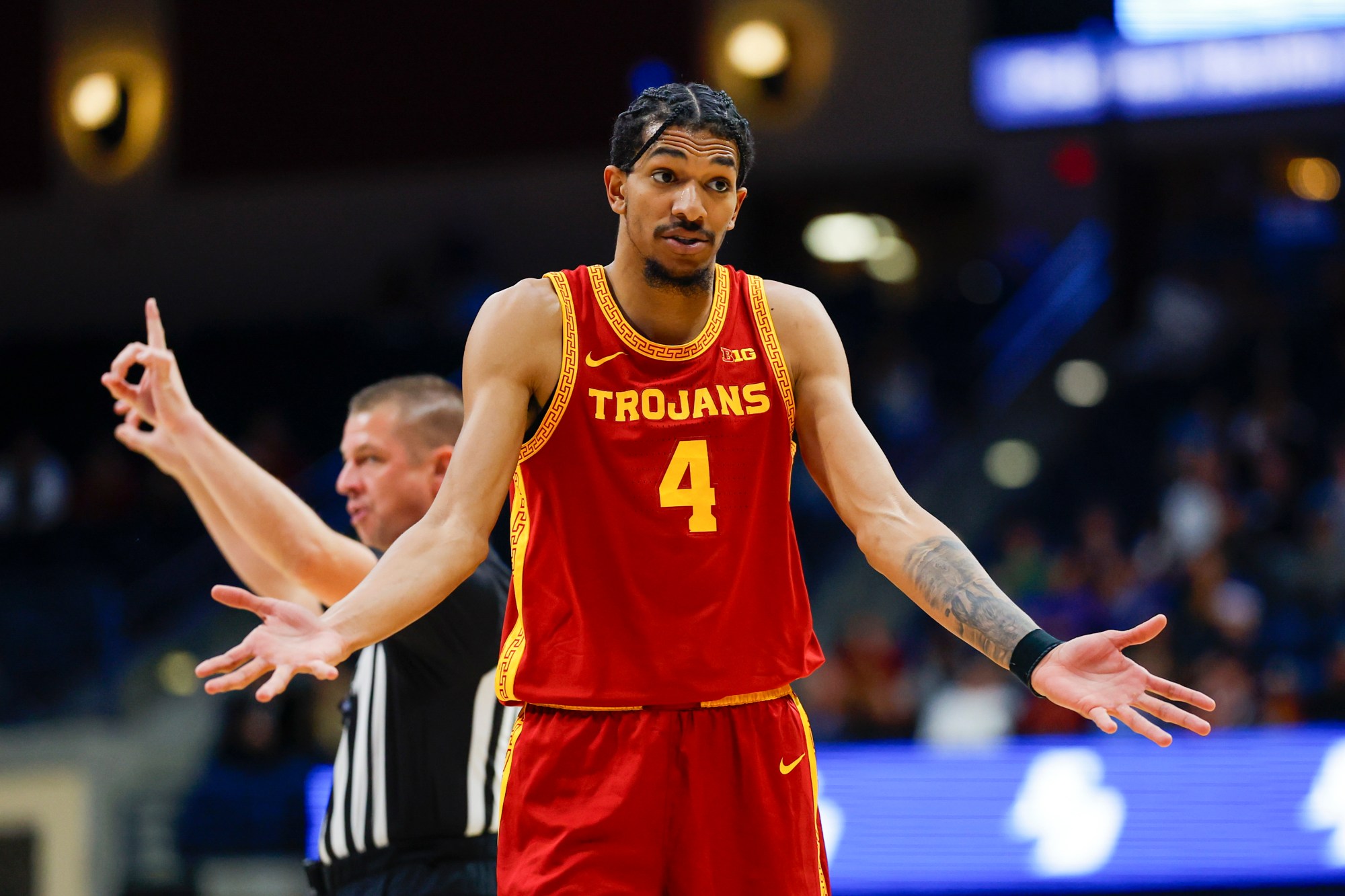
According to the lawsuit, USC dismissed Chad Baker-Mazara the morning after a fifth consecutive loss when the program's postseason prospects had effectively evaporated.
The formal complaint alleged a direct link between the team's fading postseason positioning and the decision to remove the player.
Central to the legal filing was the accusation that the program decided to part ways with the forward because of athletic standings.
The lawsuit specifically alleged that USC dismissed him when it "became likely that the Trojans would not make the NCAA Tournament."
That core claim framed the entire dispute around team performance and timing.
Baker-Mazara and the university have now officially resolved the bitter dispute out of court.
The school agreed on Friday to settle the lawsuit filed by its former player.
The resolution closed a contentious legal chapter involving NIL compensation, an abrupt roster dismissal, and serious workplace allegations.
The news of the legal settlement was first reported by Los Angeles Times reporter Ryan Kartje on X.
The settlement effectively brings an end to a case that opened up rare scrutiny of internal college basketball operations.
Following the settlement agreement, the university opted to offer only a brief public statement.
"USC is pleased to resolve this matter and will have no further comment," the university announced.
A POSTSEASON BUBBLE COLLAPSE
The dispute traced back to the late stretch of the college basketball regular season.
At the center of the dispute was a critical February 28 matchup against Nebraska.
USC entered that late-season contest in the middle of a troubling downward slide.
The Trojans dropped the game to Nebraska, marking their fifth consecutive defeat.
That setback pushed USC's overall record to 18-11 on the year.
The fifth straight loss left the program trending firmly toward the wrong side of the NCAA Tournament bubble.
In collegiate basketball, the bubble represents the cut line separating teams that earn at-large bids from those left out.
A sustained losing streak late in February often proves fatal to any hopes of an at-large invitation.
For a program with championship aspirations, watching postseason viability vanish often raises internal frustrations to a boiling point.
USC had just two regular-season games left on its schedule to attempt any kind of salvage operation.
According to the legal complaint, the program's patience had completely run out immediately after the Nebraska defeat.
THE LOCKER ROOM ALTERCATION
The legal filing laid out intense allegations concerning the immediate aftermath of the loss to Nebraska.
Baker-Mazara alleged that head coach Eric Musselman directed a profanity-laced and racially charged tirade at him in the facility.

According to the lawsuit, Musselman confronted the player directly during the postgame exchange.
The lawsuit alleged that the coach shouted, "Go back to the f—ing Dominican Republic! Nobody wants you here!! F— you."
Baker-Mazara is a native of the Dominican Republic.
The lawsuit specifically stated that Baker-Mazara interpreted those harsh words to be overtly racist and discriminatory.
The court filing noted that the player viewed the remark as akin to telling an African American person "to go back to Africa."
The alleged confrontation marked the breaking point between the student-athlete and the Trojans' coaching leadership.
LOCKED OUT OF THE FACILITY
The consequences of the postgame clash materialized almost immediately the following day.
On the morning after the Nebraska loss, representatives for Baker-Mazara received formal notification that he had been dismissed from the team.
The dismissal meant his playing career with the Trojans had abruptly come to an end.
Alongside the dismissal, the player was immediately barred from accessing the USC athletic facilities.
Baker-Mazara suddenly found himself separated from his teammates with regular-season games still left on the schedule.
USC would go on to finish out its remaining games without the forward on the court.
The Trojans proceeded to lose their final two regular-season matchups.
Their postseason skid continued directly into conference tournament play.
USC then lost its very first game in the Big Ten tournament.
With that final defeat, the Trojans officially missed out on an invitation to the NCAA Tournament entirely.
THE MORALS CLAUSE DISPUTE
While the roster dismissal took effect immediately, the financial dispute unfolded over the following weeks.
The legal conflict soon widened to encompass Baker-Mazara's name, image, and likeness earnings.
According to the lawsuit, USC's NIL collective moved to cancel the player's deals on March 13.
The collective "purported to terminate the Agreements pursuant to the purported morals clause contained in the respective Agreements," the lawsuit stated.
Morals clauses have become standard features within modern sports contracts and university collective agreements.
These provisions establish conditions that allow an organization to void an agreement if a player brings public disrepute to the brand.
The specific morals clause in Baker-Mazara's contract allowed termination if the athlete committed acts considered "immoral, deceptive, scandalous or obscene."
The language also covered any actions that "could adversely affect USC, HOV, the USC athletic department, the USC men’s basketball program, or any related parties or entities."
However, the formal complaint contended that the collective used the clause improperly.
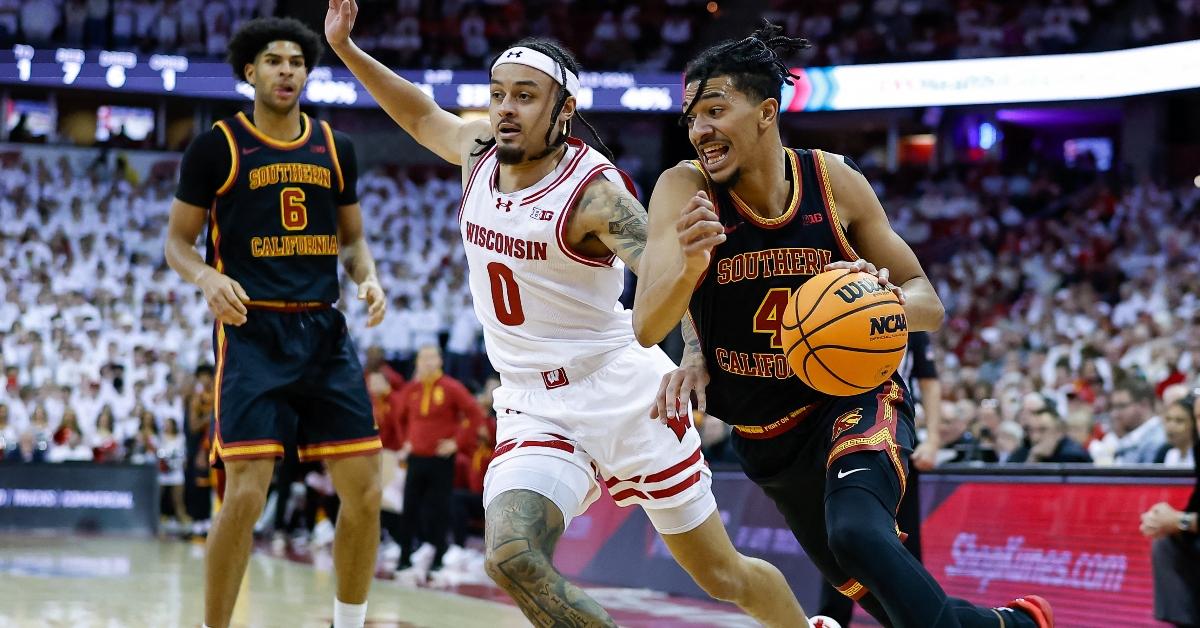
The lawsuit alleged that Baker-Mazara never received any explanation regarding how he allegedly violated the morals clause.
His legal team argued that the invocation of the morals clause served merely as a pretext to cancel financial obligations.
The lawsuit claimed the program stopped payments once it realized the tournament run was no longer possible.
NBA DRAFT CLAIMS AND FINANCIAL DAMAGES
The lawsuit went beyond demanding the remaining balance of the agreed-upon NIL compensation.
Baker-Mazara sought formal damages for what he claimed was severe harm inflicted on his professional basketball aspirations.
The lawsuit alleged that the sudden dismissal and subsequent controversy damaged his standing for the upcoming NBA Draft.
For elite collegiate players, draft position often dictates millions of dollars in rookie contract guarantees.
An unexpected removal from a high-profile roster late in the season can raise red flags for professional scouting departments.
Baker-Mazara argued that the public nature of the program's disciplinary action clouded his draft projections unfairly.
The lawsuit therefore sought restitution for both the lost NIL earnings and the projected damage to his future career.
Neither side has publicly disclosed the financial terms included in the final settlement agreement.
USC's brief public statement made clear that the university will not provide additional details regarding the resolution.
A CHANGING ROSTER LANDSCAPE
The dispute highlights the unprecedented legal complexities currently defining collegiate sports rosters.
Prior to the adoption of NIL compensation, roster dismissals were handled almost entirely through internal athletic department channels.
Today, players enter into multi-party contracts with outside collectives and marketing entities that carry major financial obligations.
When a program's season falls short of expectations, those commercial commitments do not simply disappear on their own.
Questions about roster cuts and contract enforcement are increasingly landing in civil courtrooms rather than staying behind closed doors.
Baker-Mazara's lawsuit directly challenged how collectives apply disciplinary clauses when team goals fall apart.
MOVING FORWARD
With the legal matter formally settled, both the player and the basketball program have turned their attention toward what comes next.
USC opened its new regular season on Monday night with a dominant 95-63 victory over Milwaukee.
The comfortable home victory provided a fresh start on the court for the Trojans after a difficult conclusion to their previous campaign.
Musselman is now in his third season at the helm of the USC men's basketball program.
The veteran head coach faces the task of guiding the Trojans through another competitive Big Ten schedule.
Baker-Mazara's settlement closes out the immediate court proceedings, but the broader debate over roster cuts and postseason timing remains active across college athletics.
Do you believe college programs ever push players out when a season's postseason hopes start falling apart?
Advertisement
You may also like

NBA champion Steve Kerr trolls Donald Trump with a savage jab
Golden State Warriors head coach Steve Kerr took a sharp, humorous jab at President Donald Trump during his Wednesday media availability, referencing a campaign…

John Cena’s subtle salute to Gunther after his return
John Cena made a surprise appearance on the Oct. 30, 2026 edition of WWE NXT. As he walked to the ring, he stopped in…

Braden Smith Makes NBA Debut With the Pacers
Purdue basketball alum Braden Smith makes NBA debut with the Pacers. Braden Smith, the former Purdue Boilermakers guard, stepped onto an NBA floor for…

Red Wings vs. Golden Knights Live Score and Game Updates
NHL.LIVE: Detroit Red Wings vs Vegas Golden Knights LIVE STREA.MS NHL Game On TV Coverage 6 Nov 2026. Puck drop is set for 7…

Business leaders face a tough choice with workplace monitoring.
Big Brother 2026 has officially crowned a winner. Rochelle took the title on the live final, hosted by AJ Odudu and Will Best on…

WWE Plans Huge 30th Anniversary Celebration for The Rock
WWE is planning to celebrate 30 years of The Rock this month. Plans include a commemorative championship belt. Special merchandise releases are also in…