LeBron James Orders AI Betting App to Remove His Likeness
LeBron James has sent a cease and desist letter to an AI-powered sports betting app that uses his name, nickname, likeness and image without permission.
A spokesperson for the NBA star confirmed the move to Front Office Sports.
The app is called Bron AI.
It describes itself as a tool that collects data and odds from traditional sportsbooks and prediction markets.
Users can find profitable wagers and automatically place bets on other apps.
The trouble started with a promotional video posted to X/Twitter on Wednesday.
The video shows a character who looks like James.
The character wears a basketball jersey with his nickname 'Bron' and his number 23.
His voice also resembles how James sounds.
In the ad, the character scrolls through the app and stops on a photo of Phoenix Suns forward Dillon Brooks.
'Dillon Brooks? On Kalshi?
Hell nah,' the character says.
The post came from the company's CEO.
It quickly racked up more than 900,000 views in less than 24 hours.
James's camp acted fast.
'LeBron is in no way affiliated with this unauthorized use of his likeness,' a spokesperson for James told FOS.
The cease and desist letter rails against the 'unauthorized use and illicit exploitation of' the 76ers star's 'name, nickname, likeness, image, persona, and other identifying attributes, materials and related information.'
The letter says this creates the false appearance of an association between James and the company.
The unauthorized use is 'especially serious and egregious' for two reasons.
First, James has an exclusive endorsement deal with Polymarket, a prediction market platform.
Second, the ad implies James is 'involved with betting on basketball, which is a very serious violation of NBA rules and regulations,' according to the letter.
The letter comes from the law firm Grubman Shire Meiselas & Sacks PC.
It demands that Bron AI permanently stop using James's likeness 'in any manner and media,' including removing the ad.
The full ad also appears on Bron AI's Instagram account.

The letter also requires the company to notify every person who has used the app, in writing, that James has no involvement with the company.
James 'intends to take any and all steps to enforce his rights as appropriate,' the letter says.
In addition to James and Brooks, the ad includes images of NBA players Donovan Mitchell and Giannis Antetokounmpo.
It also includes NFL players Christian McCaffrey and Jayden Daniels.
Adam Mendelsohn, James's longtime media advisor, told FOS the Bron AI ad is 'another example of the decline and lack of originality in sports marketing.'
He did not elaborate further.
The case raises questions about how existing publicity rights laws apply to AI-generated content.
Celebrities have long had the right to control how their name, image and likeness are used commercially.
But AI tools now make it possible to create convincing impersonations without the person's involvement.
Several states, including California and New York, have laws that specifically protect a person's right of publicity.
New York's law, for example, prohibits the use of a living person's name or portrait for commercial purposes without written consent.
Violations can result in damages and injunctions.

The NBA itself has strict rules about players and betting.
League rules prohibit players from gambling on NBA games or associating with betting operations in ways that could compromise the integrity of the game.
James's camp appears to be treating this as both a legal and a reputational issue.
The letter does not specify whether James plans to file a lawsuit.
But it warns that he will 'take any and all steps to enforce his rights as appropriate.'
Bron AI has not publicly responded to the letter as of this writing.
The company's promotional video remains on X/Twitter and Instagram.
It is unclear whether the app itself is still operational.
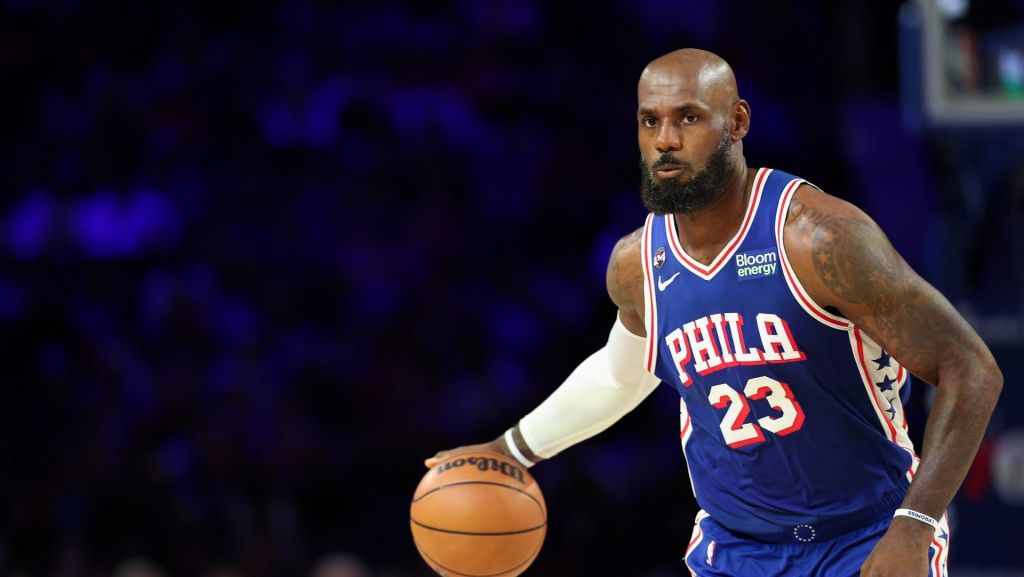
James currently plays for the Philadelphia 76ers.
He joined the team in the offseason after multiple seasons with the Los Angeles Lakers.
The 76ers are 7-2 this season as of this report.
James has been the subject of multiple headlines this week beyond the AI app issue.
He was also heckled during a game by a golf enthusiast known as the 'Sandbagger Sheriff' for not having an official handicap.
And he named Luka Doncic and Cade Cunningham as two of his favorite players in the league.
But the cease and desist letter has drawn the most attention in legal and sports business circles.
The case could set a precedent for how athletes and other public figures protect their likenesses in the age of generative AI.
Several other celebrities have taken similar action in recent years.
Actress Scarlett Johansson threatened legal action in 2023 after an AI app used her name and likeness in an ad without permission.
The app settled and removed the content.
Musicians have also sent cease and desist letters over AI-generated songs that mimic their voices.
What makes this case distinct is the betting element.
James's exclusive deal with Polymarket means he already has a commercial relationship with a prediction market platform.
Any competing app that suggests an endorsement could be seen as a breach of that contract.
And the NBA's betting rules add another layer of risk.

If fans believed James was involved with Bron AI, it could trigger a league investigation.
That alone may explain why his camp moved so quickly.
The letter demands a response from Bron AI within a reasonable timeframe.
If the company does not comply, James's legal team could seek a court order.
Federal law also provides some protections.
The Lanham Act prohibits false endorsements and unfair competition.
A court could order Bron AI to pay damages and turn over any profits generated from the ad.
The case is still in its early stages.
No lawsuit has been filed yet.
But the cease and desist letter makes clear that James's team is prepared to escalate.
For now, the ball is in Bron AI's court.
Whether they comply or fight will determine how far this goes.
Either way, the incident has already become a talking point in the sports and tech industries.
And it serves as a warning to other companies using AI to mimic real people without permission.
Advertisement
You may also like

NBA champion Steve Kerr trolls Donald Trump with a savage jab
Golden State Warriors head coach Steve Kerr took a sharp, humorous jab at President Donald Trump during his Wednesday media availability, referencing a campaign…

John Cena’s subtle salute to Gunther after his return
John Cena made a surprise appearance on the Oct. 30, 2026 edition of WWE NXT. As he walked to the ring, he stopped in…

Braden Smith Makes NBA Debut With the Pacers
Purdue basketball alum Braden Smith makes NBA debut with the Pacers. Braden Smith, the former Purdue Boilermakers guard, stepped onto an NBA floor for…

Red Wings vs. Golden Knights Live Score and Game Updates
NHL.LIVE: Detroit Red Wings vs Vegas Golden Knights LIVE STREA.MS NHL Game On TV Coverage 6 Nov 2026. Puck drop is set for 7…

Business leaders face a tough choice with workplace monitoring.
Big Brother 2026 has officially crowned a winner. Rochelle took the title on the live final, hosted by AJ Odudu and Will Best on…

WWE Plans Huge 30th Anniversary Celebration for The Rock
WWE is planning to celebrate 30 years of The Rock this month. Plans include a commemorative championship belt. Special merchandise releases are also in…