LeBron James sends cease and desist to AI betting app using his face
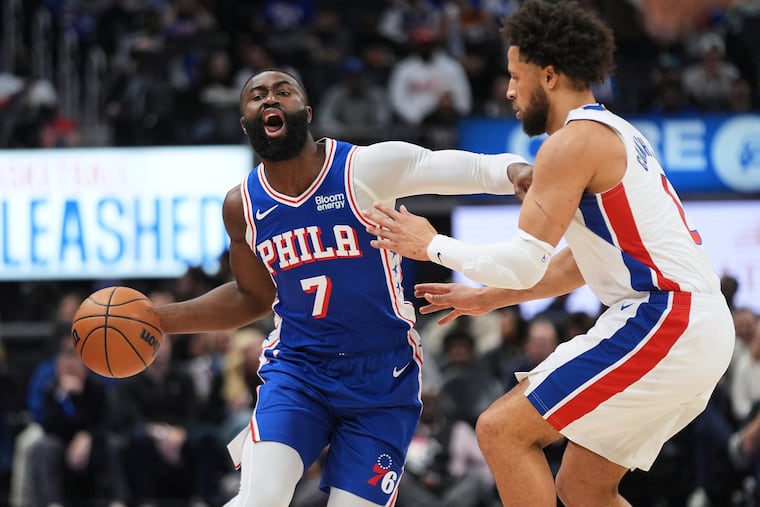
LeBron James and his attorneys have filed a cease and desist letter against an AI-powered sports betting company that used his name, image and likeness without permission.
A spokesperson for James confirmed the action to the Inquirer.
The company calls itself “Bron.”
It is not affiliated with James in any way.
Despite that, the company used his image in an online advertisement designed to get people to subscribe and place bets on its platform.
The ad ran with a yearly or monthly fee structure.
Anish Gupta, the co-founder and CEO of Bron, posted the ad on his X account.
His caption read: “Meet Bron: The TikTok for Sports Betting.”
The ad shows a figure wearing a No. 23 jersey with “Bron” on the back.
That figure scrolls through a phone, searching for player prop bets involving other prominent professional athletes before one of his games.
The letter was first reported by Front Office Sports.
According to that report, James’ camp is upset at the implication the ad makes — that James himself is involved in placing bets.
That would be a direct violation of NBA rules.

Adam Mendelsohn, a public relations advisor to James, issued a statement to the Inquirer.
He slammed the company as an example of “the decline and lack of originality in sports marketing.”
“People are all playing for the cheapest way to get clicks and aggregation. A lot of pundits do it too,” Mendelsohn said.
“I’m sure the intent here was for us to send a cease and desist in order to make it a story.”
“You would prefer not to respond but you don’t have a choice in a situation like this.”
“It’s not the first time and it won’t be the last.”
“For what it’s worth, these gimmicks never work because people see through it.”
The NBA has strict rules prohibiting players from betting on games.
Any implication that a player is placing bets — even in a fictional ad — can create serious reputational and regulatory risk.
James recently signed an exclusive deal with the prediction market Polymarket worth around $15 million, according to Front Office Sports.
The Philadelphia 76ers also recently announced a team partnership with another prediction market, Kalshi.
These deals highlight the growing intersection between professional sports and prediction markets.
But they also create a complicated landscape for player endorsements and brand protection.

A cease and desist letter is a legal document sent to demand that an individual or organization stop an allegedly illegal activity.
It is often the first step before a lawsuit.
In this case, it targets the unauthorized commercial use of James’ identity.
Under U.S. law, the right of publicity protects individuals from having their name, image or likeness used for commercial purposes without consent.
This right varies by state.
California, where James has strong ties, has some of the strongest protections.
James is one of the most recognizable athletes in the world.
His image carries enormous commercial value.
He has built a business empire that includes endorsements, media production and investments.
Unauthorized use of his likeness threatens that carefully managed brand.
The Bron app appears to have used AI to create the ad.
AI-generated content has become a growing legal battleground.
Celebrities and public figures are increasingly fighting back against unauthorized digital replicas.

Tennessee recently passed the ELVIS Act, which specifically targets AI-generated impersonations of musicians.
Federal law does not yet provide comprehensive protection against AI-generated likeness theft.
This leaves celebrities to rely on state laws and cease and desist letters.
Gupta, the CEO of Bron, has not publicly responded to the legal action.
His X post featuring the ad remains up as of this report.
It is unclear whether Bron has retained legal counsel.
The company’s business model appears to rely on AI-generated content to attract users.
The name “Bron” itself trades on James’ nickname “Bron,” short for LeBron.
This kind of naming strategy is common in viral marketing.
But it also invites legal scrutiny.
Mendelsohn’s statement suggests the company may have anticipated the cease and desist.
He said the intent might have been to provoke a response and generate publicity.
If so, the strategy worked.
The story has been picked up by multiple major outlets.
But Mendelsohn argues these tactics ultimately fail.
“These gimmicks never work because people see through it,” he said.
James has faced similar situations before.
His legal team has a history of aggressive enforcement of his intellectual property rights.
In 2020, James’ attorneys sent a cease and desist to a company selling “LeBron”-themed merchandise without a license.
In 2022, they took action against a social media account impersonating him.
This pattern reflects the constant challenge of protecting a global brand.
The timing of this incident is notable.
James and the 76ers are off to an 8-1 start, the best record in the Eastern Conference.
On Wednesday night, the Sixers defeated the Detroit Pistons 112-106.
James finished with 13 points, 10 rebounds and eight assists — just short of a triple-double.
He also moved closer to becoming the oldest player to record a triple-double.

Joel Embiid had 25 points and 15 rebounds.
Tyrese Maxey celebrated his 26th birthday with a solid performance.
After the game, a lighthearted moment between James and Embiid went viral.
Embiid joked about James reaching 16,000 career field goals.
“I’m sorry, Mr. 16,000 field goals. I forgot the question, but yeah,” Embiid said, laughing.
The team chemistry has silenced early critics.
But off the court, the cease and desist adds a different kind of drama.
It remains to be seen whether Bron will comply with the legal demand.
If it does not, James’ attorneys may escalate to a lawsuit.
A lawsuit could seek damages and an injunction against further use of James’ likeness.
The case could also set a precedent for how AI-generated ads using celebrity images are handled.
For now, the letter has been sent.
The ball is in Bron’s court.
Advertisement
You may also like
Diana Taurasi Headlines 2027 Women's Basketball Hall of Fame Class
UConn Basketball Legend Diana Taurasi Named to Women's Basketball Hall of Fame Class of 2027. The Women’s Basketball Hall of Fame announced its Class…

Jason Kelce Breaks Silence on Fired Super Bowl-Winning Coach
Lehigh Valley sets Veterans Day ceremonies; watch PBS' 'Salute to Service 2026' with Jason Kelce. More than 40,000 veterans live in the Lehigh Valley…
Miyu Yamashita co-leads in Japan, chasing back-to-back LPGA wins.
Miyu Yamashita shares the first-round LPGA lead in Japan. She shot a bogey-free, 6-under 66 at the Toto Japan Classic on Thursday. The round…
Alexander Zverev joins Pete Sampras on an unfortunate list after Paris loss.
Alexander Zverev has joined Pete Sampras on an unfortunate list. The German lost to Lorenzo Musetti in the second round of the Paris Masters.…
Buckley Threatens Poirier Over Racial Slur Feud
Joaquin Buckley has threatened Dustin Poirier over the former UFC champion's use of a racial slur during a public intoxication arrest at an Atlanta…
Country Stars Ella Langley and Miranda Lambert Set to Rock CMA Awards
ABC and the Country Music Association have announced the first round of performers for the 60th annual CMA Awards. The ceremony airs live from…