LeBron James sues company over his nickname "Bron
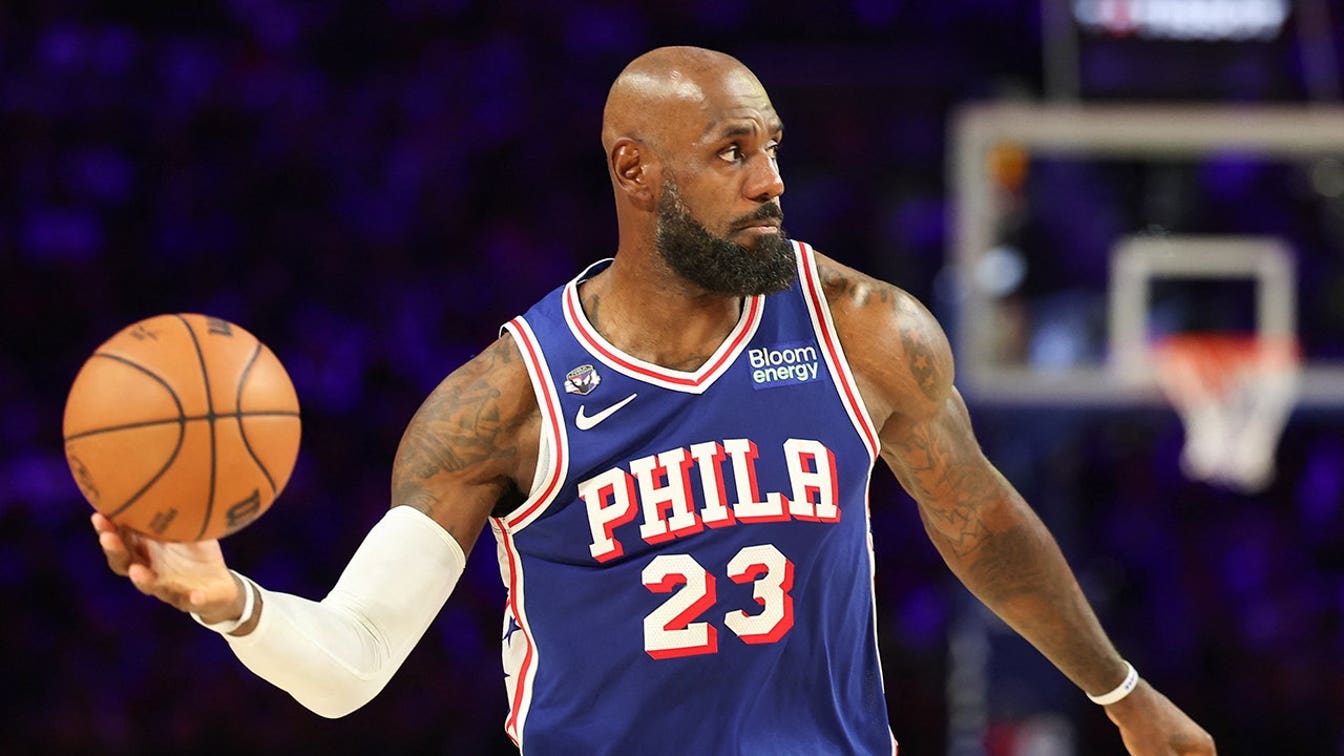
LeBron James is taking legal action against a new AI-powered sports betting app named "Bron."
A cease-and-desist letter was sent to the app's creator, Anish Gupta, according to a spokesperson for James.
The app launched with a promotional video that features a character resembling James.
The character wears a jersey with the nickname "Bron" and the number 23.
In the video, the character is shown in a locker room, holding a phone and scrolling through player profiles.
The character stops on Dillon Brooks, a longtime rival of James, and says, "Dillon Brooks? On Kalshi? Hell nah."
The video was shared by Front Office Sports.
James is in no way affiliated with the app, his spokesperson told Front Office Sports.
"LeBron is in no way affiliated with this unauthorized use of his likeness," the spokesperson said.
The cease-and-desist letter states that the app engaged in "unauthorized use and illicit exploitation of" James' "name, nickname, likeness, image, persona, and other identifying attributes, materials and related information."

The letter also says the ad implies James is "involved with betting on basketball, which is a very serious violation of NBA rules and regulations."
NBA rules prohibit players from betting on league games or sharing inside information for gambling purposes.
James has a brand deal with the prediction market Polymarket, but that does not involve betting on NBA games.
The app, called "Bron AI," is described on Apple's App Store as "a sports analytics and betting research app with live odds comparisons, data-backed picks, player and team brands, a multi-leg Slip, and bet tracking."
It is free to download but costs $249.99 annually, or $29.99 monthly, for its pro version.
The CEO of Bron AI, Anish Gupta, had been promoting the app for some time before the launch video drew attention.
The video clearly indicated that "Bron" refers to LeBron James, according to Front Office Sports.
James' longtime media adviser Adam Mendelsohn commented on the situation to Front Office Sports.
"I'm sure the intent here was for us to send a cease and desist in order to make it a story," Mendelsohn said.
"You would prefer not to respond but you don't have a choice in a situation like this."
"It's not the first time and it won't be the last."
"For what it's worth, these gimmicks never work because people see through it."
The letter demands that Bron AI permanently stop using James' likeness.
It also demands that the app notify all users that James is not affiliated with the product.
James and the Philadelphia 76ers are 8-1 on the season and look to be the top team in the Eastern Conference early on.
Sports betting and trading have become a massive part of the sports world in recent years.
Many professional leagues, including the NBA, have strict rules about player involvement in gambling.
The NBA has partnerships with multiple sportsbooks but prohibits players from betting on games.
This is not the first time a celebrity has sent a cease-and-desist over unauthorized use of their likeness.
Similar legal actions have been taken by athletes against companies using their images without permission.
The case highlights the growing intersection of AI technology, sports betting, and intellectual property law.
As AI-generated content becomes more sophisticated, legal battles over digital likenesses are expected to increase.
The outcome of this dispute could set a precedent for how AI apps use athlete nicknames and images.
For now, the Bron AI app remains available for download, though its future is uncertain.
The cease-and-desist letter gives the company a deadline to comply or face potential legal action.
If the company does not comply, James could pursue a lawsuit for trademark infringement and right of publicity.
Right of publicity laws vary by state but generally protect individuals from unauthorized commercial use of their identity.
California, where James has played for much of his career, has some of the strongest right of publicity protections.
The case also raises questions about AI-generated content and whether it constitutes a replica of a real person.
Legal experts say that using AI to create a character that closely resembles a real person for commercial gain can violate publicity rights.

The Bron AI case is being watched closely by both the sports and tech industries.
James has built a business empire worth hundreds of millions of dollars, making protection of his brand a priority.
His company, LRMR Ventures, manages his endorsements and business deals.
James has endorsement deals with major brands including Nike, PepsiCo, and AT&T.
The cease-and-desist is a standard first step in intellectual property disputes.
If the matter escalates to litigation, it could take months or years to resolve.
James' legal team is known for being aggressive in protecting his image rights.
In 2020, James won a trademark dispute over the phrase "Taco Tuesday."
The Bron AI case adds another layer of complexity because it involves AI technology.
AI-generated content is a rapidly evolving area of law with few clear precedents.

Courts are still determining how existing laws apply to AI-created works.
The case could help clarify whether AI-generated characters that mimic real people are protected speech or commercial exploitation.
James has been outspoken about his concerns regarding AI and its potential misuse.
The NBA has also been monitoring the use of AI in sports betting and fan engagement.
For now, the ball is in Bron AI's court.
The company must decide whether to comply with the cease-and-desist or fight it.
If they fight, the case could become a landmark ruling in AI and celebrity rights law.
Either way, the story has already achieved what Mendelsohn suggested: it made the app famous.
But that fame comes with legal risk.
James has the resources and motivation to see this through.
His camp has made it clear they will not tolerate unauthorized use of his likeness.
The message is aimed not just at Bron AI but at any company considering similar tactics.
In the world of sports and technology, the line between homage and infringement is getting thinner.
This case may help draw that line.
Advertisement
You may also like
Pacquiao accused of ducking two-weight world champion
Paulie Malignaggi, a former two-division world champion, has accused Manny Pacquiao of deliberately avoiding a fight with him. Speaking on The Ariel Helwani Show,…

LPGA Pro Slams Brandel Chamblee Over LIV Golf Reality Check
Brandel Chamblee says LIV Golf stars got a "slap in the face of reality" as the breakaway league officially shuts down. The Golf Channel…
Hamilton fires defiant warning amid Leclerc tension and Ferrari penalty threat
Lewis Hamilton says he “won’t be silenced” as he continues to push for “conversations that must be had” about how he and Ferrari teammate…

Brandel Chamblee reacts to LIV Golf's liquidation news
Brandel Chamblee gives his reaction as LIV Golf prepares to enter into liquidation. The Golf Channel analyst did not mince words. Speaking on Golf…
Enzo Amore Spotted Backstage at WWE NXT Amid Return Rumors
Potentially Returning Star Enzo Amore Reportedly Visited Backstage At WWE NXT. It's been quite the 2026 for Enzo Amore, especially since he hasn't appeared…
Tennis Legends Bhupathi and Sania Join AITA Leadership
Mahesh Bhupathi and Sania Mirza are set to become the two Sportspersons of Outstanding Merit (SOM) in the 15-member All India Tennis Association Executive…