Lee eldest son sues lawmaker over 'emperor golf' defamation claims
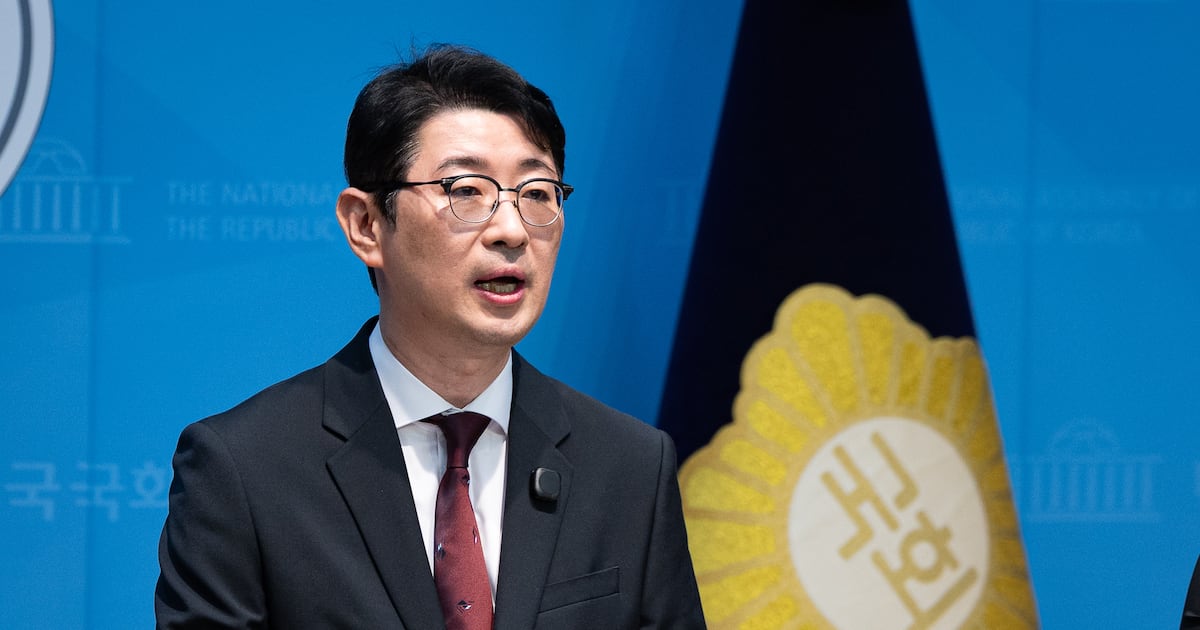
Lee Dong-ho, the eldest son of South Korean President Lee Jae-myung, has filed a criminal defamation complaint against Rep. Joo Jin-woo of the People Power Party.
The complaint was submitted to the Seoul Metropolitan Police Agency on November 5, 2026.
It accuses the lawmaker of spreading false information that damaged Lee's reputation.
The dispute stems from a press conference Rep. Joo held at the National Assembly press room on October 29, 2026.
At that conference, Joo alleged that President Lee, his wife, their eldest son Lee Dong-ho, and his spouse played golf together at Hansandae Country Club inside the Jinhae Naval Base in South Gyeongsang Province.
The alleged outing took place during the president's summer vacation in August 2025.
Joo further claimed the group traveled by helicopter from the golf course to lodgings on Jeo Island after the round.
He released a photograph of a helicopter he said was at the site at the time.
Joo called the episode "emperor golf," a term that implies the president's family used military facilities and equipment for personal leisure.
In his complaint, Lee Dong-ho stated: "I did not go to Hansandae CC during the summer vacation, and I did not play golf there."
He argued that Rep. Joo publicly specified false information and damaged his reputation.
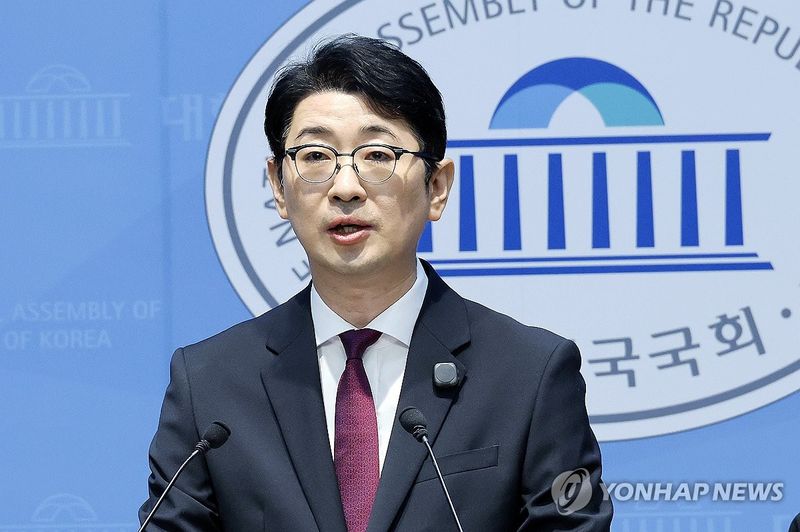
Lee said he had been branded as someone who received preferential access to a state facility for something he never did, simply because he is a member of the president's family.
He described severe emotional distress and called for strict punishment.
Attorney Lee Jae-hong of Gangmul Law Office is representing Lee Dong-ho.
The attorney said his client is "a private individual, before being the president's son, as long as he performs no public duties."
He argued that even if a presidential family's vacation were considered a matter of public interest, naming a private individual and driving the issue through a news conference, social media, and YouTube broadcasts without verifying the facts goes beyond the scope of political criticism.
Rep. Joo responded forcefully on Facebook after learning of the complaint.
"I exposed the records of the emperor golf outing, and now they have resorted to threats of legal action again," he wrote.
"This is nothing short of a gag-order dictatorship."
"Threats don't work," Joo said in a separate Facebook post.
"I will reveal the truth of the emperor golf allegations with a countersuit."
He added: "Even if they block the materials and try to gag me with complaint threats, it's no use."

"After reviewing the complaint, I will respond with legal action to ascertain the truth."
Joo also wrote: "If there is nothing to hide, President Lee Jae-myung himself should disclose the facts before the public and file a complaint against me directly."
The lawmaker's counter-complaint strategy is significant under South Korean legal procedure.
In defamation cases, both sides typically submit evidence to police investigators who then determine whether charges are warranted.
If prosecutors decide to indict, a criminal trial follows.
South Korea's defamation law treats false statements that damage a person's reputation as a criminal offense, punishable by up to five years in prison or a fine of up to 20 million won.
Public figures, including politicians and their families, are generally held to a higher threshold for proving defamation because of the public interest in their activities.
However, private individuals who are not public officials can argue that their personal lives should not be subjected to political attacks.
This case is unfolding against a backdrop of intense political polarization in South Korea.
President Lee Jae-myung, a member of the liberal Democratic Party, has faced multiple investigations and legal challenges since taking office.
His conservative opponents in the People Power Party have frequently accused his administration of corruption and abuse of power.

The "emperor golf" allegations are among the most recent in a series of claims about the president's family using military assets for personal purposes.
Similar accusations have been made against previous South Korean presidents from both parties.
In 2012, former President Lee Myung-bak faced criticism over a golf course built on a military base.
In 2016, former President Park Geun-hye was accused of using military helicopters for personal travel.
The current case centers on specific factual disputes.
Lee Dong-ho denies ever visiting Hansandae Country Club or playing golf there during the vacation period in August 2025.
Rep. Joo claims to have photographic evidence of a helicopter at the site.
Neither side has made the full evidence public as of November 6, 2026.
The Seoul Metropolitan Police Agency will now investigate the complaint and the counter-allegations.
Police typically interview both parties, review any available surveillance footage or records, and examine the photograph Rep. Joo released.
The investigation could take weeks or months, depending on the complexity of the evidence.

If police find probable cause, they will refer the case to prosecutors for possible indictment.
If they find no basis for the defamation claim, they can dismiss the complaint.
Both sides have indicated they are prepared for a prolonged legal battle.
Lee Dong-ho's attorney emphasized that his client is a private citizen who should not be dragged into political disputes.
Rep. Joo framed the complaint as an attempt to silence political criticism.
The case raises questions about the boundaries of political speech in South Korea.
Lawmakers are generally immune from civil liability for statements made during official parliamentary proceedings.
However, statements made at press conferences, on social media, and on YouTube broadcasts do not carry the same protection.
If Rep. Joo's allegations are proven false, he could face criminal penalties.
If they are proven true, Lee Dong-ho could face public embarrassment and potential legal consequences for filing a false complaint.
The outcome will depend on what evidence each side can produce.

For now, the case is in its earliest stage.
Police have not announced a timeline for the investigation.
Both men have retained legal counsel.
The political implications are significant.
If the defamation claim succeeds, it could deter other lawmakers from making similar allegations about the president's family.
If it fails, it could embolden critics to pursue further investigations into the president's use of military facilities.
The public is watching closely.
South Korean media have covered the story extensively since Rep. Joo's press conference on October 29.
The term "emperor golf" has become a flashpoint in online political discourse.
Supporters of President Lee argue that the allegations are baseless smears.
Supporters of Rep. Joo argue that the president's family should be held accountable for any misuse of public resources.
The legal process will now determine which side's version of events is accurate.
Until then, the case remains a he-said, he-said dispute with high political stakes.
The next major development will likely come when police announce their initial findings or schedule interviews with the parties involved.
Neither side has indicated any willingness to settle the matter out of court.
Advertisement
You may also like

First CMA Awards performers revealed: Tim McGraw, Ella Langley, more
The Country Music Association has announced the first round of performers for the 60th Annual CMA Awards. Ella Langley, Tim McGraw, Kacey Musgraves, Miranda…
Bryson DeChambeau Left Stranded After LIV Golf Shuts Down
Eddie Pepperell did not hold back. On the Sliced Golf Podcast, aired November 4, 2026, the DP World Tour veteran was asked who could…

Wembanyama’s 52-point game sparks Wilt Chamberlain comparisons
Victor Wembanyama drew Wilt Chamberlain comparisons after a 52-point, 24-rebound, 8-block performance against the Dallas Mavericks on Wednesday night. The San Antonio Spurs won…
The CMA Awards Just Dropped Their First Round Of Performers, and a Dolly Parton Tribute Is Already on Our Must
The CMA Awards just dropped their first round of performers, and a Dolly Parton tribute is already on our must-watch list. Miranda Lambert, Ella…
Sophie Cunningham Calls Out the Growing Coach Problem in Sports
Indiana Fever guard Sophie Cunningham is sounding an alarm that has nothing to do with politics, free agency, or the WNBA playoffs. On this…
David Falk on what fueled Michael Jordan’s killer instinct
David Falk, the longtime agent who represented Michael Jordan for decades, finally broke down what truly drove the Chicago Bulls legend’s relentless competitive fire.…