LIV Golf winner reveals why top stars avoided the league.
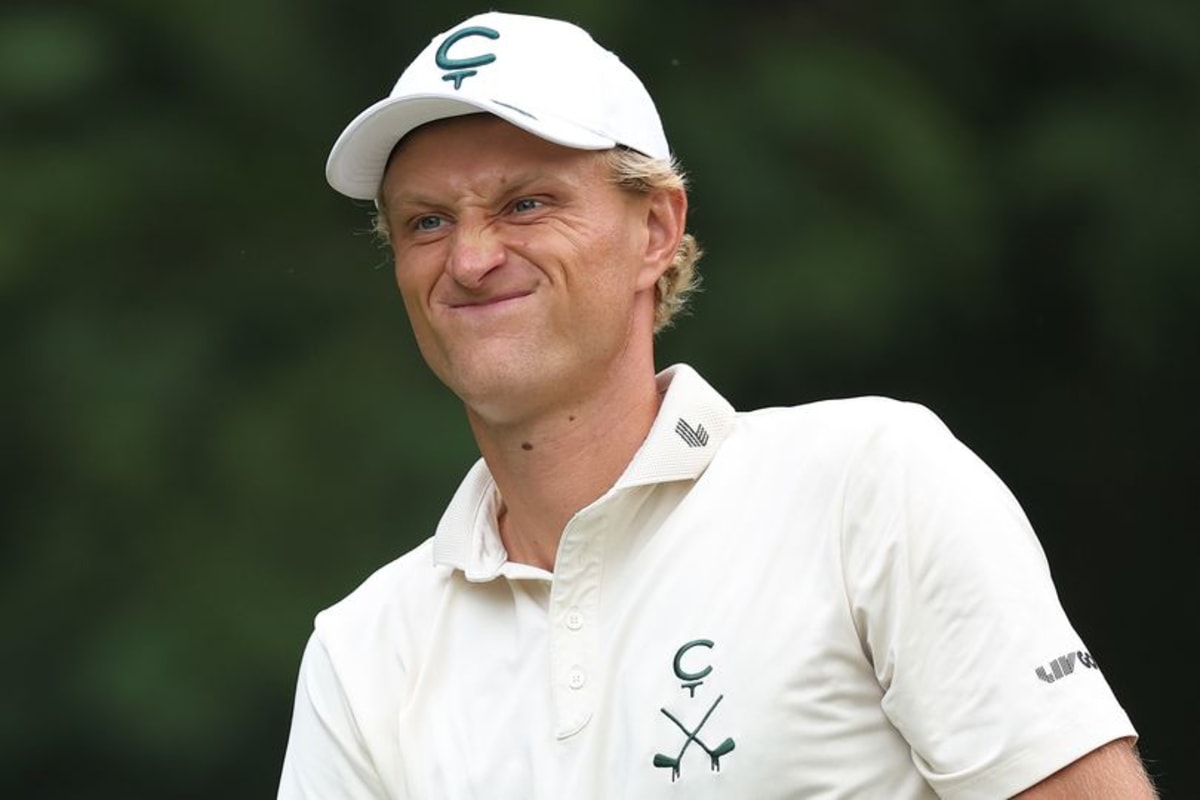
LIV Golf winner Adrian Meronk explains why no star players signed for breakaway league.
Meronk, a one-time winner on the breakaway circuit, walked away after securing his DP World Tour future with a win at the Alfred Dunhill Links Championship last month.
The 33-year-old Pole told Ben Parsons of Today's Golfer that CEO Scott O'Neil and his executives were unable to produce an attractive proposition for players.
LIV had proposed a 10-event schedule, but players were in the dark on key details.
The DP World Tour's decision to forbid its members from playing any LIV events next year also swayed Meronk.
“It’s not really exciting to stay there,” Meronk said.
“It’s nothing really to look forward to.”
He listed the reasons: no world ranking points, only 10 tournaments, a ban from the DP World Tour, difficulty getting into majors, and no Ryder Cup eligibility.
“And then if I was banned [on the DP World Tour] as well, it would be tough to get into majors,” he said.
“And also no Ryder Cup.”

LIV Golf is now on the brink of liquidation after BC Partners pulled the rug on a $300 million rescue deal.
Meronk believes the league's failure to secure commitments from star players is what killed the deal.
LIV bosses had hoped to rebuild after losing Saudi Arabian support and filing for Chapter 11 bankruptcy.
Private equity and credit firm BC Partners had agreed to refinance the league, provided it secured enough commitments from star players.
LIV failed in that mission.
BC Partners backed out of the deal ahead of a pivotal hearing at a New Jersey bankruptcy court on Thursday.
Judge Michael Kaplan is set to order liquidation of the league's assets.
It was a telling indictment that the league failed to secure commitments from some of its biggest advocates: Bryson DeChambeau, Cam Smith and Dustin Johnson.
These were players who had publicly defended LIV Golf and collected enormous signing bonuses.
If they wouldn't commit to the league's future, Meronk's analysis suggests, the proposal simply wasn't compelling enough.

Meronk, who joined LIV in 2024 and won in Riyadh in January 2025, lamented the league's demise.
He relished life on the breakaway league, but the mood instantly changed when it was confirmed in April that Saudi Arabia's Public Investment Fund would stop bankrolling the league.
“I think the first two years were amazing,” he says.
“The best place to play golf, to be honest.”
“But the last season was a bit strange, obviously, with the news that we had about Saudis backing out.”
“Then everyone didn’t know what to expect.”
“It was a lot of unknowns.”
“The energy was a little bit strange, I would say, and that didn’t help my game.”
Chapter 11 bankruptcy is a legal process that allows a company to reorganize its debts while continuing operations.
In LIV's case, the filing was meant to buy time while BC Partners completed its refinancing.

But the deal was conditional on player commitments.
When those commitments didn't materialize, BC Partners walked away.
Now the court is expected to order a Chapter 7-style liquidation, where assets are sold off to pay creditors.
LIV Golf launched in 2022 with massive financial backing from Saudi Arabia's Public Investment Fund.
The league lured top players with enormous contracts, sometimes worth hundreds of millions of dollars.
Players like Dustin Johnson, Bryson DeChambeau, and Phil Mickelson were among the first to defect from the PGA Tour.
The league operated on a team format with 54-hole events, no cuts, and guaranteed prize money.
It disrupted the traditional golf calendar and sparked a bitter rivalry with the PGA Tour and DP World Tour.
The DP World Tour, formerly known as the European Tour, is one of golf's major professional tours.
It has a long-standing relationship with the PGA Tour and the Ryder Cup.

The Ryder Cup is a biennial team competition between Europe and the United States.
To be eligible for the European team, players must be members of the DP World Tour.
World ranking points are crucial for players seeking entry into golf's four major championships: the Masters, the PGA Championship, the U.S. Open, and The Open Championship.
Without those points, LIV players risked falling in the rankings and missing out on major invitations.
Meronk's decision to return to the DP World Tour was therefore a pragmatic one.
His win at the Alfred Dunhill Links Championship secured his playing rights and gave him a path back to the mainstream tour.
For other LIV players, the calculus was different.
Some, like Jon Rahm, had already secured major exemptions through past victories.
Others, like DeChambeau and Johnson, had enough status to keep playing majors without world ranking points.
But for the next generation of talent, the lack of points and the DP World Tour ban made LIV an unattractive long-term option.

Meronk's comments suggest that the league's leadership never fully addressed these structural problems.
He described the proposal as not exciting and lacking a future worth looking forward to.
The question now is what happens to the players still under contract with LIV.
If the league is liquidated, those contracts may be terminated or sold to other entities.
Some players may return to the PGA Tour or DP World Tour, though the terms of any reunification remain unclear.
The PGA Tour and LIV Golf had been in talks about a potential merger or partnership.
Those talks stalled after the Saudi funding dried up and the bankruptcy filing complicated negotiations.
For now, the future of professional golf's breakaway experiment rests in the hands of a bankruptcy judge in New Jersey.
Meronk's account provides a rare inside look at why the league failed to attract the talent it needed to survive.
It wasn't just the money, he implies.
It was the lack of a clear, compelling plan for the players' careers.
Without that, even the biggest signing bonuses couldn't hold the league together.
Advertisement
You may also like

NBA champion Steve Kerr trolls Donald Trump with a savage jab
Golden State Warriors head coach Steve Kerr took a sharp, humorous jab at President Donald Trump during his Wednesday media availability, referencing a campaign…

John Cena’s subtle salute to Gunther after his return
John Cena made a surprise appearance on the Oct. 30, 2026 edition of WWE NXT. As he walked to the ring, he stopped in…

Braden Smith Makes NBA Debut With the Pacers
Purdue basketball alum Braden Smith makes NBA debut with the Pacers. Braden Smith, the former Purdue Boilermakers guard, stepped onto an NBA floor for…

Red Wings vs. Golden Knights Live Score and Game Updates
NHL.LIVE: Detroit Red Wings vs Vegas Golden Knights LIVE STREA.MS NHL Game On TV Coverage 6 Nov 2026. Puck drop is set for 7…

Business leaders face a tough choice with workplace monitoring.
Big Brother 2026 has officially crowned a winner. Rochelle took the title on the live final, hosted by AJ Odudu and Will Best on…

WWE Plans Huge 30th Anniversary Celebration for The Rock
WWE is planning to celebrate 30 years of The Rock this month. Plans include a commemorative championship belt. Special merchandise releases are also in…