LPGA Pro Fires Back at Chamblee Over LIV Golf Reality Check
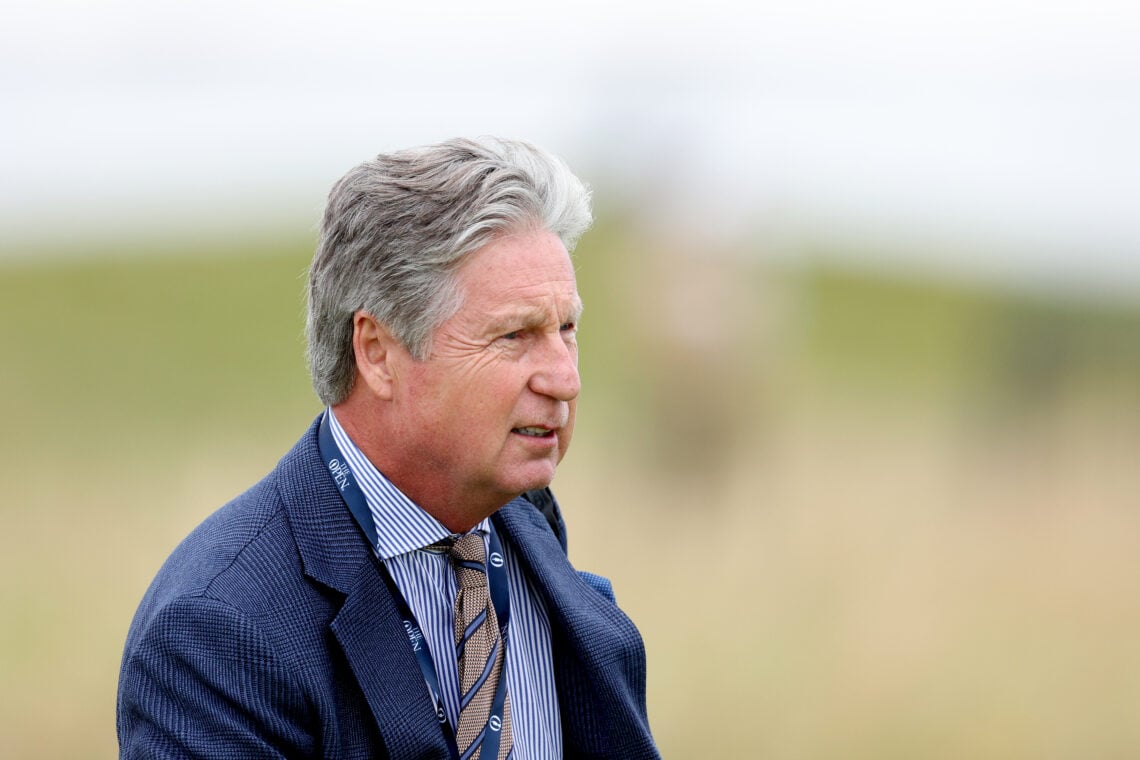
Brandel Chamblee says LIV Golf stars got a "slap in the face of reality" as the breakaway tour prepares to shut down.
The Golf Channel analyst made the comment after private capital firm BC Partners pulled its bid to relaunch the league in 2027.
LIV Golf is set to officially close its doors for good.
Chamblee did not hold back.
"You can point the finger in a lot of places," he said on Golf Channel.
"In order for it to move forward, you needed some cooperation from whatever players were going to make up LIV 2.0."
"The players and their representatives, from what I have read, were making financial demands that could not be met."
He compared the Saudi-backed contracts to hazard pay.
"What the Saudis were paying these players, I would call hazard pay," Chamblee said.
"They knew that they were going to take on reputational damage, they knew it would be disruptive and they knew it would be disruptive for their careers."
Chamblee pointed to a proposed ownership structure that players rejected.

"These players were going to have 52.5 percent ownership of the product going forward," he said.
"And the fact they were unwilling to take on that ownership tells you that they didn't have any belief that it would work."
His closing line cut deepest.
"They all thought they were beachfront property in Malibu but the market was telling them your timeshare is in Toledo," Chamblee said.
"Finally, they've got a slap in the face of reality."
The collapse of LIV Golf followed a months-long fight to stay afloat.
The Saudi Arabian Public Investment Fund (PIF) launched the league in 2022 and attracted some of golf's biggest stars with multi-million dollar contracts.
But PIF withdrew its financial support at the end of the 2026 season.
That loss of backing hit LIV Golf's leadership hard, including CEO Scott O'Neil, who spent months trying to secure investment partners.
BC Partners, an international investment firm based in London, agreed to relaunch the league with a 17-tournament schedule that maintained the team format.
That team format was the key difference between LIV Golf and traditional organizations like the PGA Tour and DP World Tour.

But after failing to get player commitment, BC Partners withdrew their bid.
Now Chamblee is not the only one talking about the state of golf.
The same week he made those LIV comments, he also posted about a different divide in the sport — one involving the LPGA.
Chamblee asked on X why South Korea and Japan dominate women's golf.
He pointed to the Rolex rankings, which show 30 South Koreans and 25 Japanese players inside the top 100, compared with just 12 Americans.
He questioned why the country with the most money and facilities was falling so far behind.
An LPGA pro answered him directly.
Jenny Shin, who moved from Seoul to America when she was nine, posted a long, detailed response.
Her reply did not start with golf.
It started with culture.
"There are fundamental differences in mentality and upbringing between Western and Asian cultures," Shin wrote.

"Reasons stated above are only a fraction of it all."
She described the popularity of women's golf in Korea and Japan.
"Women's golf in both Korea and Japan is extremely popular, much more popular than their men's tour," she said.
"Spectators are massive. It's broadcast all day on TV."
"Many KLPGA tour pros can't even walk around in Korea without being stopped or recognized."
Then she contrasted that with the situation in America.
"In the US, we struggle to get people to watch us on TV, let alone in person," Shin wrote.
"Mostly because it's not broadcasted enough or talked about enough."
Her answer went deeper than any rankings list could show.
In 2021, the USGA noted that Korea's women's tour had more events, bigger crowds, better ratings, and stronger sponsors than the men's tour.
Reuters found a similar pattern in Japan in 2017.

Chamblee had laid out his numbers clearly.
"South Korea has 30 players in the top 100 Rolex world rankings," he wrote.
"Japan has 25. The USA has just 12 and only one (Nelly Korda) in the top 19."
On a per-capita basis, South Korea has 16.5 times as many players in the top 100 as the U.S., while Japan has 5.8 times as many.
He also highlighted America's advantages, from wealth and junior programs to college golf and coaching.
Chamblee plans to discuss the puzzle on Golf Central during the CME Group Tour Championship, November 19-22, in Naples, Florida.
He will also address the U.S. Ryder Cup struggles.
But his sharpest point was about the men's game.
"If Korean and Japanese women's success were explained entirely by discipline, national culture, or practice habits," Chamblee wrote, "we might expect a comparable degree of dominance among their men. We don't see that."
Shin's response did not directly address Chamblee's LIV Golf comments.
But her post landed in the same week that Chamblee was making headlines for his blunt assessment of the LIV collapse.

Together, the two exchanges reveal a sport wrestling with deep questions.
One is about money and whether a breakaway league can survive without it.
The other is about culture and why certain countries produce more elite players.
Chamblee has been a longtime critic of LIV Golf and those who agreed to join it.
He made his feelings clear after the tour officially reached the end of the road.
Now the league that promised to reshape professional golf is gone.
The legacy of LIV Golf is complex.
On the positive side, the league forced the PGA Tour to abandon its complacency.
Those at Ponte Vedra certainly took the loyalty of their members for granted.
But the financial model proved unsustainable without PIF backing.
And the players who demanded more money from BC Partners may have sealed their own fate.
Chamblee's "slap in the face of reality" comment captured the moment.
Whether that reality applies to LIV players, the LPGA, or American golf as a whole depends on who you ask.
Shin's answer suggests the conversation is far from over.
Advertisement
You may also like

Ryan Day drops concerning Julian Sayin injury update before Oregon game
Latest Julian Sayin injury update raises significant concerns for Ohio State. Ryan Day provided the update on his radio show Thursday. Day said Sayin…

Brady Tkachuk Finally Responds to Blackhawks Rookie’s Challenge
Brady Tkachuk and the Blackhawks rookie who called him out. Florida beat Chicago 5-3 on Wednesday night at Amerant Bank Arena in Sunrise, Florida.…

Oprah’s studio became McDonald’s global HQ 28 years later
In 1990, Oprah Winfrey opened Harpo Studios in Chicago. Twenty-eight years later, McDonald’s opened its global headquarters on the same site. The 480,000-square-foot building…
Curt Cignetti destroys ESPN for SEC bias with one undeniable fact.
Curt Cignetti did not come to the microphone to complain. He came with a spreadsheet. The Indiana head coach used his weekly radio show…
Marta the Soccer Queen Gets Her Own Movie Trailer
Open & Shut: Marta al Mare; Oohhs & Aahhs; Silver Queen Cafe Baltimore's restaurant scene saw a shakeup this week with a high-profile opening,…
Reed Fires Back at DP World Tour While Eyeing PGA Return
Patrick Reed has made his position clear on the potential return of Jon Rahm to the PGA Tour. The 2018 Masters champion believes that…